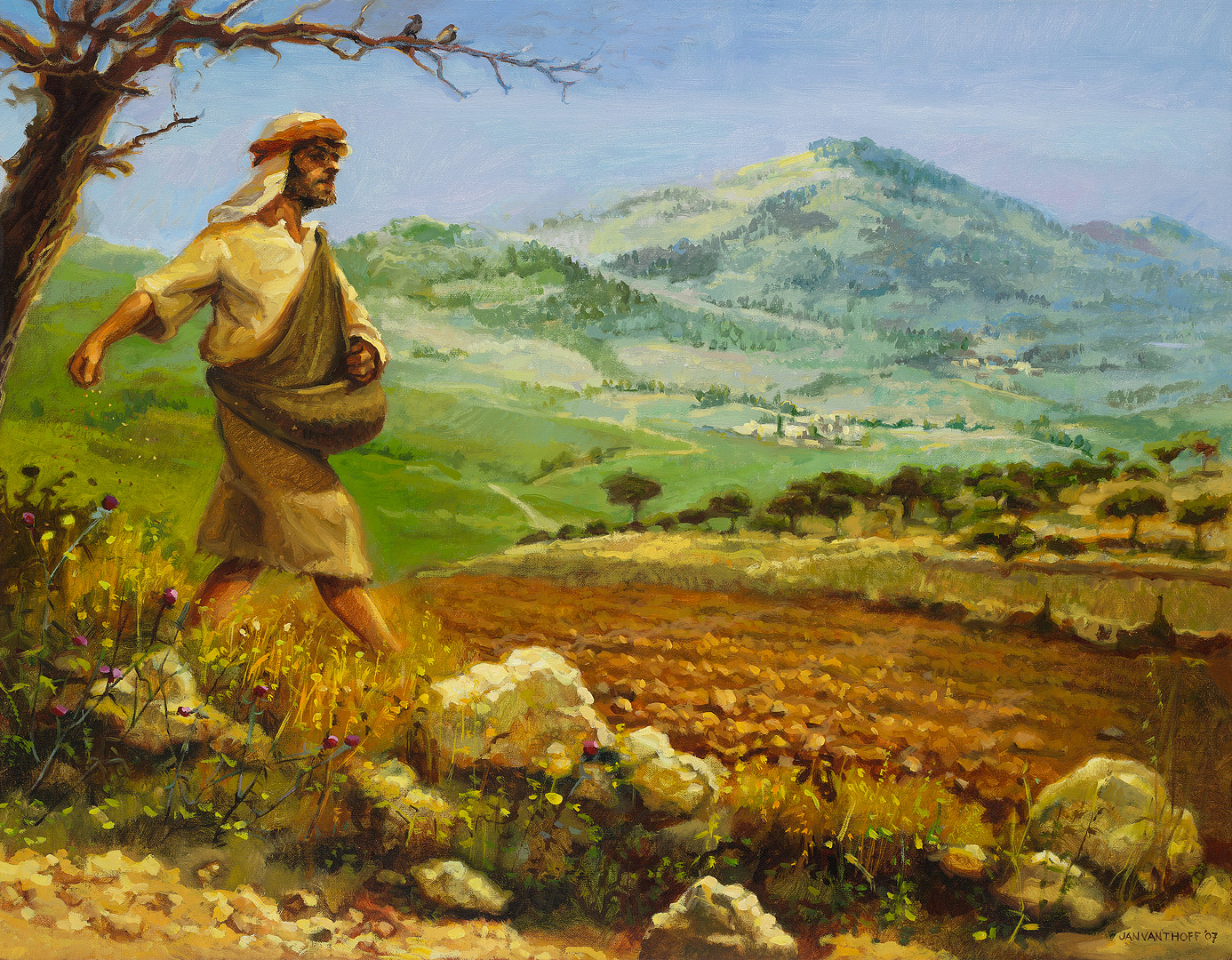
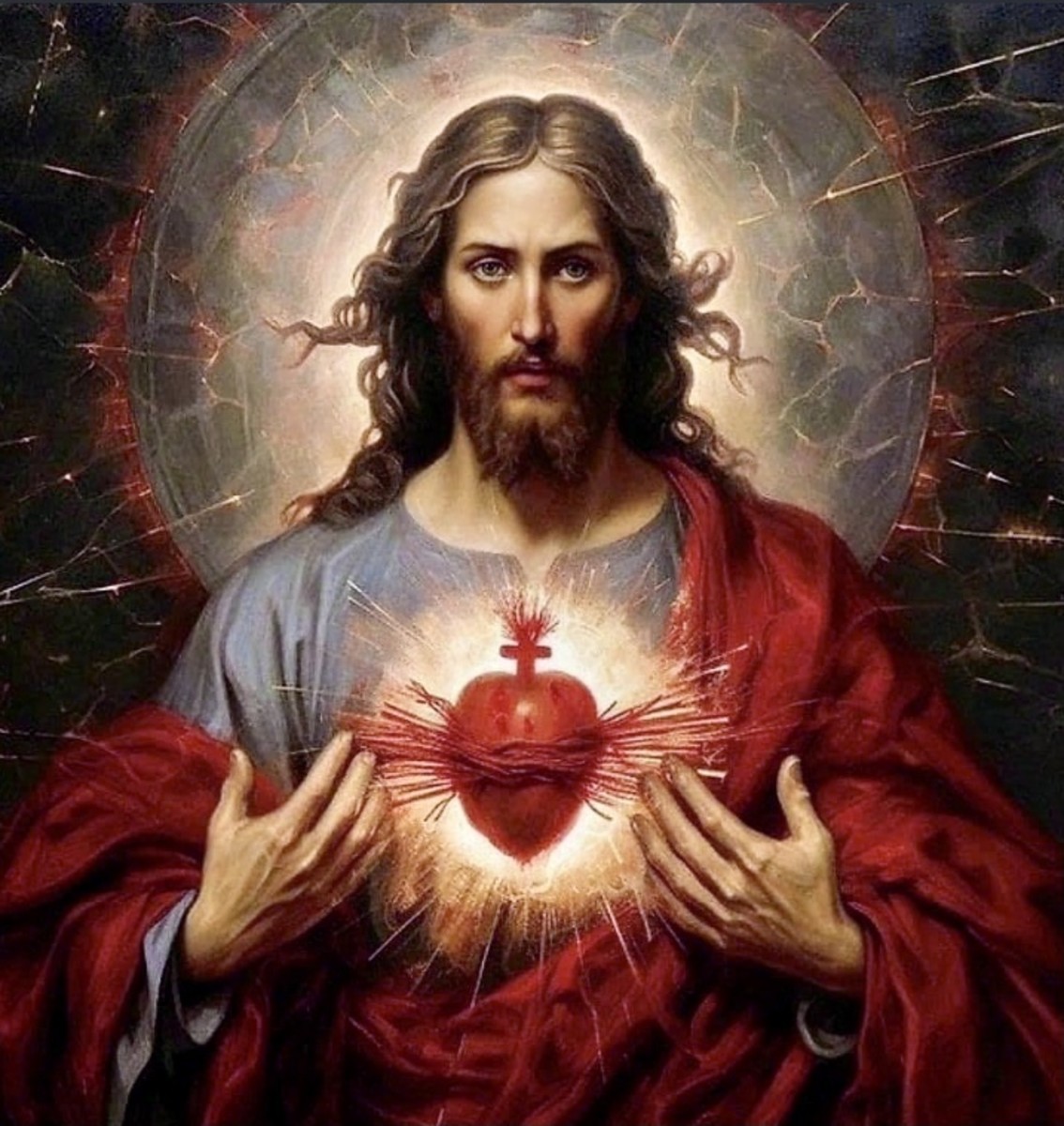
"Love follows knowledge."
"Beauty above all beauty!"
– St. Catherine of Siena

Showing posts with label Fr. Cajetan Cuddy. Show all posts

Monday, August 31, 2026

Sunday Meditation: Take Up Your Cross

For the Twenty-Second Sunday in Ordinary Time in Year A, we get the famous follow-up to the handing of the keys to Peter, the rebuke where Jesus tells Peter “to get behind me Satan.”  There are two parts to this passage.  The first is the rebuking part: Peter rebuking Jesus and Jesus counter rebuke of Peter.  The second is the discourse Jesus provides on discipleship.  Exegesis of this passage relies on the subtlety of several words.  First, “Satan,” then “get behind me” as we will see in one of the embedded homilies, and also “deny yourself” in another homily.

Whether Jesus identifies Peter as Satan or whether He is using the word Satan in its etymological sense could be up for debate.  From Wikipedia:


The Hebrew term śāṭān (Hebrew: שָׂטָן) is a generic noun meaning "accuser" or "adversary", and is derived from a verb meaning primarily "to obstruct, oppose".

Either way, Jesus is identifying the obstructive nature of Peter’s rebuke.  Gina Hens-Piazza in America Media’s Scripture Reflections identifies three more subtleties.  She points out:


First, Jesus says “Whoever wishes to come after me.” Following Jesus is a choice. Though he extends the invitation, we must be the ones to choose, to say yes.


Second, Jesus’ invitation also summons us to take up our cross. He says, “Whoever wishes to come after me must deny himself, take up his cross…” (Mt 16:24). We are being asked to take up our cross, not Jesus’ cross. He invites us to embrace, with a Christ-like trust in God, all the crosses that all our lives entail.


Finally, Jesus says, “Whoever wishes to come after me, must deny himself, take up his cross, and follow me” (Mt. 16:24). By “follow me,” Jesus does not mean for us to do exactly what he did or live our lives exactly as he lived his…following Jesus involves an entirely individual and unique way of conformity both to what he taught and to the ways he taught it. It means capturing with our own circumstances and creativity the very essence of who Jesus was and how he lived.

I think Gina’s second observation—“to take up our crosses””—is the one that resonates the most to me.


Today’s Gospel:


Jesus began to show his disciples

that he must go to Jerusalem and suffer greatly

from the elders, the chief priests, and the scribes,

and be killed and on the third day be raised.

Then Peter took Jesus aside and began to rebuke him,

"God forbid, Lord! No such thing shall ever happen to you."

He turned and said to Peter,

"Get behind me, Satan! You are an obstacle to me.

You are thinking not as God does, but as human beings do."


Then Jesus said to his disciples,

"Whoever wishes to come after me must deny himself,

take up his cross, and follow me.

For whoever wishes to save his life will lose it,

but whoever loses his life for my sake will find it.

What profit would there be for one to gain the whole world

and forfeit his life?

Or what can one give in exchange for his life?

For the Son of Man will come with his angels in his Father's glory, and then he will repay all according to his conduct."

~Mt: 16:21-27


Fr. Cajetan Cuddy O.P. explains the subtlety of what it means to “deny yourself.”


Fr. Cajetan:

In the 16th chapter of St. Matthew's gospel, our Lord speaks the truth to us, but he says things in such a way that it almost sounds like he is taking away with his left what he gives us with his right. Because today he says, "Whoever wishes to come after me must deny himself, take up his cross and follow me." And then he says, "For whoever wishes to save his life will lose it, but whoever loses his life for my sake will find it." What does this mean?  It's a perplexing thing to think of the fact that we preserve our life through the very loss of our life. As if we gain something through giving that something up. We retain something by giving it away. We earn something by losing it.


If we understand that our Lord is speaking not of our life in and of ourselves, in and of itself, but rather our life as one with his life. In other words, all of those united to Jesus are not no longer themselves alone. They don't find their identity in, through, and because of themselves. They find their identity in Christ's identity. This is the essence of the Christian life. This is the essence of the gospel. Namely, that we are not our own, that we are not alone, that we are not distant from the Lord, and in fact, that everything that the Lord has and is is ours. He has told us all things. He has given us his entire self. His life is ours. And this is where the paradox, the mystery, the ambiguity, the rhetoric dissipates and the gospel clarity becomes clear. If we lose our life, which is to say our attempt to find ourselves in and through ourselves, but really to find ourselves in his our Lord's divine life, then we don't lose anything when we lose our life and we gain everything.

In simpler words, we lose our life when we unite our lives to Jesus, but then we gain in exchange of Jesus’s life.


For the pastoral homily I once again turn to Archbishop Edward J. Weisenburger of Detroit who here focuses on the words, “follow me.” 


Archbishop Weisenburger:

What is unfolding in this gospel passage is Peter is being asked to change his understanding of what kind of Messiah Jesus is. Indeed, recall that as Peter hears Jesus explain that he will be more of a sacrificial lamb led to the slaughter than a triumphant military leader.  Peter can't quite wrap his brain around that. It's not what he expected. Certainly probably not what he wanted. And so Peter actually rebukes Jesus.  No doubt motivated by love for Jesus, Peter says, "Absolutely not, Lord. You're wrong. May that never happen." But brothers and sisters, whenever we rebuke God, we're not in a good place. And the same Jesus who just moments before had promised Peter the keys of the kingdom, must now correct Peter. Note the words of the gospel in Greek do not translate perfectly into English. When we read Jesus saying to Peter, "Get thee behind me, Satan." That get behind in the original Greek might be translated fall back in line. You see, a  disciple was a follower, one who walked behind the master. Jesus, we do not believe, is expelling Peter from the 12 or wanting him to go away forever. Moreover, that word Satan, Shatan, could refer to a stumbling block. And in that moment, had Jesus listened to Peter and changed the will of the father for himself, then Peter indeed would have been a great stumbling block. Instead, Jesus  is now rebuking Peter's incorrect understanding, his incorrect belief in the kind of Messiah Jesus would become on the cross.


I find this gospel quite powerful in my own life because while I have known some great joys, blessings, and even what felt like a few triumphs in life, I also have known setbacks, hardships, and sufferings. And I suspect that's equally true for each of you hearing these words.  But being a follower of Jesus means falling in  line and following being a disciple, a follower, not only to his cross, but to our own. And to be honest, I suspect this is a gospel passage that challenges us today, probably no less than it challenged Peter. Please forgive my mild sarcasm, but there are plenty of popular religious leaders today, as there have been in every age, who claim to be Christian, but promise if you do  everything just right, you'll only know happiness and blessings. They typically also want your credit card number. But that's not Christianity.  And as long as that misunderstanding of the kind of Messiah Jesus is remains in our brains, we will never really grasp the heart of the gospel. If we can accept no role for suffering or hardship in life, then perhaps today we are the stumbling stones between the feet of our Messiah. 


Okay, one final point from this gospel concerns the timing of this revelation.  Jesus explains the kind of Messiah he will be only as he and his disciples are now approaching Jerusalem with the cross drawing near on the horizon. Surely if some of those disciples had known what awaited them from the very start of the journey, they would never have joined Jesus as disciples. It might have been too daunting.  But when you think about it, perhaps it was a real grace, a blessing from God. After all, when you think about it, whether it's marriage, parenthood, priesthood, religious life, or any chosen career, we often times don't realize what we're getting into at the beginning, but we're given strength along the way to endure, and even more than endure to triumph over whatever challenges lay ahead. Could it be that God reveals his will for each of us at the right time when we most need it? For today, let us remain firmly in line, walking behind Jesus as a disciple, a follower. 

So “get behind me” is not just a put down, but an actual calling to be a follower.  How many times has Jesus rebuked me?  Every time I refused to get behind Him.


Sunday Meditation: " You are thinking not as God does, but as human beings do."


Today’s hymn is the lovely and most appropriate, “Take Up Your Cross.”


Take up your cross, the Saviour said,

if you would my disciple be;

Deny yourself, the world forsake,

and humbly follow after me.


Take up your cross; be not ashamed!

Let not disgrace your spirit fill;

For God himself endured to die

upon a cross on Calvary's hill.


Take up your cross, which gives you strength,

which makes your trembling spirit brave:

'Twill guide you to a better home

and lead to vict'ry o'er the grave.


Take up your cross, and follow Christ,

nor think till death to lay it down;

For only they who bear the cross

may hope to wear the glorious crown.


Lately it feels like I’ve been carrying that cross.  May I be following Jesus.


Monday, July 13, 2026

Sunday Meditation: Whoever Has Ears Ought to Hear

For the Fifteen Sunday of Ordinary Time in Year A, Jesus begins His Parables Discourse, the third of five discourses in Matthew’s Gospel.  He begins the discourse with the Parable of the Sower.

In the July 2026 (Vol 28, No. 5) issue of the magazine Magnificat, Fr. Philip Nolan, O.P. in his editorial has this to say about this parable:


The sower, says Jesus, is the Son of Man (Mt 13:37).  In the beginning of time, the Son of Man the Word of the Father, brought life not merely to a barren landscape, but to a void of absolute nothingness.  All things came to be through him, and without him nothing came to be (Jn 1:3).  Then, after the influence of evil stunted the growth of that first gift of life, in the fullness of time the Son of Man, the Incarnate Word of the Father, graced with his footsteps the hills of Galilee and the streets of Jerusalem, scattering with abandon his words of new life for the people of his time and the people of every time.

This puts the Word that is being sown into perspective.  He is the Word that brought forth life in abundance from the beginning, and is the Word which saves life now.  What is being scattered is the Word and words are the communicative constituents that are transmitted and received.  As Jesus says in this passage, “Whoever has ears ought to hear.”


Today’s Gospel:


On that day, Jesus went out of the house and sat down by the sea.  Such large crowds gathered around him that he got into a boat and sat down, and the whole crowd stood along the shore.

And he spoke to them at length in parables, saying:

“A sower went out to sow.

And as he sowed, some seed fell on the path,

and birds came and ate it up.

Some fell on rocky ground, where it had little soil.

It sprang up at once because the soil was not deep,

and when the sun rose it was scorched,

and it withered for lack of roots.

Some seed fell among thorns, and the thorns grew up and choked it.

But some seed fell on rich soil, and produced fruit,

a hundred or sixty or thirtyfold.

Whoever has ears ought to hear.”


The disciples approached him and said,

“Why do you speak to them in parables?”

He said to them in reply,

“Because knowledge of the mysteries of the kingdom of heaven

has been granted to you, but to them it has not been granted.

To anyone who has, more will be given and he will grow rich;

from anyone who has not, even what he has will be taken away.

This is why I speak to them in parables, because

they look but do not see and hear but do not listen or understand.

Isaiah's prophecy is fulfilled in them, which says:

You shall indeed hear but not understand,

you shall indeed look but never see.

Gross is the heart of this people,

they will hardly hear with their ears,

they have closed their eyes,

lest they see with their eyes

and hear with their ears

and understand with their hearts and be converted,

and I heal them.


“But blessed are your eyes, because they see,

and your ears, because they hear.

Amen, I say to you, many prophets and righteous people

longed to see what you see but did not see it,

and to hear what you hear but did not hear it.


"Hear then the parable of the sower.

The seed sown on the path is the one

who hears the word of the kingdom without understanding it,

and the evil one comes and steals away

what was sown in his heart.

The seed sown on rocky ground

is the one who hears the word and receives it at once with joy.

But he has no root and lasts only for a time.

When some tribulation or persecution comes because of the word  he immediately falls away.

The seed sown among thorns is the one who hears the word,

but then worldly anxiety and the lure of riches choke the word

and it bears no fruit.

But the seed sown on rich soil

is the one who hears the word and understands it,

who indeed bears fruit and yields a hundred or sixty or thirtyfold.”

~Mt: 13:1-23


I found Fr. Cajetan Cuddy’s explanation of this passage to be most insightful.  Other homilies focus on the sowing and the four soils, but Fr. Cajetan explores the element of hearing involved in the four types of reception. 


Fr. Cajetan:

The Gospel's opening line reads Jesus said to his disciples hear, hear the parable of the sower.  This parable and this dynamic of hearing serves as the gospel's meta context. The disciples hear Jesus.  And what do they hear? They hear a command to hear. Jesus commands them to hear the parable of the sower.  Our Lord then exposits, he explains, he unpacks the dynamics of hearing the word in each of the four disciplines. 


Thus, if we were to diagram, to frame, to outline this gospel, we could say that today's gospel comprises three degrees of hearing.  The disciples hear from Jesus, a command to hear, a parable, about hearing the word.  Hearing, hearing, hearing. This is the dynamic of today's gospel.  And each of the four seeds in the parable found in today's gospel, each of the four seeds hears the word. We note, however, what also attends or doesn't attend their hearing of the word.  The evangelical prepositions with and without With and without these prepositions, these words, play critical roles in today's gospel.  And perhaps most interestingly, the seed that's most significant is the second seed, the one, quote, sown on rocky ground.  Each of the other three seeds here's the word either with or without something else.  The first without understanding. The third with worldly preoccupations, the fourth with understanding.  Notice the withouts and the withs that punctuate these different scenarios vis-a-vis the seeds.


But it's the second scenario. The second is the only seed framed in terms of both a with and a without.  The one who hears the word and receives it at once with joy, but he has no root.  In other words, he is without root and lasts only for a short time, with joy, but without root, the paradoxical and distinguishing complexity of the second seed.  So evidently this second seed understands something. Of the word it hears.  If it lacked all understanding, there would be no basis for its initial joy.  The seed rejoices precisely because it does understand to a degree.  What it lacks, however, is root. And thus the joy of its, the seeds, the second seeds, limit under understanding, limited understanding is short-lived.  In contrast, the fourth seed. Who hears the word and understands it, bears fruit and yields a hundred or sixty or thirty fold.  This final seed who hears and understands is rooted.  So now we see as we progress through the gospel, in addition to the theme, the dynamic of hearing, we also have the theme and dynamic of understanding.  And the theme and the dynamic of rootedness.  Understanding and rootedness are essential attributes in the contemplative life in the theologian's contemplation.  As we know, understanding implies a certain intimate knowledge.


Notice what Fr. Cajetan points out.  In the first soil, “the seed sown on the path is the one

who hears the word of the kingdom without understanding it.”  In the second soil, “the seed sown on rocky ground is the one who hears the word and receives it at once with joy. But he has no root [without] and lasts only for a time.”  In the third soil. “the seed sown among thorns is the one who hears the word, but then [with] worldly anxiety and the lure of riches choke the word and it bears no fruit.”  In the fourth soil, “the seed sown on rich soil is the one who hears the word and understands it.”  The soil metaphor is related to the dynamic of hearing.

For the pastoral homily I’m going to turn to a Franciscan Friar, Fr. Jonathan St. André, TOR of Franciscan University of Steubenville.


Fr. Jonathan:

In the gospel for the 15th Sunday in ordinary time, we hear the marvelous parable of the sower and the seed. It's a beautiful parable that I think uh has so much to instruct us in in our tradition and spirituality. And actually, it's a parable that was close to St. Francis of Assi's heart. I've got my writings of St. Francis here, which are dogeared and beat up because I love reading them. And in his early rule chapter 22 in a section in admonition to the brothers he actually includes this parable in its entirety and gives some commentary on it. St. Francis writes, "We have nothing else to do but to follow the will of the Lord and to please him. Let us be careful that we are not earth along the wayside or that which is rocky or full of thorns." In keeping with what the Lord says in the gospel, the word of God is a seed.  So Francis of Assi is really imploring us, cautioning us, asking us, what kind of earth are you? How are you going to be receiving the seed of the word of God?


And I think if you're like me and you're honest and you look at your own heart, you look at your own soul, you look at your own spiritual life, that you are all of those different kinds of earth in the parable.  Sometimes parts of our heart are the wayside and the seed, the word of God, the message that we hear hits our heart, but it's too shallow. It can't really take root. Sometimes it's the rocky ground and we're all gung-ho and we're excited to move forward in faith and follow Jesus and then the trials come and it's like okay things slip away, slide away, we pull back. Sometimes it's the ground where the thorns have grown alongside the word and they choke out the word and the thorns in the scripture passage really relate to the allure of the world the temptations also anxieties for many of us we're just we get so anxious about many things that it can choke out the truth of God's word in our life so the constant pursuit of the spiritual life is to ask what kind of earth am I for the word for the seed that is the word?


So, at different moments in our lives we can be any of the four soils.  The Word of God as seed is constantly being sown, and our hearts have the capacity to plant the seed in any of the four ways.  May our hearts be of rich soil more often than not.


Sunday Meditation: “But blessed are your eyes, because they see,

and your ears, because they hear.”


This is a lovely hymn that matches today’s Gospel perfectly, “Seed, Scattered and Sown.”


Seed, scattered and sown,

wheat, gathered and grown,

bread, broken and shared as one,

the living bread of God.


Vine, fruit of the land,

wine, work of our hands,

one cup that is shared by all;

the Living Cup, the Living Bread of God.


Is not the bread we break,

A sharing in our Lord?

Is not the cup we bless,

The blood of Christ outpoured?


Lovely.


Sunday, June 14, 2026

Sunday Meditation: His Heart Moved to Pity

Today we return to counting the ordinal numbers of Ordinary Time.  “Ordinary Time” refers to the ordinal numbers by which we count the Sundays and weeks.  Today is the Eleventh Sunday in Ordinary Time in Year A.  It always seems baffling the Sunday in which we return to counting.  How did we get to eleven?  The Sunday before Ash Wednesday was the Sixth Sunday in Ordinary Time.  Then we had the Lent and Easter seasons.  Pentecost I think concludes the Easter Season.  Then we had the Solemnities of the Holy Trinity and of Corpus Christi. Both are Solemnities but both count toward the Sundays of Ordinary Time.  So that makes seven and eight.  Why are we at eleven?  I’m not going to look it up.  It will remain a mystery.

In today’s Gospel, we see Jesus call the twelve apostles and send them out.  In the first line of today’s Gospel, Jesus’s “heart was moved with pity” for the crowds.  Given that that this Friday was the Feast of the Sacred Heart of Jesus, that line really stands out.  Some translations say His heart was moved to “compassion.”  The pastoral homily below will take up Jesus’s emotions, but Gina Hens-Piazza points out in her Spiritual Reflections for this Sunday, Jesus is moved to compassion five times in the Gospel of Matthew: here (9:36), 14:14, 15:32, 18:27, and 20:34.  Gina draws this conclusion:


Compassion is more than a feeling. It manifests as an embodied experience. The word refers to a deep, visceral, sometimes “gut wrenching” empathy that moves one to act on behalf of another.  It requires our vulnerability before another so that we can be gifted with what psychologist and theologian Jean Houston once called “leaky margins,” points of interpersonal overlap that allow us to connect with someone in need, just as Jesus did. With this capacity to share in ourselves what is experienced by another, we become radically present to others. That connectedness prompts courage to well up in us, inspiring us to act.

Indeed, the etymological meaning of compassion is “a suffering with another.”


Today’s Gospel:


At the sight of the crowds, Jesus’ heart was moved with pity for them because they were troubled and abandoned,

like sheep without a shepherd.

Then he said to his disciples,

“The harvest is abundant but the laborers are few;

so ask the master of the harvest

to send out laborers for his harvest.”


Then he summoned his twelve disciples

and gave them authority over unclean spirits

to drive them out and to cure every disease and every illness.

The names of the twelve apostles are these:

first, Simon called Peter, and his brother Andrew;

James, the son of Zebedee, and his brother John;

Philip and Bartholomew, Thomas and Matthew the tax collector;

James, the son of Alphaeus, and Thaddeus;

Simon from Cana, and Judas Iscariot who betrayed him.


Jesus sent out these twelve after instructing them thus,

“Do not go into pagan territory or enter a Samaritan town.

Go rather to the lost sheep of the house of Israel.

As you go, make this proclamation: ‘The kingdom of heaven is at hand.’

Cure the sick, raise the dead, cleanse lepers, drive out demons.

Without cost you have received; without cost you are to give.”

~Mt: 9:36-10:8


Fr. Christopher Gama of the Franciscan Capuchin Friars in their A Simple Word channel provides an insightful homily.


Fr. Christopher:

Jesus is surrounded by the crowds. Everywhere he goes, people are bringing him their sickness, their fears, their struggles, their hopes.  They're bombarding him with all of their needs. Then St. Matthew tells us something remarkable.  He says, "At the sight of the crowds, Jesus's heart was moved with pity for them because they were troubled and abandoned like sheep without a shepherd."


And it's important, I think, to notice what Jesus doesn't first see. He doesn't first see their sins or their failures or their worthiness or even their problems. He doesn't see their condition, right? He sees that they're weary, that they're lost, that they're directionless like sheep without a shepherd. And that's significant, I think, context for Matthew. In the Bible, a shepherd's job is to guide, to protect, to feed, and gather the flock.  And so when Jesus says that they are like sheep without a shepherd, he's saying that they're trying to navigate life alone without God.


And then that becomes a surprising image. Jesus looks at the lost sheep and suddenly starts talking about a harvest. The tone shifts a little bit. He says, "The harvest is abundant, but the laborers are few. And why would he switch from sheep to a harvest? Well, I think because Jesus doesn't see the lost people. He sees their potential. He sees their hearts open and ready for God or potentially.  And he sees that people are ready to receive mercy, healing, and hope. And the problem isn't the harvest.


Yes!  He sees the abundant fruit of humanity, and He will summon and commission His apostles to reap the harvest.

For the pastoral homily I turn to Fr. Cajetan Cuddy, O.P. who explains why our emotions are sanctified by Christ.

Fr. Cajetan:

What do we see in the Gospel?  We see, we hear this: Jesus’s heart was moved to pity for the crowds.  Why is this so significant?  It is significant because we see that emotions, that feelings, that the sense appetites, that passions, that the affective life are not inherently disordered, not irrevocably corrupted, they are not objectively evil.  Why?  Because Jesus felt things, Jesus had an affective life, Jesus experienced movements of the sense appetites, Jesus had emotions, and Jesus could have no sin, therefore, the emotional life, the affective life, feelings are not evil per se in and of themselves.


St. Thomas Aquinas in the thirteenth century devoted dozens and dozens of pages to considering the importance of the emotions and to reminding his students in scared theology, in sacred doctrine, in holy teaching that the emotions—yes, they’re wounded, they’re hurt, there’s a struggle in the affective life because of original sin and actual sins—nonetheless they too can be healed and transformed by Christ, by grace, by love and truth and the perfective order of God.


The emotional life that we all have is something that grace can sanctify, and our Lord shows us that the affective life is not something to be ashamed of, is not something to chagrin, because it’s a part of what it means to be human.


So it is a good thing to be moved to pity and compassion.  That may be obvious but it is significant nonetheless.


Sunday Meditation: “Without cost you have received; without cost you are to give.”


Let’s listen to a Dan Schutte song, “Here I Am Lord,” but I actually adore the Collin Raye rendition.


I, the Lord of sea and sky

I have heard my people cry

All who dwell in dark and sin

My hand will save


Here I am, Lord. Is it I, Lord?

I have heard you calling in the night

I will go, Lord, if you lead me

I will hold your people in my heart


I, who made the stars of night

I will make their darkness bright

Who will bear my light to them?

Whom shall I send?


Here I am, Lord. Is it I, Lord?

I have heard you calling in the night

I will go, Lord, if you lead me

I will hold your people in my heart


I, the Lord of snow and rain

I have borne my people's pain

I have wept for love of them

They turn away


Is it I Lord?  Where do you want me to go?