"Love follows knowledge."
"Beauty above all beauty!"
– St. Catherine of Siena

Showing posts with label 700 Anniversary. Show all posts

Thursday, December 30, 2021

Dante at 700, a Discussion

Oh what a joy to find this in my email inbox from The Sheen Center.  It’s a discussion with three wonderful experts on Dante’s Divine Comedy.  I so need to share this with you.  The Archbishop Fulton J. Sheen Center for Thought & Culture is a Catholic center here in New York City that puts out cultural events.  I’ve mentioned a few events here on my blog that I’ve attended at the Sheen Center, though I may not have attributed them properly.  But the Sheen Center is great.  You can check them out here and see any upcoming events if you plan to be in NYC.   

As you probably know since I’ve mentioned it a number of times this year, 2021 is the 700th anniversary of Dante’s death.  I’ve had a number of posts on it, and I wanted to do more.  I still intend to post more; unfortunately they will have to wait until the new year.

So the Sheen Center put together this panel to discuss the Divine Comedy and it was a joy.  It’s a little over an hour, and if you are a Dante aficionado I promise you will enjoy it.  It’s just over an hour long and hosted by film director and film critic, David DiCerto.  The panel consists of Dr. Elizabeth Lev (Art Historian and Author), Prof. Randy Boyagoda (Professor of Literature, University of Toronto and Author), Fr. Paul Pearson (Dante Scholar and Author, Toronto Oratory).  I am familiar with Elizabeth Lev having just finished reading her wonderful How Catholic Art Saved the Faith: The Triumph of Beauty and Truth in Counter-Reformation Art.  I’ll have more on that book in the coming months here on my blog.  I am very impressed with her knowledge of art and now Dante. 


I hope you enjoyed that.  I did!

Tuesday, September 14, 2021

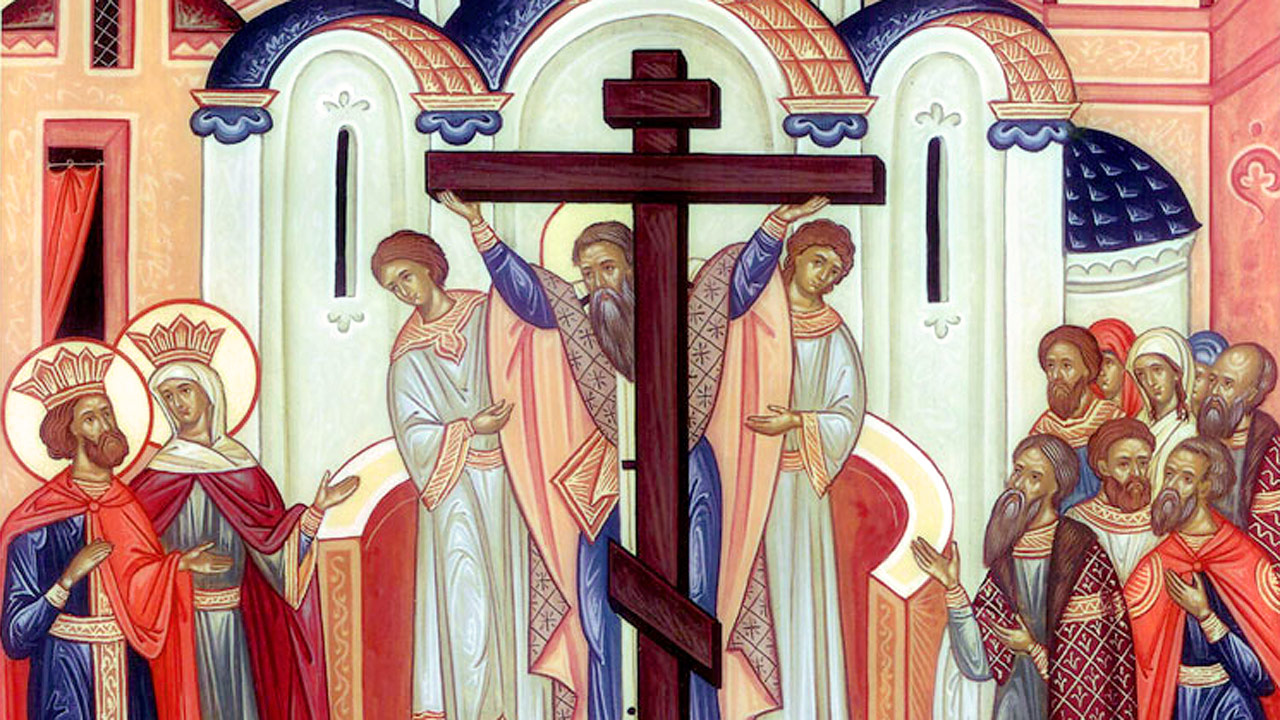
September 14: The Exaltation of the Cross and the 700th Anniversary of Dante’s Death

Well, today is the convergence of two anniversaries.  One is the Feast of the Exaltation of the Cross, and the other is the anniversary of Dante’s passing, and this year being the 700th anniversary.  Dr. R. Jared Staudt wrote in the Catholic World Report (“Our Greatest Poet: Celebrating Dante after 700 Years”): “It is fitting that Dante died on the day when we commemorate the triumph of the Holy Cross, as he narrates the drama of salvation as it plays out concretely over the course of life, showing its eternal significance.”   

We Catholics are a strange lot, it must appear to those outside the faith.  Here we are celebrating the very instrument of Christ’s torture and death.  Actually the Eastern orthodox, Anglicans, and some Lutherans also commemorate this day.  Why?  First let’s see how the feast came about.  It started with St. Helena, the Emperor Constantine’s mother, going on pilgrimage to Jerusalem to see the very places of the New Testament.  At Calvary where Christ was crucified there had been a temple built to the goddess Venus, but by the time Helena arrived there the temple had been destroyed.  From Catholic Education Resource Center, "St. Helena and the True Cross," by Fr. William Saunders:


The temple of Venus was also demolished, thereby exposing the site where Christ was crucified. The Emperor Constantine himself wrote to St. Macarius, Bishop of Jerusalem, ordering him to make a search for the cross on Mount Calvary. A learned Jew named Judas seemed to have some knowledge of the whereabouts, and was pressed into service. Just east of the site, three crosses were found in a rock-cistern as well as the titulus (the wood plaque inscribed with Jesus Nazaranus Rex Iudaeorum). (With the Church of the Holy Sepulcher is the Chapel of the Finding of the True Cross, marking the cistern.) The question then arose, "Which was the cross of Christ?"


Now that would make a great movie!  Actually Evelyn Waugh wrote an historical novel on this, Helena.  I haven’t read it, but it’s supposed to be one of his best.  The story goes on:


While the details provided by St. John Chrysostom, St. Ambrose, Rufinus, and Socrates (not the philosopher) are lacking and sometimes contradictory, the essence of the story follows: The three crosses and the titulus were removed from the cistern. A woman, dying from a terminal disease, was brought to the spot. She touched the crosses, one by one. After she touched the third cross, she was cured, thereby identifying the true cross. Other sources also relate the later finding of other instruments of the Passion. Most importantly, St. Ambrose preached that when St. Helena found the true cross, "she worshiped not the wood, but the King, Him who hung on the wood. She burned with an earnest desire of touching the guarantee of immortality."

So why September 14th?  Philip Kosloski at Aleteia (“Why is the feast of the Holy Cross celebrated on September 14?”) explains:  “It is believed that Constantine built the basilica of the Holy Sepulchre after this finding of the True Cross, and the church was consecrated on September 14, 335.” 

So why have a feast day for the cross?  From Franciscan media: 


The cross immediately became an object of veneration. At a Good Friday celebration in Jerusalem toward the end of the fourth century, according to an eyewitness, the wood was taken out of its silver container and placed on a table together with the inscription Pilate ordered placed above Jesus’ head: Then “all the people pass through one by one; all of them bow down, touching the cross and the inscription, first with their foreheads, then with their eyes; and, after kissing the cross, they move on.”

So why venerate the cross?  Well it’s tied to the veneration of relics, and that is a lengthy subject.  Suffice it to say that through sacramental such as remains of the cross, we receive graces which strengthen our faith.  Because the cross came in contact with Christ, it has become consecrated in its material substance.  In addition, the cross as a sacramental reminds us of our commandment to carry our cross and follow Jesus.


And so, what better day for Dante Alighieri to have died!  His Divine Comedy is the ultimate creative work that captures our Christian faith and the cross on which we carry for our earthly pilgrimage. 


Thursday, September 2, 2021

Art: Restored Andrea del Castagno Portrait of Dante

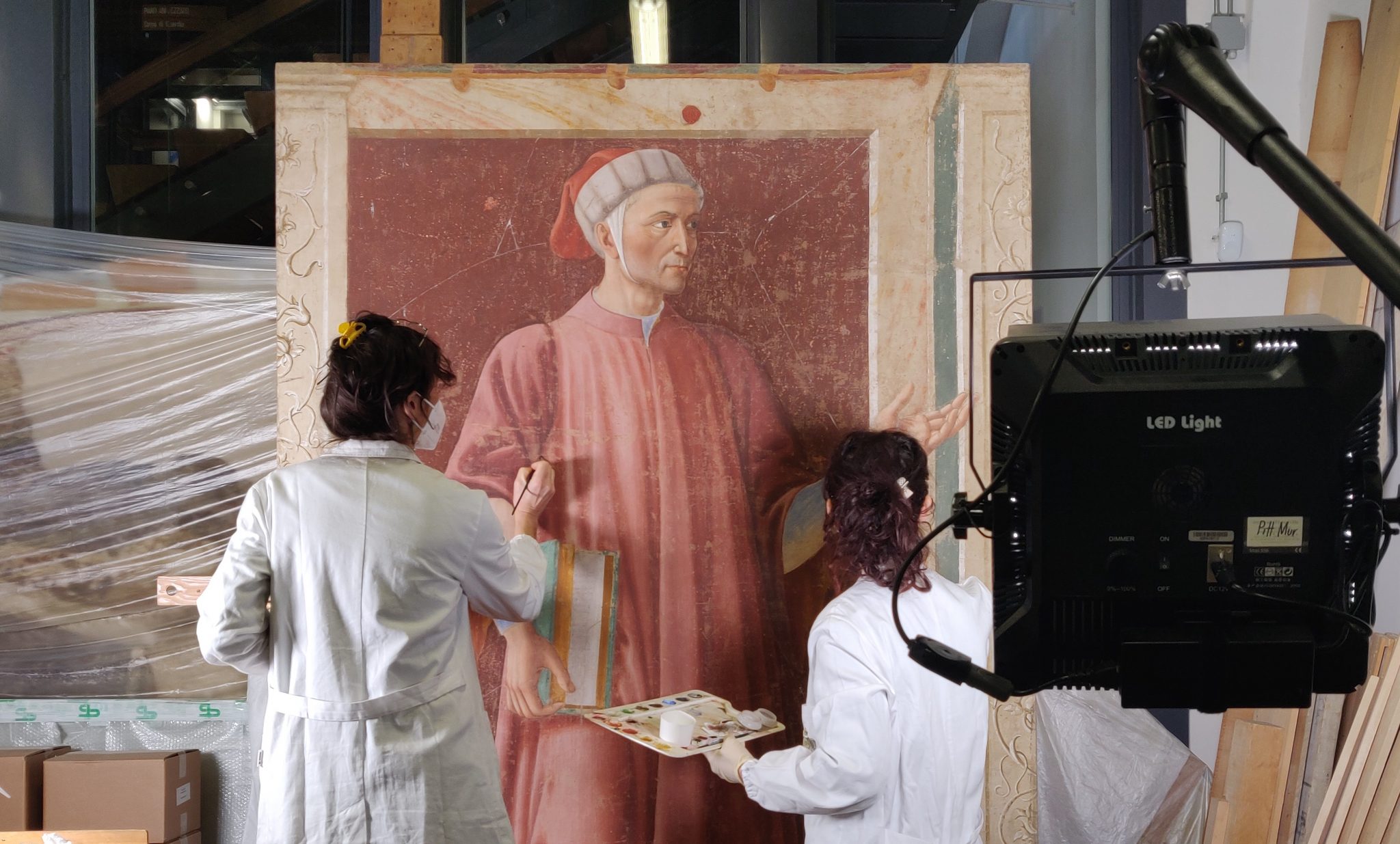
In this the 700th anniversary of Dante Alighieri’s death, I’ve been trying to have some extra posts on the great Italian poet, who is so important to this blog that I have a link up in the header summarizing all my blog posts on Dante.  It seems that Italians all across Italy have been doing special things in commemoration of the anniversary, and one of them is a restoration of a famous 15th century portrait of Dante.  The Italian Tribune, a weekly publication in the United States for Italian-Americans since 1931, published “15th Century Portrait of Dante Restored,” noting the restoration and unveiling of the painting:

The 15th century fresco of Dante Alighieri was nearly lost forever when it was whitewashed over, only to be rediscovered hundreds of years later. It was scratched and darkened with grime, but after a six-month restoration, the famous portrait of Dante has been returned to its original luster, just in time for the 700th anniversary of the poet’s death.

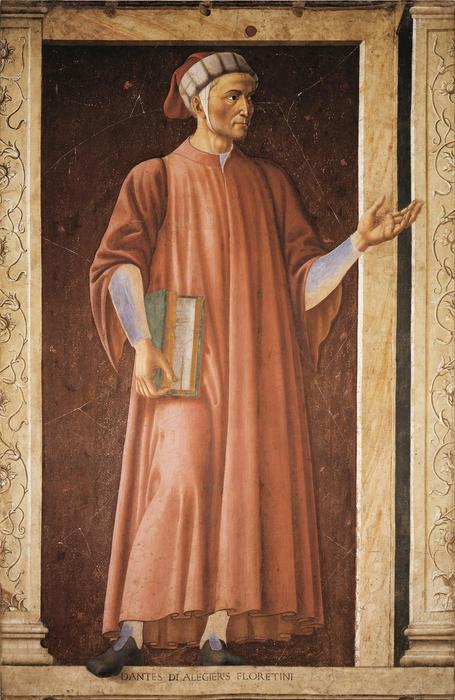
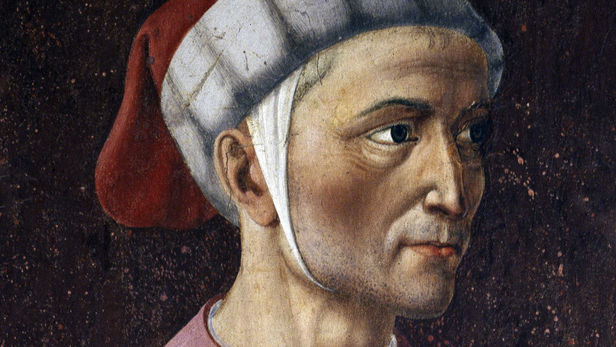
The newly restored portrait, which is eight feet high by five feet wide and was painted by Renaissance artist Andrea del Castagno, was unveiled last week [March 2021] at the Uffizi Galleries in Florence, Italy. It depicts the author of The Divine Comedy, considered to be the greatest work of literature, dressed in a cloak and a red cap, his gaze intent and his nose aquiline. “This is perhaps the most famous image of Dante, an icon of Italian culture,” said Eike Schmidt, the director of the art gallery. “He’s an important figure not just for Italy but for the whole world.”

The restorers of the Opificio delle Pietre Dure, a long-established cultural heritage institution in Florence, restored the portrait to its original color, removing sediments and pictorial retouches that had darkened the colors. An unprecedented image emerged. Having looked melancholy and dour before the restoration, Dante’s face is once again bright and animated and more youthful.

The restoration:

Andrea del Castagno only lived about 38 years (1419-57) but was a very influential painter.  Perhaps his most well-known works are a Last Supper, an Assumption of the Virgin, a Crucifixion, a young King David with Goliath’s head, and nine frescoes of famous men and women, many of them Florentines, of which this Dante is included.  From the Itaian-Tribune article:

The detached fresco was originally located in Villa Pandolfini near Florence and was one of nine famous figures painted by del Castagno on the walls of the villa between 1447 and 1449. The paintings included three condottieri, military commanders who led bands of mercenaries during the High Middle Ages and Early Renaissance, as well as three illustrious women and the three most famous poets of the age, Dante, Petrarch and Boccaccio.

All three poets are delineated in full length wearing long gowns, with head coverings, and holding a book.  The book is an obvious emblematic attribute to their literary identity but I don’t know what the long gowns and the head coverings symbolize, if anything.  What’s interesting is in the color of the gowns and the type of head coverings.  Dante is portrayed in red with a Santa type of cap.  Boccaccio is in white and a kerchief type of bandana, which Petrarch is in an orange-brown gown with a capuchin. 

First, here is the entire fresco of Dante. 


Here are the Boccaccio and Petrarch portraits as a comparison.


What I find most interesting is that Dante’s facial demeanor is delineated not in an angry or perturbed manner as so many have, but rather congenial.  Here is a detail of his face.

Also interesting is the hair sticking out from under the cap is grey.  I would think it’s unlikely that is the actual face of Dante since this was painted about 130 years after his death, but it does seem like it could be him. 

Here is a lovely just over four minute video clip with no words and just overlaid music displaying the art of Andrea del Castagno. 


Boccaccio comes in at the 1:18 mark, Petrarch at the 1:29 mark.  You can see the gallery of the nine frescos as they were intended to be displayed at the 2:24 mark.  Dante first comes in at the 3:00 mark and then a detail of the face comes in at 3:20. 

I love Renaissance art.  It’s my favorite period.

Thursday, March 25, 2021

Literature in the News: Pope Frances Releases, Candor Lucis Aeternae

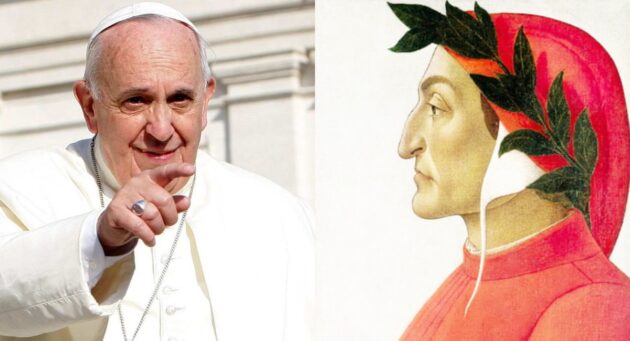
Today Pope Francis released an apostolic letter, Candor Lucis Aeternae, celebrating the great poet Dante Aligheri and his work The Divine Comedy. This year, 2021 marks the 700th anniversary of Dante's death, and so be prepared for a number of events marking it. I haven't read the apostolic letter yet but I have seen several articles about it. Oddly, two articles come from the same writer (Inés San Martín) from the same magazine (Crux) released on the same day, today. That’s certainly unusual. One article focuses on the apostolic letter, “Pope Francis calls Dante a ‘prophet of hope.’”  


Following in the footsteps of his predecessors, Pope Francis on Thursday released a document reflecting on the life and work of Italian poet Dante Alighieri, calling him a prophet of hope in a historic moment where inhumanity and lack of prospect loom large.


“At this particular moment in history, overclouded by situations of profound inhumanity and a lack of confidence and prospects for the future, the figure of Dante, prophet of hope and witness to the human desire for happiness, can still provide us with words and examples that encourage us on our journey,” Francis wrote in the closing lines of Candor Lucis Aeternae (“Splendor of Light Eternal”).


Dante, Francis writes, has an important message to convey, one that is meant to touch the hearts and minds of all, and still in present time has the ability to inspire change and transformation. The message his tale tells should help appreciate “who we are and the meaning of our daily struggles to achieve happiness, fulfilment and our ultimate end, our true homeland, where we will be in full communion with God, infinite and eternal.”


The other article by Ms. San Martin, “700 years after his death, Dante still inspires popes,” focuses on Dante's relationships with various Popes.  Here is an excerpt:


Though often labeled as a “pope of firsts,” Francis’s Candor Lucis Aeternae is not the first reflection by a pontiff on the poet: Benedict XV published the encyclical titled In Praeclara Sumorum (“Among the many celebrated geniuses”) in 1921, which was dedicated to Dante’s memory and written for the occasion of the sixth centenary of his death. Pope St. Paul VI also wrote apostolic letter in 1965, Altissimi Cantus, to mark the seventh centenary of his birth.


“Someone might perhaps ask why the Catholic Church, by the will and work of its visible Head, takes it to heart to celebrate the memory of the Florentine poet and to honor him,” Paul VI wrote. “The answer is easy and immediate: Dante Alighieri is ours by a special right: Ours, that is, of the Catholic religion, because everything breathes love for Christ; ours, because he loved the Church very much, of which he sang honors; ours, because he recognized and venerated the Vicar of Christ on earth in the Roman Pontiff.”


In 2015, ahead of the inauguration of the Extraordinary Jubilee Year of Mercy, Francis said that Dante “is a prophet of hope, herald of the possibility of redemption, liberation and the profound transformation of every man and woman, of all humanity.”


Both of Francis’s most recent predecessors also praised the poet.


At a reading of The Divine Comedy in 1997, Pope St. John Paul II noted that “almost seven centuries later, Dante’s art evokes lofty emotions and the greatest convictions, and still proves capable of instilling courage and hope, guiding contemporary man’s difficult existential quest for the Truth which knows no setting.”


Benedict XVI also voiced great admiration for the poet, and when he was still a priest and wrote his famous book Introduction to Christianity in 1968, he uses The Divine Comedy to explain the “scandal of Christianity.” 


Now if you want the actual apostolic letter, you can read it here: 

I haven't read it yet, but I hope to. I will certainly post on it when I do. 

Those who read my posts of The Divine Comedy several years ago you know my love for Dante and his work. A few weeks ago I compiled all the links to my blog posts on Dante into one post for easy access.  Now I am adding a link on my header above to that post on my Dante links.  I hope people find the link and ultimately my commentary on Dante useful.


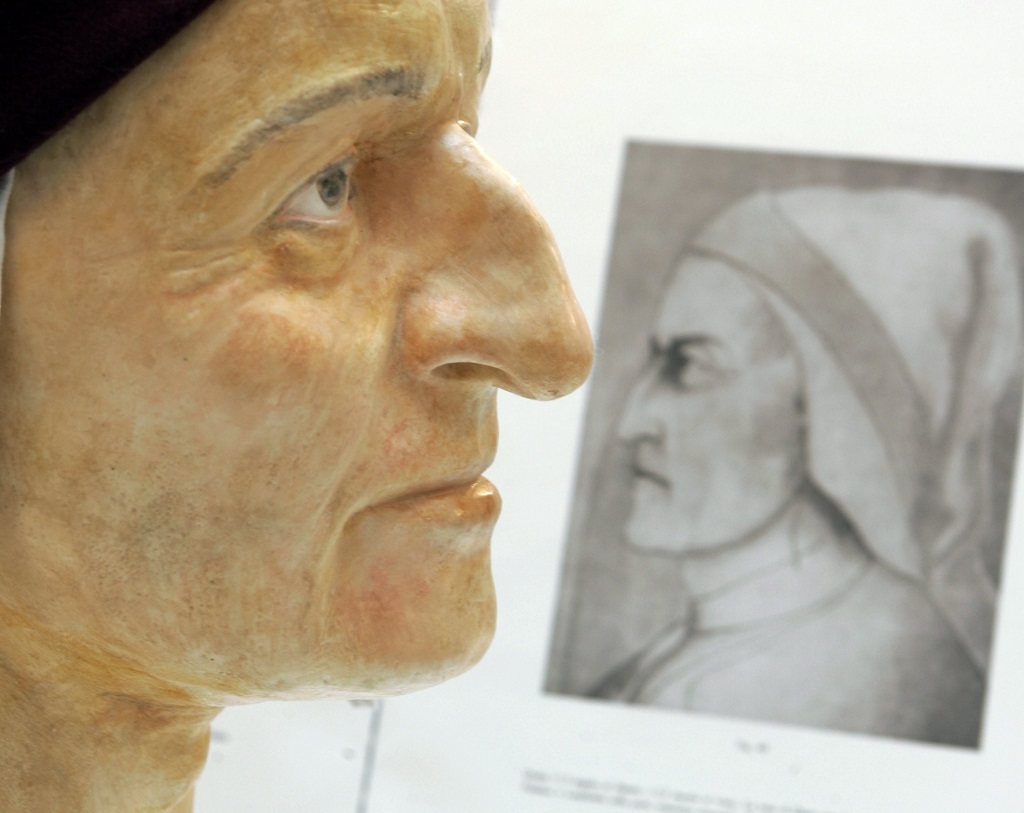
Photo Credit: Marco Bucco/Reuters via CNS, A bust of Italian poet Dante Alighieri is seen next to an etching of him at the University of Bologna in Ravenna, Italy.