"Love follows knowledge."
"Beauty above all beauty!"
– St. Catherine of Siena

Showing posts with label Lumen Fidei. Show all posts

Friday, August 30, 2013

Faith Filled Friday: Lumen Fidei, Part 5


You can read the first installment of my excerpts of Lumen Fidei here, second here,  third here, and fourth here.  The first includes an introduction and links to an overview. 
 

I’ll repeat the structure of the encyclical to orient you for the next excerpt.  Numbers in parentheses indicate the paragraph number.

 
Introduction (1-7)
Chpt 1: We Have Believed In Love (8-22)
Chpt 2: Unless You Believe, You Will Not Understand (23-36)
Chpt 3: I Delivered To You What I Also Received (37-49)
Chpt 4: God Delivers A City For Them (50-60)


While Chapter One develops the history of the faith, Chapter Two develops why the faith is important, and Chapter Three develops the transmission of the faith, especially through the church, Chapter Four develops the benefits to society of faith.   I don’t know if it’s just me, but Chapter Four seems to have a different voice than the previous chapters.  Could this be where Pope Francis picked up from Pope Benedict?  We may never know but if anyone noticed it too I would like to hear. 

 
Paragraph 51 I think summarizes not just Chapter Four but seems to serve as a compact summation of the entire encyclical.  It is worth reading thoroughly. 


51. Precisely because it is linked to love (cf. Gal 5:6), the light of faith is concretely placed at the service of justice, law and peace. Faith is born of an encounter with God’s primordial love, wherein the meaning and goodness of our life become evident; our life is illumined to the extent that it enters into the space opened by that love, to the extent that it becomes, in other words, a path and praxis leading to the fullness of love. The light of faith is capable of enhancing the richness of human relations, their ability to endure, to be trustworthy, to enrich our life together. Faith does not draw us away from the world or prove irrelevant to the concrete concerns of the men and women of our time. Without a love which is trustworthy, nothing could truly keep men and women united. Human unity would be conceivable only on the basis of utility, on a calculus of conflicting interests or on fear, but not on the goodness of living together, not on the joy which the mere presence of others can give. Faith makes us appreciate the architecture of human relationships because it grasps their ultimate foundation and definitive destiny in God, in his love, and thus sheds light on the art of building; as such it becomes a service to the common good. Faith is truly a good for everyone; it is a common good. Its light does not simply brighten the interior of the Church, nor does it serve solely to build an eternal city in the hereafter; it helps us build our societies in such a way that they can journey towards a future of hope. The Letter to the Hebrews offers an example in this regard when it names, among the men and women of faith, Samuel and David, whose faith enabled them to "administer justice" (Heb 11:33). This expression refers to their justice in governance, to that wisdom which brings peace to the people (cf. 1 Sam 12:3-5; 2 Sam 8:15). The hands of faith are raised up to heaven, even as they go about building in charity a city based on relationships in which the love of God is laid as a foundation.

 
“The light of faith is capable of enhancing the richness of human relations, their ability to endure, to be trustworthy, to enrich our life together… The hands of faith are raised up to heaven, even as they go about building in charity a city based on relationships in which the love of God is laid as a foundation.”

 
That ends my excerpts of Lumen Fidei.  I hope you enjoyed it.  May God bless you.


Friday, August 23, 2013

Faith Filled Friday: Lumen Fidei, Part 4


You can read the first installment of my excerpts of Lumen Fidei here, second installment here, and third installment here.  The first includes an introduction and links to an overview. 


I’ll repeat the structure of the encyclical to orient you for the next excerpt.  Numbers in parentheses indicate the paragraph number.


Introduction (1-7)
Chpt 1: We Have Believed In Love (8-22)
Chpt 2: Unless You Believe, You Will Not Understand (23-36)
Chpt 3: I Delivered To You What I Also Received (37-49)
Chpt 4: God Delivers A City For Them (50-60)
 

While Chapter One develops the history of the faith, and Chapter Two develops why the faith is important, Chapter Three develops the transmission of the faith and the central importance of the church in transmitting it. 


I’m going to quote two paragraphs from Chapter Three since they are both excellent I can’t make up my mind which I prefer best.
 

38. The transmission of the faith not only brings light to men and women in every place; it travels through time, passing from one generation to another. Because faith is born of an encounter which takes place in history and lights up our journey through time, it must be passed on in every age. It is through an unbroken chain of witnesses that we come to see the face of Jesus. But how is this possible? How can we be certain, after all these centuries, that we have encountered the "real Jesus"? Were we merely isolated individuals, were our starting point simply our own individual ego seeking in itself the basis of absolutely sure knowledge, a certainty of this sort would be impossible. I cannot possibly verify for myself something which happened so long ago. But this is not the only way we attain knowledge. Persons always live in relationship. We come from others, we belong to others, and our lives are enlarged by our encounter with others. Even our own knowledge and self-awareness are relational; they are linked to others who have gone before us: in the first place, our parents, who gave us our life and our name. Language itself, the words by which we make sense of our lives and the world around us, comes to us from others, preserved in the living memory of others. Self-knowledge is only possible when we share in a greater memory. The same thing holds true for faith, which brings human understanding to its fullness. Faith’s past, that act of Jesus’ love which brought new life to the world, comes down to us through the memory of others — witnesses — and is kept alive in that one remembering subject which is the Church. The Church is a Mother who teaches us to speak the language of faith. Saint John brings this out in his Gospel by closely uniting faith and memory and associating both with the working of the Holy Spirit, who, as Jesus says, "will remind you of all that I have said to you" (Jn 14:26). The love which is the Holy Spirit and which dwells in the Church unites every age and makes us contemporaries of Jesus, thus guiding us along our pilgrimage of faith.

 
“Because faith is born of an encounter which takes place in history and lights up our journey through time, it must be passed on in every age. It is through an unbroken chain of witnesses that we come to see the face of Jesus.”
 

41. The transmission of faith occurs first and foremost in baptism. Some might think that baptism is merely a way of symbolizing the confession of faith, a pedagogical tool for those who require images and signs, while in itself ultimately unnecessary. An observation of Saint Paul about baptism reminds us that this is not the case. Paul states that "we were buried with him by baptism into death, so that, just as Christ was raised from the dead by the glory of the Father, we too might walk in newness of life" (Rom 6:4). In baptism we become a new creation and God’s adopted children. The Apostle goes on to say that Christians have been entrusted to a "standard of teaching" (týpos didachés), which they now obey from the heart (cf. Rom 6:17). In baptism we receive both a teaching to be professed and a specific way of life which demands the engagement of the whole person and sets us on the path to goodness. Those who are baptized are set in a new context, entrusted to a new environment, a new and shared way of acting, in the Church. Baptism makes us see, then, that faith is not the achievement of isolated individuals; it is not an act which someone can perform on his own, but rather something which must be received by entering into the ecclesial communion which transmits God’s gift. No one baptizes himself, just as no one comes into the world by himself. Baptism is something we receive.


“Baptism makes us see, then, that faith is not the achievement of isolated individuals; it is not an act which someone can perform on his own, but rather something which must be received by entering into the ecclesial communion which transmits God’s gift. No one baptizes himself, just as no one comes into the world by himself. Baptism is something we receive.”

Friday, August 16, 2013

Faith Filled Friday: Lumen Fidei, Part 3


You can read the first installment of my excerpts of Lumen Fidei here and second installment here.  The first includes an introduction and links to an overview. 

 
I’ll repeat the structure of the encyclical to orient you for the next excerpt.  Numbers in parentheses indicate the paragraph number.


Introduction (1-7)

Chpt 1: We Have Believed In Love (8-22)

Chpt 2: Unless You Believe, You Will Not Understand (23-36)

Chpt 3: I Delivered To You What I Also Received (37-49)

Chpt 4: God Delivers A City For Them (50-60)


While Chapter One traces the history of faith, Chapter Two develops why faith is necessary to understand the fullness of life.  Through faith we find Truth, that is, with a capital “t.”  And that Truth is that love is at the center of life, the source of knowledge.   


31. It was only in this way, by taking flesh, by sharing our humanity, that the knowledge proper to love could come to full fruition. For the light of love is born when our hearts are touched and we open ourselves to the interior presence of the beloved, who enables us to recognize his mystery. Thus we can understand why, together with hearing and seeing, Saint John can speak of faith as touch, as he says in his First Letter: "What we have heard, what we have seen with our eyes and touched with our hands, concerning the word of life" (1 Jn 1:1). By his taking flesh and coming among us, Jesus has touched us, and through the sacraments he continues to touch us even today; transforming our hearts, he unceasingly enables us to acknowledge and acclaim him as the Son of God. In faith, we can touch him and receive the power of his grace. Saint Augustine, commenting on the account of the woman suffering from haemorrhages who touched Jesus and was cured (cf. Lk 8:45-46), says: "To touch him with our hearts: that is what it means to believe".[26] The crowd presses in on Jesus, but they do not reach him with the personal touch of faith, which apprehends the mystery that he is the Son who reveals the Father. Only when we are configured to Jesus do we receive the eyes needed to see him.


“By his taking flesh and coming among us, Jesus has touched us, and through the sacraments he continues to touch us even today; transforming our hearts, he unceasingly enables us to acknowledge and acclaim him as the Son of God.”

Friday, August 2, 2013

Faith Filled Friday: Lumen Fidei, Part 2


You can read the first installment of my excerpts of Lumen Fidei here.  It includes an introduction and links to an overview. 

 
I’ll repeat the structure of the encyclical to orient you for the next excerpt.  Numbers in parentheses indicate the paragraph number.


Introduction (1-7)

Chpt 1: We Have Believed In Love (8-22)

Chpt 2: Unless You Believe, You Will Not Understand (23-36)

Chpt 3: I Delivered To You What I Also Received (37-49)

Chpt 4: God Delivers A City For Them (50-60)

 
The first blog I posted last week excerpted from the Introduction, which gave the rationale.  This blog I’ll post from Chapter 1, which traces the history of Judeo-Christian faith back to Abraham, through the national faith of Israel, including its occasional lack thereof, through the fullness of faith with the coming of Christ, and salvation through faith as revealed by St. Paul, and guided to faith by the established Church of Christ.  Chapter 1 is an incredible survey of how we have arrived at our faith in fifteen short paragraphs. 

 
The most remarkable passage from Chapter 1 is the paragraph where our Holy Father pulls together the full meaning of Abraham’s story and connects it with why faith is so important to our lives.  Here is the 11th paragraph:
 

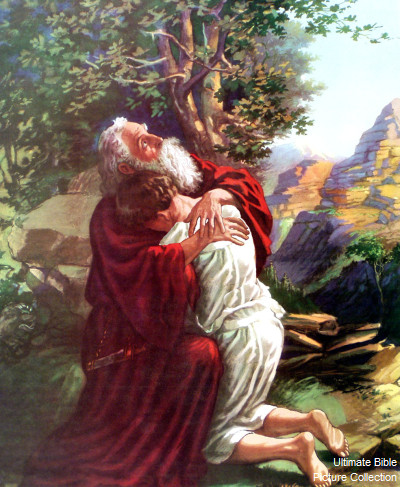
11. A final element of the story of Abraham is important for understanding his faith. God’s word, while bringing newness and surprise, is not at all alien to Abraham’s experience. In the voice which speaks to him, the patriarch recognizes a profound call which was always present at the core of his being. God ties his promise to that aspect of human life which has always appeared most "full of promise", namely, parenthood, the begetting of new life: "Sarah your wife shall bear you a son, and you shall name him Isaac" (Gen 17:19). The God who asks Abraham for complete trust reveals himself to be the source of all life. Faith is thus linked to God’s fatherhood, which gives rise to all creation; the God who calls Abraham is the Creator, the one who "calls into existence the things that do not exist" (Rom 4:17), the one who "chose us before the foundation of the world… and destined us for adoption as his children" (Eph 1:4-5). For Abraham, faith in God sheds light on the depths of his being, it enables him to acknowledge the wellspring of goodness at the origin of all things and to realize that his life is not the product of non-being or chance, but the fruit of a personal call and a personal love. The mysterious God who called him is no alien deity, but the God who is the origin and mainstay of all that is. The great test of Abraham’s faith, the sacrifice of his son Isaac, would show the extent to which this primordial love is capable of ensuring life even beyond death. The word which could raise up a son to one who was "as good as dead", in "the barrenness" of Sarah’s womb (cf. Rom 4:19), can also stand by his promise of a future beyond all threat or danger (cf. Heb 11:19; Rom 4:21).

 
“For Abraham, faith in God sheds light on the depths of his being, it enables him to acknowledge the wellspring of goodness at the origin of all things and to realize that his life is not the product of non-being or chance, but the fruit of a personal call and a personal love.”


Friday, July 26, 2013

Faith Filled Friday: Lumen Fidei


To my current reading I’ve added the Papal Encyclical, Lumen Fidei, that was just published earlier this month and have been slowly going through it.  If you don’t know what an Encyclical is, the Wikipedia entry is informative.  This is the first encyclical (you can read it here)  I have ever read, and it’s remarkably easy reading and clear to the layman.  There is certainly theology in there, but it’s presented with such clarity and absence of specialized jargon that so baffles people who don’t have advanced degrees in Christian theology.  So far I have found it a fascinating read.  Lumen Fidei, or in English, Light of Faith, is intended to teach why faith is critical to lives, how it gives meaning to our lives, especially in our modern disconnected and secular world.  Jimmy Aiken, in his usual precise and efficient manner, gives a fine short summary of the encyclical in his blog, “14 things you need to know about PopeFrancis’s new encyclical”.

 
As I read it, I want to provide certain passages that catch my attention here for my Faith Filled Fridays.  Just to orient one who has not read the encyclical, it is divided into an introduction and four chapters.  The structure is the following, numbers in parentheses signify the encyclical’s paragraph numbers:
 

Introduction (1-7)

Chpt 1: We Have Believed In Love (8-22)

Chpt 2: Unless You Believe, You Will Not Understand (23-36)

Chpt 3: I Delivered To You What I Also Received (37-49)

Chpt 4: God Delivers A City For Them (50-60)

 
So far I have read through Chapter 1.  Today I’m going to give what I found to be the most interesting passage in the Introduction, paragraph number 4.  It provides the central rationale for the encyclical.


4. There is an urgent need, then, to see once again that faith is a light, for once the flame of faith dies out, all other lights begin to dim. The light of faith is unique, since it is capable of illuminating every aspect of human existence. A light this powerful cannot come from ourselves but from a more primordial source: in a word, it must come from God. Faith is born of an encounter with the living God who calls us and reveals his love, a love which precedes us and upon which we can lean for security and for building our lives. Transformed by this love, we gain fresh vision, new eyes to see; we realize that it contains a great promise of fulfilment, and that a vision of the future opens up before us. Faith, received from God as a supernatural gift, becomes a light for our way, guiding our journey through time. On the one hand, it is a light coming from the past, the light of the foundational memory of the life of Jesus which revealed his perfectly trustworthy love, a love capable of triumphing over death. Yet since Christ has risen and draws us beyond death, faith is also a light coming from the future and opening before us vast horizons which guide us beyond our isolated selves towards the breadth of communion. We come to see that faith does not dwell in shadow and gloom; it is a light for our darkness. Dante, in the Divine Comedy, after professing his faith to Saint Peter, describes that light as a "spark, which then becomes a burning flame and like a heavenly star within me glimmers".[4] It is this light of faith that I would now like to consider, so that it can grow and enlighten the present, becoming a star to brighten the horizon of our journey at a time when mankind is particularly in need of light.


“A light this powerful cannot come from ourselves but from a more primordial source…from God.”