"Love follows knowledge."
"Beauty above all beauty!"
– St. Catherine of Siena

Showing posts with label Memorial. Show all posts

Tuesday, September 8, 2026

Music Tuesday: In Memoriam, Dolly Parton

As you all probably know, Dolly Parton, the great country singer and songwriter and even sometime movie star, passed away two weeks ago now on August 25th.  Sassy, traditional, revolutionary, feminist without the negative aspects of feminism, wife to one husband for decades, philanthropist, believing Christian, and all-round good person, she was one of a kind.  She grew up poor, became rich from her talent, but always understood those that struggled to make ends meet.  From ABC News:

Dolly Parton, the beloved country music superstar known as much for her philanthropy and theme park business as she was for her chart-topping hit songs, has died at 80.

Parton's death on Tuesday was announced by her publicist, who said the singer "died peacefully" in Nashville. No cause of death was initially provided, but a later statement provided by her publicist said Parton died at the Vanderbilt-Ingram Cancer Center surrounded by loved ones after "bravely facing a brief battle with cancer."

A small private service will be held for immediate family, the publicist said.

"As many of you know, I have been dealing with some health challenges, and my doctors tell me that I must have a few procedures," Parton wrote on Instagram in September 2025, though she never specified the nature of her health issues. Nearly six months later, at the seasonal opening of her Dollywood theme park, she said that she was still dealing with "a few little health issues" from which she was taking time to recover.

Parton also shared that she was still navigating her grief over the March 2025 death of her husband of nearly 60 years, Carl Dean, saying that she had been taking time since to rebuild herself "spiritually, emotionally and physically."


I did not really know Dolly Parton’s work that well.  Her music wasn’t exactly in my catalogue of listening titles, but I did like what I heard.  The thing that surprised me the most as I learned about her life is that she was a great songwriter.  She wrote her own songs and songs for others.  I can’t recall the exact number but the songs attributed to her are in the thousands.  AP devoted an article to her music legacy and said this.

Parton’s legacy starts with the immortality of her music: songwriting as solace, an exercise in creativity and an unwavering ability to write experience into art. Across her career, Parton wrote and performed perennial hits (“Jolene,” “Coat of Many Colors,” “Little Sparrow,” take your pick) and others that took on a life of their own (most famously, “I Will Always Love You,” made immortal by Whitney Houston ).

Parton grew up in poverty, one of 12 kids in East Tennessee’s rural Sevier County, where she started writing songs as a toddler. By 10, she was on the radio and TV in Knoxville, Tennessee. By 13, she had made her debut at the Grand Ole Opry. At 21, she joined “The Porter Wagoner Show,” her star power quickly eclipsing its host.

The accomplishments — and the trials and tribulations that came with them, which she let roll off her shoulders with enviable resiliency — came fast and furious, as they do with once-in-a-lifetime talents. There are the 10 Grammys, the numerous Hall of Fame inductions, and the fact that she revolutionized the world of country music for women alongside Loretta Lynn and Tammy Wynette, creating a path for crossover artistry. But there are also her Hollywood forays. It’s telling that her first feature film, “9 to 5,” celebrated women in the workplace and messed with their devious bosses.

The other aspect of her life that I learned was her philanthropy.  PEOPLE magazine had an article on her charitable giving. 

Beyond writing and performing hits like “Jolene,” “9 to 5” and “Coat of Many Colors,” the legendary country singer-songwriter — who died on Tuesday, Aug. 25 at age 80 — dedicated much of her life to helping others at home and abroad.

From starting her Dollywood Foundation in the 1980s to help children in Sevier County, Tenn. — where she grew up — achieve educational success, to funding COVID vaccine research, Parton’s philanthropic efforts, like her career, were wide-ranging.

“I’m kind of addicted to the feeling of giving,” the country star told PEOPLE in 2021 for a People of the Year cover story. “Knowing that I’m doing something good for someone else.”

The following year, she was recognized with the prestigious Carnegie Medal of Philanthropy for her decades of charitable efforts, which also include her foundation’s Imagination Library, a monthly book gifting program for children under five.

“I’m proud of the Imagination Library as much as anything I’ve ever done in my life,” Parton told PEOPLE while receiving the award in 2022. The same night, the country icon also shared how she finds causes to support, revealing that she has a team of staffers to help out in between her other work. She also said she followed her heart.

“I always want to do things that I can be proud to talk about, things that I believe in,” Parton told PEOPLE at the time. “I cannot be a hypocrite and just say I’m going to donate this money for a tax write-off. I’d really like for it to mean something to me — something I can take pride in.”

So after spending a week exploring her music, I came up with these seven songs which I think capture various aspects of her body of work.  First, let’s go with one of her first hits, “Jolene” of 1973.


The intensity of expression is captured in the ever increasing desperation in the singer’s voice with each successive “Jolene.”  Dolly makes this song with her articulation, and it feels so honest.  I also love the interweave of three acoustic guitars. 

Even before “Jolene” was “Coat of Many Colors” (1971) which combines her story of growing up in poverty with nostalgic family love rooted in Biblical values.


Much later in 2001 she wrote and recorded “Little Sparrow.”  She was a great performer, so I’m going to select a live rendition to show off her voice and showmanship.


Of course, the little sparrow, who feels no pain, contrasts with singer.  This is wonderful songwriting. 

“9 to 5” (1980) is probably her most well-known song, and she captures perfectly a woman’s hardship in a male dominated work world.


The video uses excerpts from the movie and hopefully also captures her foray into movie acting.

From 1975, Doly wrote “The Bargain Store” for the album by that name.  Yes, this song is country, but there is such a folk song element to it.  It crosses genres.


Again such great songwriting.  A hurt, perhaps emotionally damaged woman, compares herself to a store of reduced priced items.  The song strives to be hopeful but the tension of the passed hurt belies the hope.

A brighter and more joyous song is the 1974, “Love is Like a Butterfly,” where Dolly makes another comparative leap.


And I love her articulation in that song as she flutters from word to word.  That’s two minutes and twenty-five seconds of perfection!

Finally I want to capture Doly’s faith as expressed in song.  Christianity Today also wrote on her passing and covered religious side.  Here’s an excerpt.

She wove religious themes and imagery into her songs and, like many other country artists, frequently recorded and performed covers of sacred songs. Her 1971 hit, “Coat of Many Colors,” blends her story of growing up in poverty with the biblical story of Joseph. One of her first original songs, “Letter to Heaven,” is written as a child’s petition to God after the death of her mother. Her 1994 album Heartsongs: Live from Home includes a cover of “What a Friend We Have in Jesus,” and Precious Memories (1999) features an array of familiar hymns like “In the Garden,” “Amazing Grace,” and “Power in the Blood.”

The article quotes from Dolly’s autobiography.

One day as I prayed in earnest, I broke through some sort of spirit wall and found God,” Dolly Parton wrote in her 1994 autobiography. “Not as a chastising, bombastic bully but as a friend I could talk to on a one-to-one basis. He is our father, after all.”

They also quote her as to why she doesn’t belong to an organized church. 

Parton described herself as “very spiritual” but not religious. She grew up going to the Pentecostal church where her grandfather preached, but said that after being shamed by fellow churchgoers for the way she dressed, she chose to part ways with organized Christianity.

Still, I find her faith sincere.  Let’s end her retrospective with “When Jesus Comes Calling For Me.”


When I was a child I recall an old man everybody loved old Zeke

(He was all alone, his family was gone one day he said to me)

I'm just sittin' here thinkin' about Jesus, rockin' as my old chair creaks

Some glad day I'll fly away when Jesus comes calling for me

It might be today, it might be tomorrow, maybe one day next week

I'll soon be done with trouble and sorrow when he comes calling for me

When Jesus comes calling for me

When I die don't grieve and cry

Lordy, don't feel sorry for me

Oh what a day, what a mighty fine day

When Jesus comes calling for me

When he comes calling for me


Somehow I think she had these lyrics on her lips as the Good Lord came calling for her.


Eternal Rest give onto her, Lord,
And let perpetual light shine upon her.
May Dolly Parton rest in peace.
Amen.


Friday, June 13, 2025

In Memoriam: Dr. Walter Brueggemann

I was saddened to find out that last week on June 5th Dr. Walter Brueggemann, the Protestant theologian, teacher, and scholar of the Old Testament passed away.  From the obituary titled, “Died: Walter Brueggemann, Scholar of Prophetic Imagination,” by Yonat Shimron of the Religious News Service in Christianity Today: 


Walter Brueggemann, one of the most widely respected Bible scholars of the past century, died on June 5 at his home in Michigan. He was 92.


The author of more than 100 books of theology and biblical criticism, Brueggemann was professor emeritus of Old Testament studies at Columbia Theological Seminary in Decatur, Georgia, until his retirement in 2003.


His specialty was the Hebrew Bible and especially the Hebrew prophets, and his books were aimed primarily at clergy and church leaders. But through sermons, Brueggemann’s concepts, have become familiar to many churchgoers.


I was introduced to Walter Brueggemann by a Protestant friend of mine where she suggested I read Brueggemann’s most well-known work, The Prophetic Imagination.  I did just that and was quite drawn in, and had intended to write a post on it.  I had started that post but had to set it aside.  The theme of my post was going to be a rebuttal to Dr. Brueggemann, a rebuttal not in any Catholic/Protestant disagreement but on his social reading of the Old Testament.  To put it succinctly, Brueggemann is on the socially liberal side of the church divide in a sort of 1970s sympathy with religious church activists.  In the Catholic world, Dorothy Day would be a similar figure, as would I think Pope Francis. 

To be sure, I am not critical of social activists who live out the Gospel.  The world needs more people like Walter Brueggemann and Dorothy Day fighting for the poor, the under privileged, and the alienated.  You can read my memorial poston the passing of Pope Francis where I highlighted just that about him.  My disagreement with Brueggemann was over how he shoe-horned Old Testament history to support his social activist philosophy.  It was more of a conservative/liberal disagreement than a denominational one.  I found Mr. Brueggemann actually to be quite sympathetic to things Catholic.  In The Prophetic Imagination Brueggemann lists among his historical “three towering prophetic figures,” Bartolomé de las Casas  (the other two being Dietrich Bonhoeffer and Martin Luther King, Jr.), the Catholic priest and Dominican friar who defend the natural rights of the Native Americans in the 16th century from the rapacious New World explorers.  He is sometimes looked at as the first social activist of the modern world.  That a Protestant would even have known of de las Casas was a bit surprising to me; that he would list him as one of his three all-time heroes in history is heartwarming.

I had started that post on Brueggemann’s The Prophetic Imagination almost two years ago but I had to set it aside.  First, who am I to rebut an Old Testament scholar, and one of Walter Brueggemann’s stature?  I had read the OT but could I bring up OT history to support my argument?  I had to re-read major parts of the OT to find supporting warrants for my claims.  So I have been reading major parts of the OT for past two years.  And not too long ago I had determined I was ready to go back to that essay and challenge Brueggemann.  So yesterday I did a search for Brueggemann to see if he had been active in any way only to find he had died last week.  Well, he lived a good long life.  May he rest in peace.  I am now more determined than ever to write that essay!  I must admit that in my re-reading of the OT with Dr. Brueggemann’s thoughts in mind, I have found him to be more correct than I thought.  So my essay will not be so much a rebuttal but a qualification.  Enough on that.  Let’s get to a memorial for Walter Brueggemann.

###

Walter Brueggemann was born in Nebraska in 1933 to a pastor of the German Evangelical Synod of North America.  He went on to seminary himself and became a pastor himself (ordained in the United Church of Christ), and then a scholar and theologian.  Over his life, he was a renown teacher at Eden Theological Seminary and at Columbia Theological Seminary.  His Wikipedia entry says he wrote over 58 books (his obituary said over 100!) and hundreds of articles and commentary.  He was a giant in his field.  Since I am not really up on the nuances of Brueggemann’s thought I collected a number of short YouTube clips to capture his importance and give you a feel for the man.

This video recollection by this Jeremy Duncan at Commons Church summarizes the importance of Walter Brueggemann’s work.


I thought that he captured Brueggemann’s thought here very nicely.  You can see how a conservative might look askance at some of that but I think Brueggemann is more mainstream than appears. 

Here is an outline of his great work, The Prophetic Imagination.


Yes, you can see how this is solidly on the left side of politics, but I have to admit his connections with the Old Testament prophets are solid.  Wait for my essay qualifying his thesis!

There are so many YouTube video clips of Brueggemann for people to sample.  He became quite an internet celebrity in his old age.  Here is Brueggemann himself explaining how one should read the calls for vengeance in the psalms.  Notice his distinctive raspy voice and pizazz as an orator.


Isn’t that right!  His exegesis is traditional.  Perhaps his social implementation of the Gospel might be more radical, but so was Mother Teresa’s.  After watching a number of his interviews and video clips, Brueggemann began to feel grandfatherly to me.  Here he is delivering a sermon on Exodus but tying it into today’s society. 


That was really good.  Finally to end with just a single quote from The Prophetic Imagination, I pick this.


“It is the vocation of the prophet to keep alive the ministry of imagination, to keep on conjuring and proposing future alternatives to the single one the king wants to urge as the only thinkable one.”


Eternal rest onto you Walter Brueggemann, and may eternal light from the face of God shine upon you.   


Tuesday, June 3, 2025

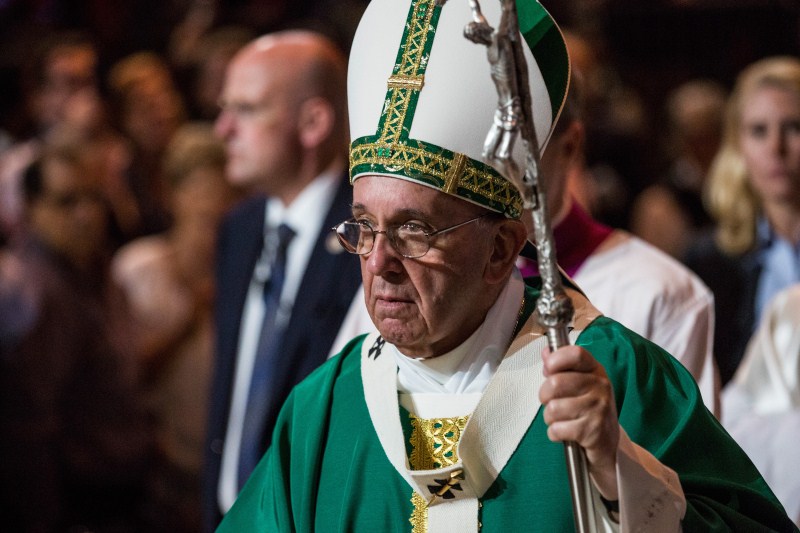
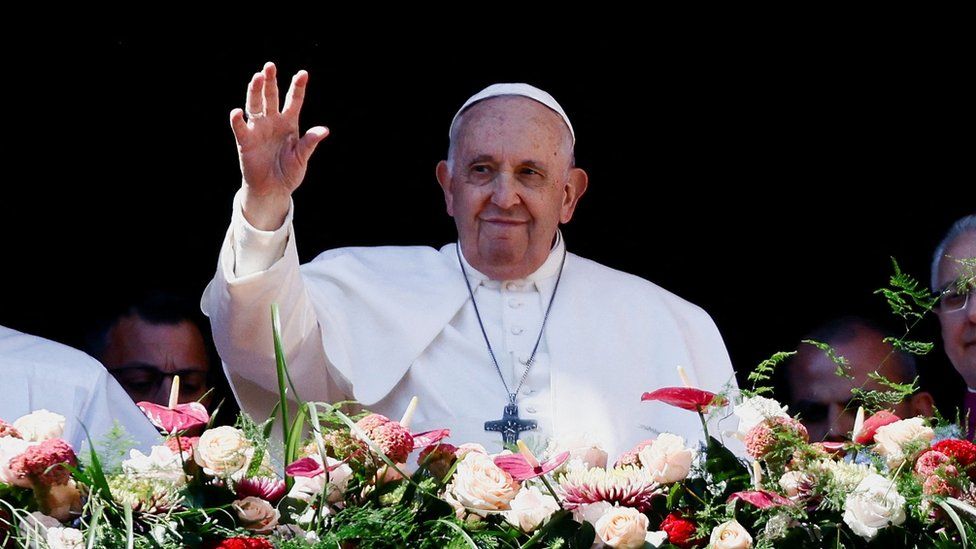
In Memoriam: The Holy Father, Pope Francis


“The joy of the gospel fills the hearts and lives of all who encounter Jesus.”—Pope Francis, Evangelii Gaudium

I’m sure the world knows by now that Pope Francis passed away early Monday morning, April 21st.  From Vatican News,” Pope Francis has died on Easter Monday, April 21, 2025, at the age of 88 at his residence in the Vatican's Casa Santa Marta”: 


At 9:45 AM, Cardinal Kevin Farrell, Camerlengo of the Holy Roman Church, announced the death of Pope Francis from the Casa Santa Marta with these words:


"Dearest brothers and sisters, with deep sorrow I must announce the death of our Holy Father Francis. At 7:35 this morning, the Bishop of Rome, Francis, returned to the house of the Father. His entire life was dedicated to the service of the Lord and of His Church. He taught us to live the values of the Gospel with fidelity, courage, and universal love, especially in favor of the poorest and most marginalized. With immense gratitude for his example as a true disciple of the Lord Jesus, we commend the soul of Pope Francis to the infinite merciful love of the One and Triune God."

It was a sad moment for me as well.  When I woke up that Monday morning and looked at my phone, there had been a news bulletin text that stated Pope Francis had died.  If he had died 7:35, Rome time; it was 1:35 AM here. 

Over the years I have had an evolving reaction to Pope Francis.  I was struck with him when he was first elected.  The charm, the smile, the self-effacing jokes, the humility, the off-the-cuff comments that no one would say.  He was a good humored man with people skills that no pope has had in a long time.  I just loved his pastoral touch.  At the time he was elected some twelve years ago, I offered this in my blog:  


We have these two strands in this pope, the disciplined mind of a scholarly Jesuit with the humility, simplicity, and human engagement of the Franciscan ministry.  The implication is that he’s going to challenge the spiritually indifferent trend of western culture, both through rhetorical argumentation and humble example.  And in him we see the real deal.  He is inherently a humble man, lived in a small apartment, cooked his own meals, rode the subway, embraced the people in the slums.  St. Francis embraced and kissed the lepers; Bergoglio washed and kissed the feet of today’s equivalent of the lepers, AIDs patients.

And then after a few days of Pope Francis meeting the world, I posted again on the new Holy Father, with even more glowing terms: 


"The last few days have made it apparent that [Pope Benedict XVI’s] strengths were intellectual at the expense of human contact. Given what I’ve seen of Francis’s human contact approach to his ministry, human contact is much more important than intellectual pontificating, pardon the pun. The intellectual underpinnings of Catholicism are there in the magisterium. Whatever updating B16 did to it is marginal, and non-Catholics weren’t listening anyway. I like what I’ve seen Pope Francis. This contact ministry is the human contact that I’ve argued brings Christ to everyone. Through human contact is where Christ is revealed. Pope Francis is a shot in the arm!"

In 2015, Pope Francis traveled to the United States and celebrated a Papal Mass in New York City.  I was fortunate to be selected to receive a ticket to the Mass representing my parish.  It was such an honor and I had a number of posts leading up to the Papal Mass and then of course the Papal Mass.  You can read those posts and see the pictures I took when you go to this link that calls up those Papal Mass posts.  

I also posted part of Pope Francis’s homily which focused on the isolation of people living in a big city.  I found this part of the homily both moving and penetrating to those who live in a big city such as myself.  


But big cities also conceal the faces of all those people who don’t appear to belong, or are second-class citizens. In big cities, beneath the roar of traffic, beneath “the rapid pace of change”, so many faces pass by unnoticed because they have no “right” to be there, no right to be part of the city. They are the foreigners, the children who go without schooling, those deprived of medical insurance, the homeless, the forgotten elderly. These people stand at the edges of our great avenues, in our streets, in deafening anonymity. They become part of an urban landscape which is more and more taken for granted, in our eyes, and especially in our hearts.


Knowing that Jesus still walks our streets, that he is part of the lives of his people, that he is involved with us in one vast history of salvation, fills us with hope. A hope which liberates us from the forces pushing us to isolation and lack of concern for the lives of others, for the life of our city. A hope which frees us from empty “connections”, from abstract analyses, or sensationalist routines. A hope which is unafraid of involvement, which acts as a leaven wherever we happen to live and work. A hope which makes us see, even in the midst of smog, the presence of God as he continues to walk the streets of our city. Because God is in the city.


What is it like, this light travelling through our streets? How do we encounter God, who lives with us amid the smog of our cities? How do we encounter Jesus, alive and at work in the daily life of our multicultural cities?

And then he implored us to go out and embrace the city and all its inhabitants.


Prince of Peace. Go out to others and share the good news that God, our Father, walks at our side. He frees us from anonymity, from a life of emptiness, and brings us to the school of encounter. He removes us from the fray of competition and self-absorption, and he opens before us the path of peace. That peace which is born of accepting others, that peace which fills our hearts whenever we look upon those in need as our brothers and sisters.


God is living in our cities. The Church is living in our cities. God and the Church living in our cities want to be like yeast in the dough, to relate to everyone, to stand at everyone’s side, proclaiming the marvels of the Wonderful Counselor, the Mighty God, the Eternal Father, the Prince of Peace.


“The people who walked in darkness have seen a great light”. And we, as Christians, are witnesses to this.

As I look back on those words from his homily, Pope Francis had not changed over the years.  The same themes he had at the beginning of his papacy were there at the end.  It was a concern for the outcast, the disenfranchised, the overlooked, the weak, the unaccepted, the lepers of our time.

In time I became somewhat dissatisfied with the Holy Father.  When it came to articulating church teaching, he was not the clearest, and he, also being on the Liberal side of both politics and the Church, his critics conflated his magisterium with his Liberal tendencies so that it gave the appearance that he was either confused or a heretic.  Being conservative myself I succumbed to the worst elements of the conservative’s characterization of Pope Francis.  There is an industry out there, especially in the United States, which is built on making money tearing down the Holy Father and anyone who smacks of not being orthodox.   The conservative language of these radical traditionalists (rad trads for short) tends to lure political conservatives to their side since so much of the jargon overlap.  I too began to conflate Pope Francis’s more Liberal political issues with liberal church teachings.  While I was sure Pope Francis had not taught anything heretical, I assumed he was pushing the Church to some liberal climax of his papacy.

And in some point in the last five years I began to see a disconnect between what I actually read and heard Pope Francis say and what the rad trad critics claimed he taught.  No, Pachamama was not meant to be a fertility goddess, and Pope St.John Paul II also embraced the symbol.  No, Francis never endorsed women priests, never endorsed homosexual lifestyle, and never supported abortion.  He may have had a compassionate heart for those outside the graces of the Church, and he pushed to extend God’s grace to them, but he never overturned Church teaching. 

What I discovered was that this industry was built on distorting Pope Francis’s Magisterial teaching to make it sound he was teaching heresy.  The turning point for me was Fiducia supplicans.  No it does not say that a homosexual union can be blessed.  It says that a couple can be blessed, and if I and my brother walked up to a priest it would satisfy as a couple.  The blessing isn’t even on the couple, it’s on the persons of the couple.  Read it carefully.  Pope Francis kept the doctrine of the Catholic faith while stretching out as far as he could to include the marginalized.  You are supposed to read Papal comments in charity and docility.  When I read this and saw the hysterical outrage and distortions, it dawned on me that there were elements in the Church that were fixated at tearing the Papacy for their own vision of what the church should be.  Well, they weren’t elected Pope.  The Holy Spirit didn’t endow them with anything.  That’s when the scales fell from my eyes.

I’m not going to dwell on the negative.  The Catholic Church has always had its Protestants and Pharisees, and they can find themselves another religion for all I care.  What I care about is Christ going to lepers and healing them.  What I care about is Christ refusing to stone the woman caught in adultery, which can be seen as Christ keeping doctrine while stretching out for the marginalized.  What I care about is the Good Samaritan caring for the injured man.  What I care about is Christ sitting to eat with tax collectors and prostitutes.  What I care about is the Prodigal Son being welcomed back.  What I care about is Christ washing His subordinates’ feet.  What I care about is Christ providing dignity to the Samaritan woman at the well who has had a series of inappropriate relationships.  That is the heart of the Gospel message and that is at the heart of Pope Francis’s magisterial teaching.

There are those who say what we needed was a more precise theologian.  Who knows?  I tend to disagree.   Pope Francis was the pope we needed. He showed us how to live in the love of Christ and provide dignity to every human being. What humanity needs is not another theologian—there are tons of those in every Catholic university—but needs someone to show them how to live out Christ. Pope Francis did just that.

That Pope Francis died after Easter and before Divine Mercy Sunday is most appropriate, if not Providential.  If any pope can be identified as the Pope of Divine Mercy, it is Pope Francis.  One of Pope Francis’s analogies for the Catholic Church was that of a “field hospital' which helps the suffering and marginalized through love, mercy, and charity.  Well, goodness gracious, the first reading from the Divine Mercy Sunday lectionary in Year C is this from Acts of the Apostles:


Many signs and wonders were done among the people

at the hands of the apostles.

They were all together in Solomon’s portico.

None of the others dared to join them, but the people esteemed them.

Yet more than ever, believers in the Lord,

great numbers of men and women, were added to them.

Thus they even carried the sick out into the streets

and laid them on cots and mats

so that when Peter came by,

at least his shadow might fall on one or another of them.

A large number of people from the towns

in the vicinity of Jerusalem also gathered,

bringing the sick and those disturbed by unclean spirits,

and they were all cured.  (Acts 5:12-16)


There is Peter at the head of the “field hospital,” navigating the actions for the cure of those disturbed by unclean spirits!


“God is living in our cities. The Church is living in our cities. God and the Church living in our cities want to be like yeast in the dough, to relate to everyone, to stand at everyone’s side, proclaiming the marvels of the Wonderful Counselor, the Mighty God, the Eternal Father, the Prince of Peace.”—Pope Francis, Homily in New York City, 25 September 2015

###

Did I have political disagreements with Pope Francis?  Of course.  I am a conservative and Pope Francis was I think innately a Liberal.  I am a free market capitalist.  I support being tough on criminals.  I want to restrict immigration to just the essential and minimum.  I am skeptical about accommodations with communist regimes.  I support the strengthening of the military in a world where power is used for evil reasons.  Did it really matter Pope Francis might have a different view on these issues?  I don’t think so.  He was the Holy Father and I was not, and in time I listened as a good Catholic should, with docility and respect. 

I cannot say that for his critics, some of whom would bring up my beloved patroness, St. Catherine of Siena as a critic of the pope in her day.  But here is the difference.  St. Catherine of Siena chided Pope Gregory XI in private conversations and in direct letters.  She never criticized Pope Gregory XI in public. 

Have I modified my views in the twelve years of Pope Francis’ papacy?  In thinking it over, though I am not sure if I can attribute it all to Pope Francis, I would have say yes.  I’ve come to the understanding that there must be some sort of accommodation for the lower economic earners in a free market economy; justice cannot be totally achieved by the harshest retributions; I no longer support the death penalty; human dignity must always be upheld; some immigration is charitable and compassionate, and morally required for those escaping human rights violations; use of the military must be implemented with caution and humility.  Over these twelve years I’ve gravitated closer to what President George W. Bush called “compassionate conservatism.”  I think the Holy Father had a hand in that evolution.

Perhaps where Pope Francis influenced me the most was on recognizing the dignity in every person.  Yes, I intellectually, abstractly knew that before, but did I understand it in my bones?  I think in his various papal writings, Pope Francis shaped me to understand it in the encounter with others. 


The heart of Christ is ‘ecstasy,’ openness, gift, and encounter. In that heart, we learn to relate to one another in wholesome and happy ways, and to build up in this world God’s kingdom of love and justice. Our hearts, united with the heart of Christ, are capable of working this social miracle”—Pope Francis, Dilexit Nos

###

If there is a single theological doctrine I most associate with Pope Francis, it is his “culture of encounter.”  Yes, I raise what appears on the surface to be a simple exhortation to a profound Christocentric idea.  Pope Francis spoke often on this culture of encounter, so I don’t know if I’m quoting from the fullest explanation, but these are the ones that came up in my search.  He made the first exhortation in his homily at Pentecost shortly after being selected in 2013.  From the Address from the Holy Father on 18 May 2013, he exhorts that the Church must be ready to step out:  


In this “stepping out” it is important to be ready for encounter. For me this word is very important. Encounter with others. Why? Because faith is an encounter with Jesus, and we must do what Jesus does: encounter others. We live in a culture of conflict, a culture of fragmentation, a culture in which I throw away what is of no use to me, a culture of waste.

Notice the mirrored complexity of that thought: In going out to meet the poor, to use an example, we go out to meet Jesus, and in so meeting Jesus, we, in turn, become Jesus meeting the poor.  This is aligned with the homily he gave in NYC I quoted above, going out to the city because Jesus is in the city.  Jesus is there in the poor.

There is also a meditation from the Vatican documents on Pope Francis homily on 13 September 2013


An invitation to work for “the culture of encounter”, in a simple way, “as Jesus did”: not just seeing, but looking; not just hearing, but listening; not just passing people by, but stopping with them; not just saying “what a shame, poor people!”, but allowing yourself to be moved with compassion; “and then to draw near, to touch and to say: ‘Do not weep’ and to give at least a drop of life”. Pope Francis used these words in his homily to describe the message contained in the liturgical readings of the Mass he celebrated at Santa Marta on Tuesday morning.


Focusing in particular on the scene of the widow of Nain, from the Gospel of Luke (7:11-17), the Pope highlighted that this passage from “the Word of God” speaks of “an encounter. There is an encounter between people, an encounter between people who were in the street”. And this, he commented, is “something unusual”. In fact, “when we go into the street, every man thinks of himself: he sees, but does not look; he hears, but does not listen”; in short, everyone goes their own way. And consequently “people pass each other, but they do not encounter each other”. Because, Pope Francis clarified, “an encounter is something else” entirely, and this is “what the Gospel today proclaims to us: an encounter between a man and a woman, between an only son who is alive and an only son who is dead; between a happy group of people — happy because they have encountered Jesus and followed him — and a group of people who weep as they accompany the woman”, who is a widow and is on her way to bury her only son.

There is too much in that meditation to quote, but to further develop Jesus’s encounter with the widow and her son, Pope Francis points out the typology of the encounter:


“The only son who is dead resembles Jesus, and he is transformed into an only son who is alive, like Jesus. And Jesus’ action truly shows the tenderness of an encounter, and not only the tenderness, but the fruitfulness of an encounter. ‘The dead man sat up and began to speak, and Jesus returned him to his mother’. He did not say: ‘The miracle has been done’. No, he said: ‘Come, take him, he is yours’”. That is why “every encounter is fruitful. Each encounter returns people and things to their place”.

And thus in so many of Jesus’s encounters in the Gospels—the Good Samaritan, the woman at the well, the woman to be stoned for adultery, the lepers and those possessed by demons—Jesus is moved and does more than just pass by. 

Thomas J. Eggleston, writing for the Houston Catholic Worker, I think concisely summarized Pope Francis’s theology of encounter:  


With this line of thinking, Christians encounter other people in their imitation of Christ, but on top of that, the disciple encounters other people as a response to having an encounter with Christ in the first place. Francis on a regular basis has spoken of a Culture of Encounter as a goal for human society. A society that espouses a Culture of Encounter facilitates right relationship among humans and involves a spirituality that emphasizes a personal friendship with God who first encounters us in love.

This is not the typical abstract theological thinking of say a Thomas Aquinas nor Pope Benedict XVI.  This is a hands on theology of the moment, one that if I had more space to flesh out is one of an existential nature.  This is not the theology of Ordo amoris that some politicians conveniently want to quote to justify reductions in aiding the needy, but one that forces you to love those before you.  (Pope Leo XIV also weighed in by rebuking such politicians, “Jesus doesn't ask us to rank our love for others.")  Pope Francis was a people person, a people Pope, one who saw the dignity in everyone, who as far as I can tell truly cared for everyone.

###

Finally I want to end with I found a very moving tribute, a statement from Dr. David Anders on his EWTN radio show, Called to Communion.  Someone had called in with a question on Pope Francis on his April 25th, 2025 show at about the 21:33 minute mark and lasts for three minutes.. 

I transcribed what Dr. Anders said, and I present it here, removing some minor verbal ticks that an ad hoc oral expression will have:


“He [Pope Francis] sounded a very consistent note from start to finish through his entire pontificate, and that was that our attachment to the Gospel of Christ must sensitize us to the dignity of the marginalized, the poor, the migrant, the other, those on the peripheries—and sometimes the peripheries could be conceived of in political terms and other times conceived of the guy or the lady in the parish who can’t receive compassion in the confessional—and he always had a heart for whoever is falling through the cracks of the Church’s ministry, how we’re failing to reach them, and a deep willingness to challenge the Church’s traditional ways of doing things, habits and customs that we might be working to defend to prop up the status quo than challenging the status quo in the interest of the apostolate, and ultimately reaching souls.”  -Dr. David Anders, Called to Communion, April 25th, 2025. 

That brought a tear to my eye.  That stands as the best statement on Pope's Francis the man and his pontificate that I heard anywhere.

May the Holy Father rest in peace. 


”In the Lord’s Paschal Mystery, death and life contended in a stupendous struggle, but the Lord now lives forever. He fills us with the certainty that we too are called to share in the life that knows no end, when the clash of arms and the rumble of death will be heard no more. Let us entrust ourselves to him, for he alone can make all things new!”—Pope Francis, Urbi et orbi, Easter 2025

Tuesday, September 17, 2024

In Memoriam: Jeanette Lucey

I received some bad news the other day, my friend Jeanette Lucey passed away.  If there are any followers of my blog from the very first years of my blogging here, they may remember I was blogging at two places, this blog as my own blog, and Jeanette’s blog, J’s Café Nette, as part of a team of three, Jeanette, Sue, and me.  Jeanette’s blog was a political blog, and the three of us commented on the politics of the day.  I started this blog as a refuge from the grind of daily politics, which in time I came realize is caustic to one’s soul.  I set up my personal blog to get away from the political wars and dwell on things I enjoyed.  I have been mostly true to that.

The J’s Café Nette blog was definitely commenting from a conservative perspective, and from what I remember—and I could be remembering incorrectly—Jeanette was probably the most balanced of the three of us.  She tried to be fair and give the Democrats and Liberals the benefit of the doubt, while I jumped on the most cynical elements of the left.  I was convinced—and still am—that the left was out to destroy the traditions of this country and Western culture, and I think my posts tended in that vitriolic direction.  As I think back on it, perhaps Jeanette may have been embarrassed by my style.  I wouldn’t be surprised.  Politics could stir a lot of passion out of me, and I wasn’t shy with expressing it.  Jeanette, ever the lady, accepted me while trying to soften my approach.

How we met and how I was invited to blog at Jeanette’s blog is worth telling.  We both frequently commented on The Anchoress blog.  It was a Catholic blog but Anchoress (Elizabeth Scalia) often spoke on the politics of the day, and she rooted her politics to her Christian, and more specially, Catholic principles.  Both Jeanette and I enjoyed that blog and commented frequently.  Now in those days it was common for blogs to keep a roll of sympathetic other blogs on their page, and J’Café Nette was one on Anchoress’s page.  I clicked it and found it to my liking.  I became a frequent commenter there and one day Jeanette sent me an email inviting me to join her and Sue on her blog.  Actually as I was reminiscing through my past emails with Jeanette, I found the very one.  Here is a screenshot of that email.


You can see Jeanette’s faith on display with her email footer: “Trust in the Lord…”

Although Jeanette liked The Anchoress, I need to stipulate Jeanette was not Catholic.  She was a Baptist, and she early on reassured me she was not one of those anti-Catholic Protestants.  For one thing she told me a joke about Baptists in heaven. 


A man dies and he’s led through the corridors of heaven, and he sees various rooms with doors ajar.  That room is for the Methodists; that room is for the Presbyterians; that room is for the Catholics.  Then they pass a room with the door closed.  Don’t look into that room the guide says, that room is for the Baptists.  But why is the door closed?  They think they’re the only ones in heaven. 

After she told me that joke, I knew we would be good friends.  She also told me about an anti-Catholic who criticized the praying of the Hail Mary.  When she looked into it, she told me, the words are taken right out of the Bible.

She asked about certain Catholic rituals.  I did my best to explain them, though I don’t think I was at the time able to make them clear.  I remember she asked about Catholic funerals.  My memory is a little vague here but I think she said her mother, who was Native-American, returned to her Catholic faith late in life and had a Catholic funeral. 

Of course I accepted Jeanette’s invitation to blog, but now if you look at the date of the Jeanette’s email, it was in March of 2010.  That was a month and a half before my wife and I went to Kazakhstan to adopt our son Matthew.  We were gone for another month and a half.  It was quite an experience and if I remember correctly I gave updates from Kazakhstan on how the process was going.  I think I posted to her blog from abroad, but my memory is vague.  I wish I could get a hold of the old J’s Cafe Nette posts but she dissolved them all into the nether sphere when she closed down the blog.

Over the years, Jeanette would always ask me about my son.  (And I should mention that Sue is also very good about asking on how Matthew is doing.)  Jeanette had a theory on why my son was so friendly with strangers.  As an infant in an orphanage, he was picked up by lots of strangers and just did not develop a fear.  It’s quite a plausible theory.  She asked for pictures of Matthew even after we had stopped blogging. 

I loved going through our past email exchanges.  Here is a paragraph from an exchange back in February of 2016.  The Republican Primary was coming up in her state, and I asked who she was voting for.


For the first time in my life I am truly undecided.  Definitely not Trump!  Enough of Bushes and Clintons, not Cruz as he is too stringent and the Canadian thing might bite him in the butt; especially if Trump decides to pursue it.  If he doesn’t you can count on the Dems doing it, but he’s the Republican version of Obama.  His way or no way.  Carson is inexperienced and doesn’t have a chance.  That leaves Rubio and Kasich.  Rubio is a first-term senator and we already have that and look where that got us.  Kasich wants to cut the military but probably civilian jobs that are redundant.  So I don’t know and won’t know until I touch the screen on Saturday.

That was the theme in that primary, “Definitely not Trump!”  I shared that sentiment too, and I don’t have a recollection on who she actually voted for in the primary, but we both voted for Trump in the general.

There was another email about waiting at the hospital while the doctors performed a delicate operation on her husband’s spine.

I could feel the presence of the Lord as I sat there all day Monday waiting to hear it was over.  I got butterflies in my stomach when they told me the operation had started and I said a silent prayer to ask Him to calm me.  It must have happened immediately because I do not recall having butterflies after that.

If there is one single comment that characterizes Jeanette, it’s that one.  She was a woman of faith and family and love.  The operation went well I was told.   

In time both Jeanette and Sue began to grow tired of blogging.  Perhaps it was the dark days of the Obama administration that made us all so cynical.  (She sent me a link to a clock that counted down the days to Obama being out of office!)  So around August of 2013, Jeanette officially closed down her blog.  I posted here about that day, and I urge you to read it.   Jeanette posted a comment, and just like these quotes I posted here it’s wonderful to relive her words and with a little imagination I can hear her voice as I read them.

I will be forever grateful to Jeanette for introducing me to blogging.  I would never have started this blog if not for her and Sue.  They were my mentors.  In honor of Jeanette I will do something that this blog has resisted for these dozen years.  I will break my rule of not going into politics and announce who I will vote for and why in the coming presidential election, and no it is not either of the major candidates.  So stay tune for that.

It is with a tear in my eye I went through these past email exchanges.  She passed away much too young.  You can read her public obituary here.  Oh wow, she had the same birthday as my father.  I never knew.


Eternal rest grant unto Jeanette, O Lord, and let perpetual light shine upon her.

May her soul and the souls of all the faithful departed rest in peace.  Amen.


We never did meet in person Jeanette .  If someday I am led to that room with all the Baptists, I’m going to knock, have you come out, and give you a big hug we never had a chance to give in life.  Take care, my friend.