"Love follows knowledge."
"Beauty above all beauty!"
– St. Catherine of Siena

Showing posts with label What Jesus Saw from the Cross. Show all posts

Sunday, April 16, 2017

What Jesus Saw from the Cross: The Look to Heaven

I’ve posted twice on this wonderful book, A. G. Sertillanges’ What Jesus Saw from the Cross, already (here and hereand I wanted to post one more on its amazing conclusion.  I did want to post this before Easter Sunday, but I was just too busy.  But here it is on Easter Sunday night.

As I’ve noted, Sertillanges’ book is a devotional on Christ’s passion, taken from the perspective of Christ looking out hanging from the cross.  Sertillanges identifies the sights and sounds, the events of Christ’s last days, Christ’s friends and His enemies, His last words, and what all this sound and fury was about.  In the last chapter, as Christ raises His eyes toward heaven in His last moments of life, the vision steps away from what is below, and Sertillanges attempts to contemplate Christ’s vision beyond the earth. 

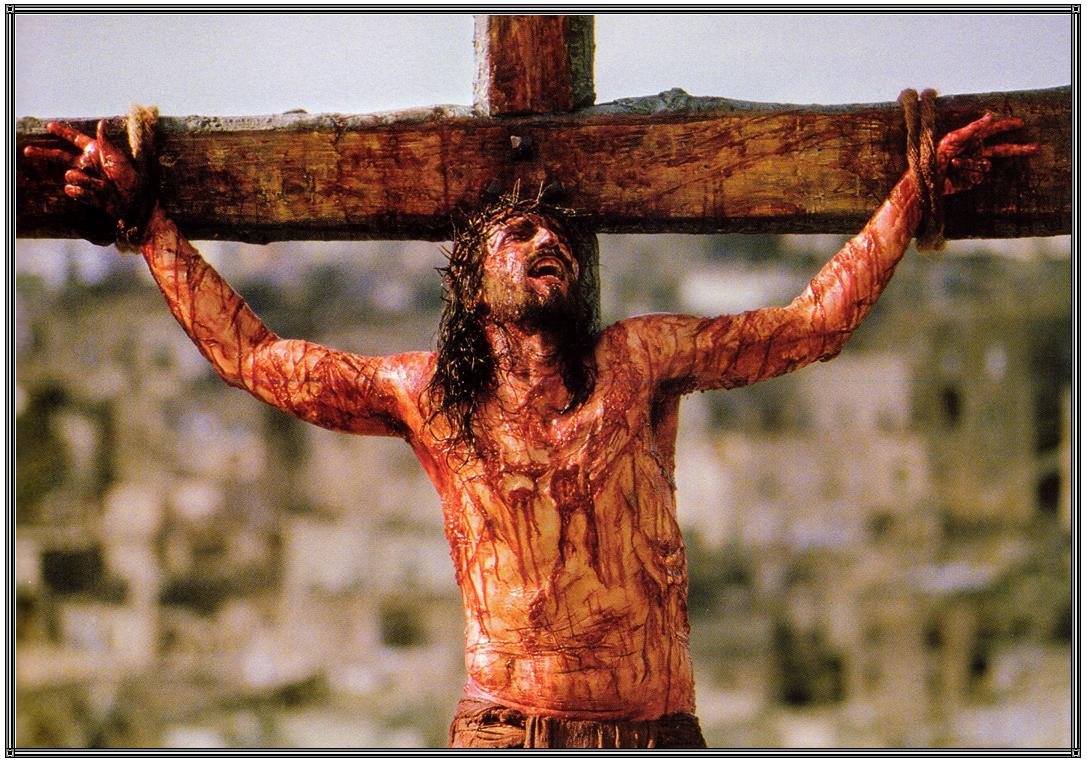
In the eyes of the dying Savior, things and people are never withdrawn from their natural environment nor isolated from the divine sphere in which they are enclosed.  When He meditates upon what He sees He cannot but consider its divine content.  Heaven envelopes the earth and all things that are upon it.  Lifted up from the earth, more by His soul than by His Cross, Christ finds in Heaven the first object of His contemplation.  From Heaven He comes and to Heaven He returns.  Thus it is with His eyes raised to Heaven that we must think of Him uttering His first and His last sentences, each of them beginning with the word Father.  (p.211)

Two things are important there—the intermingling of the divine with the material and the source of the first cause, God the Father.  In that glance toward the Father, eternity and the temporal meet, and the mutual love of the Father and Son, which blossoms in the form of the Holy Spirit, is made manifest.  What Sertillanges sees at that moment is the reconciliation of all things, the material and the spirit, the eternal and the transient, the internal and the external.

It is not without importance at the foot of the Cross, which reconciles all extremes, to notice how the heavens—especially the heavens at night—are related to the mystery of the soul.  The ether is beyond all measure; and beyond all measure and understanding also are the stirrings of the heart.  We cannot rise to the stars or descend to the depths of our being.  Two infinites stretch beyond the bounds of our experience, and both attract us irresistibly yet hold us at a distance.

What can we do without God in the heights, and without His grace in the depths of ourselves?  Yet we feel that these two domains coalesce and that God, who is in us and ineffably beyond us, welds the whole of nature into one.  If we go to God and give ourselves to Him, then we reconcile all things—being, our own being, and the Subsistent Being upon whom all else depends.  (pp. 213-14)

 Reconciliation implies that despite fragmentation there is unity.  Christ being one of the Trinity is aware of the impalpable wholeness.  Sertillanges continues:

We cannot doubt that Christ always has an intimate realization of these things.  If “the father had given all things into His hands” (John 3:35), it was assuredly with the full consciousness that this was so.  Filled with the knowledge of what is, He has by that very fact full assurance of what He does.  His vision reaches unerringly to God, the living Heaven, to the soul, that lowly heaven in which the other is reflected, to the nature of the universe, and to Himself in whom all these fragments of reality find their unity.

And so Sertillanges has Christ first lovingly contemplating the beauty of creation, the natural world, the blue vault of sky, the gathering clouds, expressing that vision in His imagination as a poet expresses mystery.  Here Christ becomes an artist, expressing truth and beauty, all leading to God and a part of God.

Who better than this human and heavenly soul was able to taste God in the universe and the universe in God who sustains it?  Associated with the divine harmony (One in Three, Three in One), is He not wholly attuned to the music of creation?  Son of Man, does He not find in man’s dwelling place His proper home?  He has caught up in Himself the whole of humanity.  He bears within Himself the Idea, the begetter of beings.  He is the “beginning of creation of God” (Rev 3:14) and He is the End.  Everything is a symbol of Him.  Nature tends to Him with all its significance and all its powers.  (pp. 216-17)

In that last moment Christ “perceives the harmony of creation as an eternal Will whose applications to human life for the object of His teaching, of His exhortations, and of His grace.  He mingles Heaven with earth, nature with the soul, time with the eternal outcome of time” (217).  Christ both contemplates the vastness of the grand universe and the minuteness of the molecular world, the infinity inside the microscopic.  His vision is both expansive and confined.

Second, Setillanges has Christ, at that moment of looking heavenward, in prayer on the cross.  Christ’s contemplation of the harmony of all things is a prayer.

Jesus prays.  His prayer on the Cross is a continuation of His constant prayer.  If the sky is Heaven, if the universe, the soul, and God are Heaven, then the act by which Jesus links all of these together in one common thought is a communion with Heaven in the most complete sense of the word, a vision of Heaven boundless and sublime.  (p. 220)

It is in prayer that the sublime of Heaven interfuses with the physicality of earth, the transcendence of the spirit with the incarnate of flesh and blood.  The cross is the axis between the two realms.

The cross, then, is the great place of prayer, just as it is the great altar, the great monstrance, and the first tabernacle.  It is not in vain that we are told to begin and end prayer with the sign of the Cross.  Properly understood the sign means: “I adore Thee, my God, by the Cross, by Jesus on the Cross, with Jesus on the Cross, in a spirit of commemoration and trust, but also in a spirit of obedience and sacrifice…I ask of Thee all that I need in the name of the Cross, that is, in the name of the same memory, in the name of the same merits, to which I humbly unite those things that are wanting, according to the exhortation of the Apostle” (Col 1:24).  (pp 224-25)

Paul in that passage in Colossians speaks of uniting his sufferings with that of Christ.  Sertillanges is suggesting that through such a union, we too marry the transcendence with our flesh and blood.  We reach it through prayer and sacrifice, which amounts to love.  Jesus prays on the cross the 22nd psalm, “My God, my God, why hast Thou forsaken me.”  We all know the famous first line, but surely Christ didn’t stop praying there.  He prayed the whole psalm, and in it we hear of the suffering servant but we also hear of the transcendent.  By the middle of the psalm, the psalmist gives praise to the Lord, and by the conclusion the Lord is triumphant.  The dualism of suffering and victory merge, as does Christ on the cross.

In Christ there are two lives, the one is a temporal life, which moves on from the manger to the Cross and the grave, the other eternal, immutable at the right hand of the Father.  The Beatific Visio, identical in each, welds as it were these two lives in one.  For Jesus, life after death is not entirely a renewal; it is a continuation.  Jesus is reborn and glorified in His flesh; but in His soul He merely pursues His destiny and continues His eternal colloquy with God.  The crown of His destiny makes no deep change in Him.  In the dust of daily action, and under the searing fire of pain, He was already in glory; He saw God face-to-face.  What was there still for Him to acquire, save that His body should finally share the glory of His soul.  (p. 230)

So in that moment of looking toward heaven, just before Christ dies, defeat and victory, heaven and earth, spirit and body, fuse.  Sertillanges has Jesus watching the heavens open.  “This is His vision of victory, symbolized on Calvary by those eyes that look out upon the infinity of space through a film of blood” (pp. 233-34).

This is a remarkable book, one of the best devotionals—if not the best—I have ever read. 


I hope your holy week was blessed and Easter Sunday joyous.  Alleluia, He is risen.


Friday, March 31, 2017

Lines I Wished I’d Written: The Crowd Turns against Jesus, from What Jesus Saw from the Cross

On Ash Wednesday I mentioned I was reading What Jesus Saw from the Cross by A. G. Sertillanges for Lent, and I have to say this is one of the best devotional books I have ever read.    Perhaps it’s the very best devotional I have ever read.  As I said then, Sertillanges contemplates what Jesus saw and thinks as He is pinned upon the cross, meditating on the Passion events.

Not only are the meditations profound, but the writing is superb!  Here’s for your appreciation an extended quote from the passage where the crowd turns against Jesus.  Notice how Sertillanges shifts subtly perspectives from Pilate to Jesus to the crowd several times to create different angles, perceptions, and views.  Notice how he changes the pacing of the syntax, accelerating as the actions and emotions build, slowly down to provide contemplative commentary.  This passage, and along with many other passages in the book, are truly passages I wished I had written.  Sertillanges, a French Dominican friar, had written the work in his native tongue, but whoever translated it—it doesn’t say in my Sophia Institute Press 1996 edition—did a remarkable job.  There is a note on the copyright page that says the book “was published in French as Ce Jésus voyait du haut de la croix by Ernest Flammarion of Paris in 1930.  An English translation was published by Clonmore & Reynolds Ltd. in Dublin in 1948.” 

Here is the passage, taken from the chapter titled, "His Enemies." 


The incredible thing is that it should have been found possible to mobilize against Jesus so many people who for various reasons ought to have been His friends.  They had received from Him nothing but benefits.  His word had awaken their slumbering hearts; His goodness had won their affection; His miracles had aroused their admiration; His condemnation of abuses could not but command their sympathy; and His promises of happiness, even if they were not believed, must at least have flattered their dreams.

What is their grievance?  That the leaders of the Jews should have hated Jesus is perhaps intelligible, but the enmity of the crowd is most mysterious.  It is only at the last moment that it becomes manifest, and then only under the stimulus of encouragement from the priests.

At the beginning of His sacred ministry Jesus had applied to Himself the words of the prophet: The spirit of the Lord is upon me, wherefore He hath anointed me to preach the gospel to the poor.  He hath sent me to heal the contrite of heart, to preach deliverance to the captives, and sight to the blind, to set at liberty them that are bruised, to preach the acceptable year of the Lord, and the day of reward (Luke 4:18; Cf. Isa 61:1-2). 

This program had aroused intense enthusiasm.  It is true that there was annoyance at some of His reproaches, and that among His own people Jesus had already experienced something of the fickle moods of mankind.  Still, on the whole He had been well received by the masses.

If Jesus complained of their tepidity and their incredulity, of their selfishness and their demands, He did not attribute hostile sentiments to His hearers.  Often He had been acclaimed; they had wanted to make Him king.  He was received and welcomed with gratitude, and during the last few days since the raising of Lazarus, their love for Him seemed to have reached its zenith.

“A great prophet has arisen in the midst of us!  God has visited His people!  He has done all things well!  Never has man spoken as this man!  He is Elijah!  He is John the Baptist risen again, or one of the prophets!  He is the messiah: Hosanna to the son of David!  Blessed is he that cometh in the name of the Lord!  Such were the cries that saluted Him.

Even during the Passion itself, at Pilate’s house, the crowd does not seem ill disposed at first.  The leaders had not summoned them; it was hardly likely!  Had it not been for Judas and the opportunity he offered, they would willingly have postponed the satisfaction of their hate to avoid this concourse.  “Not on the festival day,” they said, “lest there be a tumult among the people (Matt 26:5). 

The crowd has assembled for reasons of its own.  They have a right to have a prisoner released to them this day, and they are going to claim that right.  Perhaps they are thinking of Barabbas, perhaps of Jesus, who is at this moment is appearing before the tribunal (Mark 15:11-13). 

Unhappily for the popular choice or for its constancy, the leaders take a hand; they have time to do so, for this is the interval during which the procurator’s wife interrupts the proceedings.  The mutual explanations of the pair must have taken a moment or two, and it was natural that a certain time should be allowed to claimants to decide upon their choice. 

Pilate has just given them the option: “Which of the two will you that I release unto you?”  And he has shown them in which direction his own inclination lies: “Will you that I release unto you the king of the Jews” (Mark 15:9)?  Left to themselves, those in the crowd might answer in the affirmative, but the leaders are rousing them now; their high priests have control over them, in spite of their complaints.  Moreover, Pilate has irritated them by twice referring jocularly to “their king” (Mark 15:9, 12). 

King, king, always the king!  And a broken-down king at that!  He rouses their derision more than their pity: a Messiah in chains before a Roman governor!  This seems to be the kernel of the matter in the eyes of these Israelites, who yesterday were enthusiastic, a few moments ago were in doubt, and now are suddenly hostile and furious.

Mobs do not like to be disillusioned; and the man who disappoints them may pass in a moment from the rank of a national hero to nothing, and even to less than nothing.  The sympathies of the mob are liable to revulsions.  Many a crashing fall in history has been due to no more than this.

Think what a disillusionment it is for the Jews to see Jesus in this condition before Pilate, to say nothing of the other accusations against Him to which that condition easily lent credit.  The Liberator of the chosen people appearing as a leader of sedition before a Roman tribunal and unable to acquit himself of the charge!  This is the Pualine “scandal of the Cross” (Cf. 1 Cor 1:23) by anticipation, and we can understand that an infuriated crowd will leave Him to His fate.

From disappointment they pass to spite, from spite to anger, and under the ceaseless encouragement of their iniquitous leaders they are easily roused to exasperation.  The word cross has been spoken; it is taken up and repeated.  The penalty of crucifixion has been so often inflicted on Jews that they are surprised at the hesitation of the governor.  Once they have rejected Jesus, He is nothing more nor less for them than an agitator and an enemy of the empire.  “What you have done to so many others,” they answer in reply, “Crucify Him!” (Matt 27:22; Mark 15:13; Luke 23:20-21; John 19:15)

Once the change of feeling is thus achieved, the taste of blood now begins to intoxicate the mob; a thrill of cruelty runs through them all.  To any further questions or objections the maddened crowd has only one reply, given with increasing violence: “Crucify Him!  Crucify Him!”  And it does not stop there; it involves the whole people in its own responsibility, and not only the present generation but posterity as well: “His blood be upon us and upon our children!” (Matt 27:25)

And that prayer will be answered.  But what a tragedy for Him who would have gathered this thankless people “as the hen gathers her chicken under her wing!” (Matt 23:37; Luke 13:34)  He has come to them with a message of happiness, and they hate Him and blaspheme.  If that message was only a dream it was at any rate a dream of goodness; and their only answer is the nightmare of death.

This people, which has awaited and expected Him for many centuries, receives Him and fails to know Him for what He is.  He who was to come is come, and He departs carrying all His blessings with Him.  His nation scorns Him, kills him, drives Him forth; even dead they will have Him only outside their walls.  And while He dies they scoff and sneer.  Even those who have not come to see Him die are over there on the terraces of their houses, waving their arms and crying out like madmen.  And Jesus, whose Cross raises Him above the level of the walls, can see these traitors to His love, these distant enemies.

As the procession passed the Gate of Ephraim, those who had been waiting there since the great news came from the praetorium, who had heard the legal formula “Go, lector, prepare the cross!” pronounced, must have broken forth again into tumultuous fury.  For now it was their fury that they showed, not their desires or their requests.  The cruel gaiety of this day had gone to everybody’s head; the word cross was on the lips of them all, and the word blood and the word death, mingled with Galilean, rabbi, prophet, Messiah; and every word was uttered with a sneer. 

Every savage instinct latent in the heart of man was awake; souls frothed over with rage, and this anticipatory delegation of those who in every generation would hate and oppose Christ, vented itself in a cry of satanic joy.


The darkness and the other portents that are soon to appear will damp this delirious frenzy.  A thrill of fear will pass through the city; hearts will be heavy; those who now acclaim the death of the Savior will beat their breasts.  Once more the fickle crowd will change, in its emotional and childish fashion.  Yet the problem still remains: how did this transformation which we have described become possible?  General explanations do not satisfy the mind; is there not one which perhaps goes deep to the heart of things?  (pp. 156-61)


Wednesday, March 1, 2017

Lent and What Jesus Saw from the Cross

I want to introduce one of my Lenten reads for this year.  Today is Ash Wednesday, the beginning of Lent.  I hope you got your ashes across your forehead today.  You don’t have to be Catholic to receive ashes from a Catholic church.  Ashes are not a sacrament but a sacramental, and so anyone can receive them.  What’s a sacramental?  According to the Catechism of the Catholic Church, “sacramentals are sacred signs which bear a resemblance to the sacraments” but “do not confer the grace of the Holy Spirit” (CCC 1667-1670).  That’s rather theological, so let’s just summarize it as an action or outward sign that helps you get closer to God.  Ash Wednesday is a reminder that one is dust (“Remember that you are dust, and to dust you shall return") and a calling to repent (“Repent, and believe in the Gospel"). 

So this starts Lent where one is called to self-denial, penance, increased prayer, and alms giving.  This Lent I’m giving up the usual deserts and snacks and alcoholic beverages.  Someone also suggested one give up buying all “wants” and make purchases only of necessities.  I thought that was a brilliant self-denial, and so this year I will limit purchasing things only to things that are basic needs.  That’s going to be hard to do with limiting myself from buying books, but it will be a good test.

During Lent I increase devotional and spiritual reads, and a few weeks ago I mentioned I was going to read Compassionate Blood by Fr. Romanus Cessario, O.P. on meditations of Christ’s passion through the words of St. Catherine of Siena.  Now that’s a relatively short read.  A lengthier read is going to be What Jesus Saw from the Cross, published in 1930 by the French Dominican Antonin-Gilbert Sertillanges, O.P. 

The book is basically just what the title implies, a meditation on what Jesus saw looking out while hanging on the cross.  It’s objective is stated in the Prologue:

St. Paul exhorts us to “to on Jesus Christ, and in his words, understood in the spiritual sense in which he intended them, are of immeasurable importance.  However, there is perhaps another sense in which it is not impossible, nor without importance, to put on Jesus Christ.

We may put on Christ in imagination, placing ourselves not at the foot of the cross, nor before it, but upon it, with head bowed beneath the inscription, wearing the crown of thorns, pierced by the nails, feeling the cold, rough wood between our shoulders.  In short, we can make our own the sphere of vision and the emotions that were His, seeing with His eyes and feeling with His heart, remembering, judging, and foreseeing with Him so that, still in this same sense of imaging that we have changed places with Him, it is no longer we who live but Christ who lives in us.

It was in Jerusalem that this thought came to me, while I stood (as I frequently did) on a spot which is uniquely suggestive of such reflections.

Now that’s enticing.  Then I read the first chapter, “The View from the Cross,” and it blew me away.  Here’s a sample:

Having established the site of Calvary and described the Cross, the question still remains, in what direction was the Sufferer facing?  There are mystical authors who orient the Cross to the west—that is to say, they “disorient” it.  Their idea is that the look which regenerates is turned toward us, Israel and the Old Law being forsaken.  This theory, besides being a priori and not free from partiality, finds no confirmation in the situation of Calvary.

As you pass out of the Gate of Ephraim you are facing Mount Gareb, of which Calvary is a small foothill: to turn the gibbet to the west would be to make it face the hills and to hide it from the people.  The idlers of the gate and the loiterers of the esplanade, the passerby who met in great numbers at the crossroads, the folk that clustered everywhere about, the dwellers in the tents set up in the open air for the feast, all these would have been foiled.  The public example made of the victim would have been thwarted; furthermore, the erection of the gibbet and the management of the execution would have been made difficult.  In every way, it would have been a bad arrangement.

No, Jesus faced the gate by which He had come forth, through which came His insulters and those who were greedy for a spectacle.  He offered Himself to those who hated and mocked Him.  He lent Himself to the convenience of His executioners. 

And, if reasons of appropriateness must be added, the new Man looked toward the beginnings, toward the end of the earth from which came civilization together with the light.  He faced as the apse of a church faces, having before His eyes the rampart of a world beyond which He had passed, although He had not forsaken it.  His final glance saluted the Temple, His Father’s house, and the rising sun.


That is excellent prose.  I assume the original French was just as finely written.  For some reason the book doesn’t list the translator, but it does say it was translated in 1948.  A great subject, outstanding writing, intense spirituality, profound meditation, all through the thoughts of a Dominican friar—this is going to be a great read.  I’ll try to post again as I get deeper into the book.