"Love follows knowledge."
"Beauty above all beauty!"
– St. Catherine of Siena

Showing posts with label Philosophy. Show all posts

Friday, January 14, 2022

In Memorial, Alice von Hildebrand

I don’t know how many people who come here know of Alice von Hildebrand.  She’s probably better known as the wife of the more famous 20th century philosopher, Dietrich von Hildebrand, but she was a philosopher in her own right.  She taught at Hunter College in New York City where in an age of relativism and deconstructionism insisted on the philosophic principle that objective truth existed.  She passed away today.  This is a fine article from Aleteia, “Alice von Hildebrand, Catholic philosopher and critic of moral relativism, dies at 98.”  Here is how they describe her relationship within the left wing academy:

She found it difficult to get a teaching position, even at Catholic colleges, which told her at the time that they did not hire women to teach philosophy. Finally hired at Hunter College, part of the City University of New York, she became the first woman to teach philosophy there. She also found herself in a secular world for the first time. Her dedication to objective truth raised the hackles of professors who were materialistic, liberal and communist, she said.

I went to a couple of City University of NY colleges and I know from personal experience they were filled with left wing radicals.  And still are!  Here from the article is what I would say is at the heart of her philosophy:


“The crucial question in teaching philosophy is whether there is an objective truth and whether man’s mind can find it,” she said in a 1996 interview with Catholic New York, the newspaper of the Archdiocese of New York. “Relativism and subjectivism inevitably block the way to God, who is truth itself. … The moment you recognize that there is an objective truth, independent of man’s mind, you look for it, and, if you’re honest, you find God.”

Here she describes the seed that perhaps shaped her heart for life.  Jourdain was her maiden name:


Growing up in Belgium, French was Alice Jourdain’s mother tongue. She wrote that at the age of 11, she discovered Blaise Pascal while taking a course on 17th-century French literature. His Pensées overwhelmed her, especially “with the beauty of his style. [He] awakened in me a profound philosophical interest. I started memorizing many of his most beautiful thoughts, and I recall reciting them over and over again as I walked along the Belgian seashore where my parents had a summer home.”


I assume she considered herself a conservative.
  When I searched on line for some of her notable quotes, they all have a conservative bent.  Here are a few.


A woman by her very nature is maternal -- for every woman, whether ... married or unmarried, is called upon to be a biological, psychological or spiritual mother -- she knows intuitively that to give, to nurture, to care for others, to suffer with and for them -- for maternity implies suffering -- is infinitely more valuable in God's sight than to conquer nations and fly to the moon.

By the way, Alice did not have any children herself.  But I wonder if this next quote is an amplification of the above:


Do you think that the Lord gave them to me for a decoration?

LOL, I’m guessing at what she’s referring to.  But I love this quote:


The diabolical work that has taken place since the legalization of abortion is that it has destroyed, in those tragic women who have allowed their child to be murdered, their sense for the sacredness of maternity. Abortion not only murders the innocent; it spiritually murders women... the wound created in their souls is so great that only God's grace can heal it. The very soul of a woman is meant to be maternal.

She held such a high value to femininity that it led to this quote:


By living up to their calling, women will succeed in guaranteeing a proper recognition of the unique value of femininity and its crucial mission in the world.

And she had a fighting spirit in defending that femininity, as in this challenge to feminists:


Unwittingly, the feminists acknowledge the superiority of the male sex by wishing to become like men.

And finally one more on her faith and her perspective of the transitory nature of this life:


One thing is certain: When the time has come, nothing which is man-made will subsist. One day, all human accomplishments will be reduced to a pile of ashes. But every single child to whom a has given birth will live forever, for he has been given an immortal soul made to God's image and likeness.

May her immortal soul be now with God and her beloved husband.   Eternal rest grant unto this good woman, O Lord, and let perpetual light shine upon her. May she rest in peace. Amen


EDIT (Jan 16th, 2022 at 11:45 PM:

If anyone is still interested, this is one of Alice's last interviews.  

Monday, October 11, 2021

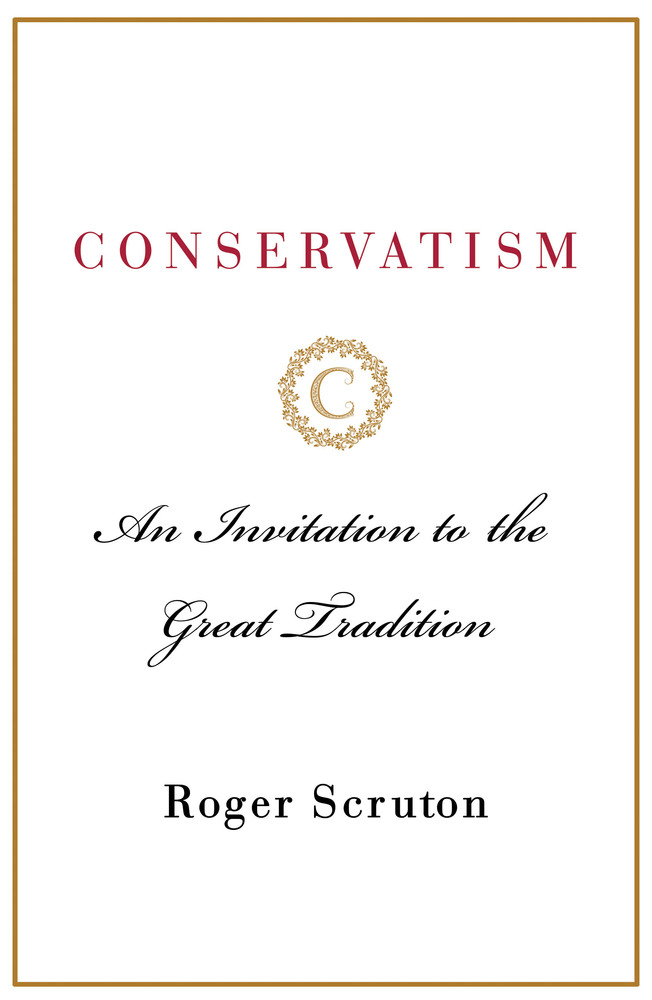
Conservatism: An Invitation to the Great Tradition by Roger Scruton

Published in 2017, a little over two years before his death, this I think was Roger Scruton’s last published work devoted to conservatism proper.  He has written other books on music and art, albeit as seen through a conservative lens, but their primary focus were aesthetic and not civic.  Conservatism: An Invitation to the Great Tradition summarizes a great career of a man who has lived his life in the public square with a particular philosophy that runs against the current of contemporary ethos.  Roger Scruton (1944-2020) was a conservative in the paleo conservative sense, not some neoconservative rebranding of once Liberal thought.  He is British, though has had a voice in European and American conservative circles, a professor of philosophy, has published over 50 books on a wide range of subjects, and for almost twenty years was chief editor at the conservative quarterly, The Salisbury Review.  Prior to the collapse of the Soviet Union, Scruton helped establish underground academic networks in communist controlled countries.


This is an excellent and concise book on the history of modern conservatism by an author who lived through most of the debates of the last fifty years.  When Scruton identifies modern conservatism, he says it is “a product of the Enlightenment,” although acknowledging that conservatism dates back in every era of history.  Conservatism for Scruton is a set of customs, values, and institutions built by a community over time that have proven to sustain, preserve and “ensure [the] community’s long-term survival” and that give it a sense of identity and unity.  Conservatism in the modern sense is a counter to the Liberal emphasis of reshaping society as radical individualism that rose out of the Enlightenment.  “Tradition,” as Scruton observes from Edmund Burke, “is a form of knowledge.”

Scruton walks us through the philosophical ideas that have shaped conservatism going back to Edmund Burke, who argued against a notion of society as a “social contract” (from Jean-Jacques Rousseau) but as a “shared inheritance for the sake of which we learn to circumscribe our demands, to see our own place in things as part of a continuous chain of giving and receiving, and to recognize that the good things we inherit are not ours to spoil but ours to safeguard for our dependents” (p. 45).  Indeed I never signed a social contract but I was certainly born into a shared inheritance.


This is not a book of the ins and outs of political battle over the course of 250 years, but the philosophic developments over that time in Western culture.
  Scruton takes us from the Enlightenment, through the British conservative counter-reaction, through the American founding, through continental European developments, and finally as a reaction to socialism in the twentieth century.  Conservatism for Scruton—and for me, since this has been my view too—is not so much a political philosophy or an economic theory or an intellectual construct, but more a desire to preserve one’s culture and traditions in the face of forced change.  Yes, there is intellectual process which ultimately undergirds that inclination, but foremost is that our culture is our home, which we have ordered through love, and to tear down that home is to violate that love.  Perhaps a summary paragraph of the book is stated as Scruton brings the reader into contemporary times:


Modern conservatism began as a defense of tradition against the calls of popular sovereignty; it became an appeal on behalf of religion and high culture against the materialist doctrine of progress, before joining forces with the classical liberals in the fight against socialism.  In its most recent attempt to define itself it has become the champion of Western civilization against its enemies, and against two of those enemies in particular: political correctness (notably its constraints on freedom of expression and its emphasis in everything on Western guilt) and religious extremism, especially the militant Islamism promoted by Wahhabi-Salif sects.  In all these transformations something has remained the same, namely the conviction that good things are more easily destroyed than created, and the determination to hold on to those good things in the face of politically engineered changed.  (p. 127)

Scruton brings us through a lot of material and personages in such a short book: Burke, Locke, Hume, Blackstone, Adam Smith (and not just for his economic theories), Samuel Johnson, Jefferson, Madison, Tocqueville, Maistre, Chateaubriand, Coleridge, Arnold, Ruskin, Chesterton, Hayak, even T.S. Eliot, Simone Weil, and D.H. Lawrence.  And of course there is William F. Buckley, Russell Kirk, and Scruton himself.  I can’t name them all, but it is quite a journey.  This is a gem of a book.


Notable quotes from the book:

“We human beings live naturally in communities, bound together by mutual trust.  We have a need for a shared home, a place of safety where our claim to occupancy is undisputed and where we can call on others to assist us in times of threat.  We need peace with our neighbors and the procedures for securing it.  And we need the love and protection afforded by family life.  To revise the human condition in any of those respects is to violate imperatives rooted in biology and in the needs of social reproduction.  But to conduct a political argument as though these factors are too far from the realm of ideas to deserve a mention is to ignore all the limits that must be borne in mind, if our political philosophy is to be remotely believable.  It is precisely the character of modern utopias to ignore these limits – to imagine societies without law (Marx and Engels), without families (Laing), without borders or defenses (Sartre).”  (p. 10)

"The most important input into conservative thinking is the desire to sustain the networks of familiarity and trust on which a community depends for its longevity. Conservatism is what the name says it is: the attempt to conserve the community that we have - not in every particular since as Edmund Burke put it, 'we must reform in order to conserve,' but in all matters that ensure our community's long-term survival."  (12)

“What [Samuel] Johnson believed he also exemplified, which was a firm moral sense combined with a robust eccentricity of manner and a deep respect for aesthetic values.  For Johnson, the established church, which brought people together in a shared recognition of God’s presence in their daily lives, was the heart of political order.  Tolerance should be extended to dissenters and unbelievers, but not at the expense of orthodoxy.” (30)

“Liberals saw political order as issuing from individual liberty; conservatives saw individual liberty as issuing from political order.  What makes a political order legitimate, in the conservative view, is not the free choice that create it, but the free choices that it creates, The question of which comes first, liberty or order, was to divide liberals from conservatives for the next two hundred years.”  (31)

“Conservatism is about freedom, yes.  But it is also about the institutions and attitudes that shape the responsible citizen, and ensure that freedom is a benefit to all.  Conservatism is therefore also about the limits to freedom.  And here, in the potential conflict with the extreme liberal view that values freedom above all other things and refuses to set limits to its exercise, we encounter one of the principal political issues of our times.”  (39)

 "For Maistre, obligation to the sovereign can have no basis in contract or consent, but only piety towards established things.  The true object of political obligation is not the state, but God, and it is in religious duty that the obligation towards all human institutions must ultimately be founded. Moreover, it is God, not man, who is the maker of constitutions, and the ultimate legislator, all French revolutionary thought on this subject being nothing but blasphemy designed to fortify human incompetence." (69)

"Thus in a celebrated essay, ‘Tradition and the Individual Talent’ (1919)…[T.S.] Eliot argued that the originality and sincerity demanded of the artist cannot be reached in isolation, that each new work acquires its expressive power through the tradition that makes room for it, and that in every sphere tradition is a process of continuous adaptation of the old to the new and the new to the old. Without tradition, originality is neither significant nor truly perceivable, and this evolutionary view of tradition is clearly applicable to civil society as a whole.  This essay left a profound mark on literary criticism and also on the practice of poetry.  But its lesson has been learned and repeated by political philosophers too." (93)

“But by the end of the nineteenth century the political philosophy of conservatism had turned in another direction.  In its original form, as described in the first two chapters, conservatism was a response to classical liberalism, a kind of ‘yes, but…’ in answer to the ‘yes’ of popular sovereignty.  It was a defense of inheritance against radical innovation, an institution that the liberation of the individual could not be achieved without the maintenance of customs and institutions that were threatened by a single minded emphasis on freedom and equality.  By the end of the nineteenth century conservatism had begun to define itself in another way, as a response to the gargantuan schemes for a ‘just’ society, to be promoted by a new kind of managerial state.  In this battle conservatism became, to a great measure, the true defender of liberty, against what was at best a rising system of bureaucratic government, at worst, as in the Soviet Union, a tyranny yet more murderous than that of the Jacobins in revolutionary France.” (104)

"Throughout its growth as a modern nation America has been built from below, through the free association of its citizens - a point noted and praised by Tocqueville in Democracy in America.  This has offered scope for conservatism as a philosophy of civil society - a philosophy that outlines and justifies the intrinsic form of civil order, against the attempt to control and amend them through the institutions of the state."  (137)

“This led [Samuel Huntington] to raise, in Who Are We? (2002), the question of American identity.  Written in the wake of the atrocities of 11 September 2001 (the 9/11 attacks on New York and Washington DC), the book argues that it will be impossible to respond in a coherent way to the Islamist threat without regaining confidence in our own identity.  This means confidence not in our political institutions only, but in the spiritual inheritance on which they ultimately rest.  The correct response to Islamist belligerence is, therefore, not simply the reaffirmation of the liberal order and the secular state.  It is the rediscovery of ourselves, in a systemic policy of cultural conservatism.”  (149-50)

This is a great interview shortly after this book was published.


Roger Scruton is one of my idols. 


Monday, March 1, 2021

City of God, Volume I, Books 1-10 by St. Augustine of Hippo

This past year I read the first volume of St. Augustine of Hippo’s City of God, the great theological opus by one of the great Doctors of the Church.  Given that the entire City of God is a 1000 pages or so, it’s not a surprise that William Babcock divided his translation into two volumes.  The first volume is comprised of the first ten “Books” (what we might call chapters, Augustine calls books), and it’s actually a very natural dividing point.  Augustine himself divides his work at Book 10 as well.  Part 1 deals with the pagan thought and theology, while Part 2 deals with the Judeo-Christian thought and theology. 

I’m only going to compose this one post for this first volume.  I may at some point post some notable quotes from the book. 

Two cities are at the heart of this work, the city of man and the city of God.  It should not be a surprise that Augustine values the city of God over that of man, but how he gets there is a feat of extraordinary composition.  He reconstitutes all of Greco-Roman history, theology, and philosophy and then deconstructs the fallacies which led to the formation of the city of man. 

The occasion for writing City of God was the sack of the city of Rome in 410.  Rome, as a physical polis, had already deteriorated by the beginning of the fourth century.  The capital of the empire had been moved to Constantinople.  Even the center of the west had moved from Rome to Milan and Ravenna.  The resources for maintaining the infrastructure went elsewhere, and so it was an aging city.  But psychologically it was still the eternal city, the heart and soul of their culture, their founding roots.  

So when the news that their founding city had been sacked, pillaged, and destroyed, it came as a trauma to their sense of being.  It was akin to how we Catholics felt when the Cathedral of Notre Dame burned and was thought to have been destroyed.  It was a cultural symbol of all we hold dear and share, and was a defining image of the decline we had been experiencing and sensing.  The sack of Rome by the Visigoths was the first time the city of Rome had been invaded by outsiders in 800 years.  That time before was by the Gauls in 390 B.C, and Rome then vowed to never be weak again and to be on their guard for any threatening force again.  It was that historical disgrace that generated an expansionist mentality in the Roman culture through legends of how their lack of virtue had led to that sack.  Years later, Virgil would take up the legend of their developed virtue and put forth that their empire was a result of Roman virtue. 

So with any monumental failure, the politicians and, indeed, the voice of the people sought blame.  It had only been less than a century since Rome had been Christianized, and the remaining pagans, who looked at their glorious history before Christianity accused Christianity as the root cause of the sack and increasing sense of a coming fall of the west.  [By the way, central thesis of Edward Gibbons’s, The Decline and Fall of the Roman Empire, a very famous work, is just that, Christianity was to blame.  Despite its fame as a work of history, it’s dead wrong.]  The occasion for City of God, begun in 412, then was a defense of Christianity against the charges of the pagans.  St. Augustine would complete the work in 426.

William Babcock quotes this from City of God as its central thesis:


Two loves have made two cities.  Love of self, even to the point of contempt for God, made the earthly city; and love of God, even to the point of contempt for self, made the heavenly city. (XIV, 28)

Now it’s not so simple to say that the earthly city stands for the pagans and the heavenly city stands for the Christians—Augustine is way more complex than that—but the earthly city does encapsulate those who lack virtue and the heavenly city does encapsulate those who live by virtue.  And Augustine will argue, Christianity was the means of which virtue, which had faded in pagan Rome, was re-introduced into society, and therefore could not be the reason for the sack of Rome in 410.


Through these first ten Books, Augustine takes us through the sordid Roman founding and history.
  Augustine outlines the history of Rome as a failure of the Roman people to maintain virtue, and that the deities on which they believed failed first to provide a moral foundation and second were actual examples of lack of virtue. The gods themselves were the source of degradation. The gods then were no gods but demons.  All the evils that occurred to the Roman people prior to Augustus, and therefore prior to Christ, were never prevented by the pagan gods, and at their root was the sinful, even shameful, nature of the Roman people.  Whatever success the Roman people had could not be attributed to the pagan gods because the pagan gods themselves lacked the virtue needed.  Whatever success the Roman people had could only be attributed to the one true God for whatever purposes He had. 

Just as the pagan gods are rejected, so too is pagan theology examined and rejected.  Pagan theology fails to instruct man to salvation, and therefore could not be the source of Roman success.  You could think of it as coincidental but not causative.  At the heart of Augustine’s argument is that the pagan gods are false because as he demonstrates they do not control the natural world.  In every tenet pagan theology that Augustine takes up he goes on to show either an inconsistency in logic, a lack of any efficacy in the ritual, or a monstrous immorality with the gods and rituals. In turn he concludes that the pagan gods are either just reflections of man’s inner fancies or outright demons that have induced their worship.

Pagan philosophy is also examined and refuted.  Augustine refutes the pagan philosophic underpinning to the divine, first acknowledging the Platonists similarity to Christianity and then showing they actually worship many gods. Augustine then turns to undermining the validity of Apuleius’ claim that demons serve as intermediaries between gods and men, and finally Augustine rebuts the Egyptian Hermes Trismegistus on his magical creation of gods and how they are rooted in dead men, not a transcendent Being.

In Book X’s closing paragraph, Augustine summarizes what he was trying to do in Part 1 and projects what he will do in Part 2.

In these ten books, then, even if less fully than a few people expected of us, we have satisfied the desires of some, so far as the true God and Lord has deigned to give us his help, by refuting the objections of the ungodly, who prefer their own gods to the founder of the holy city which we have undertaken to discuss. Of these ten books, the first five were written against those who suppose that the gods are to be worshiped for the sake of the goods of this life, and the last five against those who hold that the worship of the gods should be maintained for the sake of the life to come after death. Next, as we promised in the first book, I shall set forth, so far as I am aided by God, what I judge should be said about the origin, the course, and the due ends of the two cities, which are, as we have said, deeply interwoven and mixed together in this world.

So Augustine ends Part 1 by rejecting the pagan notion of sacrifice as a means of obtaining happiness and showing how it is a dead end while Christianity the true sacrifice was obtained by Christ the real mediator with God so that our souls can ultimately reach beatific union. One can see how then it all fits together.

I have to admit I was intimidated to read this magnificent opus, but I found it highly readable ad profoundly captivating.  But I am an ancient Roman history buff.  Perhaps it was this translation.  I can’t speak to the accuracy of Babcock’s translation—it does feel like Augustine is writing, albeit in English—but it is well annotated, well footnoted, and a real scholarly work.  I can’t wait to read Volume II.


###

Here is what I composed as a short central thesis of each of the ten Books from Volume 1.  Of course it’s as I read it, and so it may not be the perfect summary.

Book I

My take as the central thesis of Book I, then, is that the sack of Rome cannot be seen as punishment from God because it is not clear that events in history can be discerned to God’s will.  Bad things happen to good people, good things happen to bad people.  Any event can be seen as a test from God, a punishment from God, or a result of collateral damage of an overarching movement of God’s will to shape history.

Book II

Book II was absolutely fascinating.  Picking up from Book I, where Augustine delineates historical events in the life of Rome, showing that good and bad things happen to both good and bad people, Augustine outlines the history of Rome as a failure of the Roman people to maintain virtue, and that the deities on which they believed failed first to provide a moral foundation and second were actual examples of lack of virtue.  The gods themselves were the source of degradation.  The gods then were no gods but demons.

Book III

I would summarized Book III as the following: all the evils that occurred to the Roman people prior to Augustus, and therefore prior to Christ, were never prevented by the pagan gods, and at their root was the sinful, even shameful, nature of the Roman people.

Book IV

I would summarized Book IV as the following: the success and happiness of the Roman people had nothing to do with the pagan gods, who at best did not exist and at worst were demons in disguise.  The success of the Roman people had to do with the one true God who exists and is the source of all goodness.

Book V

I would summarized Book V as the following: Fate is an illusion because individuals have free will, so Rome’s empire was not acquired from worship of the Roman gods but because the one true God was pleased with Roman virtue and therefore blessed the Roman people with an empire.

Book VI

Book VI still deals with the pagan gods, but now Augustine develops the philosophy of Roman philosopher, Marcus Terentius Varro, and how his pagan theology fails instruct on what leads men to salvation.  Augustine will show how Varro’s three forms of theology, mythic (pertaining to stories of the gods) natural (pertaining to the nature of the gods), and civic (pertaining the relationship of humanity to the gods). 

Book VII

This chapter described rites and rituals of which I was never aware, and Augustine presented the theology behind myths, at least as written by Varro, and as interpreted by Augustine.  In every tenet of pagan theology that Augustine takes up he goes on to show either an inconsistency in logic, a lack of any efficacy in the ritual, or a monstrous immorality with the gods and rituals.  In turn he concludes that the pagan gods are either just reflections of man’s inner fancies or outright demons that have induced their worship. 

Book VIII

In Book VIII, Augustine refutes the pagan philosophic underpinning to the divine, first acknowledging the Platonists similarity to Christianity and then showing they actually worship many gods.  Augustine then turns to undermining the validity of Apuleius’ claim that demons serve as intermediaries between gods and men, and finally Augustine rebuts the Egyptian Hermes Trismegistus on his magical creation of gods and how they are rooted in dead men.  Augustine concludes with rejecting the claim Christians worship martyrs in the same way. 

Book IX

Augustine in this Book describes the nature of demons as conceptualized by pagans, and shows they are not the equivalent of angels.  He shows that neither angels nor demons are mediators to God, and that neither angels nor demons should be worshipped in any way.

Book X

In this magnificent chapter, Augustine takes us from what is true happiness, that is being united with God in love, through how the pagans and Platonists (through the philosopher, Porphyry) have misunderstood union with God and individual purity which brings us to God, and that the true source of are not demons, who are working against that union, but Christ by His incarnation and sacrifice.  This was a super chapter that put the entire Part 1 into context. 


Wednesday, January 15, 2020

In Memoriam: Sir Roger Scruton

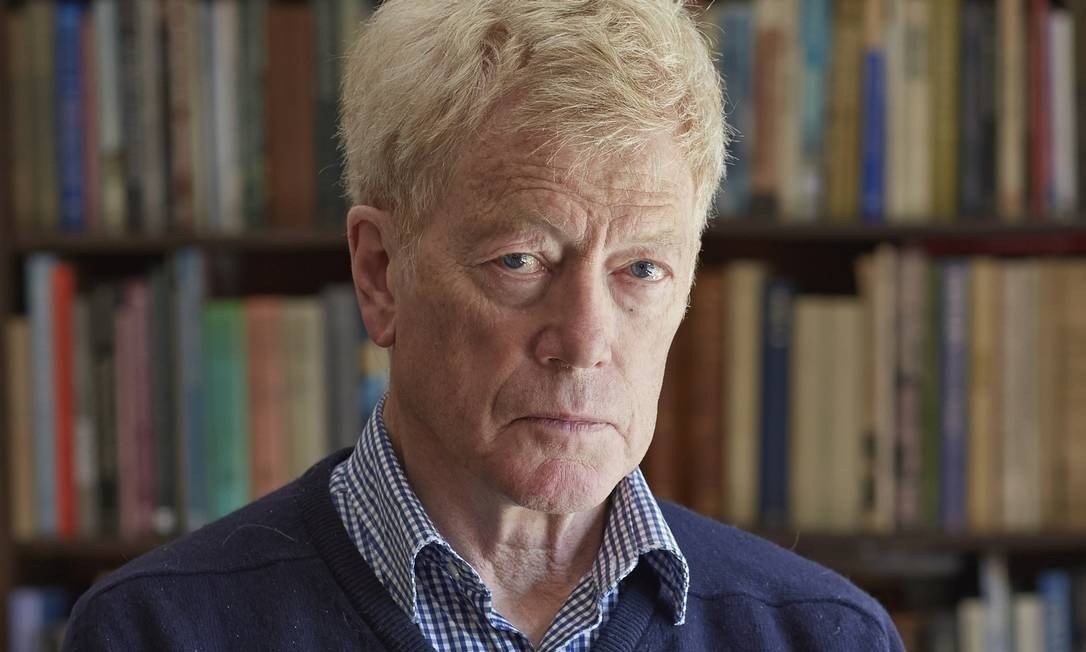
A few days ago (January 12th) the notable British philosopher and conservative intellectual, Sir Roger Scruton passed away from cancer at the age of seventy-five.  It was certainly a sad moment, especially for those of us who consider themselves conservative, who have embraced and engaged in the intellectual progress of conservatism, and revere conservatives living and through the ages.  Sir Roger Scruton was a giant of modern day conservatism.  He was the William F. Buckley of Britain.  That is to say using the Buckley adage, “A conservative is someone who stands athwart history, yelling Stop.” Sir Roger Scruton yelled stop against the mindless progressivism that is probably even more dominant in Britain than in the United States. 


I’m not going to list his intellectual accomplishments.  I can’t.  I’m not schooled enough in his books, but you can get a cursory overview in his Wikipedia entry.  While I compared Scruton to William F. Buckley above, that comparison was in terms of stature and public persona, not in philosophic unanimity.  Buckley over the years became more and more a Libertarian.  Roger Scruton was not a Libertarian and I believe was suspicious of Libertarians.  While conservatives may have some economic agreement with Libertarians, there is much we disagree.  Closer to Roger Scruton in philosophic outlook I believe was Russell Kirk, the person at the root of 20th century American conservatism. 

That said, let me highlight a number of tributes put out for Sir Roger on his passing.  First from an obituary in the British Daily Mail, subtitled “'Greatest conservative of our time.”  

Sir Roger Scruton, a revered conservative philosopher who cleared his name after being sacked as a government advisor over false anti-Semitism claims, has died after a six-month battle with cancer.

The Cambridge graduate - author of some 50 books on morals, politics, architecture and aesthetics - died on Sunday, with his family saying they are 'hugely proud of him and of all his achievements'.

Tory MEP Daniel Hannan tweeted: 'Very sad news. Professor Sir Roger Scruton, the greatest conservative of our age, has died. The country has lost a towering intellect. I have lost a wonderful friend.'

The conservative magazine the Spectator USA highlighted possibly his greatest achievement, setting up an underground university in communist held Europe despite the intellectual sympathies to the communists that came out of British universities: 

During the Cold War he faced an academic and cultural establishment that was either neutral or actively anti-Western on the big question of the day. Roger not only thought right, but acted right. Not many philosophers become men of action. But with the ‘underground university’ that he and others set up, he did just that. During the Seventies and Eighties at considerable risk to himself he would go behind the Iron Curtain and teach philosophy to groups of knowledge-starved students. If Roger and his colleagues had been largely leftist thinkers infiltrating far-right regimes to teach Plato and Aristotle there have been multiple Hollywood movies about them by now. But none of that mattered. Public notice didn’t matter. All that mattered was to do the right thing and to keep the flame of philosophical truth burning in societies where officialdom was busily trying to snuff it out.

Paul Krause at the online conservative magazine, The Imaginative Conservative, probably summarized the core of Scruton’s thought: 

Sir Roger had risen to some fame with the publication of The Meaning of Conservatism in 1980, a philosophical exposition of the political tradition free from the negativity and pejoratives of those who have often controlled the meaning and understanding of conservatism. In this work, Sir Roger decisively showed how conservatism is, properly, independent of the classical liberal economic dogmas that largely usurped the older, communitarian, traditional, and aesthetic spirit of conservatism, which Sir Roger saw deriving from the thought of Aristotle through that of Burke and Eliot. In his defense and exposition of conservatism, Sir Roger explained that conservatism was an organic outgrowth of unique inheritances including Common Law, property rights, and institutional justice, producing the liberty that conservatives enjoy and in which they are allied in preserving. In American parlance, Sir Roger’s conservatism is what we now call paleo-conservatism.

Krause, who had studied under him, characterized him summarily: 

Contrary to the leftwing media’s portrait of him, the Roger Scruton that we all came to know was a gentle and humorous man, a man who wouldn’t harm a fly and who was open to all people. Like moths attracted to the flame, students from all continents came together to discuss everything from music and aesthetics to politics and metaphysics with Sir Roger, who seemed to be the incarnate flame of wisdom. His encyclopedic knowledge allowed him to help all in our respective pilgrimages. He was our Virgil through hell and purgatory, and he left us at the top of the mountain, pointing to the light that lay beyond. Befitting a man of such humility, he once revealed to us that instead of being remembered as the world-class philosopher he was, he wished to be remembered as the organist for the small Anglican parish of which he was a member.

The Imaginative Conservative also published Sir Roger’s final speech titled, “A Thing Called Civilization.” A couple of quotes: 

Now, I myself have obviously got into an awful lot of trouble through defending Western civilization. It seems a strange feature of our times that the more you’re disposed to defend it, the more you are regarded as some kind of narrow-minded bigot. But the people who make that accusation are the real ones with the narrow mind. They’re people who do not see exactly how large and comprehensive our civilization has been and still is.

And

And I feel that now is the time, through institutions like ISI especially, to bring courage and conviction again to young people who know that there’s something wrong with this activist witch hunting of the old curriculum. The time has come, it seems to me, for people like me and the older generation of teachers to give courage to young people, to say: Look, you have a civilization and inheritance which helps you to understand these things. Giving way to activism of this kind, activism which excludes whole realms of human knowledge, is not doing yourself a favor. It’s not bringing to you the things that you actually need in the world into which you’re going to progress.

And

Let’s leave aside the idea of Western civilization. After all, it depends which way you’re going around the globe whether it’s West or East. Look instead at the idea of civilization. What is it? What is a civilization? It is surely a form of connection between people, not just a way in which people understand their languages, their customs, their forms of behavior, but also the way in which they connect to each other, eye to eye, face to face, in the day-to-day life which they share.

This is something which has ordinary dimensions in the workplace and in the community, in our day to day. But also it has a high culture built upon it, works of art, literature, music, architecture, and so on. These are our ways of changing the world so as to be more at home in it.

I think that is the distinctive feature of Western civilization, that it is a comprehensive civilization constantly giving us new ways of being at home, ways of being in relation to each other, which bring peace and interest as the primary bonds between our neighbors.

As a philosopher, Sir Roger was known for his philosophy of aestheticism, that is, what makes beauty. His contribution I think was answering the question as to why beauty is even needed.  Here is a BBC documentary, titled “Why Beauty Matters,” that he wrote and produced explaining why beauty in the modern world matters even more so than in the past.  It’s almost an hour long, but it will be worth your while to watch it in its entirety.


Finally I wish to include in this In Memoriam a quote from Sir Roger that I think captures the core of what his conservatism was all about. 

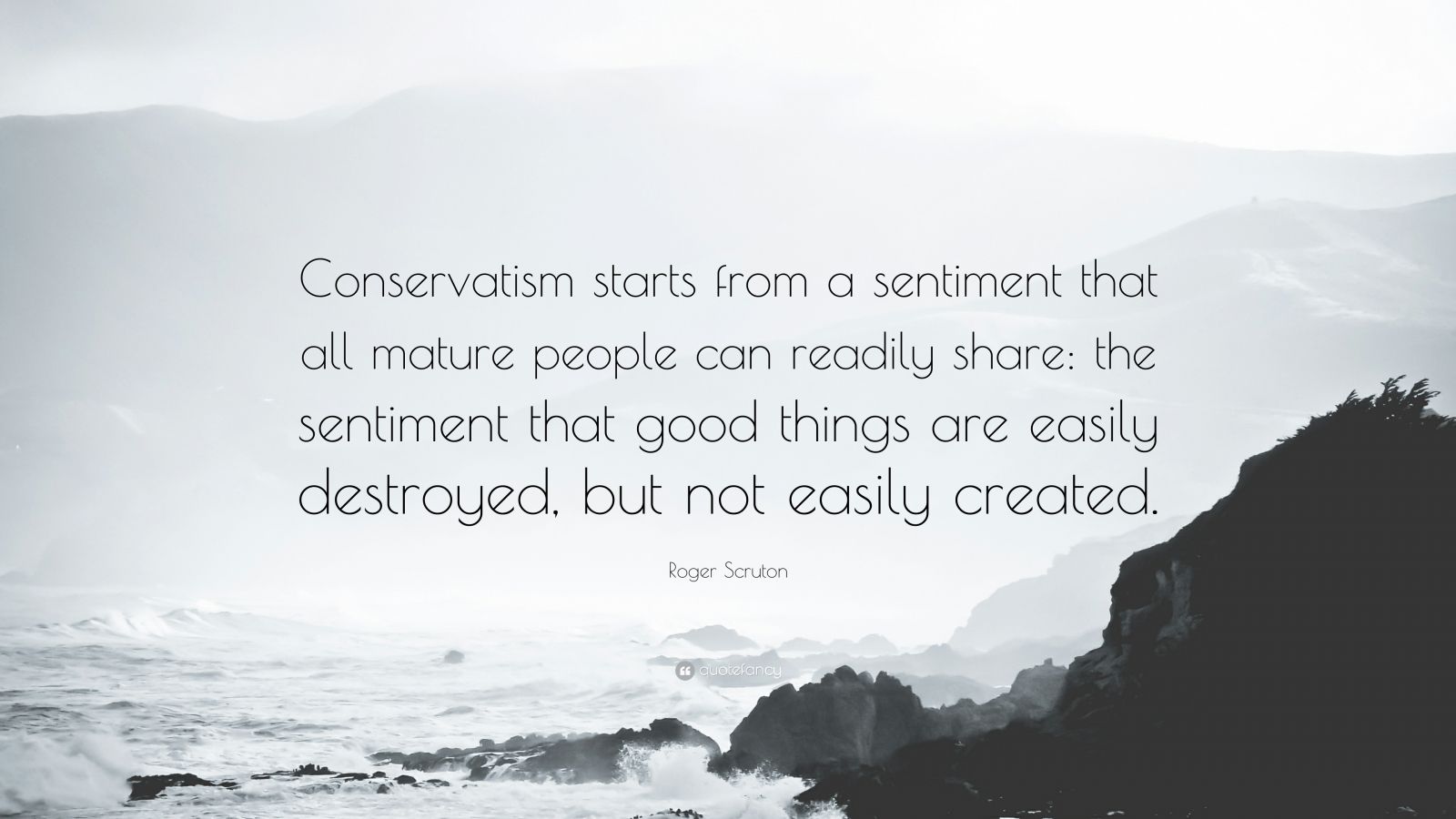
"Conservatism starts from a sentiment that all mature people can readily share: the sentiment that good things are easily destroyed, but not easily created. This is especially true of the good things that come to us as collective assets: peace, freedom, law, civility, public spirit, the security of property and family life, in all of which we depend on the cooperation of others while having no means singlehandedly to obtain it. In respect of such things, the work of destruction is quick, easy and exhilarating; the work of creation slow, laborious and dull. That is one of the lessons of the twentieth century. It is also one reason why conservatives suffer such a disadvantage when it comes to public opinion. Their position is true but boring, that of their opponents exciting but false."
-Sir Roger Scruton

That my friends is the essence of conservatism, that "collective assets," by which he means cultural touchstones, are derived from a historical past and cannot be replicated without generations of experience.  They should be nearly sacrosanct in value and handled with loving care.

May the Lord grant Sir Roger Scruton eternal rest in peace with God’s beautiful light shining on him in eternity.