Happy First Week of Advent!
This is the first post of several posts on Redeemer in the Womb: Jesus Living in Mary
by John Saward, a book which our Goodreads Catholic Book Club chose as our
Advent/Christmas read in 2024. This is a
devotional book meditating on the nature and implications of the nine months of
Jesus conception and gestation in the Blessed Virgin Mother’s womb. These posts will coincide nicely with this
year’s Advent.
From the book’s Introduction:
This book is an essay in reclamation. First, with the aid of the
Church’s Fathers and chief Doctors, drawing on Christian philosophy, liturgy,
poetry, and iconography, it seeks to recover and reconsider a forgotten pearl
from the treasury of revelation: the nine months of Jesus’ life as an unborn
child in Mary. Secondly, since the Incarnation of God the Son in the Virgin’s
womb reveals the greatness of man’s dignity, I am inviting my readers to look
again, this time in the light of the incarnate Son of God, at the womb-weeks of
their own and every human life. I am going to suggest that we re-read this
first chapter of the human story and find afresh its beauty, truth, and
goodness. It is only our estranged faces that have missed this many-splendored
thing.
That statement of objective is split in
two. First it presents the conception
and gestation of our Lord within His mother’s womb, but it also stops to
meditate on the significance of the various stages leading to the birth. I think the book is first a meditation on
Christ in the womb and second a book of theology.
A good question is how do we approach
meditations? I think we approach them
knowing there are insights we glean to deepen our devotion, deepen our
understanding, and deepen our faith.
###
From Kerstin’s Introduction to Chapter 1: The
Moment God Became Man:
Chapter 1 – The Moment God Became Man
…according to the Church’s teaching, we can be precise about the moment
of the Incarnation: it took place when the Virgin Mary said to the angel, “Be
it done unto me according to thy word” (v. 38). It was exactly then that, by
the overshadowing of the Holy Spirit, a body was fashioned from the Virgin’s
flesh and blood, a rational soul created and infused into the body and, in the
same instant, the complete human nature united to the divine Word. There were
no successive stages in this taking of manhood; the body did not come into
being before the soul, nor the soul before the body, nor were either ever other
than his, God the Son’s: the flesh was conceived, ensouled, and assumed
simultaneously.
When exactly was Christ conceived in the Virgin’s womb? There was a
debate in the Church from early on spanning many centuries about it as well as
to when Christ’s body and soul was fully formed in the Virgin’s womb. Did he
have a soul prior to conception as Origin proposed? Was there first the body
and then it was infused with a soul? It was Maximus the Confessor (580 – 662)
who ultimately determined that the intellectual soul is created by God and
infused into the body in the very instant of conception. He teaches that man is
a synthesis of body and soul. One cannot exist without the other. St. Thomas
Aquinas added that Christ’s body was perfectly formed from the moment of
conception. This conclusion, while wholly logical for his time, is now outdated
given our current understanding of the mechanisms of conception and the
developmental stages of the human baby in the womb.
Michelle’s Comment:
Thank you, Kerstin. I really liked this from pg. 18:
"Maximus suggests that, were soul not wedded to body from the
beginning, there would be no reason why it should not, so to speak, divorce and
remarry at the end: reincarnation would be as reasonable a human destiny as
resurrection."
Michael’s Comment:
I don't think that the mystery of Christ's birth can be seen only in
biological or logical terms. Mary's virginity already shows us that is not a
conventional conception. We're outside any other conception that has ever taken
place, and any other conception that will take place between the beginning and
the end of the world. Christ and his Blessed Mother are a unique and
unrepeatable event.
Ellie’s Comment:
I loved the comparison of Elizabeth to King David: How can the Ark of
the Lord come to me? I don't think such a similarity is accidental - nothing is
accidental with the Lord, and so it's such a wonder. I also put down some notes
on how Mary might be the redeeming quality of Eve. I'm not a theologian and I
don't want to say the wrong thing, but still I'd like to share these two notes
I made:
"The greatest miracle of humanity is that God came to dwell among
us. And He did it through a humble woman. There is this striking difference
between Eve and Mary – Mary’s obedience was absolute, even to the point of her
life being in danger. She, in some sense, is the redeeming quality of
Eve."
"Corinthians 22:15 “For as in Adam all die, so also in Christ shall
all be made alive.” Can we also apply this to Eve and Mary? Mary is exempt from
labour pains for her holiness, she is holy."
(Here I would also love to draw from Vita Consecrata by st. John Paul
II. when he described how Mary is the first consecrated person - she has been,
since Jesus' conception)
My Comment:
Saward makes the doctrine clear up front.
The coincidence of the Virginal Conception and the hypostatic union is a
defined doctrine of the Catholic faith. In the words of the ‘Formula of Union’
agreed between St. Cyril of Alexandria and the Antiochene bishops in 433
and canonized by the General Council of Chalcedon in 451, “We confess the holy
Virgin to be Mother of God, because God the Word was made flesh and became man
and from the very moment of conception united to himself the temple he had
taken from her.”
###
My Comment:
“This book is an essay in reclamation. First, with the aid of the
Church’s Fathers and chief Doctors, drawing on Christian philosophy, liturgy,
poetry, and iconography, it seeks to recover and reconsider a forgotten pearl
from the treasury of revelation: the nine months of Jesus’ life as an unborn
child in Mary. Secondly, since the Incarnation of God the Son in the Virgin’s
womb reveals the greatness of man’s dignity, I am inviting my readers to look
again, this time in the light of the incarnate Son of God, at the womb-weeks of
their own and every human life. I am going to suggest that we re-read this
first chapter of the human story and find afresh its beauty, truth, and
goodness. It is only our estranged faces that have missed this many-splendored
thing.
That statement of objective is split in two. First it presents the conception
and gestation of our Lord within His mother’s womb, but it also stops to
meditate on the significance of the various stages leading to the birth. I
think the book is first a meditation on Christ in the womb and second a book of
theology.
A good question is how do we approach meditations? I think we approach them
knowing there are insights we glean to deepen our devotion, deepen our
understanding, and deepen our faith.
###
My Comment:
Chapter 1 is a meditation on the conception of Christ within the Blessed
Virgin’s womb. Saward goes on to say that at the very moment, that is with no
lapse of time, the Blessed Mother gave her yes was the physical conception
generated.
There were no successive stages in this taking of manhood; the body did
not come into being before the soul, nor the soul before the body, nor were
either ever other than his, God the Son’s: the flesh was conceived, ensouled,
and assumed simultaneously
It was at this very moment, and again with no lapse of time, that the full
nature of Christ became incarnate.
The coincidence of the Virginal Conception and the hypostatic union is a
defined doctrine of the Catholic faith. In the words of the ‘Formula of Union’
agreed between St. Cyril of Alexandria and the Antiochene bishops in 433 and
canonized by the General Council of Chalcedon in 451, “We confess the holy
Virgin to be Mother of God, because God the Word was made flesh and became man
and from the very moment of conception united to himself the temple he had
taken from her.
This also provides insight as how a natural person is ensouled during typical
conception. Saward takes from St. Maximus the Confessor:
One of the questions concerns the moment at which soul and body are
united. Does the soul exist before the body (as the Origenists teach)? Or does
the body exist before the intellectual soul (as Aristotle and the Stoics, in
their different ways, teach)? Both hypotheses are to be rejected, says Maximus:
the intellectual soul is created by God and infused into the body in the very
instant of conception.
So when the pro-abortion crowd try to sell you that a fetus has no soul until
some distant point in the gestation, you can utterly reject that out of hand.
It is not what the Catholic Church teaches.
Maximus goes on to conceptualize, and again this is Catholic Church teaching,
that the body and soul are integral to each other.
Maximus insists that man is not a soul using a body but a unity of body
and soul, a “synthesis,” a “complete figure” (eidos holon). This “completeness”
(ekplêrôsis) of the human person enjoys a physical as well as metaphysical
priority. If a man is essentially
a whole, then he must be a whole from the beginning: the genesis of body and
soul must be simultaneous. This soul is defined in relation to this body; that
body in relation to that soul. Each must, therefore, belong to the other from
the outset. After all, even after separation in death, they do not lose their
reference to each other. Maximus suggests that, were soul not wedded to body
from the beginning, there would be no reason why it should not, so to speak,
divorce and remarry at the end: reincarnation would be as reasonable a human
destiny as resurrection.
So there is a knitted relationship between one’s body and one’s soul that are
linked even after death and reunited at the end of time. All of this seems to
be derived from Christ’s incarnation and resurrection.
The miraculous how of Christ’s conception reveals who he is; it does not
make him any the less what we are. This is the doctrine of Pope St. Leo the
Great (d. 461) in his Tome. The Son of God becomes man, he says, “in a new
order, generated in a new birth,” but this newness—so “singularly wonderful and
wonderfully singular”—has not abolished the nature of our race.
Saward goes on to conclude:
Apart from the saving novelty of its virginal manner, the conception of
Christ is in all respects like ours. For us, then, as for him, it is the moment
from which we are fully and completely human, endowed with rational soul as
well as body.
Some in the pro-abortion crowd will argue that St. Thomas Aquinas did not
believe in that the soul was formed at conception, and this is true. Saward
fully provides Aquinas’ argument that a rational being required organs to be
rational, and so could not be ensouled until they had formed. On this Thomas
Aquinas is wrong, and the Church has never accepted that argument.
###
Ellie Reply to My Comment:
Manny wrote: "So when the pro-abortion crowd try to sell you that a
fetus has no soul until some distant point in the gestation, you can utterly
reject that out of hand. It is not what the Catholic Church teaches. "
I was actually thinking exactly that!! To be Catholic is to be, first and
foremost, pro-life and I love how this book subtly emphasizes. It will come up
in the third chapter, too, so I don't want to get ahead, but some of the things
the Church Fathers dealt with are so eerily similar to what we have to deal
with in today's society, including the dignity of human life.
Kerstin’s Reply to My Comment:
Manny wrote: "This also provides insight as how a natural person is
ensouled during typical conception."
There is a natural phenomenon that occurs when the two gametes join to form a
new human being, there is a flash of light. With frog eggs, which are quite
large and the laying and fertilizing is outside the body, one can observe it
with the naked eye.
My Reply to Kerstin:
Yes, I had forgotten about that. That is true and I think represents
God's involvement in the creation of life.
###
My Comment:
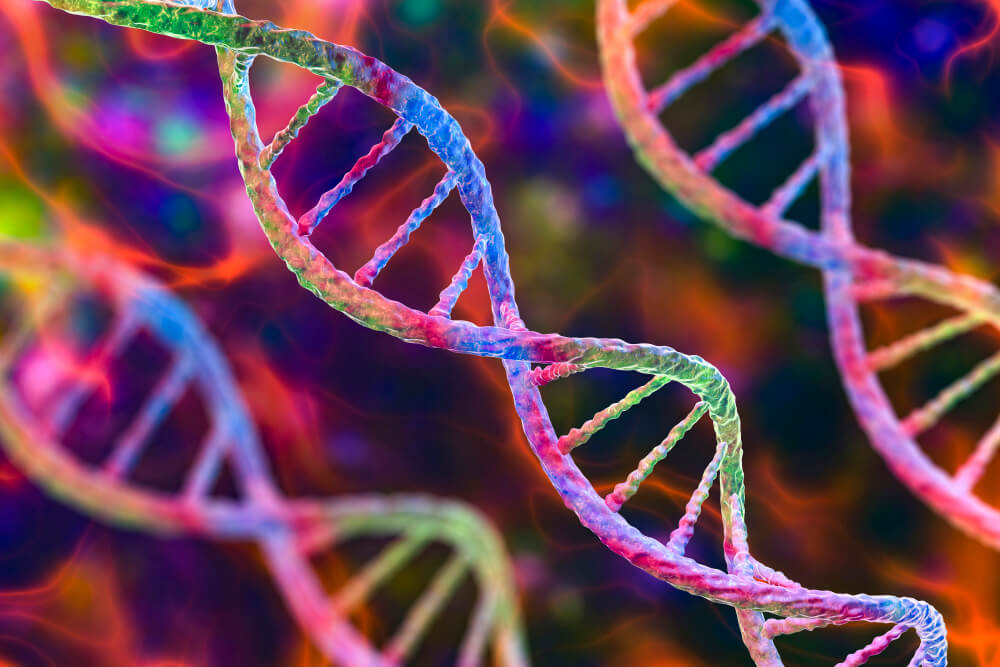
One aspect of Christ’s conception that Saward does not contemplate upon
is the interaction of the male and female DNA at conception. Twenty-three pairs
of chromosomes come together at conception, half from the father and half from
the mother. Christ’s conception did not have a human father. So what DNA did
Christ have? This is something I’ve contemplated over the years, and unfortunately
have not come to any conclusion. It’s too bad Saward doesn’t take this up; I
would have loved to have seen some speculation. As I have thought on this,
there are a myriad of possibilities that I can come up with. Here are some.
1. Christ could have received the female contribution from his Blessed
Mother and God could have infused a divinely inspired male side. This would
dovetail with Christ’s two natures.
2. Christ could have received the female contribution from his Blessed
Mother and God could have infused the DNA of Joseph, Mary’s spouse and Christ’s
foster-father as a fitting formation of their family.
3. Christ could not have had any human DNA and had a uniquely set of
divinely inspired chromosomes.
4. Christ could have had some general Jewish DNA formulated from his
genealogy.
5. Christ could have had his Blessed Mother’s DNA from the female side
and King David’s from the male side. Or Abraham’s from the male side. Or Adam’s
from the male side.
Anyone think of any other possibility? Which one do you think is most
likely?
###
Ellie’s Reply:
Manny wrote: "Anyone think of any other possibility? Which one do
you think is most likely?"
This is such a complicated idea and much too big for me to even attempt to
unravel, but I would probably point to the Shroud of Turin or the Eucharistic
miracles. The DNA found on the Shroud might have been from people touching it,
but what about the blood of the miracles? It would be awesome if we could
amplify the DNA samples from the blood, then the mystery would be solved, but I
guess some things have to remain a mystery because they are too great for us to
understand? That's my understanding.
But I think all the options you laid out, Manny, are interesting. I guess Jesus
would probably have to have some DNA from the Davidic line, and subsequently,
Adam's, since he is the Son of Man, completely human as well as God.
It's a wonderful question for contemplation, though!
Kerstin’s Reply:
Many years ago, when our bishop came to visit the parish, he spoke on
the very same thing. He didn't know how the "missing" human father's
contribution was accomplished. It is still in my memory how my immediate
reaction was: we're dealing with God here, I think He can manage!
What was my gut reaction here? We in the West have a tendency to explore
things into minute details often at the expense of the great mystery before us.
Unlike our Orthodox brothers and sisters we are not very good at keeping a
mystery a mystery, we have to dissect it as much as possible. Yes it is fun to
play around with the possible permutations, but in the end we should not lose
sight of the wonder and mystery.
Frances’s Reply to Kerstin:
Thank you for such beautiful contributions, Kerstin. I don’t remember
his words in their entirety, and so this is only part of a quotation, but at
the ceremony celebrating the re-opening of Notre Dame Cathedral, Gabriel Macron
said that one reason the cathedral has so much significance for us is the human
longing for “meaning and transcendence.’’ I think that is exactly what you are
stressing in reminding us not to lose sight of ‘’the wonder and mystery” as we
read.