"Love follows knowledge."
"Beauty above all beauty!"
– St. Catherine of Siena

Showing posts with label Rock. Show all posts

Sunday, August 23, 2026

Sunday Meditation: Who Do People Say That the Son of Man Is?

On the Twenty-First Sunday in Ordinary Time in Year A, we get the well-known foundation of the Church in the person of Peter.  Three years ago I embedded a video clip of Dr. Brant Pitre giving the fullest exegesis of how this Gospel passage formed the Catholic Church, the Papacy, and the Church’s authority in the person of Peter.  No other video clip is going to expand on that because that clip said it all.  In that clip, Dr. Pitre quoted the second century theologian and bishop, Irenaeus, from Against Heresies on the early Church’s view of this passage.  It’s worth quoting here.


St. Irenaeus wrote this about the church at Rome and Peter's successors: quote, “the very great the very ancient and universally known church found in and organized at Rome by the two most glorious Apostles Peter and Paul; as also the faith preached to men…comes down to our own time by mean of the successions of the bishops.  For it is a matter of necessity that every Church should agree with this Church [meaning the church at Rome] on account of its preeminent authority, that is, the faithful everywhere…The blessed apostles, then, having founded and built up the Church, committed into the hands of Linus the office of the episcopate [Linus was Peter successor]…To him succeeded Anacletus; after him, in the third place from the apostles, Clement.  To this Clement there succeeded Evaristus. Alexander followed Evaristus; then sixth from the Apostles, Sixtus was appointed; after him Telephorus, who was gloriously martyred; then Hygenus; after him, Pius; then after him Anicetus.  Soter having succeeded Anicetus, Eleutherius does now, in the twelfth place from the Apostles, hold the inheritance of this episcopate.  In this order, and by this succession, the ecclesiastical tradition from the Apostles, in the preaching of the truth have come down to us. and this is the most abundant proof that there is one and the same vivifying faith which has been preserved in the church and the Apostles until now and handed down in truth.”  (Irenaeus, Against Heresies 3.3.2-3; trans. ANF 1.415-16)

This was written in the year 180 A.D.  Don’t ever let anyone dissuade you from knowing that today’s Gospel passage identified Peter and his successors—for this passage shows the rule of succession which some deny—as the foundation to bind and loose, teach and consecrate from Peter to Pope Leo XIV today. That understanding was there from the beginning.

Today’s Gospel:


Jesus went into the region of Caesarea Philippi and

he asked his disciples,

"Who do people say that the Son of Man is?"

They replied, "Some say John the Baptist, others Elijah,

still others Jeremiah or one of the prophets."

He said to them, "But who do you say that I am?"

Simon Peter said in reply,

"You are the Christ, the Son of the living God."

Jesus said to him in reply,

"Blessed are you, Simon son of Jonah.

For flesh and blood has not revealed this to you, but my heavenly Father.

And so I say to you, you are Peter,

and upon this rock I will build my church,

and the gates of the netherworld shall not prevail against it.

I will give you the keys to the kingdom of heaven.

Whatever you bind on earth shall be bound in heaven;

and whatever you loose on earth shall be loosed in heaven."

Then he strictly ordered his disciples

to tell no one that he was the Christ.

~Mt: 16:13-20


My Catholic Life! provides an exegetical aspect that Dr. Pitre doesn’t develop.  It’s worth including here.


My Catholic Life!:

Jesus went into the region of Caesarea Philippi and he asked his disciples, “Who do people say that the Son of Man is?” They replied, “Some say John the Baptist, others Elijah, still others Jeremiah or one of the prophets.” He said to them, “But who do you say that I am?” Simon Peter said in reply, “You are the Christ, the Son of the living God.” Matthew 16:13–16


The symbolism associated with Caesarea Philippi is central to today’s Gospel. Located north of Jesus’ home base in Capernaum, it was a predominantly pagan city known for its shrines to false gods. One of the most prominent was Pan, after whom the region was named Panias (later Banias). Pan, a Greek god, was honored at a shrine near a large cave and spring considered the entrance to Hades. Pan was the god of nature, shepherds, flocks, wild places, fertility, and rustic music, and was often depicted as half man, half goat, with horns and hooves. He played the pan flute and was associated with lust, chaos, and sudden fear—from which we get the word panic.


Additionally, the city was the site of a temple dedicated to the late emperor, Caesar Augustus, who was worshiped as a god throughout the Roman Empire. It was into this spiritually dark pagan setting that Jesus led His disciples—on what may have been a two-day journey—for what culminated in a single, monumental question.


Jesus took the Twelve away from the comfort of their familiar fishing village and Jewish neighbors for a reason. He wanted them to answer His question not in the midst of the familiar and safe, but in a place marked by spiritual confusion and idolatry. Why? So that faith could be professed even there, and divine grace could confront the darkness that permeated the region.

The locations of where the Gospel events occur are usually important to their meaning.  I may have mentioned this before, and here the region of Caesarea Philippi—notice its very Roman derived name—is a contrast to what Jesus is trying to instruct.  If the Roman emperor titled Caesar was considered a god and a son of god, Jesus identifies who the true God and the true Son of God is.


For the pastoral homily I’m going to turn to the successor of St. Peter, the current Holy Father, Pope Leo XIV.  This is from his homily on this passage given today at his Sunday Angelus.  The first four minutes are television introductions.  The Holy Father comes out at just about the 4:00 minute mark. 


Better still, you can read his entire homily at the Vatican Website.  Here are some key excerpts.

Pope Leo XIV:

The Gospel passage makes us understand how decisive this question is for the experience of discipleship.  Indeed, although the twelve apostles had already shared so much of the life and ministry of their teacher, Jesus did not take for granted that they truly knew him or had understood the mystery of the Kingdom of God.  Thus, after asking them what people were saying about him, he addressed them directly: “But who do you say that I am?” (Mt 16:15).


Brothers and sisters, this is a fundamental question for the disciples of every age, and for each one of us.  Faith is not something given to us once and for all.  Rather, we continually need to rediscover the face of Christ and his Gospel, to enter more deeply into his message and to renew the choices we make in our lives, so that they may be consistent with what we profess.  In this way, we can overcome the temptation to think that we already know everything and to reduce faith to mere habit.


The question that is put to us each day — who is Jesus for me, and what does his presence mean in my life? — emerges especially in prayer and when we meditate on the Gospel.  Yet it also arises when we encounter the wounds and needs of our brothers and sisters, and in those relationships and situations that most deeply challenge our conscience.  In our daily lives, in short, we can discover whether the Lord Jesus is for us merely a great figure of history, who said and did important things, or the Christ of God, the One sent to bring us into the love of the Father and to transform our lives and the world in which we live.

The question Jesus poses to the apostles is the question He poses to us, not just once or once a month or once a year.  Jesus poses this question to us every day, and we are to be guided by our response every day.


Sunday Meditation: "You are the Christ, the Son of the living God."


Let’s return to John Michael Talbot for today’s hymn with “Surrender to Jesus.”


Take all my freedom

My liberty, my will

All that I have

You’ve given to me

So I offer it up to You


CHORUS:

I surrender it all to Jesus

I surrender it all to God’s will

I surrender it all for the kingdom of God

I surrender my life, my all


Your grace and Your love

Are wealth enough for me

Grant me these Lord Jesus

And I’ll ask for nothing more


(CHORUS)


I surrender it all for the kingdom of God, my life, my all.  I surrender it all to Jesus.

Tuesday, November 4, 2025

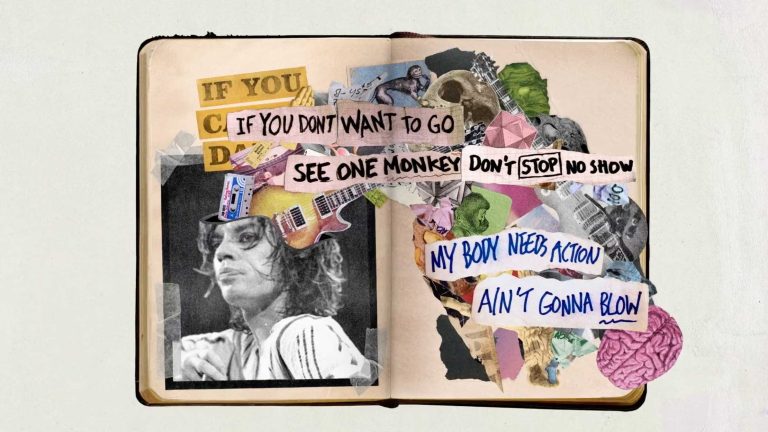
Music Tuesday: Shame Shame Shame by The Rolling Stones

I haven’t had a “Music Tuesday’ post in quite a while.  If you have followed my blog you might remember that one of my guilty pleasures is my love of the music by The Rolling Stones.  Of course The Rolling Stones are not going to get an imprimatur from any Catholic bishop, and perhaps one could make an argument that some of their themes contributed to the decadence of our contemporary culture.  Nonetheless as artists of rock and popular music, they are among the greatest.

On November 14th, the Stones will be releasing a remastered and expanded version of their 1976 album, Black and Blue.  Remastering is an enhancement of the audio sound using more modern technology so that the track on the medium sounds closer to the studio recording.  You can read about remastering here.  But this new release is also an expanded version of the original album which will include six tracks that did not make the final album.  The Stones like to say they have a vault full of gems that never made the final cut, and so, as with other new remastered albums, they have provided outtakes from the original recording sessions as additional material.  These outtakes aren’t necessarily finished, and so sometimes they will go into the studio and “finish” the song or even add to it.  But the finished song still should retain the aesthetics of that original session.

The remastered release will have six outtakes as new songs and depending on which version of the album (two disk studio songs, four disk includes live show, and five disk includes a Blu-ray video of the show) will have a recording of a live show from the 1976 tour, “Live at Earl’s Court.”  Of the six new songs, the Stones have released a single, “Shame Shame Shame.”  This is the song I want to share in this Music Tuesday.  First the song, and then I’ll talk about it.


It’s too bad this song did not make the original album because this song is fantastic!  Black and Blue was not one of the Stones’ great albums.  It probably would come in low on my ranking of Stones’ albums.  This is just a great cover of a song and would have most certainly improved the album.  The original song was written Sylvia Robinson and originally released by Shirley & Company in 1974.  The lead singer of Shirley & Company was the Shirley Goodman of the 1950s group Shirley and Lee, and who had a big hit in 1956, “Let the Good Times Roll.” Her “Shame Shame Shame” also hit number one on the charts. 

Shirley Goodman’s work is mostly in the Rhythm and Blues and Soul vein, but “Shame Shame Shame” has more of a disco dance feel of the 1970s.  It also uses a Bo Diddley beat that has been widely used in R&B and rock and is perfect for dance music.  Shirley has a naturally high pitched voice and in her original she does it as a duet between her falsetto female voice complimented with the male tenor voice of Jason Alvarez.  The original version uses a saxophone for the solo interlude played by Seldon Powel.  Here is the original “Shame Shame Shame.”


It’s a dance song with the first person narrator expressing her need to go out dancing and it’s a shame if her interlocutor, who I take is a male friend, can’t dance or doesn’t want to go.


Shame shame shame on you

If you can't dance too


Can't stop me now hear what I say

My feet wanna move so get out my way

I'm gonna have my say

I'm going to every discotheque

I'm gonna dance dance dance dance ooh

Till the break of day I say


CHORUS

Shame shame shame hey shame on you

If you can't dance too

I say shame shame shame

Shame shame shame

Shame shame on you

If you can't dance too


Don't stop the motion

If you get the notion

You can't stop the groove

'Cos you just won't move

Got my sun-roof down

Got my diamonds in the back

So put on your shaky wig baby

If you don't I ain't comin' back


REPEAT CHORUS


If you don't want to go

Remember one monkey don't stop no show

My body needs action ain't gonna blow

Yes I'm going out I'm going to find a dancin' man

If you really think you're fast

Try to catch me if you can

I say shame shame shame yeah (aah) shame on you

If you can't dance too


It's a shame shame shame

Shame shame shame

Shame shame on you

If you can't dance too

If you can't dance


This is an incredibly catchy song.  There is something that coordinates so well between the predominant lyric “Shame shame shame/Shame on you” with the Bo Diddley beat.  If you don’t know what is referred to as a Bo Diddley beat, listen to Matt Dwyer who provides blues guitar lessons on YouTube.


The catchy lyric has the meter of four stressed accents followed by two unstressed: / / / / u u.  The four stress words (“Shame Shame Shame/Shame”) mirror the first part of the Bo Diddley beat and the two unstressed words (“on you”) mirror the last two beats.   Now that you have seen the Matt Dwyer explanation and my metrical insight, go back to the Shirely version and listen to it again.  I think I’m correct there.

Now go back to the Stones version.  They just don’t copy the music, they enhance it.  First off, the Stones version weaves multiple guitars that overlay over the Bo Diddley beat.  It’s a much more complex sound.  The original song is joyous but the interplay by the guitars in the Stones version make it so much more joyous.  It’s as if the guitars are in a state of ecstasy.

Another difference is that the Stones version eliminates the sax and uses an electric guitar for the solo.  It fits so much better with the interweaving guitars.  It’s as if one of the weaving guitars stepped up and provided the solo and then steps back into the interweaving web of sound. 

Another difference between the two versions is in the vocals.  On the original version, Shirley is mostly the lead matched with a duet of Jason Alvarez, but they do alternate stanzas.  Her high pitched voice is near falsetto and Alvarez is clearly tenor.  The image is clearly of two separate people interacting.  In the Stones version, Mick Jagger is singing in two voices, roughly a falsetto voice for the Shirley parts and in his natural tenor in the Alvarez parts.  While the voices are two separate vocal ranges, they still have the timber of the same natural voice, and it comes across much more naturally as one person.  Jagger has used the falsetto voice in quite a few songs, so this isn’t new for him.  On that very Black and Blue album, arguably the best song on the album is “Fool to Cry,” which alternates between falsetto and tenor.  The Shirley duet is not truly a duet.  The two voices aren’t replying to each other.  They are saying the same message.  The lyrics of the song don’t call for two separate statements.  Jagger’s one voice in two ranges makes it true to the lyrics.

Another difference is in the backup vocals.  When Shirley and Alvarez come together they come to a harmony where the two voices are blended into one.  In the Stones version, the backup vocals are descant (“a voice (cantus) above or removed from others”) from the lead to give it a sense of separation.  Just like there is a weave of guitars there is also a weave of voices.  As one listens deeper into the song there seems to be an ever so slight difference in timing (a 32nd of a note perhaps?) between the lead singer and the backup vocals.  This gives the feel that the lead voice is running away, emphasizing the opening lines, “Can't stop me now hear what I say/My feet wanna move so get out my way.” 

The Rolling Stones released a clip of the song being overdubbed to the recording.  It features Mick, backup singer Chanel, and Ronnie Wood on electric guitar.


Mick is 82 years old, and he still delivers!  Amazing.

I love the Shirley & Company version of the song, but the Stones cover is an aesthetic masterpiece.  On the surface it appears they are just copying the original, but, when you look closer, they have put their stamp on the song and taken it to a higher level.  Too bad it didn’t make the Black and Blue album, but I can see how with the original being out just two years before it would not have given the original artist their due respect.

Finally I should mention that Shirley & Company put out a “Disco” version of the song that doubles the length to just over seven and half minutes.  The length is extended partly by repeating the verses but more importantly by giving Seldon Powell a second tenor sax solo.  That second solo is exquisite.  I can see that Powell was a jazz saxophonist.  I’m not going to embed that longer version, but you can easily find it on YouTube.


Sunday, August 25, 2024

Sunday Meditation: The Bread of Life, Do You Want to Leave?

So last week Jesus completed Hid Bread of Life Discourse, and now will respond to their reaction.  Let’s summarize first.  On the Seventeenth Sunday of Ordinary Time, we had the “sign” of Jesus’ divinity, the supernatural power to feed the multitudes, a precursor of sorts.  On the Eighteenth Sunday, we had the first part of the Discourse on the Bread of life, connecting Jesus with the Manna from heaven.  On the Nineteenth Sunday we have Jesus saying that He is the living Bread.  On the Twentieth Sunday, Jesus concludes His discourse telling us His flesh is the Bread of heaven, and that you must eat His flesh and drink His blood to have life.  Today there is a conclusion, or an epilogue if you will.  On the Twenty-First Sunday, Jesus makes clear it is not a metaphor and does not stop the listeners from leaving Him.


Many of Jesus' disciples who were listening said,

"This saying is hard; who can accept it?"

Since Jesus knew that his disciples were murmuring about this,

he said to them, "Does this shock you?

What if you were to see the Son of Man ascending

to where he was before?

It is the spirit that gives life,

while the flesh is of no avail.

The words I have spoken to you are Spirit and life.

But there are some of you who do not believe."

Jesus knew from the beginning the ones who would not believe

and the one who would betray him.

And he said,

"For this reason I have told you that no one can come to me

unless it is granted him by my Father."


As a result of this,

many of his disciples returned to their former way of life

and no longer accompanied him.

Jesus then said to the Twelve, "Do you also want to leave?"

Simon Peter answered him, "Master, to whom shall we go?

You have the words of eternal life.

We have come to believe

and are convinced that you are the Holy One of God."

~Jn 6:60-69


Oh, again, Bishop Barron gives the best exegesis of this passage.    


Bishop Barron I think is the only one I have come across that touches on the Ascension in Verse 62.  If Jesus were to rise to heaven right in front of you, would you not believe?  But He doesn’t.  He will save that for later.

One verse that Bishop Barron does not touch on is on verse 63: “It is the spirit that gives life, while the flesh is of no avail.  The words I have spoken to you are Spirit and life.”  Some critics take this as proving Jesus is indeed speaking as His body and blood being a metaphor or symbol.  When Jesus says the “flesh is of no avail” and it is “the spirit that gives life” He is not referring to His flesh and spirit.  He is referring to your (or the apostles’ there) flesh and spirit.  What He is saying is that His body and blood will give your flesh life by infusing your spirit.


Sunday Meditation: "Do you also want to leave?"


But it always has struck me as Jesus putting them to the test in a way that doesn't fully reveal the full understanding of the Eucharist.  What if Jesus explained that they will be eating His body and blood under the accidents of bread and wine?  What if He explained it's only the substance of His body and blood they will be eating, not the accidents?  The accidents will remain something non-revolting?  Would everyone have left?  Maybe, maybe not.  It's only at the Last Supper that the full understanding of this passage will make sense.

Since Bishop Barron mentioned the Bob Dylan song, “Gotta Serve Somebody,"” this will be our hymn for the day.


Sunday, August 27, 2023

Sunday Meditation: Upon This Rock

I today’s Gospel passage, Jesus does one of His most important and everlasting things. He founds the Holy Catholic Church. 

Jesus went into the region of Caesarea Philippi and

he asked his disciples,

"Who do people say that the Son of Man is?"

They replied, "Some say John the Baptist, others Elijah,

still others Jeremiah or one of the prophets."

He said to them, "But who do you say that I am?"

Simon Peter said in reply,

"You are the Christ, the Son of the living God."

Jesus said to him in reply,

"Blessed are you, Simon son of Jonah.

For flesh and blood has not revealed this to you, but my heavenly Father.

And so I say to you, you are Peter,

and upon this rock I will build my church,

and the gates of the netherworld shall not prevail against it.

I will give you the keys to the kingdom of heaven.

Whatever you bind on earth shall be bound in heaven;

and whatever you loose on earth shall be loosed in heaven."

Then he strictly ordered his disciples

to tell no one that he was the Christ.

~Mt 16:13-20


I thought I knew this passage well, but Dr. Brant Pitre pulls out double from what I knew.  He is absolutely amazing here.


That is the fullest exegesis I have ever heard of this very important passage. Let’s meditate on this verse.

Meditation: “Blessed are you, Simon son of Jonah.  For flesh and blood has not revealed this to you, but my heavenly Father."

Do we see the Father in heaven reveal this to Peter?