"Love follows knowledge."
"Beauty above all beauty!"
– St. Catherine of Siena

Showing posts with label Classical. Show all posts

Monday, August 19, 2024

Matthew Monday: Iceberg

Back in May, I posted an original composition of a piano piece composed between Matthew and his piano tutor, Mason.  That was titled “Untitled No. 1.”  So I expected his next composition to be titled Untitled No. 2.  He tricked me.  The next piece they composed they called “Iceberg.”  Why?  I have no idea.  But for your listening pleasure, here is Matthew performing his original composition, “Iceberg.”


I think I like the Untitled No. 1 a little better.  But the kid is learning!

By the way, as an aside, I will have a few Matthew Mondays coming up.  We’ve been going to a number of baseball games, and I’d like to document them.

Monday, May 20, 2024

Matthew Monday: Untitled No. 1

Matthew, as readers of this blog should know, has been taking piano lessons now for several years.  He has gotten pretty good for a fourteen year old if I can say so myself.  You’ll see his playing in this clip.  In addition he has built up a very good relationship with his piano teacher, Mason, and Mason has not only pushed Matthew’s ability to perform but Matthew’s ability to understand and create music.  Matthew here has composed, with Mason’s help, his own piano piece.  They didn’t give it a name, other than “Untitled No. 1.”

As a preface, you will hear Mason at the beginning introduce the piece.  Also you may hear stray voices from other music classes.  That is unfortunate.  The rooms are not exactly sound proof.


I think I caught a mistake or two in what I think is striking a wrong key but I don’t know if that’s how the composition was intended.  Still I think it’s pretty wonderful given it was mostly composed by a fourteen year old.  I’m proud of him!  What do you think, the next Frédéric Chopin?  

Tuesday, March 5, 2024

Music Tuesday: Prayer of St. Gregory

I haven’t had a Music Tuesday post in a while.  I came across this piece on my local classical music station (WQXR, you can get it on the internet) while driving.  I had never heard of it, nor of the composer, Alan Hovhanass. 

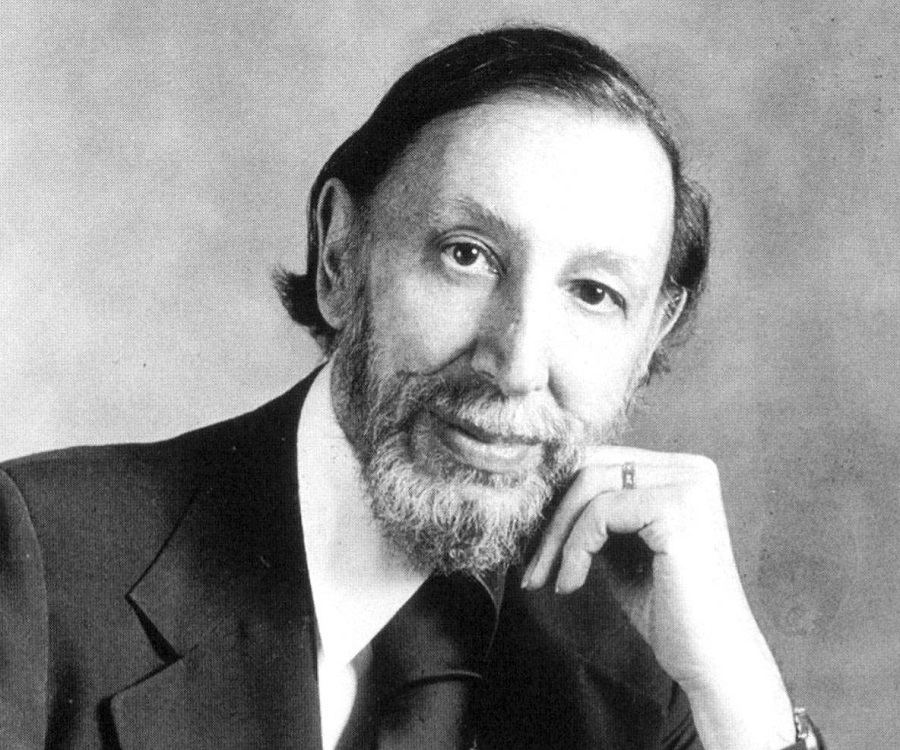
Alan Hovhanass (1911-2000) was an American composer of partial Arminian ethnicity, and he would eventually embrace that ethnicity and compose from that cultural perspective, at least at first.  He would later expand into other world musical perspectives.  His music embraces many international forms and styles.  I probably should be embarrassed I had never heard of him.  He was immensely prolific—67 symphonies!—with over 500 known compositions.  And he destroyed over a thousand pages of youthful compositions which he didn’t consider worthy.  He wrote his first composition at the age of four!


Prayer of St. Gregory is a trumpet piece with accompanying strings.  There is an alternate arrangement with an organ replacing the strings.  I’ll embed both and we can decide which we prefer.

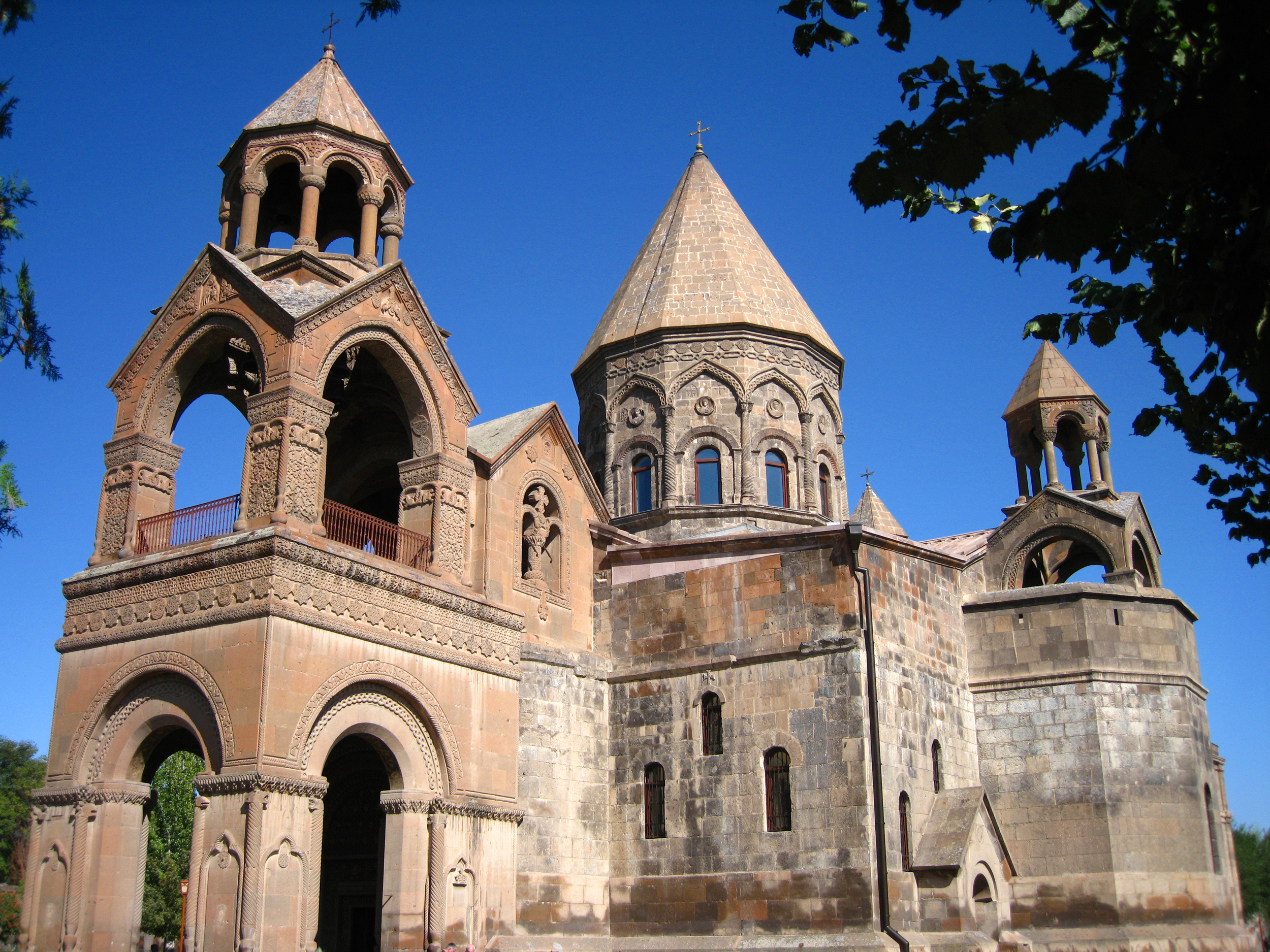
The Prayer of St. Gregory piece is part of Hovhannas’s opera, Etchmiadzin.  Etchmiadzin is an alternate name to the Armenian city of Vagharshapat where the holy Etchmiadzin Cathedral resides.  It is not clear to me whether the opera refers to the city or the cathedral.  The Cathedral dates back to the fourth century.  Construction is supposed to have begun back in 303 AD, and attributed to St. Gregory the Illuminator, the founder of Armenia’s Apostolic Church, which is currently not in communion with the Catholic Church.   As an aside, I should add that there is currently an Armenian Catholic Church which is in full communion with the Bishop of Rome and is one of the 23 Eastern Rite Catholic Churches.


The Armenian Apostolic Church was in 301 the first official Christian religion of a national state in history.  The Catholic Church was still being persecuted under pagan Imperial Rome and would not reach toleration under the Emperor Constantine until 313 but not made the state religion of the empire until 380 by the Emperor Theodosius I.  Armenia had last been part of the Roman Empire in 117 under the Emperor Trajan but Trajan’s successor, Hadrian, decided to not defend it in 118.  Parts of Armenia in subsequent years would both be incorporated and then fall away from both the Roman and Parthian Empires which were in struggle against each other.  But Christianity took root in Armenia in as early as the year 40, supposedly under the apostles Jude and Bartolomew. 


Gregory the Illuminator, however, is credited with evangelizing the country in the late third and early fourth centuries.  Prior to the conversion of the country, Gregory is to have spent fourteen years in jail for refusing to sacrifice to a pagan goddess, a jail cell which sounds like it was not much different than a well.  He would eventually be released and then convert the king, and the country followed.  I am guessing that the Prayer of St. Gregory is alluding to the prayer Gregory must have made while in the desolation of the jail pit.  The trumpet solo voice represents the prayer of desolation, sadness, and appeal of the saint toward providence.  The strings (or alternative organ) establishes the context and ambiance of Gregory’s predicament and perhaps represents the voice of God.  On that you will have to judge for yourself.  Let’s listen first, and then I’ll try to describe what my amateur ears hear.  Of the various orchestra versions on the internet, I prefer this orchestra version with David Krauss on trumpet and the Metropolitan Opera Orchestra (The Met) accompanying. 


There are three trumpet entries into the piece.  I think that is the key characteristic in conceptualizing the score’s structure.  The strings—the first voice—initiates the piece and sets the context of what feels like prison walls.  At about thirty seconds the trumpet makes its first entry and plays what I’ll call the desolation melody.  The phrasing seems to emulate a vocal prayer.  The first trumpet entry lasts for about 40 seconds.  That diminishing phrase that concludes the trumpet melody seems to be the defining fragment of the melody and expresses the emotional core.

Then the strings have a short moment of prominence picking up what I think is part of the desolation melody.  In just 20 seconds, the trumpet enters for the second time, again with the desolation melody but this time the prayer developing to a greater appeal.  It reaches a higher pitch of notes with more dynamism and longer note duration.  The energy momentarily surges but then retreats to the melancholy phrasing of the first entry. 

Then the trumpet goes silent for almost two full minutes, almost 40% of the piece.  In this stretch, the strings develop its melody, what seems to me a response to the desolation melody.  This second melody seems to pick elements of the trumpet phrasing but its ebbing and flowing feels like this is a voice of comfort, or trying to comfort, perhaps even a voice of explanation.  Is the trumpet comforted?  I feel a tension in the extended silence, and when it comes in for its third entry the melody has not changed and its appeal seems even greater.  It returns to the dynamism of the second entry only with even higher pitched notes.  But after its burst of energy the trumpet returns to its desolation phrasing, but, it should be noted, the piece concludes with the strings and trumpet ending on an extended harmonic note together.  While desolation melody has remained prominent, the piece does seem to conclude in intimacy.

But these are all my reactions.  You could make the argument that it ends in an unanswered appeal.  That is for you to decide.

Now let’s hear the version with organ as accompanying voice.  Wynton Marsalis is on trumpet and Anthony Newman on organ.  This alternate version is a shade shorter, the forty seconds taken from the trumpet’s silent section.


Marsalis is magnificent on trumpet but I have to admit, the organ seems to be lacking in the response.  It’s just not a fuller voice than the strings, and it doesn’t feel equal to the trumpet voice.  I definitely prefer the version with the strings.  How about you?


Wednesday, December 16, 2020

Personal Essay: "A Great Man is Always Willing to be Little" -Ralph Waldo Emerson

Today, December 16th is sometimes attributed to be the birthday of Ludwig van Beethoven, perhaps the greatest musical composer who ever lived.  There’s no official birthday since there is no record.  There is a record of him being baptized on the 17th, and so they assume he was born the day before.  [I like to think he was born two days before actually, the 15th, and so it would make him born on my birthday!]  It’s not just any birthday; it’s the 250th anniversary of his birth, and should be a moment for reflection.  When one thinks of Beethoven, one’s thoughts have to go toward just how great a composer he was.  We know of his greatness: the nine symphonies, the five piano concertos, the one violin concerto, the sixteen string quartets, the countless sonatas of various instrumentation, and so on, all of the highest craftsmanship and sublimity. 

And his ego went along with all of that greatness.  He knew he was great, and he acted on the belief that fate had led him to greatness.  Even as a young man when he came to Vienna to study under the almost equally great composer and his senior, Joseph Hayden, and let us say that after some lessons the twenty year old Beethoven began to scorn at his elder.  Their two styles are very different.  Hayden seems to always strive for a certain elegance and order, and even humor, while Beethoven can be dark, chaotic, and brooding.  I’ve always felt that Beethoven’s innovation of making the third movement of his symphonies into a scherzo was a direct mock at Joseph Hayden.  Typically, before Beethoven, and perfected by Hayden, the third movement of symphonies was traditionally set as a Minuet and Trio, a highly ordered and stylized dance genre.  Scherzo means joke in Italian and Beethoven, as Romantic era egoist, by overturning the tradition with a “joke”is ridiculing the order and formulaic style of the classical era. 

And this brings me to my quote of the day, "a great man is always willing to be little,” articulated by the Romantic era essayist, and perhaps also a bit of an egoist, Ralph Waldo Emerson.  Now by egoist I don’t mean to say Beethoven was necessarily selfish.  I don’t believe he was.  By egoist I mean to say that his aesthetic was built on the ego of the individual and the greatness that one perceives the artist to be.  He was bold and self-affirming, and thought of himself as a “great man.”  The roots of the artist as a self-inspired genius might be traced to Beethoven. 

And yet, later in life, we get a sense that he had gained humility.  He was not in good health for most of his later years, and he only lived to 56.  His output was immense, so one gets a sense of a man having lived a long life.  But that is not so.  Besides his deafness, he had intestinal problems, kidney problems, probably Paget’s Disease of the bone, and some sort of virus (perhaps measles) that kept recurring.  All these ailments produced an irritable man who drove people away.  He couldn’t hear them, and they didn’t want to hear him. 

But in 1825, two years before his death, he had an intestinal issue which brought him close to death.  From that near-death experience came what some call his greatest musical composition, the third movement of his String Quartet in A minor Op. 132 (No. 15), the third movement given the name “Hymn of Thanksgiving.”  You can read about his illness and the composition here in this BBC article by Andrea Valentino, “Beethoven 250: The ultimate songof health after illness.”  

In the piece, the great man becomes small.  The full name of the movement that Beethoven himself gave it is "Holy song of thanksgiving of a convalescent to the Deity, in the Lydian mode" ("Heiliger Dankgesang eines Genesenen an die Gottheit, in der lydischen Tonart").  The piece is slow, meditative, a conversation with God, thanking him for his recovery.  What I get is pure humility, the early dissonance resolving into harmonious psalm.  Valentino from the article tries to describe the piece.


How, then, to explain the Heiliger Dankgesang? Perhaps the fifth and final part of the movement can help. At the end of the second New Strength section, the slow pace returns again – but only for a moment. From there the original eight-note chorale is reduced to five notes, then three, then two, then one. At the same time, the simple accompanying prelude becomes more complex, turning the whole soundscape into a floating world of transcendental emotion, the composer ordering musicians to play with the “utmost, deepest, and sincere feeling”.

On his 250th anniversary of his birth, please listen to a great man turn small before the face of God.


Very few of us will ever be acknowledged on the 250th anniversary of our birth.  I know I won’t.  Only a great man will have such acknowledgments.  But remember, even a great man returns to the littleness of dust, and unto dust we shall all return.

Edit: If I may point out something about the composition, the fifth and final part of the piece that Valentino refers to starts at about 10:20 and is about a third of the entire length. Leading up to 10:20 you have sections that could be described as slow/fast/slow/fast, and I think they are supposed to reflect illness, semi-recovery, relapse, recovery. The fifth part is an expression of thanks to the Almighty for his ultimate recovery. The melody in that fifth part is heart wrenching. When one puts it into the context, the psalm – as I called it – is a beautiful prayer of gratitude.

Tuesday, December 29, 2015

Music Tuesday: Dvořák’s Ninth Symphony, 4th Movement, Conducted by Kurt Masur

I was saddened to learn last week that Kurt Masur had passed, though at a fine old age of 88, on December 19th.  Fromthe New York Times: 

Kurt Masur, the music director emeritus of the New York Philharmonic, who was credited with transforming the orchestra from a sullen, lackluster ensemble into one of luminous renown, died on Saturday in Greenwich, Conn. He was 88.

The death, from complications of Parkinson’s disease, was announced by the Philharmonic, which said it would dedicate its Saturday night performance of Handel’s “Messiah” to Mr. Masur’s memory.

Mr. Masur (pronounced mah-ZOOR) was the Philharmonic’s music director from 1991 to 2002. When he took its helm, the orchestra was roundly considered to be a world-class ensemble in name only, its playing grown slipshod, its players fractious and discontented, its recording contracts unrenewed.

Until I became a father—actually the year prior when I anticipated a child—I would attend about three or four concerts at the New York Philharmonic every year, and for a number of those years Kurt Masur was the music director and conductor.  I got to see him conduct often.  I had not known he had been so significant in bringing back the NY Philharmonic back to world class status.  From what I remember Masur had not been thought highly, and he was not the first choice.  The Times obituary confirms that.

The selection of Mr. Masur to lead the Philharmonic astounded nearly everyone in classical music circles. A specialist in the music of Central European composers — notably Beethoven, Brahms, Mendelssohn, Mahler and Bruckner — he had built a respectable if not scintillating career amid the musical and political repressions of East Germany.

The longtime Kapellmeister of the Leipzig Gewandhaus Orchestra, Mr. Masur was known as a faithful — some would say stolid — interpreter who seemed to have neither immense musical charisma nor intense interest in works outside the canonical repertory. (Kapellmeister, literally meaning “master of the chapel,” designates a post that in German-speaking countries is roughly equivalent to that of music director. But among musicians elsewhere, the term can be used derisively.)

Apparently before Masur, the orchestra had fallen in prestige.  We New Yorkers tend to think we’re the world class at everything.  Whoever ran the Orchestra back in 1991 could not hire some of the leading conductors.  Though Masur had been a fallback selection, he transformed the orchestra back to its leading status.

Enter Mr. Masur, the darkest of dark horses. A shambolic, bearded giant who stood 6-foot-3 and favored bolo ties offstage, he may have lacked the dynamism of Bernstein and the avant-gardism of Mr. Boulez. But what he could bring to the Philharmonic, the search committee believed, were attributes that were even more urgently needed: the respect of its players, before whom he had appeared as a guest conductor; a deep knowledge of the Germanic repertory that is the foundation stone of the Western symphonic canon; and a tasteful, unswerving fealty to the intent of composers.

He could also bring a meticulous if somewhat dictatorial approach to rehearsal discipline, something that New York’s unruly orchestra was widely thought to need.

“I remember when I asked one of the orchestra committee after my appointment here, ‘Why me?’ ” Mr. Masur, who spoke fluent if somewhat impeachable English, told the newspaper Scotland on Sunday in 1999. “He said, ‘Because you do not fear orchestras.’ ”

I had not known any of that.  But Masur was its prime conductor for some twelve years, which is significant amount of time as conductors go.  I enjoyed his work and selection, though, to be honest, I don’t have a fine enough musical ear to distinguish one conductor from another.  My classical musical ear had been built on recordings of Beethoven’s symphonies conducted by the great Leonard Bernstein, and when I sat at a Beethoven symphony conducted by Masur, it sounded similar enough. 

Here’s a little interview clip of Masur on music.


And here is Masur in action on the wonderful fourth movement of Dvořák’s Ninth Symphony with the New York Philharmonic.  You can see many of Masur’s mannerisms as he conducts.  I guess each conductor has his own particular mannerisms.  The camera, since it can look from various angles, especially facing him, can pick up more than someone sitting in the audience.  At around the 6:34 mark with the camera facing the conductor and with a wide camera shot showing the whole audience, you can see the three levels of the upper seating.  I usually sat in that top level when I attended, the cheapest seats in the house.  ;)


What a magnificent symphony.  That opening theme from the final movement is  so memorable.

Tuesday, February 10, 2015

Music Tuesday: Brandenburg Concerto No. 2

I have to say that Johann Sabastian Bach’s Brandenburg Concertos are among the greatest works of music ever, and Concerto No. 2 is probably my favorite of the six.  I am not musically knowledgeable to understand its complexity, but I don’t think one needs to.  Just listen and appreciate the verve, the energy, the sheer joy. 

But let me just outline the complexity.  First, the work is a concerto, and a concerto creates a relationship between the instrument being highlighted and the orchestra.  But Bach doesn’t just highlight a single instrument, or two instruments, which would make it a double concerto; Bach highlights four instruments in relationship with the orchestra.  Now four instruments is a rather interesting number since four instruments typically constitutes a chamber music quartet.  So look at the relationships that abound in this composition.  The four highlighted instruments can all play off each other as a quartet; each of the four instruments relates to the orchestra at large, and the quartet itself as a unit relates to the orchestra.  It’s like playing three dimensional chess.

The four instruments of Brandenburg Concerto No. 2 are an oboe, a recorder, a violin, and a clarino, which is an early brass valve less trumpet. It was supposed to be extremely hard to play, but Bach had a particular virtuoso in mind when he wrote the piece.  Even so, the clarino is absent in the middle movement, probably to give the player a respite to gather himself for the climatic third movement.

Forget all the complexity.  Just listen for the wonder of this piece.  If you're looking to break at the movements, the second movement starts at 4:55 and the third starts at 9:04.


Of the performances placed on youtube, I think I liked this one the best.  I think it’s just a bit faster in tempo in the first and third movements than the others, and my hunch is that’s what Bach intended.

The Wikipedia entry also mentions that third movement was the theme of William F. Buckley Jr’s TV show, Firing Line.  Ah yes, I remember it well.  It was one of the rare (probably a token) shows with a conservative bent on Public Television.  And I was just the young, geeky conservative that faithfully watched it. 


Back to Bach: He’s the greatest!

Tuesday, August 26, 2014

Music Tuesday: “Ode to Joy” by Ludwig van Beethoven

Is Beethoven greater than Mozart?  When you’re dealing with the greatest of the great of any artistic medium, it’s impossible to say one is greater than another.  It becomes a matter of preference.  At the catholic blog, Inebriate Me, Pascal-Immanuel Goby wrote a post titled “Beethoven > Mozart.”    The “>” symbol signifies “greater than.” 

I like Goby’s blog, though it can be more philosophical than my tastes run in reading about Catholicism.  But he’s got an interesting, out of the box, yet still traditional take on things.  I like his perspective on economics and Catholicism.  Most Catholic bloggers don’t understand economics, but Goby does.  I never refer to him in my head as Goby.  From writing literary essays I’m trained to use last names but the way I think of him is by the first half of his name, Pascal.  He seems to share a number of things with the famous Pascal: an intellectual Catholicism and that he’s French.  I know he lives in France, but he does write in English, so if he’s not French, then his parents were certainly Francophiles to name him Pascal.

In “Beethoven > Mozart” Goby wonders bemoans that theologians prefer Mozart as their favorite composer, while Goby clearly believes that Beethoven is the greatest.  Why this this preference for Mozart over Beethoven.  Here’s part of what he wrote:

We need more theologians who love Beethoven. (We need more theologians who love Led Zeppelin!)

I love Mozart. Truly. He had access to the Forms. However…

We have many theologians who love Mozart. Balthasar and Barth connected (in part) on their shared love of Mozart as the greatest composer in history. Ratzinger, as is well known, is a devotee of Mozart. All good.

But, but, but.

No, Mozart is not the greatest. Mozart is not the greatest, because for all his attempts to move beyond, all his pathos, he remains the classical composer par excellence. Mozart is the Parthenon. Mozart represents art understood as submission to, and fulfillment of, form.

No. This is not the full truth of art. The full truth of art must have as its primary impulse the expression of human subjectivity (an expression of subjectivity which only through its embrace of itself can then point to universality), even as it incorporates, uses, and in its fullness, transcends, aesthetic rules. And here we are talking about Beethoven. Mozart expressed the fullness of humanity within the classical rules. Beethoven expressed the fullness of humanity by transcending (through incorporating) the classical rules.

Beethoven is not afraid of being off-balance. Mozart raises the mind to contemplation, Beethoven grabs you by the throat. Mozart is Aquinas, wonderful Aquinas, building angelic cathedrals. Beethoven is Paul, frustratingly unsystematic, cajoling, browbeating, repudiating, pleading, ordering, crying on the page.

The comparison of Aquinas to Mozart, Beethoven to St. Paul is kind of apt.  But I don’t see why that would make Beethoven greater than Mozart.  Here’s my comment to his post.

Mozart is not the greatest because he died too young. Had lived another twenty years he would have been the greatest. I agree it would be great if more theologians loved Beethoven as they do Mozart (I'm surprised they don't) but I think you're being silly with Led Zeppelin. Bach is probably the greatest of them all. Where I disagree is with how you value aesthetics. It's not that Beethoven is greater because he is subjective in his art or because he is off balance. Neither of those makes art greater or lesser. They are just different approaches. Greatness comes from how well you create and how well your vision is represented aesthetically. We are still under the guiding force of Romanticism, so off balance appears to the general person to be of greater aesthetic quality. If and when we return to a neo-classical zeitgeist, Beethoven might appear to be ugly, or I should say uglier. Is Dante's Divine Comedy any lesser because of its balance and interconnectiveness and rational form? I would argue that Dante is closer to Mozart than Beethoven. And then perhaps one could say that Shakespeare might be closer to Beethoven than Mozart, though perhaps that's arguable. Dante and Shakespeare, as Mozart and Beethoven, have different approaches. It's not the approaches that make them greater or lesser.

Goby never replied to my comment; he usually does, but I sense he’s been busy lately.  Another person replied to me and we had an interesting conversation about Led Zeppelin, so you can go over to check that out if you wish.  Goby’s central thesis is that Christian theologians are too neo-classically oriented and lack the passion of Romanticism.  He does end his post with this summation: “We need, in other words, Appasionnata theology, we need Hymn to Joy theology, we need 5th and 6th symphony theology.”  The “Hymn to Joy” allusion is actually a reference to Beethoven’s concluding Ninth Symphony movement where Friedrich Schiller’s poem “Ode to Joy” is set in a choral.  I’m sure people here know of it.  

And just a few days after reading the Goby post, I came across in almost divine guided happenstance a post written by Stephen Klugewitz at The Imaginative Conservative, titled “Did Mozart Write the “Ode to Joy”?”  Klugewitz’s claim is that Beethoven took the theme from Mozart.

Only a few pieces of music in the Western canon rival the fame of the “Ode to Joy” theme: the opening chords of Beethoven’s own Fifth Symphony, “Spring” from Vivaldi’s Four Seasons, Wagner’s “Ride of the Valkyries,” the first notes of Mozart’s Eine Kleine Nachtmusik, to name a few. The “Ode to Joy,” however, seems to stand above these, due to its hymn-like, sublime character and its elevated call to universal brotherhood. It will be forever associated with Beethoven’s name, and alone would ensure his legacy as one of the greatest composers—in the estimation of many, THE greatest composer—who ever lived.

The problem is that the “Ode to Joy” theme is not entirely Beethoven’s. He borrowed the main part of it from none other than Wolfgang Amadeus Mozart.

In 1775, at the age of nineteen, Mozart composed the “Misericordias Domini,” K. 222, a six-minute sacred work that is little recorded and seldom performed today, yet which constitutes a minor masterpiece. Mozart employs what became the germ of the “Ode to Joy” theme three times throughout the work

You can read the rest of Klugewitz’s thoughts there and here Mozart’s “Misericordias Domini” side by side to Beethoven’s fourth movement.  Tell me if they sound similar.  They do to my ear.  What Klugewitz doesn’t show is that Beethoven was aware of this little known Mozart piece.  It’s quite possible that it coincidental.  But after listening side by side I tend to agree; I think Beethoven stole it!  Even the arrangement is similar.

For Music Tuesday I offer Beethoven’s “Ode to Joy.” section of the fourth movement of his Ninth Symphony, here conducted by the late, great Leonard Bernstein.  The actual “Ode to Joy” theme starts at about 3:50; the chorus stats at 7:55.


Tuesday, August 5, 2014

Music Tuesday: Fanfare for the Common Man by Aaron Copland

The other day I came across this post in American Thinker , “Why Criminals are Afraid of Classical Music.”   I had never heard this, but the author, Enza Ferreri seems to think it’s common knowledge.

Many young people, especially the anti-social, dislike classical music so much that it can be played to discourage them from intimidating, harassing and robbing.

This experiment has been successful over many years in countless locations.

The earliest occurrence was in the mid-1980s, when Canadian outlets of 7-Eleven played easy listening and classical music to disperse teenagers loitering outside. After that, companies from McDonald's to Co-op, transport authorities, housing estates and shopping malls around the world have employed this method.

She goes on to list various places across the globe that have used this concept to discourage bad behavior.  Then she tries to draw some reasons:

The evidence seems plentiful. Why, then?

The simplest explanations, in the time-honored scientific tradition of Occam's razor, should be considered first.

Teenagers, especially those with uneducated ears, don't like classical music, and they think it's not "cool" to be seen by their peers listening to it.

Still other explanations are in the nature of classical music itself. Much of it conveys a sense of order, symmetry and beauty, that conflicts with the disorder and ugliness in the minds of hooligans.

Musicologist Giovanni Bietti explains that Beethoven -- who was convinced that music could make a great social contribution -- Mozart and Haydn had a rational image of music, which is why in their works the initial contrasts are always resolved through the rules of composition, giving order to thoughts. This discourages those who don’t accept the rules.

It’s like the link between criminal behavior and rap, through the rap lyrics and the "music" -- or rather cacophony -- itself.

I don’t know if I’m completely convinced, but nonetheless it’s very interesting.  So in an effort to keep the hooligans away from my blog, here’s one of my favorite classical pieces, a well known 20th century work by the American composer Aaron Copland, "Fanfare for the Common Man."


A thought just occurred to me.  My ear is so attuned to German and Italian classical composers, that it is striking when you hear an American composer.  The “language” of the music seems very American to me.


Tuesday, February 4, 2014

Literature in the News: Two New Poems by Sappho Discovered

I’m not a classist, but stuff like this for a classist must be exciting.  Heck, I think it’s fantastic. 

From the Greek Reporter: 

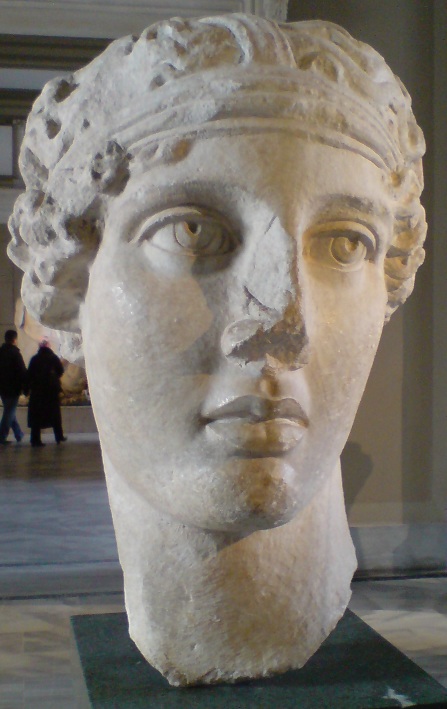
Today, only few poems by the ancient Greek poetess Sappho have survived, but thanks to new findings, two new works have been recovered, giving experts hope to find even more.

 
These previously unknown poems by the great poetess of the 7th century B.C. came to light when the owner of an ancient papyrus consulted Oxford classicist world-renowned papyrologist Dr. Dirk Obbink about the Greek writings on the tattered scrap.

 
Despite Sappho’s fame in antiquity and huge literary output, only one complete poem survives until today, along with substantial portions of four others. One of those four was only recovered in 2004, also from a scrap of papyrus.

 
“The new Sappho is the best preserved Sappho papyrus in existence, with just a few letters that had to be restored in the first poem, and not a single word that is in doubt. Its content is equally exciting,” said a Harvard classics professor upon examining the papyrus.


You can read about Sappho at Wikipedia.   Of course the thing that is routinely stated about her is that she was a lesbian—she lived on the island of Lesbos, from which the term “lesbian” was derived—but frankly it’s hard to tell from the sketchy poems, as this article clearly points out here  She speaks of both male and female relationships and translation is paramount.  Not being a classists I’m not going to claim to have any special insight, one way or the other. 

 
More interesting to me is the actual poetry.  The Greek Reporter speaks of her style:

 
 The two poems share a common meter, the so-called Sapphic stanza, a verse form perhaps devised by Sappho and today bearing her name. Both belonged, therefore, to the first of Sappho’s nine books of poetry and their recovery gives a clearer glimpse into the makeup and structure of that book. “All the poems of Sappho’s first book seem to have been about family, biography, and cult, together with poems about love/Aphrodite,” Dr. Obbink writes.

 
Sappho wrote in a dialect of Greek called Aeolic, which is significantly different in sound and spellings than the Attic Greek that later became standard. The handwriting on the papyrus allowed Dr. Obbink to establish its date as late 2nd or 3rd century A.D., almost a millennium after Sappho first wrote. It was not long after this time that Aeolic texts and other non-standard dialects began to die out in ancient Greece, with the focus of educators and copyists shifting on Attic writers.

 
Well, here are some translations of the two poems.  First, Prof. William Harris of Middlebury College of what is identified as “Poem 58.”   Read his commentary on how the poem was reconstructed it include the missing phrases.   


[For you] the fragrant-blossomed Muses' lovely gifts
[be zealous] girls, [and the ] clear melodious lyre.

[but my once tender] body old age now
[has seized] my hair's turned [white] instead of dark.

My heart's grown heavy, my knees will not support me,
that once on a time were fleet for the dance as fawns.

This state I bemoan, but what's to do?
Not to grow old, being human, there's no way.

Tithonus once, the tale was, rose-armed Dawn
love smitten, carried him off to the world's end

handsome and young then, get in time grey age
o'ertook him, husband of immortal wife.


The second poem seems to be a discussion of Sappho’s brothers, Charaxos and Larichos, with an interlocutor.  Here is a translation from Tom Payne from The Telegraph.   Payne is a classists and translator. 


Still, you keep on twittering that Charaxos
comes, his boat full. That kind of thing I reckon
Zeus and his fellow gods know; and you mustn’t
make the assumption;


rather, command me, let me be an envoy
praying intensely to the throne of Hera
who could lead him, he and his boat arriving
here, my Charaxos,


finding me safely; let us then divert all
other concerns on to the lesser spirits;
after all, after hurricanes the clear skies
rapidly follow;


and the ones whose fate the Olympian ruler
wants to transform from troubles into better –
they are much blessed, they go about rejoicing
in their good fortune.


As for me, if Larichos reaches manhood,
[if he could manage to be rich and leisured,]
he would give me, so heavy-hearted, such a
swift liberation.


Like most poetry, you never get the full poetic effect translated to another language.  Unfortunately I do not read ancient Greek.  Still, I enjoyed both of these.
 

Hat tip to Tom McDonald of God and theMachine blog for bring this to my awareness.


.

Tuesday, January 21, 2014

Music Tuesday: Adagietto from Mahler's 5th Symphony, In Memoriam of Claudio Abbado

I was saddened to see this (Monday) evening that classical composer Claudio Abbado passed away.  He was eighty years old.  You can read the NY Times Obit here.  In his career he had either been principal conductor or the musical director at La Scala in Milan, London Symphony Orchestra, Chicago Symphony Orchestra, Vienna State Opera, and Berlin Philharmonic.  Those are some of the world top orchestras.  I think I saw him conduct once as a guest conductor at the NY Philharmonic many years ago.  I'm not adept enough to distinguish what makes one conductor superior to another, but he had a great reputation.  I have several of his recordings on my ipod.

The Times Obit says he was particularly adept at interpreting Mahler, so here I present him conducting the fourth movement, Adagietto, of Gustav Mahler's 5th Symphony.  You can read about the piece here.


Lovely.  Requiescat in Pace, Maestro.

Tuesday, April 9, 2013

Music Tuesday: "Gloria" from Bach's Mass in B Minor

I can never make up my mind on who's the greatest composer between Bach, Mozart, or Beethoven.  I guess it depends which one's work has been in my ear.  Leading up to Easter our local classical radio station, WQXR, 105.9 FM, presented Bach's complete works in about ten days of play time, calling the event Bach 360.  I had been sick of talk radio ever since the election, and so I've had WQXR on in the car.  During the Bach 360, every time I got in the car it felt like I was in heaven.  I love Johann Sebastian Bach. 

Here is his Gloria in excelsis from his Mass in B Minor.  Now I don't know why a German Lutheran would write a mass in Latin.  Honestly I know very little about the Lutheran liturgy, but if the Mass in B Minor is any indication, it appears to have a very similar form as the in the Latin rite.  Hope you enjoy this piece of heaven.


Director: Karl Richter and the Munich Opera Bach Orchestra

Tuesday, March 5, 2013

Music Tuesday: "En Aranjuez Con Tu Amor" by Andrea Bocelli

I love Andrea Bocelli.  He's definitely my favorite living tenor.  My parents love him too, and I treated them to a concert at Madison Square Garden a few years before my father fell seriously ill, which at this point must be nine or ten years ago.  Taking them to that concert was one of the best things I ever did for them.  Luxuries like that were not something they could afford.  There was also a special connection with Bocelli.  If you don't know, he's blind, and my father was blind for most of his adult life.  So my father had a natural kinship.  But when they guided Bocelli on stage, and my mother and I watched him move in the limited, wary way that blind people do, we realized how similar his mannerism were to those of my father.  It has stuck with me ever since.


I know Bocelli sings mostly in Italian, but this one in Spanish has enthralled me ever since I first heard it.  This song was composed by the great Spanish composer Joaquin Roderigo, and coincidentally he was also blind.  Lorin Maazel, the lead conductor at the New York Philharmonic for some years, is the conductor here and arranged the piece.  The original Roderigo composition I believe was for orchestra, guitar, and voice.  Maazel substitutes the violin for the guitar, and softens the orchestra somewhat, bringing out the vocals and violin.  It does change the true Spanish feel, but still it's quite a nice effect.  You can find this song on Bocelli and Maazel's album titled Sentimento.  Hope you like it.


The lyrics are really beautiful and worth including in its entirety in Spanish.


En Aranjuez Con Tu Amor

Aranjuez,
Un lugar de ensuenos y de amor
Donde un rumor de fuentes de cristal
En el jardín parece hablar
En voz baja a las rosas.

Aranjuez,
Hoy las hojas secas sin color
Que barre el viento
Son recuerdos del romance
Que una vez
Juntos empezamos tu y yo
Y sin razón olvidamos.

Quizá ese amor escondido esta
En un atardecer
En la brisa o en la flor
Esperando tu regreso.

Aranjuez,
Hoy las hojas seces sin color
Que barre el viento
Son recuerdos del romance
Que una vez
Juntos empezamos tu y yo
Y sin razón olvidamos.

En Aranjuez, amor
Tu y yo!

Aranjuez is a medium sized town in Spain dating back into the middle ages and at one time a spring home for the royalty. Here are the first two stanzas in English:

Aranjuez,
A place of dreams and love.
Where a rumor of crystal
Fountains in the garden
Seems to whisper to the roses.
Aranjuez,
Today the dry leaves without color
Which are swept by the wind
Are just reminders of the romance
We once started
And that we've forsaken
Without reason.
Read the entire translation here.