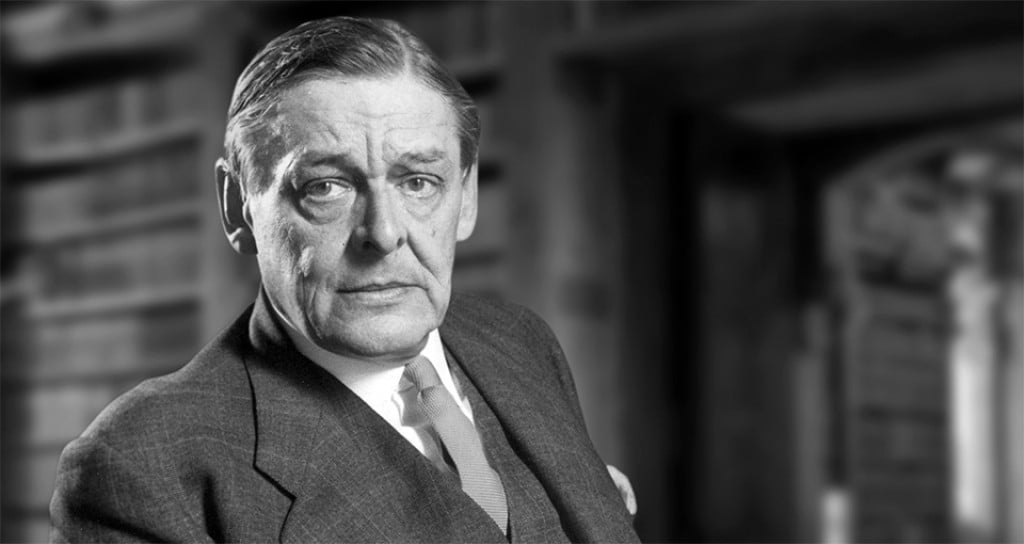
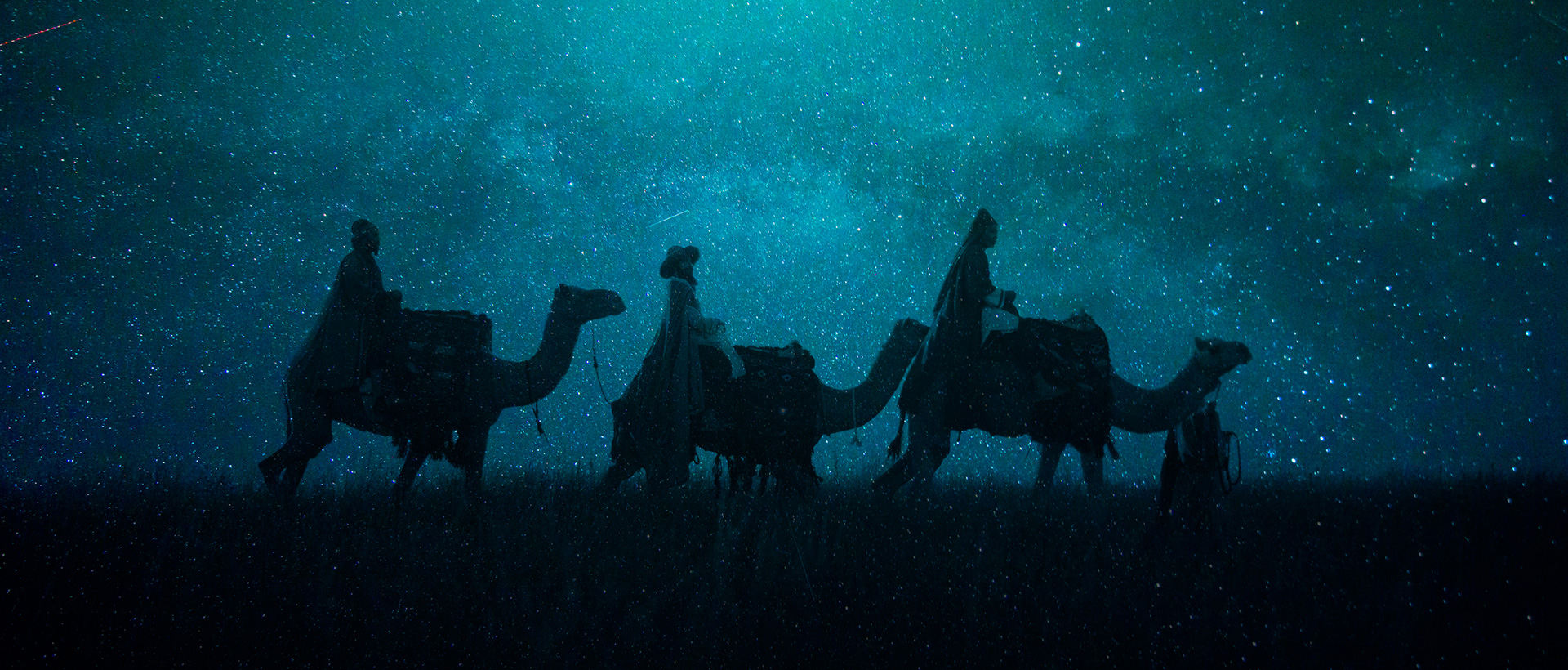
In
addition to Eliot’s “The Journey of the Magi,” which I posted here,
we also read and discussed G.K. Chesterton’s poem, “The Wise Men” as part of
our discussion of Fr. Dwight Longenecker’s book, The Mystery of the Magi: The Quest to Identify the Three Wise Men.You can read the four part blog posts on
Longenecker’s book: Part 1, Part 2, Part 3, and Part 4.
The Wise Men
By G.K. Chesterton (1913)
Step softly, under snow
or rain,
To find the place where men can pray;
The way is all so very
plain
That
we may lose the way.
Oh, we have learnt to
peer and pore,
On tortured puzzles from our youth,
We know all labyrinthine
lore,
We are the three Wise Men
of yore,
And we know all things but the truth.
We have gone round and
round the hill,
And lost the wood among the trees,
And learnt long names for
every ill,
And served the made gods,
naming still
The Furies the Eumenides.
The gods of violence took
the veil
Of vision and philosophy,
The Serpent that brought
all men bale,
He bites his own accursed
tail,
And calls himself Eternity.
Go humbly . . . it has
hailed and snowed . . .
With voices low and lanterns lit;
So very simple is the
road,
That we may stray from it.
The world grows terrible
and white,
And blinding white the breaking day;
We walk bewildered in the
light,
For something is too
large for sight,
And something much too plain to say.
The Child that was ere
worlds begun ─
(. . . We need but walk a
little way . . .
We need but see a latch
undone . . .)
The Child that played
with moon and sun
Is playing with a little hay.
The house from which the
heavens are fed,
The old strange house that is our own,
Where tricks of words are
never said,
And Mercy is as plain as
bread,
And Honour is as hard as stone.
Go humbly; humble are the
skies,
And low and large and fierce the Star,
So very near the Manger
lies
That we may travel far.
Hark! Laughter like a
lion wakes
To roar to the resounding plain,
And the whole heaven
shouts and shakes
For God Himself is born again
And we are little
children walking
Through the snow and rain.
You
can hear “The Wise Men” read on YouTube, here:
I
can’t say I understand every line, but I think I got the gist, though it took
quite a few readings and listening’s.This is a poem you have to hear.
So
I have to say I was a little confused by the different forms of the
stanzas.There are three forms, a
quatrain (four lines), a cinquain (five lines), and a sestet (six lines).The stanzas are all in iambic meter
(unstressed/stressed syllable pattern) and are of eight syllables (referred to
as four feet) long.The quatrains and
the sestet end with a shortened line of six syllables.I should also mention that the quatrain and
the sestet also have an alternating ABAB (and a concluding AB for the sestet)
rhyme scheme while the cinquain has an ABAAB rhyme scheme.
So
the eight syllabic line quatrain, including the shortened fourth line, is a
classic ballad form.There are
variations on this, but what Chesterton chose might be most common.They are typically narrative and the form harkens
back to the Middle Ages, though they returned to popularity in the 19th
century.
The
cinquain was not as typical but also made a comeback in the 19th
century.The 19th century
poets strove for musicality, and Chesterton really comes from that
tradition.The great heyday of the
cinquain I would say was in the 17th century.“Hymn to God, My God, in My Sickness” by John
Donne is a really fine example.That
fifth line gives a cinquain more of a contemplative feel.
Finally
a sestet echoes the last six lines of an Italian sonnet, which among other
things gives a closure to a thought.
In
all there are ten stanzas, arranged in what I would consider a pattern:
4-5-5-5-4-5-5-5-4-6, where four stands for a quatrain, five for a cinquain, and
six for the sestet. There’s no such
established form that I could find, so I would say it’s Chesterton’s
creation.And like the Victorian poets
whose lineage he comes from (think Tennyson, Poe, Rossetti, even Yeats and
others) the musical/sound experience is paramount to his construction.And as I look at each of the stanzas, I would
say they function in their classical sense.Though not perfectly, the quatrains are narrative, the cinquains are
contemplative, and the sestet brings it to a conclusion.That’s pretty innovative and yet traditional
at the same time!
Now
what’s the narrative about?Yes, the
Magi traveling to Jesus, but what I can’t distinguish is whether it’s an actual
Magi speaking or someone in Chesterton’s present time (the narrator?) taking on
the persona of a Magi.It seems to
blur.What do people think on that?Is it one or the other or both?I just can’t make up my mind.
Now
what I would do at this point is identify the central idea of each stanza.Here’s my best guess.
Stanza
1: Journey to a place to pray, which I take is the Magi kneeling before the
manger as in a crèche scene.I’m also
struck by the paradox that way is plain but easy to lose one’s way.
Stanza
2: Describes the studious nature of the Magi with another paradox that despite
their learning they don’t know the truth.
Stanza
3: Further describes the Magi learning, but this time characterized as caught
in a circular trap serving merciless pagan gods.
Stanza
4: He describes these gods as hiding the truth, bringing evil by linking them
to the serpent.What’s fascinating here
is he has another reference to circular, the serpent biting his tail is a
circle, and he identifies it as a false eternity.
Now
take a break here.I would say that
stanzas one through four are the first chunk of thought.Let’s call this Part 1.It concerns the Magi’s fruitless existence
prior to encountering Christ.
Stanza
5: The journey continues.Again
Chesterton brings up the paradox about getting lost on a simple road.
Stanza
6: A description of the whirlwind of snow about them, being blinded by a light,
and paradoxically (again!) not being able to see something that is “too large
for sight.”
Stanza
7: A walking into the stable to find the Christ child. Best lines in the poem: “The Child that played
with moon and sun/Is playing with a little hay.”
Stanza
8: I have to admit, I am baffled by this stanza.Which house?The Magi’s home?The stable?The house of the narrator?This feels like the philosophic center of the
poem but I can’t get it.
OK,
those last four stanzas can be called Part 2.The reach the Christ child and are overwhelmed.
Stanza
9: I think they walk up to the manger here, and again another paradox: they are
near but yet so far still to go.I take
that as they still have a journey to comprehend the significance.
Stanza
10: So this concludes with a roaring laughter.Why?And another paradox, “God
Himself is born again.”“Again”?When was He born the first time?But the concluding couplet is very striking:
they have suddenly, I assume metaphorically, become children “walking through
snow and rain.”
So
what I take from that last stanza is that the joy of meeting the Christ child
transforms the narrators (he refers to a “we”) into children playing in
snow.The once drudgery of the journey
is a sort of child’s play now.This, and
the plain too that the lion roars on, brings the poem back to the first stanza
of snow and rain.It gives the poem a
circular feel.
This
leaves me with some unanswered questions.So why the circular form and how does that relate to the serpent’s evil
circular image in Part 1?What is stanza
8 all about?Why the laughter as a
concluding image—it seems to come from nowhere?And what about the narrator?Is
it the wise men of yore or present day speaker?
Still
I became very fond of the poem as I understood it!That was enjoyable.
Given
the similarity in themes, this poem, “The Journey of the Magi” by T.S. Eliot
and G.K. Chesterton’s poem “The Wise Men” were part of the discussion at the
end of Fr. Dwight Longenecker’s book, The
Mystery of the Magi: The Quest to Identify the Three Wise Men.So this and a coming post on Chesterton’s
poem are associated as Magi posts.You
can read the four part blog posts on Longenecker’s book: Part 1, Part 2, Part 3, and Part 4.
Here
is Eliot’s poem.
The Journey of the Magi
By T.S. Eliot
A cold coming we had of it,
Just the worst time of the year
For a journey, and such a long journey:
The ways deep and the weather sharp,
The very dead of winter.'
And the camels galled, sorefooted, refractory,
Lying down in the melting snow.
There were times we regretted
The summer palaces on slopes, the terraces,
And the silken girls bringing sherbet.
Then the camel men cursing and grumbling
and running away, and wanting their liquor and women,
And the night-fires going out, and the lack of shelters,
And the cities hostile and the towns unfriendly
And the villages dirty and charging high prices:
A hard time we had of it.
At the end we preferred to travel all night,
Sleeping in snatches,
With the voices singing in our ears, saying
That this was all folly.
Then at dawn we came down to a temperate valley,
Wet, below the snow line, smelling of vegetation;
With a running stream and a water-mill beating the darkness,
And three trees on the low sky,
And an old white horse galloped away in the meadow.
Then we came to a tavern with vine-leaves over the lintel,
Six hands at an open door dicing for pieces of silver,
And feet kicking the empty wine-skins.
But there was no information, and so we continued
And arriving at evening, not a moment too soon
Finding the place; it was (you might say) satisfactory.
All this was a long time ago, I remember,
And I would do it again, but set down
This set down
This: were we led all that way for
Birth or Death? There was a Birth, certainly
We had evidence and no doubt. I had seen birth and death,
But had thought they were different; this Birth was
Hard and bitter agony for us, like Death, our death.
We returned to our places, these Kingdoms,
But no longer at ease here, in the old dispensation,
With an alien people clutching their gods.
I should be glad of another death.
You
can listen to T.S. Eliot reading his own poem here:
First
we should note the form of the poem.We
have three uneven stanzas, the first of twenty lines, the second of eleven
lines, and the third of twelve lines.It
is in free verse of uneven line length with no rhyme scheme.It’s pretty close to natural speech.If you could summarize the theme of each
stanza, one could say the first is the journey, the second is the arrival, and
the third is trying to comprehend the experience.We see that the first two stanzas, the
narrator speaks in the inclusive “we” while in the third he shifts to the
personal “I.”
We
see that in the first stanza the journey was difficult: cold, long, dirty,
expensive, sleepless, having to sustain uncouth and repulsive workers and
hostile cities, all the while dreaming of the “silken girls” of summer back
home and hearing the voices in his head saying it was “folly.”The details are of bodily lusts, and of other
sinful and unkind acts, and the scenery of a waste land of winter, dead snow,
nothing growing.The central animal
imagery is of camels who are “galled,” that is to say chafed, irate, who are
“sorefooted,” that is struggling, and “refractory,” that is to say resistant,
stubborn.In fact, the word
“refractory,” an odd word to use in a poem, characterizes the whole first
stanza: resistance.
In
the second stanza, the narrator comes to a “temperate valley,” echoing perhaps
the land of milk and honey.We have
“vegetation,” so we have life.We have
running water and civilization with the wind-mill, and a horse, this stanza’s
central animal image, in the meadow.We
have allusions to the sacraments, a running stream for baptism, vegetation with
a wind mill suggesting grain milled into flour for bread, and a tavern with
vine leaves suggesting wine.But we have
not come to Eden.Interwoven we have
images of the crucifixion: the three trees and hands dicing for silver, and
feet kicking “empty wine-skins.”But the
narrator concludes with the word “satisfactory,” the word that I think
characterizes this stanza and which by the way rhymes with the word
“refractory” from the previous.On first
blush, “satisfactory” sounds anticlimactic until you look at its Latin root of satis, meaning enough, sufficient.Yes what they found was anticlimactic, after
all it was only a baby they found, but the baby was “enough,” “sufficient,”
“fulfilling.”
In
the final stanza what is at first striking is the absolute lack of
imagery.There is none.Everything is an abstraction.Birth is a summary descriptive; it lacks any
specificity.The same thing with
death.There are no images of birth and
death given.“Kingdoms,” “evidence,”
“remember,” “agony,” and “dispensation” are more abstractions.The closest he comes to an image is with
“alien people clutching their gods.”While the clutching of gods is still an abstraction, it does approximate
an image, and what a strange way to end a Christian poem with an image of
people holding on to their pagan gods.“Dispensation”
is I think the word that characterizes this stanza, and I think defines the
entire poem.I’ll get to that shortly.
So
what are we to make of the entire poem?Yes, it’s the first person account from one of the Magi, but this poem
came shortly after Eliot’s profound religious conversion.In a sense perhaps this poem is taking us
through his biographical journey.What
do we make of the three stanza division?When you see three you kind of think of the Trinity, but unfortunately
there is no way to link any of the Persons of the Trinity to the first and
second stanza.No that doesn’t fit, but
perhaps you can think of this as Dante’s journey through the Divine Comedy, with the first stanza
being hell, the second being purgatory, and the third being heaven.That fits rather nicely when you know that
Eliot loved Dante.
Perhaps
an even better organizing principle is St. Augustine’s City of God.There Augustine
constructs the polar opposites of the City of Man versus the City of God, but
more importantly he divides the City of Man into two parts, the pagan world and
the world of Judaism, that is, of the Old Testament.Could we see the first stanza as sitting in
for the pagan world, the second stanza for the world of the Old Testament, and
the third stanza for the sublime New Testament’s City of God?I certainly think so.The first stanza is filled with pagan
idolatry of wine (liquor), women, and song (voices singing in our ears)!The people around him are completely
undisciplined, seeking only satisfying bodily passions.Even the Magi dreams of girls and
sherbet.There is no
self-sacrifice.Only grumbling of
discomforts, hostility, and no turning the other cheek.Even the “folly” of the voices seems to echo
St. Paul’s “Christ crucified: a stumbling block to Jews and foolishness to
Gentiles’ (1 Cor 23).The ‘folly” comes
from the perception of gentiles.
In
the second stanza I mentioned how we have the rudiments of the sacraments, but
unfulfilled, and we even have the lintel of the Passover.We also have the allusions to the
crucifixion, and we have the white horse, which I think is a symbol of earthly
power, which becomes harnessed in heaven (there are several white horses in the
Book of Revelation) but here runs away.The most intriguing image is that of the empty wine-skins.This alludes to Jesus’ parable of the
wineskins: “no one pours new wine into old wineskins. Otherwise, the new wine
will burst the skins, and it will be spilled, and the skins will be
ruined.Rather, new wine must be poured
into fresh wineskins” (Lk 5:37-8).In
Jesus’ parable, the old wineskin is Israel of the Old Testament.It cannot hold the new wine that is Jesus or
the new covenant.
In
the final stanza we are met with “Birth” and “Death,” both strikingly capitalized.What Eliot has done here is merged the
two.Birth and death are one which is
merged in the person of Jesus Christ.Indeed, how many births and deaths can we draw up here?There is Christ of course.There is the Magus narrator who is now born
to a new life and realizes that this birth is a mortification—a death to the
body.There is the same for the poet
Eliot in his personal experience, a new devout Eliot and the old pagan Eliot
dead.But there is the death that
Christ’s birth conquered through His resurrection, so that with heaven open we
all can be born to eternal life.His
birth ends death through a new birth.Finally
it is no accident I think that the last stanza has twelve lines.The Feast of the Magi is celebrated on the
twelfth day of Christmas, but more importantly the number twelve symbolizes
completeness in Biblical numerology, not just completeness but
fulfillment.The Old Testament is
fulfilled in the New.Indeed then one
can look back at the other stanzas and link the twenty lines of the first
stanza to the undisciplined indulgence of the pagan world, and the eleven lines
of the second stanza to the coming short and unfulfilled of the Old Testament
world.I don’t know if Eliot had
Augustine’s City of God in mind but
the construction and details work very well.
Finally
I must mention what I think is the greatest poetic flare of the entire
poem.I’ve read this poem for decades
and never saw this, and it has elevated this poem from a good to a great poem
for me.It’s these lines that are so
easy to overlook and probably aren’t even comprehensible.They weren’t for me all these years, and for
some reason I never stopped to draw their significance.But then I never stopped to break the poem
down like this.You miss so much if you
don’t analyze a poem in a formal, disciplined way.These lines: “And I would do it again, but
set down/This set down/This: were we led all that way for…”It actually sounds discombobulated: “but set
down/This set down/This.”Eliot never
describes the manger scene, the Christ child, and the holy parents.He can’t.You can’t describe the mystery of the incarnation.It’s beyond words.The experience has overwhelmed him.It is a conversion experience.It is indescribable.It’s the same with my personal religious
experience.I was essentially a
pagan.I was moved beyond comprehension,
and I can’t for the life of me describe it.Words just fail.I assume the
same thing happened to Eliot on his conversion.Despite Eliot being the greatest poet in English of the 20th
century he can’t describe it.It comes
down to a babbling incomprehension.It
comes down to “this,” just “this.”Nothing more.
And
so when the magus returns to his country, to those “alien people,” he is the
one alienated.He has to live in the
“old dispensation,” which means in the old order of things.Look up the definition of
“dispensation.”(1) A general order or
arrangement of things.(2) An exemption
from the law or vow or some rule.(3) An
act of dispensing, distributing.So he
is alienated in the world of the old arrangement; but now exempt from the old
law of the Old Testament, and has received the dispensed free grace of God to
those of faith.He has been profoundly
changed.He has gone through a birth,
which is the death of his old self. And awaits the death of his bodily self
into a new birth.
You
may not like this poem, but it is a rich, rich poem by one of the greatest
poets to ever have lived.In just a mere
43 lines, he has taken the reader through a powerful experience.
Also
the shift to the personal "I" in the last stanza makes the experience
singular. We ultimately go before the Lord as individuals. It is our individual
hearts that are changed.
Casey
Commented:
Thank you, Manny. This
was an excellent articulation of the poem and it does help a great deal.
I disagree a bit that one
gains most in analyzing a poem formally. A poem ought to convey that which
cannot be conveyed ordinarily. That is, a poem, as unit, conveys something
complete. I feel this poem fails in that regard.
However, after reading
that articulation, I wonder if it fails for me because I have not had the kind
of conversion experience you describe. Perhaps the unit of meaning is something
that I cannot grasp having not experienced it. As one might never grasp the
experience of eating persimmon who has never eaten one.
My
reply to Casey:
Perhaps a little bit. But
I think the poem grew on me as I uncovered more and more of its muted poetic
elements, even beside that inarticulate moment in the poem. Poems such as this
are not as obvious as poems that have established form such as meter and rhyme.
Both types of poems have organizing principles, and while the organizing
principle is given in say the Chesterton poem, here you have to deduce it. It
so happened that I was reading Augustine's City of God the other day and was
fresh on my mind. If it's the musicality of poetry that is pleasing to you,
then I can understand why this one doesn't suit your taste. But for me it was
the connections and the word play
(refractory/satisfactory/vegetation/dispensation), the supporting imagery, all
culminating in a life changing experience that made me realize it was a great
poem. Was it you that used the word "encoded" to see how the Old Testament
is found in the New? Someone used that word recently in that context. Eliot
does similar. He "encodes" meaning through words and images and
progression to pack what could easily be a novel length story into just 43
lines. The beauty of this poem is to see all that.
Kerstin
Commented:
Manny, I get the feeling
you like the puzzling out of wordplays, the detective work of looking what is
deeper in these types of poems by picking the language apart. To me this looks
like a lot of work. I like it a little easier presented, give me the imagery in
ready to comprehend pieces. But I think this has to do with what sorts of
things we enjoy and where our aptitudes lay. I can spend countless hours
learning about traditional/ancestral preserving and cooking methods, trying to
perfect making country paté, mayonnaise, or sourdough bread. The hours can fly
by and I don't even notice. I can imagine you can spend this kind of time
delighting in what you can uncover in a poem.
My
Reply to Kerstin:
LOL, well yes. But the
puzzling out is not the objective. The objective is to understand the artistry.
It's not just poems or novels but paintings and symphonies and such. For some
people understanding the artistry takes the wonder out of the work. For others
understanding the artistry gives the work its full wonder. I'm in the latter
category.
My
Comment:
Oh I'm sorry you guys
don't like this. It's really a great poem.
If you didn't like Eliot
reading it himself, you should listen to this great read by Sir john Gielgood:
Or this reading by this
young man, Tim Martin.I have no idea
who he is, but this might be the very best reading:
I have to admit, I love T.S. Eliot's poetry. The name of this blog is taken from Eliot's Four Quartets.
This
is the fourth and final post of a series on Dwight Longenecker’s The Mystery of the Magi:The Quest to Identify the Three Wise
Men. You can read Post #1 here.
Next
Fr. Longenecker takes on the legend of the Magi following the star to
Jesus.Fr. Longenecker evaluates various
theories: a supernatural phenomenon, a natural astronomical event, or an
astrological reading of the night sky.Each of these generic theories have specific possibilities.First Longenecker attempts to understand how
Matthew understood the star?
Matthew, of course, never
says that a supernatural star guided the wise men across the desert. He
mentions the star twice. First the wise men say to Herod, “Where is the one who
has been born king of the Jews? We saw his star when it rose and have come to
worship him” (Matthew 2:2). A few verses later Matthew continues, “After they
had heard the king, they went on their way, and the star they had seen when it
rose went ahead of them until it stopped over the place where the child was”
(Matthew 2:9).[p. 113]
I’m
not going to summarize each of the theories but some of them considered are a
comet, a meteor, a supernova, an alignment of planets, celestial divination, the
helical rising and falling of Jupiter, and astrological reading of the stars.
Chapter
11, “Wise Men from the East”
Here
Longenecker explores the understanding of Matthew’s use of the term “wise men”
for the Magi and what Matthew meant by “from the East.”In so doing Longenecker recapitulates the
theory that the Magi were Nabateans star gazers, that the “East” referred to
the land of the Nabateans, and how the legends of the Magi developed into what
it has become.Longenecker then goes
into some of the very earliest of Christian writings—when the legends had not
developed yet—and located passages from the Church fathers substantiating his
theory.Longenecker then proposes how
the real knowledge of the Magi was lost as the Church center of gravity moved
from the Middle East to the European continent.
###
One
theory on the star of Bethlehem that Fr. Longenecker did not consider, though
it would fall under the supernatural category, is that of St. John Chrysostom
back in the fourth to fifth century was that the star was an angel.I came across this theory from Aleteia, the Catholic online magazine,
the other day.Chrysostom proposed in his Homily on the
Gospel of Matthew.(Link is provided in
the article.)First he rejects the
scientific phenomena theory because he does not believe there are stars that move
from east to west.
[W]hether it was a star
by nature or a star in appearance only, we shall easily know the other things
also. Whence then will these points be manifest? From the very things that are
written. Thus, that this star was not of the common sort, or rather not a star
at all, as it seems at least to me, but some invisible power transformed into
this appearance, is in the first place evident from its very course. For there
is not, there is not any star that moves by this way, but whether it be the sun
you mention, or the moon, or all the other stars, we see them going from east
to west; but this was wafted from north to south, for so is Palestine situated
with respect to Persia.
Second
he points out that no star could have been visible in the daytime.
In the second place, one
may see this from the time also. For it appears not in the night, but in
mid-day, while the sun is shining; and this is not within the power of a star,
nay not of the moon; for the moon that so much surpasses all, when the beams of
the sun appear, straightway hides herself, and vanishes away. But this by the
excess of its own splendor overcame even the beams of the sun, appearing
brighter than they, and in so much light shining out more illustriously.
Third
he points out that it would be impossible for a star to come to rest above a
single child, and concludes it had to be an angel.
For it did not, remaining
on high, point out the place; it not being possible for them so to ascertain
it, but it came down and performed this office. For you know that a spot of so
small dimensions, being only as much as a shed would occupy, or rather as much
as the body of a little infant would take up, could not possibly be marked out
by a star…How then, tell me, did the star point out a spot so confined, just
the space of a manger and shed, unless it left that height and came down, and
stood over the very head of the young child? And at this the evangelist was
hinting when he said, Lo, the star went before them, till it came and stood
over where the young Child was ... Therefore after He has brought them, leading
them by the hand, and has set them by the manger; it is no longer by a star,
but by an angel that He now discourses unto them.
I
do lean to Fr, Longenecker’s theory of an astrological prediction, but if I had
to go with a supernatural theory, I do like Chrysostom’s angel theory.If angels individually visited Joseph and
Mary then why not the Wise Men?For me
none of the natural astronomical event theories make sense.
My
Comment:
I subscribe to The St.
Paul Center for weekly emails on the Sunday Mass readings. This is Scott Hahn's
organization and he usually provides a short explanation of the readings akin
to a homily. This coming Sunday (Jan 2) is the Epiphany of the Lord, where we
get the readings on the Magi, and you can listen to Scott give his thoughts on
these readings here.
It's apparent Scott has
not read Fr. Longenecker's book. He says the Magi "probably came from
Persia." Well we now know otherwise! They came from the Nabatean Kingdom.
Is n't it something that we know something about Catholicism that the great
Scott Hahn doesn't? ;) At least Scott says "probably."
This
chapter divides into two parts.The
first part, Longenecker goes line by line of the Magi passage in Matthew and
provides his final response to all he has walked us through in the book.The second half of the chapter Longenecker
speculates what happened to the Magi after the Nativity event and how they may
have shaped Christianity afterward.Could the Magi have settled with the Essenes of the Dead Sea Scroll
community?Could the Magi or their next
generation have shaped St. Paul’s theology when St. Paul after his conversion
spent three years in the desert meditating on the significance of Christ?Longenecker provides some evidence that
support those claims.
Conclusion,
“Why Does it Matter?”
Here
Longenecker justifies why knowing the true history of the Magi should be
known.Because it supports the facts of
the life of Jesus Christ, and knowing that the Magi were not mythical weakens
the skeptic’s arguments against Christianity.
Epilogue,
“What Happens to the Epiphany?”
Longenecker
spends a few concluding pages on contemplating what de-mystifying the Magi
implies to our understanding of the Feast of the Epiphany.He feels it doesn’t alter it much.
###
Gerri
Commented:
I didn't realize Fr.
Longenecker was a priest. I knew he was a convert and thought he was a deacon.
In his closing pages, he,
too, wants what we discussed earlier - for other scholars to take up the topic
and continue the research he started.
And I agree with him:
de-mystifying the Magi doesn't alter my understanding or appreciation of the
Feast of the Epiphany.
My
Reply to Gerri:
It didn't alter mine. If
anything it enhanced it. What seemed like a made up story made it real for me,
and in that reality it deepened my faith. Truth be told, I'm not keen on
hagiographic stories, including saints' lives.
###
Before
we leave this book, I wanted to discuss the second half of chapter 12, the speculative
section on the Magi going to Damascus, joining with the Essenes, and then years
later St. Paul spending three years learning from the Essenes and the next
generation Magi.This theory resonated
quite strongly with me.I don’t know if
you have known about the three years St. Paul spent in Arabia after his
conversion.It’s in Arabia that Paul
seems to discern what Christianity is all about.Remember before his conversion experience he
was a strict Pharisee.He has his
conversation on the road to Damascus where he goes blind, is taken to
Christians in Damascus, has his sight returned, gives himself up to Christ, and
is baptized.Fr. Longenecker then quotes
Paul.
“But when
God . . . was pleased to reveal his Son in me so that I
might preach him among the Gentiles, my immediate response was not to consult
any human being. I did not go up to Jerusalem to see those who were apostles
before I was, but I went into Arabia. Later I returned to Damascus. Then after
three years, I went up to Jerusalem to get acquainted with Peter and stayed
with him fifteen days.” (Galatians 1:11–18) [p. 148]
I’ve
always been intrigued by those three years.I always took it as he spent three years “in the desert” contemplating
how Jesus fits into Judaism and what Jesus as a crucified, “failed” messiah
means.The messiah to the Pharisees was
supposed to be a conquering hero who was going to overthrow the earthly
shackles on the Jewish people.But Jesus
didn’t do that.But Paul clearly had a
supernatural experience encountering Christ, and so he could not deny Christ
wasn’t who He said He was.So how did
this all fit together? We see from
Paul’s letters he more than any of the apostles derives the theology from the
Old Testament and from Christ’s life and teachings.Was this theology all from Paul’s
contemplative three years in Arabia?
Fr.
Longenecker lays out some important questions.
[Jean] Daniélou mentions [in
Primitive Christian Symbols] an
ancient tradition that Paul was converted at Castle Kokhba, the name of which
means “Star Tower.” If there is truth to the ancient tradition, then Paul was
blinded by a radiant light at Kokhba, which means “star.” Was his sudden
illumination seen as a sign of direct divine revelation similar to the star
that had led the Magi to Christ?
Immediately after his
conversion Paul went into Arabia for three years. What prompted him to do that?
His sojourn in Arabia has mystified scholars. Some suggest he went there to
begin his missionary work, but this seems unlikely so soon after his sudden
conversion. Others suggest that he went into Arabia for a meditative retreat,
like Jesus’ forty days in the wilderness.
The New Testament scholar
Margaret Barker observes, “After his conversion, Paul went to Arabia, and his
visit may help to identify the magi. He came back better informed about his new
faith and able to explain that Christianity was rooted in something older than
the law of Moses. Who instructed him?” (p. 149)
I
don’t know about that blinding light being connected with the Magi star, but
what exactly did Paul do in the Arabia and how did he become so insightful to
Christianity?I think it’s generally
acknowledged that Christian thought more directly derives from Essenes’ Judaism
and not the Pharisee’s understanding of Judaism.
One
could quote almost all of Longenecker writing from page 148 to 154, but that
would be too extensive.Let me just
quote these paragraphs which kind of pulls together his theory:
We find in Paul’s
theology a synthesis of the same three cultural and religious strains that we
find in the Nabateans. The first strain is Abrahamic Judaism. This is the
Judaism from before the destruction of Solomon’s temple by Nebuchadnezzar in
586 BC. The Arabian tribes claimed descent from Abraham, and Nabatean religion
had its roots in the earlier Abrahamic religion. This earlier form of Judaism
was also the religion of the Jewish refugees who fled into Arabia in the sixth
century BC.
The second strain in
Paul’s theology is the mystery religions that had grown out of Mesopotamian
culture and were the second source of Nabatean culture and religion. Paul warns
his followers of the dangers of mystery religions, but he also uses the
language and imagery of the mystery religions, correcting them and using them
to point to the mystery of redemption in Jesus Christ.
Paul also understands
Greek philosophy, which he integrates successfully into his theology. The
Nabateans had also absorbed and integrated elements of Greek culture, religion,
and philosophy.
Somewhere and somehow,
Paul learned how these three elements could be fused to explain the gospel of
Jesus Christ to a non-Jewish audience. Did he develop his theology during his
three years in Arabia and Damascus? Who were his teachers? Did Paul learn from
a school of Nabatean wise men? Was he taught by the Magi themselves?(p. 150-1)
Longenecker
goes on to expand on each of these strains teasing out the theology Paul
formulates from them.I don’t know if
Longencker is perfectly correct on what Paul formulates from these strains but
I do think he is on to something as to Paul’s sources.What cannot be argued against is that
Christianity is not Pharisaic Judaism, and Paul’s Christian theology is much
more than what comes from the Pharisees.I’m a supporter of Longenecker’s theory here.
###
Kerstin
Commented:
Fr. Longenecker is
definitely on to something. He is connecting the story of the Magi with the
larger cosmology. On the last page, p. 164, he writes:
The Magi's whole world
view and cosmology were predicated upon a belief that the "heavens declare
the glory of God and the firmament shows his handiwork."
We in the West have
gotten lost in the weeds over the past centuries in materialism, functionalism,
legalism, etc., etc. We have looked less and less to the heavens and wondered
at the Cosmological Order as a whole. In contrast, Eastern Orthodoxy has
retained this sense of wonder and mystery of the Cosmological Order.
On page 154 Fr.
Longenecker writes:
The foundation of the
Jewish religion is the covenant of faith that was established with Abraham and
his descendants. Margaret Barker suggests that this Abrahamic religion was
considered the original by the refugees from the destruction of Jerusalem and
that they considered the legalistic religion that emerged after the exile to be
an illicit development
Immediately I thought of
the division between the more legalistic Roman Rite and the more mystical
Eastern Rite. What a parallel!
Here is a 16 minute video
from the Christian artist Jonathan Pageau who has a You Tube channel called
"The Symbolic World". Jonathan is a convert to Eastern Orthodoxy. In
this recent video he goes into detail of How Christmas Reorganizes the Gods by
the example of an Orthodox hymn called the Nativity Troparion. You will find it
has everything to do with what we've read here. It will give a deeper
understanding of what Fr. Longenecker is getting at. He didn't pluck any of
this out of thin air.
Also, Jonathan had an
hour-long conversation with Bishop Robert Barron on A Return to Cosmic
Christianity. It dovetails nicely here.
My
Reply to Kerstin:
Do you mean
"legalistic" or more based on "reason" for the Roman Rite?
There's faith and reason and one needs both. I do see the Eastern Rite as less
based on reason and more on mysticism than the Latin Rite. But frankly too far
to the mystical turns me off. It feels superstitious or disconnected from basic
science. There needs to be a balance of faith and reason. I'm not sure the
Latin Rite has it about right but whenever I listen to Eastern Rite speakers it
feels like they are disconnected from reason. For me, Pope Benedict XVI has it
perfectly.
By the way, by reason I
don't mean to support Enlightenment rationalism as Fr. Barron denounces in the
second video. There is a balance between faith and reason and an imbalance in
either direction is disturbing.
Frances
Replied to My Comment:
Manny, I am not trying to
speak for Kerstin -- she can do that quite beautifully on her own! -- but as I
read her post I thought of the word "transcendence." The Roman Rite
has lost somewhat a sense of the transcendent; Bishop Robert Barron has
referred to this condition at times as a "flattening out." I think
the yearning for that sense lies behind the hunger for the Latin Mass. We want
"The Other," a sense of the transcendent.
Kerstin
Replied:
By "legalistic"
I was thinking in the direction of splitting hairs too much, of
overcomplicating things, being too rationalistic. Jesus fought the Pharisees on
this all the time.
We are all products of
our own culture, and hence the Roman Rite is what fits me, and I would imagine
many of us here. At the same time I find the Eastern Rites fascinating, how
they have preserved liturgical rituals and hymnody over the centuries. There is
a very pronounced sense of reverence and the holy. I delight in their artistry.
What I think is important for us to remember is that the Christian faith
emerged in a cultural space that is far more eastern than we are. We may not be
used to or comfortable with to move in the mystical space they do, but we have
to know about it for better understanding. That's my take.
Going back to our book
and the mystery of the star, Jonathan Pageau says that for the ancients and the
cosmic order they lived in, a star and an angel is the same thing! The stars
were the gods, or angels, or beings of the higher order. With this mystical
element in mind, that a star/angel showed the Magi where to find Jesus makes
perfect sense.
My
Reply to Kerstin:
Well said Kerstin. I
think we're saying the same thing. I lean toward Thomas Aquinas and Pope
Benedict XVI who are just as mystical and transcendence but can support the
mystery through reason. I'm not saying the Eastern Orthodox can't support it
but I haven't seen it and in a number of places (like in writings of
Dostoyevsky) I've seen ridicules of Latin reason. But Dostoyevsky is not a
theologian, so I probably shouldn't link Orthodox theologians to him.
Joseph
Replied:
Manny, if you haven't
read St. Maximus the Confessor, he's a good example of how eastern theologians
meld mysticism and reason. Weighing in on Kerstin, Frances, and Madeleine's
point, as a priest who celebrates both the Mass of the Ages and the Mass of
Paul VI there is a tangible difference in how the two relate to the Divine. My
first time attending the Ancient Mass I was just as lost as could be, but as I
was exposed to it more I learned how to enter into the prayer and see what goes
on. This is not to discount the New Rite, I have also had mystical experiences
there, but the Ancient Mass is more in tune with our mystical senses than is
the New.
Kerstin
Replied:
Manny wrote: " I'm
not saying the Eastern Orthodox can't support it but I haven't seen it and in a
number of places (like in writings of Dostoyevsky) I've seen ridicules of Latin
reason. But Dostoyevsky is not a theologian, so I probably shouldn't link
Orthodox theologians to him."
I had to think on this a bit. The divergence goes all the way back to the
"filoque" dispute in the Nicean Creed. What exactly is Dostoevsky
reacting to? He especially dislikes the Jesuits. I wonder if it had to do with
modernism and even secularism seeping into the Latin Rite, and this posed a
danger of Orthodoxy being susceptible to the same erosion of Tradition.
My
Reply to Kerstin:
I don' think it has
anything to do with the filioque. He was xenophobic, like a good number of
Russians. Don't get me wrong, he's a great novelist, among the handful of
greatest, but he was anti western, and that involved the Catholic Church. I
remember a good number of gibes directed toward Poles and Germans. There is a
section of his greatest novel, The Brothers Karamzov called The Grand
Inquisitor. Read about that here:
He has a Catholic Bishop
put Jesus through an inquisition and ultimately condemns Jesus to death. Now
there is a lot of psychological and theological stuff going on. It's a great
scene. But he didn't have to have a Catholic Bishop be the inquisitor. It
didn't have anything to do with Catholicism.
###
When
driving home yesterday afternoon from shopping, I had Relevant Radio, a
Catholic radio channel around the country, on my radio and on the Drew Moriani
show he had Fr. Dwight Longenecker on to discuss his Magi book. It was a
twenty-ish minute conversation, and while he didn’t say anything that was not
in the book, it was still a blessing to listen to it. Now that all radio shows
get turned into podcasts, you can access the show and listen for yourself. So
the Relevant Radio podcasts get broken into hour long units. Fr. Longenecker’s
portion was the first half of the hour. The second half was a discussion about
the guiding star with Fr. Chris Corbally, a priest astronomer. That was
interesting and is worth listening to. Here is the link to the “Hour 3 of The
Drew Mariani Show 12-22-21.”
###
Well,
tomorrow Jan 6th is the Feast of the Epiphany of the Lord,
the day we readers of this book have been waiting for. I'm almost sure you will
have this hymn played at Mass tomorrow. It was my hymn for my Vespers prayer
this evening, which would make it the vigil of the feast.
We Three Kings
Composer: Rev. John Henry
Hopkin (1857)
We three kings of Orient
are
Bearing gifts we traverse
afar
Field and fountain, moor
and mountain
Following yonder star.
O Star of wonder, star of
night
Star with royal beauty
bright
Westward leading, still
proceeding
Guide us to thy Perfect
Light.
Born a King on
Bethlehem's plain
Gold I bring to crown Him
again
King forever, ceasing
never
Over us all to reign.
O Star of wonder, star of
night
Star with royal beauty
bright
Westward leading, still
proceeding
Guide us to thy Perfect
Light.
Frankincense to offer
have I
Incense owns a Deity nigh
Prayer and praising, all
men raising
Worship Him, God most
high.
O Star of wonder, star of
night
Star with royal beauty
bright
Westward leading, still
proceeding
Guide us to thy Perfect
Light.
Myrrh is mine, its bitter
perfume
Breathes of life of
gathering gloom
Sorrowing, sighing,
bleeding, dying
Sealed in the stone-cold
tomb.
O Star of wonder, star of
night
Star with royal beauty
bright
Westward leading, still
proceeding
Guide us to thy Perfect
Light.
Glorious now behold Him
arise
King and God and
Sacrifice
Alleluia, Alleluia
Earth to heav'n replies.
O Star of wonder, star of
night
Star with royal beauty
bright
Westward leading, still
proceeding
Guide us to thy Perfect
Light.
Here
is a beautiful version by the opera singer, Mario Lanza.
###
My
Goodreads Review:
More
precisely, four and a half stars.This
is a book that locates the historical roots of the story that has become the
legend of the three “wise men/kings” who come to the nativity of Christ
offering Him gifts.Mind you, what is in
the Bible, more precisely, the Gospel of Matthew, is not the legend.The legend has been built up from
elaborations and folklore, built up so much that hardly anyone believes the
legend.But the Biblical story is there
in Matthew, and so what are we to make of it?
Fr.
Dwight Longenecker—the author is a Roman Catholic priest—breaks down the parts
of what is actually in the Bible and finds their historical basis, and in so
doing saves the story for we believers.What
seemed like a made up story made it real for me, and in that reality it deepened
my faith. Truth be told, I'm not keen on hagiographic stories, including
saints' lives.The legend of the Magi
went beyond hagiography.
So
Fr. Longenecker goes on to show the Magi were not from Persia or some disparate
region of the world.They were not kings.And they probably didn’t even ride
camels.So who were these mysterious men
who have been linked to the exotic?Were
they exotic?Yes, but not in ways you expect.Read the book.It was methodically argued and quite
compelling.
###
This
may be the final post on Fr. Longenecker’s book, but there will be two related
posts on the Magi, two famous poems, T.S. Eliot’s “The Journey of the Magi” and
G.K. Chesterton’s “The Wise Men.”I will
link them after I post them.