"Love follows knowledge."
"Beauty above all beauty!"
– St. Catherine of Siena

Showing posts with label Divine Mercy. Show all posts

Sunday, April 12, 2026

Sunday Meditation: Receive the Holy Spirit

For the Second Sunday of Easter we have the same Gospel passage every year, though the other readings change with the liturgical calendar.  Every year we hear how the Apostle Thomas doubted Christ’s bodily Resurrection only to have Jesus show up and let Thomas touch the wounds.  In the year 2000, Pope St. John Paul II instituted for the Second Sunday of Easter as Divine Mercy Sunday.  Last year we were in mourning over the passing of Pope Francis who had died Easter Monday.  Pope Francis had a very strong devotion to Divine Mercy. 

The Gospel reading is famous for the Doubting Thomas story, but perhaps more important is the fact that the Risen Christ breathes on the apostles to pass on the Holy Spirit.  “Receive the Holy Spirit,” he tells them and with that He creates them anew.  This of course is an allusion to Genesis chapter 2, “Then the LORD God formed the man out of the dust of the ground and blew into his nostrils the breath of life, and the man became a living being” (Gen 2:7).  Man is formed with the breath of life in Genesis, and Jesus reforms them with the breath that is the Holy Spirit upon His resurrection.  Jesus’s Resurrection begins the new creation. 


Today’s Gospel:


On the evening of that first day of the week,
when the doors were locked, where the disciples were,
for fear of the Jews,
Jesus came and stood in their midst
and said to them, “Peace be with you.”
When he had said this, he showed them his hands and his side.
The disciples rejoiced when they saw the Lord.
Jesus said to them again, “Peace be with you.
As the Father has sent me, so I send you.”
And when he had said this, he breathed on them and said to them,
“Receive the Holy Spirit.
Whose sins you forgive are forgiven them,
and whose sins you retain are retained.”


Thomas, called Didymus, one of the Twelve,
was not with them when Jesus came.
So the other disciples said to him, “We have seen the Lord.”
But he said to them,
“Unless I see the mark of the nails in his hands
and put my finger into the nailmarks
and put my hand into his side, I will not believe.”


Now a week later his disciples were again inside
and Thomas was with them.
Jesus came, although the doors were locked,
and stood in their midst and said, “Peace be with you.”
Then he said to Thomas, “Put your finger here and see my hands,
and bring your hand and put it into my side,
and do not be unbelieving, but believe.”
Thomas answered and said to him, “My Lord and my God!”
Jesus said to him, “Have you come to believe because you have seen me?  Blessed are those who have not seen and have believed.”


Now, Jesus did many other signs in the presence of his disciples
that are not written in this book.
But these are written that you may come to believe
that Jesus is the Christ, the Son of God,
and that through this belief you may have life in his name.

~Jn:20:19-31


There is a lot going on in this passage.  Resurrection, breath, peace, wounds, faith, Fr. Cajetan Cuddy O.P. of the Encyclopedia of Catholic Theology pulls it all together.


Fr. Cajetan:

“Nothing can be a barrier to union with Jesus.”  “The Gospel reveals that nothing can prevent Christ from reaching those He loves—not fear, not suffering, not even sin. In His mercy, Jesus passes through every barrier and gives Himself to us, especially through the sacrament of confession.”  “The wounds of Christ are not signs of defeat, but of a love that transforms all things. Even our brokenness can become a place of healing when brought to Him.”  “It is in the sacrament of penance that Jesus gives us mercy, His peace, reconciliation to Him.”  “Whatever Jesus touches, bears, becomes holy.”  “The wounds Jesus bore show that He can transform any disorder.”  “He assimilated the pain and suffering of the world so that when we go through pain and suffering our pains and sufferings in Jesus can become a means of sanctification, of holiness, and of salvation.


Listen to it all. 


For the pastoral homily, let’s turn to a Franciscan, Fr. Greg Friedman OFM who appropriately quotes Pope Francis.


Fr. Greg:

Grace always precedes us, Pope Francis declared, and takes on the face of mercy that affects our reconciliation and pardon. God makes us understand the great love for us precisely when we recognize that we are sinners. Grace is stronger than sin. It overcomes every possible form of resistance because love conquers all.  I think Thomas realized his need for Jesus at that moment in the story. His humble prayer says it all. My God and my Lord. We who hear this gospel centuries later are included in this scene as well. Jesus blesses us who have not seen and yet believe. Our faith assures us as Pope Francis said that in our risen Lord, love conquers all.


What grace Thomas received.  What peace Thomas must have felt when Christ allowed him to put his fingers into Christ’s wounds.  What Divine Mercy.  And what grace we have by believing.  What Divine Mercy.


Sunday Meditation: “Peace be with you.”


I have played this lovely song before, “Divine Mercy Flood My Soul” by Annie Karto.  I have to post it again.  It seems so perfect.


All I could see, all I could feel

Was swept away in a river of his love

I felt so weak I rested in his arms

Washed clean, His gaze now feels so warm.


Divine Mercy like a river

Oh flood my soul

Wash me clean

And make me whole.


Finally we had a special praying of the Divine Chaplet at our parish at the three o’clock hour with the Blessed Sacrament exposed.  Off to the side we had a first class relic and beside that our replica of the Divine Mercy painting.  Let me share pictures.


For the sake of his sorrowful passion, have mercy on us and on the whole world.

Sunday, April 27, 2025

Sunday Meditation: Have Mercy on Us and on the Whole World

The Second Sunday of Easter has the same readings each year, the passage where St. Thomas the Apostle needs to see and feel Jesus’s wounds to believe. 


On the evening of that first day of the week,

when the doors were locked, where the disciples were,

for fear of the Jews,

Jesus came and stood in their midst

and said to them, “Peace be with you.”

When he had said this, he showed them his hands and his side.

The disciples rejoiced when they saw the Lord.

Jesus said to them again, “Peace be with you.

As the Father has sent me, so I send you.”

And when he had said this, he breathed on them and said to them,

“Receive the Holy Spirit.

Whose sins you forgive are forgiven them,

and whose sins you retain are retained.”

Thomas, called Didymus, one of the Twelve,

was not with them when Jesus came.

So the other disciples said to him, “We have seen the Lord.”

But he said to them,

“Unless I see the mark of the nails in his hands

and put my finger into the nailmarks

and put my hand into his side, I will not believe.”

Now a week later his disciples were again inside

and Thomas was with them.

Jesus came, although the doors were locked,

and stood in their midst and said, “Peace be with you.”

Then he said to Thomas, “Put your finger here and see my hands,

and bring your hand and put it into my side,

and do not be unbelieving, but believe.”

Thomas answered and said to him, “My Lord and my God!”

Jesus said to him, “Have you come to believe because you have seen me?

Blessed are those who have not seen and have believed.”


Now Jesus did many other signs in the presence of his disciples

that are not written in this book.

But these are written that you may come to believe

that Jesus is the Christ, the Son of God,

and that through this belief you may have life in his name.

~Jn 20:19-31


I have posted on this passage the last two years.  You can listen to Fr. Geoffrey Plant from two years ago as he connects the “signs” of John’s Gospel to faith.    And last year Fr. Joseph Mary of theFranciscan Capuchins used the dystopia of George Orwell’s 1984 to shed light on Divine Mercy, one of his best homilies.  

This year Bishop Robert Barron walks us through the Gospel reading and connects the it to Divine Mercy Sunday, which Pope St. John Paul II fixed to the Second Sunday of Easter.


The “peace” from Christ is the breath of Divine Mercy!

The pastoral homily comes from Fr. Patrick Briscoe O.P. who connects the reading to our hope for eternal life, and how much we need to accept Divine Mercy.


Alleluia, He is risen!


Sunday Meditation: “Peace be with you.  As the Father has sent me, so I send you.”


Finally, we sung the Divine Mercy Chaplet today at our parish in a special Three O’clock gathering with the exposed Blessed Sacrament.  It was beautiful.  I’m going to provide a YouTube clip of a Divine Mercy Chaplet in song, sung from The National Shrine of The Divine Mercy, Stockbridge, MA, USA.


I want to also provide a picture of the side display today at my parish, St. Rita’s Catholic Church on Staten Island, NY, of the Divine Mercy painting.  Beside stood our picture of beloved Holy Father, Pope Francis. 


May Pope Francis rest in peace.  I will have a memorial post for his passing.

Sunday, April 7, 2024

Sunday Meditation: Divine Mercy Sunday

Easter has passed and we like the apostles are dazed with the events of the past week.  Jesus has died, and some have seen the Risen Man.  But we hide in fear and doubt.  Until suddenly He appears with the word of Peace. 

We are now in the Easter season, and we come to the Second Sunday of Easter, the first being Easter itself.  The reading is the same for all three years of the lectionary.  We are asked to believe.


On the evening of that first day of the week,

when the doors were locked, where the disciples were,

for fear of the Jews,

Jesus came and stood in their midst

and said to them, "Peace be with you."

When he had said this, he showed them his hands and his side.

The disciples rejoiced when they saw the Lord.

Jesus said to them again, "Peace be with you.

As the Father has sent me, so I send you."

And when he had said this, he breathed on them and said to them,

"Receive the Holy Spirit.

Whose sins you forgive are forgiven them,

and whose sins you retain are retained."


Thomas, called Didymus, one of the Twelve,

was not with them when Jesus came.

So the other disciples said to him, "We have seen the Lord."

But he said to them,

"Unless I see the mark of the nails in his hands

and put my finger into the nailmarks

and put my hand into his side, I will not believe."


Now a week later his disciples were again inside

and Thomas was with them.

Jesus came, although the doors were locked,

and stood in their midst and said, "Peace be with you."

Then he said to Thomas, "Put your finger here and see my hands,

and bring your hand and put it into my side,

and do not be unbelieving, but believe."

Thomas answered and said to him, "My Lord and my God!"

Jesus said to him, "Have you come to believe because you have seen me?

Blessed are those who have not seen and have believed."


Now Jesus did many other signs in the presence of his disciples

that are not written in this book.

But these are written that you may come to believe

that Jesus is the Christ, the Son of God,

and that through this belief you may have life in his name.

~Jn 20:19-31

In the year 2000, the Second Sunday of Easter has been observed as the Feast of Divine Mercy, authorized by Pope John Paul II, who had a devotion to St. Maria Faustina.  Fr. Joseph Mary of the Capuchins Franciscan gives a wonderful homily, capturing the fear and message of peace of the day.


I bet no one in the whole world has used Orwell's 1984 as part of a Divine Mercy Sunday homily.  Well done!  And that is the connection to “Peace” or “Shalom,” or as Father explains, “Wholeness.”  Christ brings wholeness to a fragmented world.

Sunday Meditation: "Peace be with you."

Finally, I embedded Annie Karto’s “Divine Mercy Flood My Soul” some 11 years ago for Divine Mercy Sunday.  I love it so I will post it again, only a different video with the lyrics.


Tuesday, April 18, 2023

Personal Note: Kitten With A Cup Stuck On His Head

Well I had a strange incident Saturday morning. I was walking Rosie and I noticed this little kitten under a SUV parked on a driveway. It was acting strange and when I looked more carefully it had a white plastic cup stuck on its head. It couldn’t see, but it could hear, and I think trying to hide.  It couldn't get the cup off. I wasn't sure what to do. I walked past not to scare him off, to the next house down the street to let him relax. I tied Rosie to the house railing, hoping no one would come out. I snuck up behind the kitten. It couldn't see me of course. Knelt under the SUV and grabbed him, held him against me with my left arm while I pulled the cup off its head. The cup was really stuck. Poor thing would have probably died. And then I let him go and he scrambled off. He was gray and white.  He was a tiny thing. Probably recently broke away from his mother. 

It broke my heart to see the little tyke compromised like that.  I wonder how long the cup had been stuck on his head.  Perhaps all night.  Perhaps he was reaching a point of resolution.  He did struggle when I held against my chest.  It was probably frightened as can be.  The cup seemed like it was a child’s cup, for a toddler, and it had some residue of food inside.  I can see how a little kitten would stick his head all the way in.

I was surprised at how successful my plan turned out, sneaking behind him and grabbing him.  There had to be some sort of divine guidance to it all.  I was that poor kitten’s angel.  It felt so nice to hold a kitten again, even if it was just for a few seconds.  I can still feel his little legs pushing against my chest.  I would have liked to have taken the kitten home, but we really can’t fit another pet in our home.  Plus I was too far to be able to hold him all the way home without him wriggling out of my arms.  I hope I at least see him around the neighborhood.  I wish I could have taken his picture.

The incident has been on my mind ever since, so I thought I would put it into a blog post.  It happened on the Saturday before Divine Mercy Sunday, and all I have been thinking since was “mercy.”  I went out of my way to give the kitten mercy.  Perhaps, I thought afterward, I am just like that kitten with a cup stuck over my head unable to see.  May God give me mercy as well.  I think I will call him Mercy if I see him around.

Sunday, April 16, 2023

Sunday Meditation: Do You Believe?

One week after the Resurrection, Jesus proves His physical body is alive after being dead.


On the evening of that first day of the week,

when the doors were locked, where the disciples were,

for fear of the Jews,

Jesus came and stood in their midst

and said to them, “Peace be with you.”

When he had said this, he showed them his hands and his side.

The disciples rejoiced when they saw the Lord.

Jesus said to them again, “Peace be with you.

As the Father has sent me, so I send you.”

And when he had said this, he breathed on them and said to them,

“Receive the Holy Spirit.

Whose sins you forgive are forgiven them,

and whose sins you retain are retained.”


Thomas, called Didymus, one of the Twelve,

was not with them when Jesus came.

So the other disciples said to him, “We have seen the Lord.”

But he said to them,

“Unless I see the mark of the nails in his hands

and put my finger into the nailmarks

and put my hand into his side, I will not believe.”


Now a week later his disciples were again inside

and Thomas was with them.

Jesus came, although the doors were locked,

and stood in their midst and said, “Peace be with you.”

Then he said to Thomas, “Put your finger here and see my hands,

and bring your hand and put it into my side,

and do not be unbelieving, but believe.”

Thomas answered and said to him, “My Lord and my God!”

Jesus said to him, “Have you come to believe because you have seen me?

Blessed are those who have not seen and have believed.”


Now, Jesus did many other signs in the presence of his disciples

that are not written in this book.

But these are written that you may come to believe

that Jesus is the Christ, the Son of God,

and that through this belief you may have life in his name.

        Jn 20:19-31

Fr. Geoffrey Plant walks you through the Gospel passage and then walks you through a proof of God’s existence.  It’s lengthy but worth it.


But this is also Divine Mercy Sunday.  Jeff Cavins explains what the Divine Mercy of God means.


Pray a Divine Mercy Chaplet today and be sure to ask for God's mercy every day.


Friday, April 22, 2022

Faith Filled Friday: “St Thomas Didymus [the Twin]” by Denise Levertov

This coming Sunday—Second Sunday of Easter, “Divine Mercy Sunday”—the Gospel reading is from John 20: 19-31, the passage where St. Thomas the Apostle confronts the risen Jesus and puts his fingers into Jesus’ wounds.  I will probably have a Sunday Meditation post on Sunday for your contemplation.  Here I want to post a poem on the subject by Denise Levertov brought to my attention by my friend Mary Sue.  Denise Levertov was a British born and raised American immigrant who had a religious conversion late in life and ultimately became a Roman Catholic.  She was a poet from almost toddler years and as a child actually corresponded with T. S. Eliot, who had encouraged her.  After her religious experience, she wrote a number of Christian themed poems that I have always admired. 


St Thomas Didymus [the Twin]

by Denise Levertov


In the hot street at noon I saw him

a small man

gray but vivid, standing forth

beyond the crowd’s buzzing

holding in desperate grip his shaking

teethgnashing son,


and thought him my brother.


I heard him cry out, weeping and speak

those words,

Lord, I believe, help thou

mine unbelief,


and knew him

my twin:


a man whose entire being

had knotted itself

into the one tightdrawn question,

Why,

why has this child lost his childhood in suffering,

why is this child who will soon be a man

tormented, torn, twisted?

Why is he cruelly punished

who has done nothing except be born?


The twin of my birth

was not so close

as that man I heard

say what my heart

sighed with each beat, my breath silently

cried in and out,

in and out.


After the healing,

he, with his wondering

newly peaceful boy, receded;

no one

dwells on the gratitude, the astonished joy,

the swift

acceptance and forgetting.

I did not follow

to see their changed lives.

What I retained

was the flash of kinship.

Despite

all that I witnessed,

his question remained

my question, throbbed like a stealthy cancer,

known

only to doctor and patient. To others

I seemed well enough.


So it was

that after Golgotha

my spirit in secret

lurched in the same convulsed writhings

that tore that child

before he was healed.

And after the empty tomb

when they told me that He lived, had spoken to Magdalen,

told me

that though He had passed through the door like a ghost

He had breathed on them

the breath of a living man –

even then

when hope tried with a flutter of wings

to lift me –

still, alone with myself,

my heavy cry was the same: Lord

I believe,

help thou mine unbelief.


I needed

blood to tell me the truth,

the touch

of blood. Even

my sight of the dark crust of it

round the nailholes

didn’t thrust its meaning all the way through

to that manifold knot in me

that willed to possess all knowledge,

refusing to loosen

unless that insistence won

the battle I fought with life


But when my hand

led by His hand’s firm clasp

entered the unhealed wound,

my fingers encountering

rib-bone and pulsing heat,

what I felt was not

scalding pain, shame for my

obstinate need,

but light, light streaming

into me, over me, filling the room

as I had lived till then

in a cold cave, and now

coming forth for the first time,

the knot that bound me unravelling,

I witnessed

all things quicken to color, to form,

my question

not answered but given

its part

in a vast unfolding design lit

by a risen sun.


The poem recreates and marries two moments in the Gospels, the moment where a man asks Jesus to heal his convulsing son and when St. Thomas—the doubting Thomas—puts his finger into Christ’s open side but Levertov’s imaginative leap as to what he finds is wonderful.  Both scenes are from the perspective of Thomas, since as an apostle he would have been present at the curing of the possessed young boy.  When Thomas puts his finger in he feels “but light, light streaming/into me, over me, filling the room/as I had lived till then/in a cold cave.” 

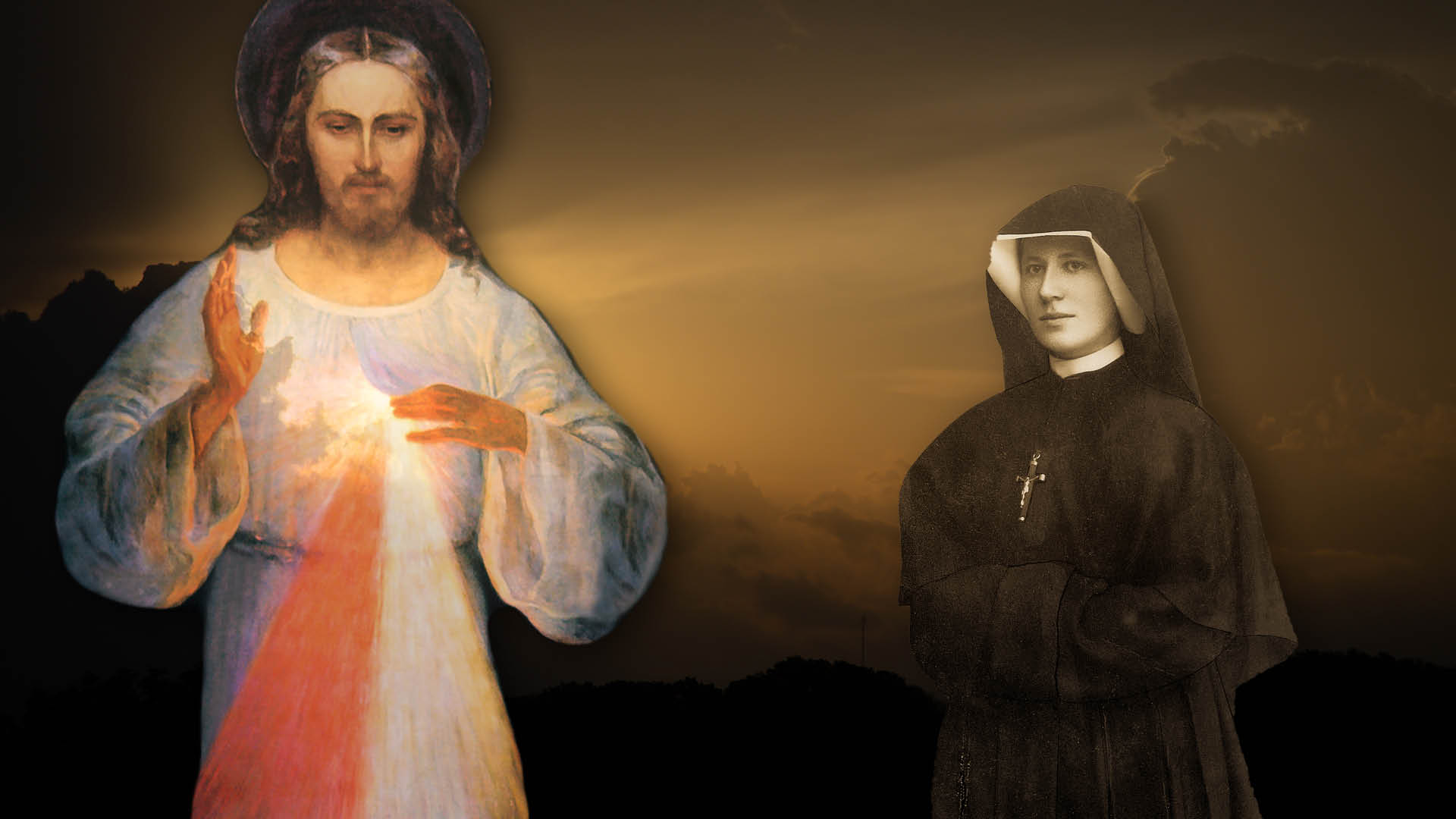
Now I don’t know how much Levertov knew of St. Faustina Kowalska and her image of Christ’s Divine Mercy, but that that light coming out of Christ’s wound has an amazing similarity to St. Faustina’s iconography.  Take a look.


 I wrote about the history of this wonderful painting St. Faustina had commissioned to capture her mystical vision, “The Divine Mercy Painting by Eugeniusz Kazimirowski” just over six years ago.  

There doesn’t seem to be a video of Levertov reading her “St. Thomas” poem, but if you like you can watch her read six poems to get a feel for her style and person.


Back to the “St. Thomas” poem.  If you’re wondering why Levertov combines the convulsing boy scene with the Doubting Thomas scene, contemplate first the struggle for the boy’s father to believe (“help my unbelief”) and what I think is the key image in the poem, the metaphorical “knot that bounds” Thomas inside his soul.  The convulsing boy, “twisted,” is a visual knot that Christ unwinds.  The boy’s father’s unbelief “knots” his insides as Thomas’s unbelief does to him.  Christ the healer “unravels” all knots.