
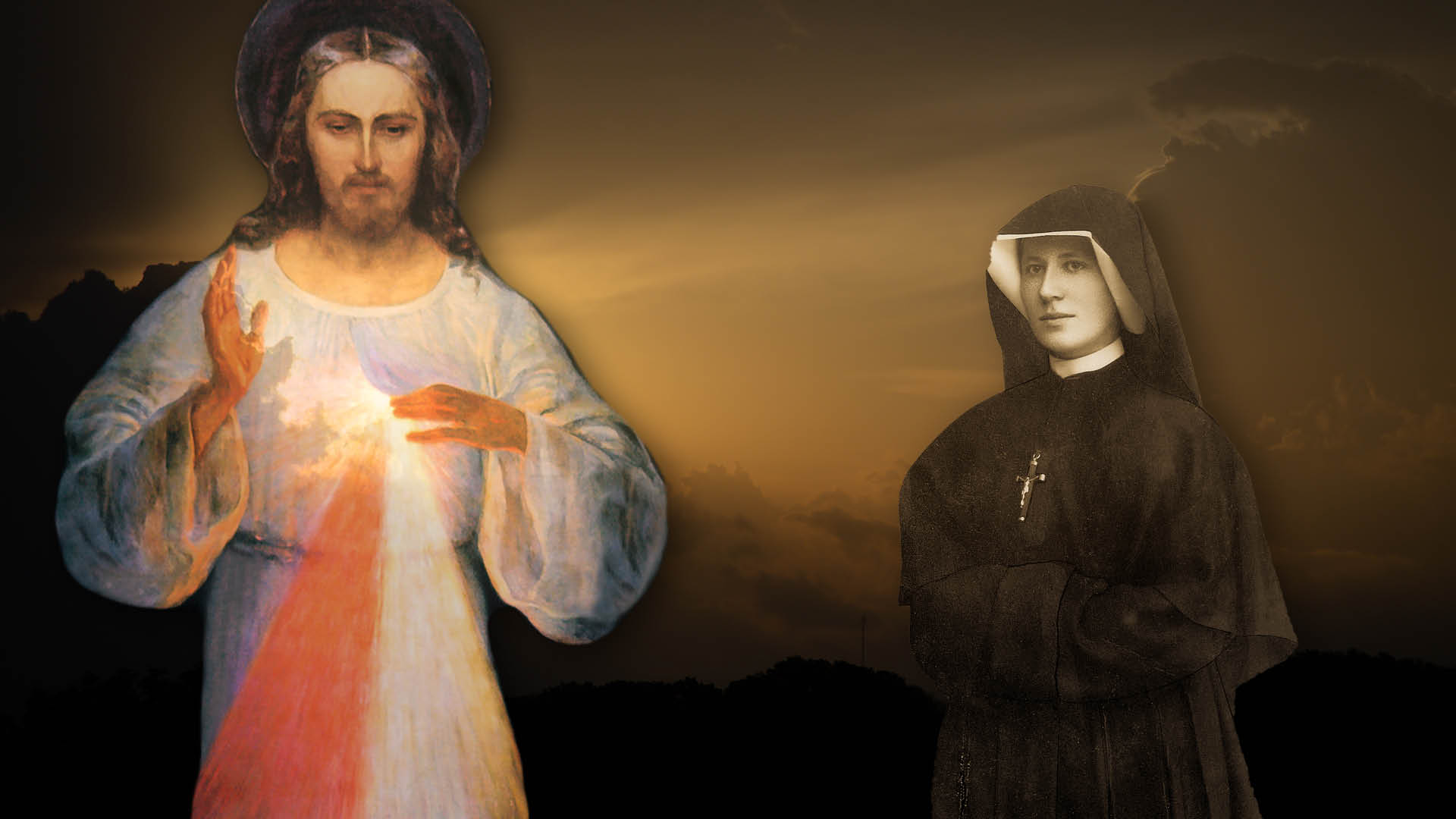
For the Second Sunday of Easter we have the same Gospel passage every year, though the other readings change with the liturgical calendar. Every year we hear how the Apostle Thomas doubted Christ’s bodily Resurrection only to have Jesus show up and let Thomas touch the wounds. In the year 2000, Pope St. John Paul II instituted for the Second Sunday of Easter as Divine Mercy Sunday. Last year we were in mourning over the passing of Pope Francis who had died Easter Monday. Pope Francis had a very strong devotion to Divine Mercy.
The Gospel reading is famous for the Doubting
Thomas story, but perhaps more important is the fact that the Risen Christ
breathes on the apostles to pass on the Holy Spirit. “Receive the Holy Spirit,” he tells them and
with that He creates them anew. This of
course is an allusion to Genesis chapter 2, “Then the LORD God formed the man
out of the dust of the ground and blew into his nostrils the breath of life,
and the man became a living being” (Gen 2:7).
Man is formed with the breath of life in Genesis, and Jesus reforms them
with the breath that is the Holy Spirit upon His resurrection. Jesus’s Resurrection begins the new creation.
Today’s Gospel:
On the evening of that first day of the week,
when the doors were locked, where the disciples were,
for fear of the Jews,
Jesus came and stood in their midst
and said to them, “Peace be with you.”
When he had said this, he showed them his hands and his side.
The disciples rejoiced when they saw the Lord.
Jesus said to them again, “Peace be with you.
As the Father has sent me, so I send you.”
And when he had said this, he breathed on them and said to them,
“Receive the Holy Spirit.
Whose sins you forgive are forgiven them,
and whose sins you retain are retained.”
Thomas, called Didymus, one of the Twelve,
was not with them when Jesus came.
So the other disciples said to him, “We have seen the Lord.”
But he said to them,
“Unless I see the mark of the nails in his hands
and put my finger into the nailmarks
and put my hand into his side, I will not believe.”
Now a week later his disciples were again inside
and Thomas was with them.
Jesus came, although the doors were locked,
and stood in their midst and said, “Peace be with you.”
Then he said to Thomas, “Put your finger here and see my hands,
and bring your hand and put it into my side,
and do not be unbelieving, but believe.”
Thomas answered and said to him, “My Lord and my God!”
Jesus said to him, “Have you come to believe because you have seen me? Blessed are those who have not seen and have
believed.”
Now, Jesus did many other signs in the presence of his disciples
that are not written in this book.
But these are written that you may come to believe
that Jesus is the Christ, the Son of God,
and that through this belief you may have life in his name.
~Jn:20:19-31
There is a lot going on in this passage.
Resurrection, breath, peace, wounds, faith, Fr. Cajetan Cuddy O.P. of
the Encyclopedia of Catholic Theology pulls it all together.
Fr. Cajetan:
“Nothing can be a
barrier to union with Jesus.” “The
Gospel reveals that nothing can prevent Christ from reaching those He loves—not
fear, not suffering, not even sin. In His mercy, Jesus passes through every
barrier and gives Himself to us, especially through the sacrament of
confession.” “The wounds of Christ are
not signs of defeat, but of a love that transforms all things. Even our
brokenness can become a place of healing when brought to Him.” “It is in the sacrament of penance that Jesus
gives us mercy, His peace, reconciliation to Him.” “Whatever Jesus touches, bears, becomes holy.” “The wounds Jesus bore show that He can
transform any disorder.” “He assimilated
the pain and suffering of the world so that when we go through pain and
suffering our pains and sufferings in Jesus can become a means of sanctification,
of holiness, and of salvation.
Listen to it all.
For the pastoral homily, let’s turn to a Franciscan, Fr. Greg Friedman
OFM who appropriately quotes Pope Francis.
Fr. Greg:
Grace always precedes
us, Pope Francis declared, and takes on the face of mercy that affects our
reconciliation and pardon. God makes us understand the great love for us
precisely when we recognize that we are sinners. Grace is stronger than sin. It
overcomes every possible form of resistance because love conquers all. I think Thomas realized his need for Jesus at
that moment in the story. His humble prayer says it all. My God and my Lord. We
who hear this gospel centuries later are included in this scene as well. Jesus
blesses us who have not seen and yet believe. Our faith assures us as Pope
Francis said that in our risen Lord, love conquers all.
What grace Thomas received. What
peace Thomas must have felt when Christ allowed him to put his fingers into
Christ’s wounds. What Divine Mercy. And what grace we have by believing. What Divine Mercy.
Sunday Meditation: “Peace
be with you.”
I have played this lovely song before, “Divine Mercy Flood My Soul” by Annie Karto. I have to post it again. It seems so perfect.
All I could see, all I
could feel
Was swept away in a
river of his love
I felt so weak I
rested in his arms
Washed clean, His gaze
now feels so warm.
Divine Mercy like a
river
Oh flood my soul
Wash me clean
And make me whole.
Finally we had a special praying of the Divine Chaplet at our parish at
the three o’clock hour with the Blessed Sacrament exposed. Off to the side we had a first class relic and
beside that our replica of the Divine Mercy painting. Let me share pictures.


For the sake of his sorrowful passion, have mercy on us and on the whole
world.

No comments:
Post a Comment