"Love follows knowledge."
"Beauty above all beauty!"
– St. Catherine of Siena

Showing posts with label 2018 Reads. Show all posts

Sunday, January 13, 2019

My 2018 Reads

Typically I have an initial post at the beginning of the year on the upcoming plans for the year, and then I post an update at the end of each quarter with the fourth quarter being the conclusion of the year’s reads.  This year I had that initial post in January and a first quarter update, and then I abandoned my poor blog readers without an update the rest of the year.  I apologize, and if you thought I had given up on reading, you were mistaken.  Anyway, you can tell by my posts throughout the year I was certainly reading.  Here is the final quarter’s update which summarizes my reads for 2018.  First a listing of what I read by quarter, and then I’ll break it down in a summary.


Completed First Quarter:

From Islam to Christ: One Woman’s Path through the Riddles of God, a confessional memoir by Derya Little.
The Inferno, 1st part of the epic poem, The Divine Comedy by Dante Alighieri, translated and annotated by Robert and Jean Hollander.
The Inferno, 1st part of the epic poem, The Divine Comedy by Dante Alighieri, translated and annotated by Anthony Esloen.
"Behind the Veil," a short story by Dhu'l Nun Ayyoub, translated by S. Al-Bazzazz. 
The Way of the Cross, a non-fiction devotional by Caryll Houselander.
A Man Could Stand Up, the 3rd novel of the Parade’s End Tetralogy by Ford Madox Ford.
The Magician’s Nephew, a novel from the The Chronicles of Narnia series by C. S. Lewis.
“The Call of the Cthulhu,” a short story by H. P. Lovecraft.
“Hard Times,” a short story by Ron Rash.


 Completed Second Quarter:

“The Dead,” a short story by James Joyce.
“Arrangement in Black and White,” a short story by Dorothy Parker.
Humanae Vitae, a Papal Encyclical by Pope Paul VI.
The Book of Isaiah, a book of the Old Testament, KJV translation.
The Power of Silence: Against the Dictatorship of Noise, a non-fiction work of theology by Robert Cardinal Sarah.
  

Completed Third Quarter:

The Everlasting Man, a non-fiction book of Christian apologetics by G. K. Chesterton.
 “Flowering Judas,” a short story by Katherine Ann Porter. 
Purgatorio, 2nd part of the epic poem, The Divine Comedy by Dante Alighieri, translated and annotated by Robert and Jean Hollander.
Purgatorio, 2nd part of the epic poem, The Divine Comedy by Dante Alighieri, translated and annotated by Anthony Esolen.


Completed Fourth Quarter:

“Letter to the Corinthians,” a papal epistle from Pope Clement I.
The Book of Isaiah, a book of the Old Testament, RSV (Catholic Edition) Translations.
Inside Islam: A Guide for Catholics, a non-fiction book by Daniel Ali and Robert Spencer.
Confessions of a Convert, a non-fiction memoir by Robert Hugh Benson.
Not All of Me is Dust, a novel by Frances Maureen Richardson.
Blood Pressure Down: The-10 Step to Lower Your Blood Pressure in 10 Weeks—Without Prescription Drugs, a self-help, non-fiction book by Dr. Janet Bond Brill. 
The Gospel of Luke, a book of the New Testament, Revised Standard Version, Catholic Edition.
The Lion, the Witch and the Wardrobe, a novel from the The Chronicles of Narnia series by C. S. Lewis.
The Letter to the Hebrews, an epistle in the New Testament attributed to St. Paul, KJV and RSV (Ignatius) translations.
Joy to the World: How Christ's Coming Changed Everything (and Still Does), a non-fiction work on Christian theology by Scott Hahn.
Vol 4 of Les Misérables, “Saint-Denis, the Idyll in the Rue Plumet, and the Epic in the Rue Saint-Denis” a novel by Victor Hugo.


Currently Reading:

Julius Caesar: Life of a Colossus, a biography by Adrian Goldsworthy.
The Virgin and the Gipsy, a short novel by D. H. Lawrence.
Hildegard of Bingen: Selected Writings, a collection translated and edited by Mark Atherton.
Fra Angelico (Metropolitan Museum of Art Series), a non-fiction work on art by Laurence Kanter, Pia Palladino, and others.
The Life of Saint Dominic, a biography by Augusta Theodosia Drane.
The Fathers of the Church: An Introduction to the First Christian Teachers, 3rd Edition, a non-fiction work by Mike Aquilina.


As you can see, being the moderator of the Catholic Thought Book Club at Goodreads shapes my reading list.  I would say that more than half—perhaps three quarters—is determined by the book club selection, and since I’m moderator I can’t really opt out of a read.  The readings break down in the following manner.  Nine works of fiction, eight works of non-fiction, only six short stories, five books from the Bible, and two papal documents.  Let’s take the categories individually. 

In the nine works of fiction, I include two individual canticles of Dante’s Divine Comedy separately.  It is a poetic epic, but I count it as fiction because it is narrative in nature, and I count the canticles (Inferno and Purgatorio) as separate works.  Each are book length.  Also I count the two different translations (Hollander and Hollander and Esolen) separately since I read them both.  In all four of the nine works stemmed from Dante.  As you may know I’ve been reading Ford Madox Ford’s tetralogy of novels set during World War I collected under the title Parade’s End.  This year I read the third of the four, A Man Could Stand Up.  One more to go.  In that vein, the last few years I’ve been reading the over 1200 page epic Les Misérables by Victor Hugo.  Because of its length I’ve been reading annually one of the five volumes and counting each as a novel.  This year I read the fourth volume, “Saint-Denis, the Idyll in the Rue Plumet, and the Epic in the Rue Saint-Denis.”  One more year to go on this too.  I’ve been reading C. S. Lewis The Chronicles of Narnia series with my son.  This year we read the first two, The Magician’s Nephew and The Lion, the Witch and the Wardrobe.  They are delightful and frankly not just for children.  Finally, I read Not All of Me is Dust, a novel written by an incredibly nice woman I met in my Catholic Thought Book Club at Goodreads, Frances Maureen Richardson.  I would classify this as a Catholic novel since the faith of the characters is at the center of each of their lives, but it is way more than that.  It’s a journey through the second half of the 20th century with its declining faith and one person whose example stands against it.  I haven’t posted on this novel here yet, but I intend to do so.

Seven of the eight non-fiction works have a theological element to them.  Two of the books I would classify as confessional memoirs.  They are autobiographic and focus on a particular element of their lives.  Both books were religious conversion stories.  Derya Little’s From Islam to Christ tells of her conversion from growing up with Islam in Turkey and becoming Roman Catholic.  Robert Hugh Benson’s Confessions of a Convert also speaks of a conversion to Roman Catholicism, he being an Anglican priest and son of an Anglican Archbishop at the turn of the end of the 19th century.  Both took the reader through their theological reasoning and personal emotions.  Four of the non-fiction books were theological discourses.  Robert Cardinal Sarah’s The Power of Silence discussed the need for silence as a means to communicate and understand God.  G. K. Chesterton’s The Everlasting Man identified the importance of man and Christ in the shaping of human and salvation history.  In Inside Islam: A Guide for Catholics, Daniel Ali—also a convert to Catholicism—provided a handbook of the differences between the two religions.  Scott Hahn’s Joy to the World provided a wonderful exegesis to the Christmas narrative.  The final non-fiction was a self-help book by Dr. Janet Bond Brill, Blood Pressure Down on how to lower one’s blood pressure, as the title states.  It’s becoming an issue for me.

I only read five short stories this past year as opposed to my usual twenty-four.  Actually last year I only read eighteen, so my trend is toward fewer short stories.  That’s a shame because I get so much diversity from reading so many different writers.  I need to try to do better on that.  With only six, I won’t go through a whole lot on what I thought of them.  I’ll just rate them as exceptional, good, ordinary, and duds.  “Behind the Veil” by Iraqi writer Dhu’l Nun Ayyoub, was ordinary.  “The Call of the Cthulhu” by H. P. Lovecraft was also ordinary.  “Hard Times” by Ron Rash was good.  “The Dead” by James Joyce was exceptional.  “Arrangement in Black and White” by Dorothy Parker was a dud.  “Flowering Judas” by Katherine Ann Parker was good.  So the winner of the best of the short stories read this year is James Joyce’s “The Dead,” a classic and one of the best works Joyce wrote.

I read five books out of the Bible this year.  I am counting The Book of Isaiah and The Letter to the Hebrews twice each because of two different translations.  As those who have read my blog may know, I am trying to read through the Bible both in King James Translation (to get a feel for the English language of the time) and a contemporary Catholic translation (to get the most comprehension of the work).  The fifth work from the Bible read this year was The Gospel of Luke and since I had read this before I only read it in RSV translation.  We are in the C lectionary year for readings at Mass, which means the predominant Gospel readings will come from Luke.  So the book club read the entire Gospel up front as a way to prepare us for this year’s readings.  We did this last year with the Gospel of Mark.

The book club also read two papal documents.  We read Humanae Vitae, a papal encyclical which had reached its fifty year anniversary, from Pope Paul VI.  The book club also read the Letter to the Corinthians by church father Pope Clement I.  Pope Clement I was the fourth Bishop of Rome and held office from 88 to 99 AD.  

On the list of currently reading but unfinished are three reads from the past I have not gone back to this year: Goldworthy’s Julius Caesar, Lawrence’s The Virgin and the Gypsy, and the selected writings of Hildgard of Bingen.  The art book on Fra Angelico’s work and the biography of St. Dominic were added this year, and every so often I will read a few pages.  Also added was Mike Aquilina’s The Fathers of the Church, which is a survey book of good portion of the church fathers.  This is a book we’re reading at my parish Bible study this year.

As you can see, almost everything I read these days is related to Catholicism in some way. 


Monday, April 23, 2018

2018 Reads, Update #1


It’s time for this year’s first quarter status.  Even though I’ve been unable to read much the last few weeks (busy with work and home, and baseball season has begun!) I think I’ve accomplished more than most quarters.  Here’s the list with upcoming plans:

Completed First Quarter:

From Islam to Christ: One Woman’s Path through the Riddles of God, a confessional memoir by Derya Little.
The Inferno, 1st part of the epic poem, The Divine Comedy by Dante Alighieri, translated and annotated by Robert and Jean Hollander.
The Inferno, 1st part of the epic poem, The Divine Comedy by Dante Alighieri, translated and annotated by Anthony Esloen.
"Behind the Veil," a short story by Dhu'l Nun Ayyoub, translated by S. Al-Bazzazz. 
The Way of the Cross, a non-fiction devotional by Caryll Houselander.
A Man Could Stand Up, the 3rd novel of the Parade’s End Tetralogy by Ford Madox Ford.
The Magician’s Nephew, a novel from the The Chronicles of Narnia series by C. S. Lewis.
“The Call of the Cthulhu,” a short story by H. P. Lovecraft.
“Hard Times,” a short story by Ron Rash.


Currently Reading:

Julius Caesar: Life of a Colossus, a biography by Adrian Goldsworthy.
The Virgin and the Gipsy, a short novel by D. H. Lawrence.
Hildegard of Bingen: Selected Writings, a collection translated and edited by Mark Atherton.
The Everlasting Man, a non-fiction book of Christian apologetics by G. K. Chesterton.
 “Flowering Judas,” a short story by Katherine Ann Porter. 
The Lion, the Witch and the Wardrobe, a novel from the The Chronicles of Narnia series by C. S. Lewis.
The Book of Isaiah, a book of the Old Testament, Ignatius Translation.
Blood Pressure Down: The-10 Step to Lower Your Blood Pressure in 10 Weeks—Without Prescription Drugs, a self-help, non-fiction book by Dr. Janet Bond Brill. 


Upcoming Plans:
The Annotated Waste Land, a book of the poem, “The Waste Land” by T. S. Eliot with essays and annotations by Lawrence Rainey.
Purgatorio, 2nd part of the epic poem, The Divine Comedy by Dante Alighieri, translated and annotated by Robert and Jean Hollander.
Purgatorio, 2nd part of the epic poem, The Divine Comedy by Dante Alighieri, translated and annotated by Anthony Esloen.
The Book of Isaiah, a book of the Old Testament, KJV Translation.
“The Balance,” a short story by Evelyn Waugh.
“The Tight Frock-Coat,” a short story by Luigi Pirandello
“Here We Are,” a short story by Dorothy Parker.
“The Light of the World,” a short story by Ernest Hemingway.
“Gods,” a short story by Vladimir Nabokov.


I’ve completed six full length books and three short stories this past three months or so this first quarter.  Not bad.  From Islam to Christ by Derya Little was a conversion story, confessional memoir on her religious journey, going from a Muslim to an atheist, from atheist to Christian, and then Protestant Christian to Roman Catholic.  It’s a wonderful young woman’s exploration for the truth.  I read Dante Alighieri’s The Inferno, the first section of his great epic poem, The Divine Comedy. And I read it in two different translations the Robert and Jean Hollander translation and the Anthony Esolen translation.  Both are wonderful translations.  In effect I’ve read it twice! I’ve read one devotional for Lent, Caryll Houselander’s The Way of the Cross.  It follows the Stations of the Cross, and each chapter is a meditation on a station.  I’ve completed two novels.  A Man Could Stand Up, which is the third novel in Ford Madox Ford’s tetralogy, Parade’s End, set during the First World War.  Finally I’ve been reading C. S. Lewis’s seven novel sequence compiled as The Chronicles of Narnia to my son Matthew at night as an extended bed time story.  I started The Magician’s Nephew some time at the end of last year, but I completed it recently.  The Chronicles of Narnia may be novels for young adults, but it’s something everyone should read.  I have never read them, and I’m thoroughly enjoying them. 

I’ve also read three short stories, which is only one per month.  I can’t say any of the three are standouts, but none of them were dreadful.  "Behind the Veil," by the Egyptian writer, Dhu'l Nun Ayyoub, is about a young woman who challenges the conformity of covering her face in public.  “The Call of the Cthulhu,” by H. P. Lovecraft which is considered a classic in the horror genre, is about a monstrous demon called a Cthulhu, and the destruction to the lives of those who try to study it.  Finally “Hard Times,” by Ron Rash is a story set in a depression era farming household involving the daily theft of eggs whose loss puts a financial strain on the family.  The thief turns out to be the neighbor’s little girl.  Very well told, though ending seemed to be anticlimactic. 

The Goldsworthy biography of Julius Ceasar is still on my list—I refuse to give up on any book I think worthwhile—after a number of years, but I haven’t touched it this quarter.  I never had time last year to finish the D. H. Lawrence short novel, The Virgin and the Gypsy, but I will get to it.  Every so often I still read a page or two of the selected writings of Hildegard of Bigen.  But most of my time has been spent with G. K. Chesterton’s The Everlasting Man.  It’s a good read, but slow in spots.  I’m about half way through.  We’re currently reading it for my Catholic Thought Book Club.  I’ve also been reading the next of the Narnia series, The Lion, the Witch and the Wardrobe.  I’m about a third of the way in The Book of Isaiah.  Usually I read the King James Version first and then go to the modern English, but this time I’m trying reversing it with the modern English first.  I think that’s the better way to go.  Finally I’ve been reading Blood Pressure Down by Dr. Janet Bond Brill because in all these doctor’s visits I’ve had recently, besides all the immediate ills (bronchitis and broken nose) they have found a slightly high blood pressure, and they have given me a few months to resolve with adjustments to life style.  And if I fail with life style changes, then I will have to go on medication. 

With upcoming reads, I want to walk my readers through the great T. S. Eliot poem, “The Waste Land.”  It will probably be an eight to ten post endeavor.  Also the Catholic Thought book club will continue with Dante’s The Divine Comedy with the second cantica, Purgatorio.  I also list some short stories I want to read and continue with Isaiah. 

Happy reading!


Sunday, February 11, 2018

My 2018 Plans


Given I can no longer plan with any certainty what I plan to read, I don’t know if outlining my plans make sense.  Maybe I should post separate this into two halves, the half I know what I will read and the half I would like to get to read if I may.  The problem is I don’t know how many I can list with any confidence that I know I will read.  Of course this all has to do with me taking on the role of moderator at the Goodreads Catholic Thought Book Club.  Books are nominated and put to a vote and chosen by the entire club.  But let’s try it. 


Books I know I am pretty sure I will read.

(1) From Islam to Christ: One Woman’s Path through the Riddles of God by Derya Little.  I know for sure this book will be read because I have already read it!  It’s a wonderful coming of age memoir about a Turkish girl who grew up Muslim, became an atheist, had a conversion experience to Christianity, and then through her research and learning found the fullnesst of Christianity in the Roman Catholic faith.  It’s a great story and I will certainly post something on it shortly.  In the meantime, I highly recommend it. 

(2) Dante Alighieri’s The Divine Comedy, but this is going to count as six books since I will be reading all three parts, Inferno, Purgatorio, and Paradisio, and I am reading two different translations, the Robert and Jean Hollander translation and the Anthony Esolen translation.  Again I’m pretty certain to to complete these.  It’s been picked for the book club and we’re doing Inferno now as you can see by my recent posts.  We will break after Inferno for other Catholic reads, return to Purgatorio I estimate around May or June, break again, and return for Paradisio by around September or October.  If you want to join in, either read along and comment on my blog, or join the book club.  It’s free.

(3) I’m going to squeeze in the next volume of Victor Hugo’s Les Misérables, which will be the fourth volume, which is called, “The Idyll in the Rue Plumet and the Epic in the Rue St. Denis.” 

(4) I’ll try to complete some of the ones I didn’t complete last year.  The Virgin and the Gipsy, a short novel by D. H. Lawrence should be a fast read once I get a week to concentrate on it.

(5) Another started last year but not finished was Hildegard of Bingen: Selected Writings, a collection of the saint’s writings translated and edited by Mark Atherton.

(6) I’ve started a gorgeous book on the life and art of the early Renaissance painter, Fra Angelico, simply titled Fra Angelico by Laurence Cantor and  Pia Palladino.  I will post on some of the paintings as well.


(7) I just purchased and have read more than a third of a short devotional, The Way of the Cross by Caryll Houselander.  It’s one of my reads for Lent.  I’ll have to see what the book club chooses. 

(8) My poetry read this year will be The Annotated Waste Land with Eliot’s Contemporary Prose: Second Edition by T. S. Eliot and edited by Lawrence Rainey.  I will post my thoughts on all five sections of the great poem.

(9) Biblical reads will Isaiah in Old Testament, and the Letter to the Hebrews, and the Letters of James, First and Second Peter, and if I have time the three letters of John and the Book of Revelations.  This year I will read all Biblical texts in both KJV and Ignatius translations.

(10) Of course the short stories, which will get picked mostly on impulse.  I only did eighteen last year but I will strive for my usual two per month.

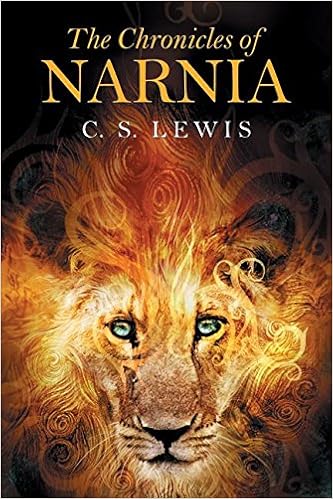
(11) I’m reading The Chronicles of Narnia books with Matthew and so I hope to include one or two in this year’s read.  I’m actually well into the first of the series, The Magician's Nephew.  I’ve never read them, and what a joy it is so far.


Books I hope to get to:


(1) Three years ago I had started the tetralogy (a series of four) Parades End by Ford Madox Ford.  I had read the first two books in the series and I was supposed to read the third last year.  I did not get to it.  I really hope to get to it this year.  The third in the series is titled, A Man Could Stand Up —. 

(2) I really want to continue through a few books from French literature.  On my list for a very long time is Stendhal’s The Red and the Black.

(3) I want to read the recent Nobel Prize’s winner, Kazuo Ishiguro’s great novel, The Remains of the Day.”

(4) I really would like to read something by Alice McDermott and her most highly acclaimed work is Charming Billy. 

(5) I started Shakespeare’s trilogy of the Henry VI plays, so if I can I would like to read Part II and Part II.

(6) If I can persuade the book club to pick Pensées, by Blaise Pascal it would add to my French literature and to Catholic great works. 


Well, I know I’m not going to get to all that.  But one can only hope!