"Love follows knowledge."
"Beauty above all beauty!"
– St. Catherine of Siena

Showing posts with label The Windhover. Show all posts

Tuesday, June 14, 2022

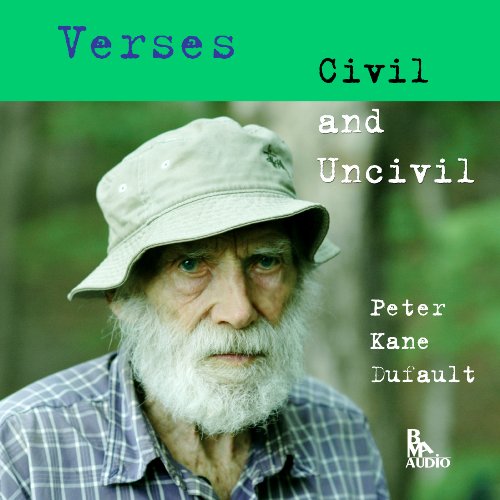
Poetry: “Goshawk” by Peter Kane Dufault

A friend of mine sent me an email the other day with an urging to check out a particular poem.  Here is her note:


When you have time, Manny, please look at this poem: 

       “Goshawk”   By poet Peter Kane Dufault

I happened upon it and was struck by its excellence yet violence. If you read it, tell me if it reminds you of a dark, shadowy likeness of Hopkins’ “The Windhover.’’ It really seems that way to me, a world without God.

I love it when friends ask me questions on literature.  It pricks something in me to investigate. 

First, you can find the poem at Poetry Nook,  but here’s the poem.


Goshawk

by Peter Kane Dufault


That harbinger of God's hardness, North

American Goshawk — storm-

grey above, ice-grey beneath — segment

of a winter azimuth — de-

tached herself from this morning and

seized a black hen and caromed

thirty yards through the soft snow, wrenching

feathers and flesh out, too

blood-crazy to kill clean. . . .


Tell me

if it's not hard how a haggard

hasn't even the hangman's mercy

but tears the heart out alive — that she

should have been made so;


and so, too, that when the dog

ran yapping and drove her off,

the grey crucifer levitated

in such a cold pride of windblown

lightness over the tines of the trees


you'd have forgiven her, even

if she could have torn

in that worse way there is:

with a word, never breaking the skin.


I had never heard of Peter Kane Dufault before.  He’s got a Wikpedia entry and a listing in Poetry Foundation, so he’s a poet of some merit.  He lived through most of the 20th century (1923-2013), fought in WWII, and even ran for Congress on an Anti-Vietnam War platform.  The Poetry Foundation bio note says he was highly thought of by some more well-known poets: “Poets such as Marianne Moore and Ted Hughes championed Dufault, as did New Yorker editor Howard Moss, who published the poet 44 times.”  Poetry Foundation lists six poems attributed to him, but none are as good as “Goshawk.”  Searching the internet you can find some two dozen poems of his.  Again, nothing I found as good as “Goshawk,” but of note you might want to read “After Boxing”  and “Paramath.”   

Perhaps the best of the obituaries is by Brad Leithauser in the New Yorker, published on June 7, 2013, several weeks after Dufault’s passing.  Here’s his opening:


A marvellous poet whom you’ve probably never heard of died some weeks ago. His name was Peter Kane Dufault, and at the time of his death he was a couple of days short of ninety. On the face of it, his lack of renown is surprising, for he had some prominent supporters, including Marianne Moore and Richard Wilbur and Ted Hughes and Amy Clampitt. He was also embraced by Howard Moss, the poetry editor of The New Yorker from 1948 until 1987. Dufault published forty-four poems in the magazine, nearly all of them during Moss’s tenure.

Leithauser characterizes Dufault as that poet we’d all wished we had known, a “pure poet” who lived his life in obscurity and simplicity.


It’s tempting to overstate the virtues of the recently dead, so I’ll resist declaring that, at the time of his death, Dufault was my favorite living American poet. But he was certainly among the five or six whose work counted most for me. In one way, he was preëminent: I came to think of him as the Pure Poet. If this was a romantic image, it was a romanticism he encouraged.

Perhaps if one had to reach for what Dufault’s themes centered around, I think this little characterization captures it.


He was constantly posing new theological questions, in an era often hostile to poetry of devotion. He looked hard at the natural world, then looked hard at its spiritual implications.

Here Leithauser captures Dufault’s style.


I first came upon him in the seventies, in “The New Yorker Book of Poems.” I fell hard for “In an Old Orchard,” with its abandoned farm “still pitifully gathering all / windfalls onto its damp lap of graves,” and looked up his two out-of-print collections, “Angel of Accidence” (1954) and “For Some Stringed Instrument” (1957). I didn’t know then that Marianne Moore had been a fan, but affinities between them were easy to spot: Dufault, too, had an eerily sharp eye for the more idiosyncratic dwellers of the animal kingdom. Manx cats and tarsiers and mud-dauber wasps and mastodons inhabited his stanzas. He was like her, too, in being quite fanciful in his imagery (an old turkey with a head “like a loading-hook from a drowned galleon,” a hefty starling seen as a “sampler-shape whose bid / to be a bird / suffers from thickness of the thread”) while always respecting his creatures’ fierce and inalienable reality: you never had the feeling that his was a denatured zoo, a menagerie of mere symbols. A reader was in danger of getting stung if he mistook one of Dufault’s wasps for an emblem.

It sounds like Dufault’s work is similar to Marranne Moore’s, who had a sharp eye for observation, a precise word or metaphor to capture it, and loved to write about animals for their wondrous nature.  Leithauser continues.


In 1993, a book of selected poems, “New Things Come Into the World,” appeared, published by a small press, Lindisfarne, which normally didn’t publish poetry. At that time, I’d never met Dufault, though we’d exchanged some letters. I reviewed “New Things Come Into the World” in the New York Review of Books, writing with that special charged eagerness that comes of introducing a little-known treasure to a potentially wide audience. I called him a “poet of vivid landscapes.” I called him “as fine an ‘animal poet’ as any American now going.” I compared him to Moore and Elizabeth Bishop and Clampitt and May Swenson.

Finally Leithauser felt a certain pride in knowing a poet of distinction that lived in obscurity.


Though he slowed down, creatively, in his last decade, he continued to write beautiful poems, and did so, nobly, in an undeserved obscurity. Now and then I’d come upon someone, in person or in print, who shared my enthusiasm, and I’d feel that clandestine bond which comes with membership in a small high-minded club. I felt this keenly when I read Ted Hughes’s blurb for a later Dufault collection, “Looking in All Directions” (2000): “So fresh and new and itself… wonderful stuff. Snatches those uncatchable moments—like snatching a butterfly out of the air—then letting it go undamaged. So nimble and delicate.”


###

Now to the poem. It’s an interesting poem.  It's not Gerard Manly Hopkins.  It's very visual, so it captures the reader.  Are there similarities to Hopkins?  This is a very different poem that “The Windhover.”  (I provided a detailedanalysis of Gerard Manly Hopkins’, “The Windhover.”)   It is quite possible Dufault is alluding to “The Windhover” but I just don’t see the interdependence.  Perhaps Dufault’s image of the goshawk “detaching herself from the “winter azimuth” is an allusion to the Hopkin’s image of  a “dapple-dawn-drawn Falcon,”  Or it’s coincidental imagery or Dufault just liked the image so much he reinvented it for his purpose.  An allusion is more than just reference; it requires significance, and I’m not getting the significance. 

Other than Dufault's use of alliteration I do not see other similarities.  Dufault does not use any real rhythm, sprung or conventional.  He's very prosaic, modernist, free verse, though his diction is terse, which gives it power, especially for a violent poem.  I'm baffled by Dufault's use of breaking words and phrases at the end of a line.  Hopkins does it to keep meter.  Not sure why Dufault does it.  Perhaps as an aesthetic capturing of the theme of ripping things apart?  That would be skillful on his part. 

Dufault's theme has been done many times: one finds in nature a certain viciousness, (he calls it a "hardness") and one points to God for it, either to condemn God, to "prove" God doesn't exist, or to point to some great spiritual meaning in the act of animals killing animals. 

Can you tell which of the three Dufault is expressing?  I think it's the latter but I'm not sure, and if it is the latter then what is this great spiritual meaning in the act of a hawk killing a chicken?  I've pondered it for a while.  He sees in the hawk gliding above a cross (“the grey crucifer levitated”), which is a nice metaphor, but what does it suggest?  Isn't Christ the one who gets killed and not the killer?

Why is the hawk the "harbinger" of God's hardness?  Is this an allegory?  A harbinger is one who comes ahead of another.  So is God going to come and destroy us?  Perhaps.  Or is the allegory a representation of the Calvinist interpretation of the crucifixion, where God's wrath is redirected on the Son and thereby satisfied?  I don't know.  And is that a reference to God at the end, imagining the hawk killing with a word instead of with violence (“if she could have torn/in that worse way there is:/with a word”)?  God creates with a word; Christ is the Word made flesh.  And why is killing through a word "the worse way"?  You got me. 

This may all hold together and be a great poem, but given that I have all these questions and still can't get beyond the surface events I wouldn't call this a great poem.  I do love how it reads.  Alliteration can be showy and stilted, but when done well as here it really drives the point as in the second stanza:


Tell me

if it's not hard how a haggard

hasn't even the hangman's mercy

but tears the heart out alive — that she

should have been made so

 And one marvels at the absolute power of the central violence in that opening:


          …de-

tached herself from this morning and

seized a black hen and caromed

thirty yards through the soft snow, wrenching

feathers and flesh out, too

blood-crazy to kill clean. . . .

The alliteration of “feathers and flesh” along with the hard C’s of “caromed,” “crazy,” “kill,” and “clean” adds to the very visual moment of struggle and brutality.  I am glad to have been introduce to Peter Kane Dufault.  I will have to remember him if I run across his work again.

 ###

In my search I found a couple of videos of Mr. Dufault.

First an extemporaneously composed poem criticizing America:


Second, here is a trailer to a documentary movie of his views” What I Meant to Tell You: An American Poet's State of the Union.”


He was definitely anti American, or of a different America to give him his due.  In his obituary Leithauser did say he would have edited out Dufault’s political poems.  They are not that good.  We would have disagreed vehemently, but still in my engagement on his life and this poem I grew to like Peter Kane Dufault.  Yes I can see how he was a “pure poet.”

 ###

Postscript:

I received a reply from my friend who had originally sent me the email on the poem. 

Her Comment:

I looked Peter Kane Dufault’s work up a little more and found that he wrote a poem called ‘’Peregrines,’’ and in that poem he quotes directly from ‘’The Windhover.’’ He had a rich imagination and an exceptional way with words but ‘’Peregrines‘ is not his best work. Unfortunately, this reader found it empty and meaningless. You mentioned that he was anti-American. Do you mean ‘’progressive left,’’ ‘’woke’’ anti-American?

My reply:

I really enjoyed "Peregrines"!  It's a poetic ramble, a jazzy improvisational piece that streams language around an emotion and theme.  It reminds me of the Beat poets, Lawrence Ferlinghetti in particular.  I have a secret crush for that poetry.  It's lesser poetry than more structured and sculpted but I find it fun.  My trash food addiction!  ;)


Dufault is an old time Liberal, someone of the Beat Generation.  I think that's a good analogy.  He’s definitely progressive and definitely "woke" but aren't they all?  In music he would be like the folk music types.  In fact he reminds me of Pete Seeger.  And amazingly they lived almost the exact same years (1919-2014).

Sunday, August 17, 2014

Poetry: “The Windhover” by Gerard Manly Hopkins, Part 2

In Part 1 I took you through a reading of the poem, but now I want to expand beyond a reading to an analysis.

Here is the poem in its entirety again so it’s easily before your eyes.

The Windhover

To Christ Our Lord


I caught this morning morning's minion, king-
   dom of daylight's dauphin, dapple-dawn-drawn Falcon, in his riding
   Of the rolling level underneath him steady air, and striding
High there, how he rung upon the rein of a wimpling wing
In his ecstasy! then off, off forth on swing,
   As a skate's heel sweeps smooth on a bow-bend: the hurl and gliding
   Rebuffed the big wind. My heart in hiding
Stirred for a bird, – the achieve of, the mastery of the thing.
Brute beauty and valour and act, oh, air, pride, plume, here
   Buckle! AND the fire that breaks from thee then, a billion
Times told lovelier, more dangerous, O my chevalier!

   No wonder of it: shéer plód makes plough down sillion
Shine, and blue-bleak embers, ah my dear,
   Fall, gall themselves, and gash gold-vermilion.

Let’s first look at this from a language perspective.  Hopkins is known for replicating Anglo-Saxon rhythm and diction.  Certainly the frequent alliteration recalls early and middle English poetry.  And we get as expected from a Hopkins poem many Germanic rooted words: “dapple,” “dawn,” “drawn,” “morning,” “sheer,” “plod,” “plough,” “bleak,” “wimple,” “bow,” “kingdom,” and so on.  What I find remarkable, however, is how many Latinate, and more specifically, French rooted words Hopkins uses.  Notice how many: “minion,” “falcon,” “rein,” “brute,” “billion,” “dauphin,” “sillion,” “vermillion,” “air,” “dangerous,” “lovelier,” and, most conclusively, “chevalier.”  No doubt there is a conscious effort to create a dualistic contrast with diction.  It’s as if the two language roots are crashing together into that very same buckle that the wind and the falcon crash at the heart of the poem.  And what is interesting is how at the center of this is the word “buckle.”  Buckle to me sounds very Germanic/Anglo-Saxon, but when I looked up its etymology, I was surprised to find it comes from French.  The collapsing connotation of buckle comes from the middle French word, boucler, and coupling definition of buckle comes from the old French, bocle.  Not only is the drama of the falcon and wind meet at the word “buckle,” but so does the meeting of the two language groups.  So what is suggested here is an aesthetic of dualism.

Next let’s look at the sequence of metaphors:
1. The falcon as a servant (minion).
2. Falcon as a French aristocrat, a dauphin.
3. The daylight as a kingdom or territory.
4. Flying as if climbing unto a saddle, “rung upon the rein.”
5. Flying as skating on ice.
6. The collision of bird and wind as a joust and collapsing (buckling) of lances.
7. The meeting of bird and wind as a joining (buckled).
8. The collision of bird and wind causes dangerous fire.
9. The falcon as a knight (chevalier).
10. Hot broken embers form a gold shine.

I think those are the major metaphors.  The heart in hiding and stirring is more of a circumlocution than a fully developed metaphor.  So what does this all suggest?  Well, let’s set aside the metaphors that are merely there for descriptive purposes, numbers four, five and ten.  Numbers two and nine coordinate representing the falcon as an aristocratic, French knight.  Why a French knight?  I don’t see any particular reason why the knight needs to be French, but it allows Hopkins to bring in the French-rooted diction to collide with the Germanic/Anglo-Saxon diction.  Number three is a rather interesting metaphor, advancing light from the morning dawn as a territorial expansion, with the falcon then as sovereign.  But number one, in contrast to compared to a king, identifies the falcon as a servant (minion).  Number eight describes a metaphysical discharge from the buckling—in both senses of the word—bird and wind.  Numbers six and seven are the play on the word “buckle” as I outlined in the Part 1 post.

What does that all lead to?  It leads to a complex set of symbols, where the falcon stands for something beyond the mere surface of its being.  That shouldn’t surprise us.  Birds as symbols are a topos, a poetic meme that one frequently encounters.  Consider Keats’ nightingale, Poe’s raven, Stevens’ blackbird, Frosts’ oven bird, Shelley’s skylark, and so on.  Hopkins’ falcon is symbolic for Christ as servant and king, as knight and spirit, as prince of both the air and the dirt, of winged majesty and of humble plow.  Now we see why there is the aesthetic of duality.  It projects toward the double nature of Christ, man and God, flesh and spirit, king and servant, synthesized in His being.  And that brings us back to buckle, where two oppositions clash, discharge, and then couple.  Falcon and wind become one.  Nature, from air to dirt, becomes unified into wholeness, as the body of Christ brings all into unity.

Which brings me to a little controversy I mentioned in Part 1.  If you notice, there is a dedication underneath the title, “To Christ Our Lord.”  The dedication was not in the original writing of the poem, which occurred in 1877.  Hopkins added that seven years later in 1884, presumably because he felt this was his best work and he ought to offer it to our Lord.  According to some who read the poem as strictly a nature poem the suggestion of the falcon representing Christ only was inserted by the addition of the dedication.  Otherwise it’s a poem about a falcon and the hidden divine that is within the natural world, revealed by the energy of the falcon opposing the wind, the shiny, overturned soil, and the gold inside the cracked embers. 

Now the idea does have some merit.  It’s not one of those loony deconstructionist approaches.  It’s actually a New Criticism approach, which isn’t all that new.  It goes back to the 1940s.  Under New Criticism one rejects using the author’s background and the critic’s intuitive reductions and deals strictly with the poem’s text and structure.  Since Christ isn’t formally mentioned in the poem, one might be reading into the poem meaning that wasn’t there.  So was the dedication, the New Criticism critics might ask, added as an afterthought or to lead the reader to the meaning?

Oh I think it’s clear that the falcon symbolizes Christ.  Both servant and King can only suggest Christ.  Those that apply that restrictive a reading could never acknowledge any symbolism in any poetry.  I think the controversy is based on over intellectualizing.

I hope you now understand and appreciate this great poem.  It’s always beneficial to hear the poem read out loud by professional readers.  Here:


Tuesday, July 22, 2014

Poetry: “The Windhover” by Gerard Manly Hopkins, Part 1

As I continue on my annual poetry read, this year being that of Gerard Manly Hopkins, I want to analyze in some depth one of the most original poems in the English language, arguably Hopkins’ greatest poem, and for sure one of my all time favorite poems ever written, “The Windhover.”  Actually Hopkins himself said it was “the best thing I ever wrote.”  Here is the poem, but don’t be intimidated, I’ll walk you through it. 

The Windhover

To Christ Our Lord

I caught this morning morning's minion, king-
   dom of daylight's dauphin, dapple-dawn-drawn Falcon, in his riding
   Of the rolling level underneath him steady air, and striding
High there, how he rung upon the rein of a wimpling wing
In his ecstasy! then off, off forth on swing,
   As a skate's heel sweeps smooth on a bow-bend: the hurl and gliding
   Rebuffed the big wind. My heart in hiding
Stirred for a bird, – the achieve of, the mastery of the thing.

Brute beauty and valour and act, oh, air, pride, plume, here
   Buckle! AND the fire that breaks from thee then, a billion
Times told lovelier, more dangerous, O my chevalier!

   No wonder of it: shéer plód makes plough down sillion
Shine, and blue-bleak embers, ah my dear,
   Fall, gall themselves, and gash gold-vermilion.

First let’s get some of the basics out of the way.  It’s an Italian sonnet where amazingly all eight endings of the octave have one rhyme, “-ing.”  [The octave is the first eight lines; the sestet is the remaining six lines.]  The octave here contains one complex thought, which I’ll shortly decompose, and the sestet breaks down into two thought units, one in the first three lines, the other in the last three lines.
If it is a sonnet, it’s a rather experimental sonnet.  Sonnets typically contain ten syllables, making that pentameter, and the rhythm is usually iambic, which means it follows a rhythm of unstressed/stressed, five times per line.  The very first line does follow an iambic pentameter meter, the bold being a stressed syllable.  Bold type below signifies a stressed syllable, while normal type is unstressed.

I caught this morning morning’s minion, king-

But what is one to make of the second line:

dom of daylight's dauphin, dapple-dawn-drawn Falcon, in his riding

Sixteen syllables!  And with no regularity.  I won’t do this for the whole poem, but here are the next three lines:

   Of the rolling level underneath him steady air, and striding
High there, how he rung upon the rein of a wimpling wing
In his ecstasy! then off, off forth on swing,

The third line also has sixteen syllables, the fourth has fourteen syllables, and the fifth has eleven syllables.  There just isn't a pattern.

A couple of points can be made here about the meter.  Hopkins is a dissenter to the belief that natural rhythm of the English language is iambic.  He is actually prophetic here.  Other than Walt Whitman, and I don’t know if Hopkins was aware of Whitman’s poetry, no other poet before him broke from the iambic predominance in English poetry, with the possible exception of Robert Browning.  Browning had a penchant for quirky rhythms, Whitman considered his meter natural, and Hopkins called his meter “sprung rhythm.”  Between the three they pioneered what became known in the 20th century as “free verse.” 

Hopkins’ stretching of the lines beyond the traditional pentameter is both an aesthetic statement of breaking with tradition and reflects the soaring flight of the falcon within the lines.  Adding or subtracting an extra foot (a single syllable) is not unusual, but adding six most definitely is.  Notice also the enjambment (the running of lines into the next) in the octave, and how that also reflects the soaring freedom of the bird.  It makes the poem run.  I don’t ever recall seeing a hyphenation (“king-dom”) in any poetry before modernism get fragmented so that the first syllable ends a line and the next enjambs into the next.  It probably has occurred, and I suspect someone will point it out to me, but it’s not in my memory banks.  Did Hopkins do it just to be different or for the rhyme?  No!  It has thematic significance, which I’ll point out in part two of this analysis.

So, allow me to break down what is literally going on.  From the first chunk of meaning from the octave we have this, which I’ll reformulate in linear form:

“I caught this morning morning's minion, king-/dom of daylight's dauphin, dapple-dawn-drawn Falcon, in his riding/Of the rolling level underneath him steady air, and striding/High there, how he rung upon the rein of a wimpling wing/In his ecstasy!”

The poet saw a bird that morning, a falcon, who the poet calls a “dauphin” (a French aristocrat) and in whose flight appears to be either (a) being pulled in by the morning dawn light or (b) the falcon ahead of the dawn seemingly pulling the encroaching light across the sky.  Both of those meanings I think can fit “dawn-drawn Falcon.”  I’ve always seen it as (b) but I bet most people read it as (a).  Now the falcon is actually a windhover, which is a smaller species of falcon that can stop and hold itself still against the wind so that it appears to hover in the sky.  So to put this all together, the bird swooshes across the morning sky until he comes before the poet and just hangs still in an ecstasy. 

Now for the next chunk of meaning:

“then off, off forth on swing,/As a skate's heel sweeps smooth on a bow-bend: the hurl and gliding/Rebuffed the big wind.”

After a moment of hovering, the falcon takes off, swooping like an ice skate heel pulling a precise turn.  In flight, the bird “rebuffs” the wind, that is, checks it or pushes back against it.  This is the first image of the bird in opposition to the wind.

“My heart in hiding/Stirred for a bird, – the achieve of, the mastery of the thing.”

Here the narrator steps forth and tells how at a moment of weakness or fragility—how does one interpret “my heart in hiding”?—was looking for some inspiration, some incredible finesse, some incredible skill, some “mastery.”  That completes the octave, and to put the complex thought together what we have is a poet looking for some inspiration when early one morning he catches sight of a falcon coming across the dawn light.

The sestet has a b-c-b, c-b-c rhyme scheme, which so beautifully interlocks.  And Hopkins chooses some of the hardest words to rhyme: “chevalier” and “vermillion.”  The first three lines of the sestet brings a climax to the bird/wind opposition, and the last three lines explains the meaning of event that enfolded before his eyes.

“Brute beauty and valour and act, oh, air, pride, plume, here/Buckle!”

Here is the climax: the falcon (“brute beauty”) in full skillful sweep collides with the air into a crash.  The metaphor (implied through “chevalier” and “dauphin”) is of jousting knights coming to a crash.  The collision is described as a “Buckle,” and, if anything, how he uses this word shows Hopkins to be a great poet.  What a word to choose here.  To some degree the whole poem rests on this word “Buckle.”  Notice how he enjambs the word to the next line and ends the sentence one word into the line.  That’s a bit unusual, but it gives the word an immense power.  But what does he mean?  When jousting knights collide, their spears buckle.  It means a collapsing and breaking open.  But it means more.  Hopkins is punning on the word.  Buckle, like a belt buckle, brings things together, binds them.  But in what way does a bird flying into the wind buckle?  Yes, it’s metaphorical.  But it’s more than that.  It’s metaphysical.  What buckles and breaks open and binds together is transcendence.

“AND the fire that breaks from thee then, a billion/Times told lovelier, more dangerous, O my chevalier!”

What breaks open is literally the morning sun bursting with light, lovely and dangerous.  The bird, the wind, the sun, God’s creatures within God’s elements are integrated and charged with spirit.

But Hopkins is not finished there.  He then goes on to explain what the drama that unfolded before him means with two incredible and contrasting metaphors.

“No wonder of it: shéer plód makes plough down sillion/Shine”

From the lofty action-filled imagery of the falcon and the wind, all of a sudden Hopkins is talking about a plough?  The burst of light, he says, should not be a wonder.  Why?  Because a plough plodding through dirt shines.  From the transcendent imagery of falcon and air and light, Hopkins switches to that of plough and earth and mundane.  Here too that gleam of transcendence is encapsulated in the “shine” that bursts forth from the activity.  Even the word sillion—a word coined by Hopkins, meaning the turned over soil that is not as dusky as that on top—suggests the innate glimmer of the divine that shines in all things, not just with a falcon, but with lowly dirt.

“and blue-bleak embers, ah my dear,/Fall, gall themselves, and gash gold-vermilion.”

Here he repeats how the divine is in everything with another image, embers in a fireplace.  As they burn, they fall and break open, and show the “gold vermillion” of its interior beauty.


That provides a reading of the poem.  This post is already a bit long, so I’m going to reserve the implications and aesthetic considerations in a part two, and even discuss a little controversy with this poem.  If you enjoyed this, stay tuned.