I’ve been reading a number of short stories of late, inspired
by the new Substack podcast, Classics Read Aloud, but
it’s impossible for me to do a full analysis on all the stories I read, even
only the ones I think are superlative.In
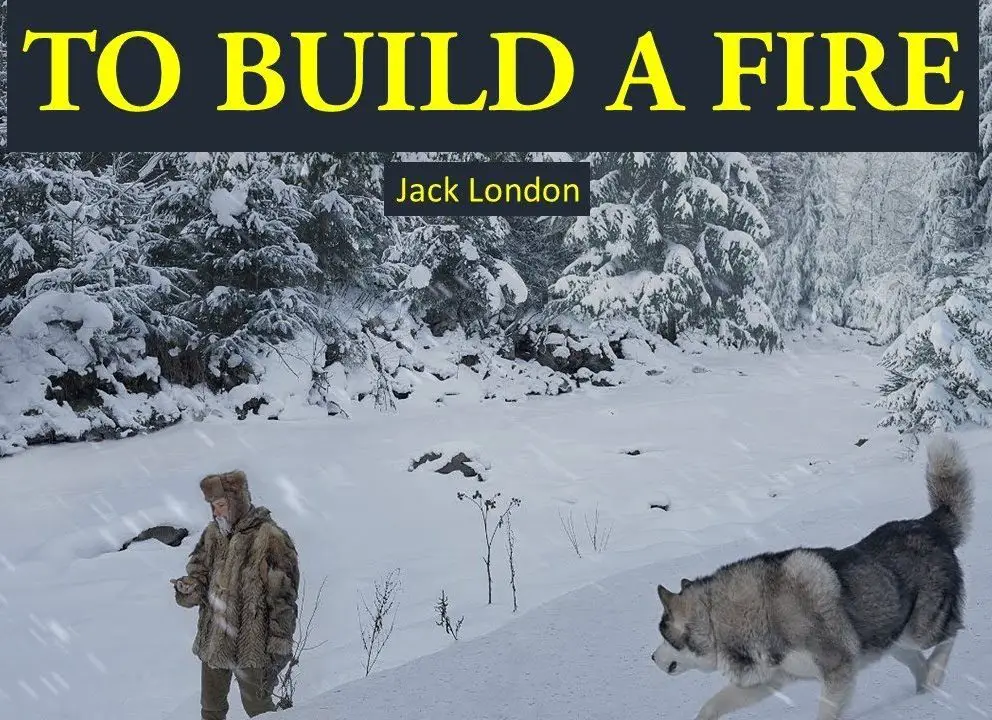
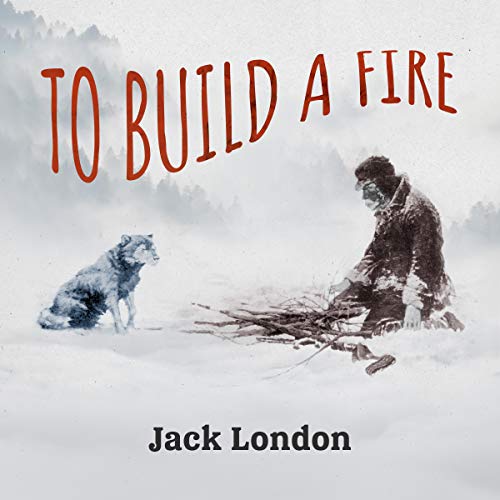
January I had two posts on a full analysis of Jack London’s “To Build a Fire” (here
and here).
One such story I just read was the great American short
story by Sherwood
Anderson, “The Egg.”I’m surprised
this story doesn’t have a Wikipedia entry.It’s a frequently anthologized story from Sherwood Anderson, and
possibly his most well-known.His
collection of stories in Winesburg, Ohio published
in 1919 centers around the characters of his fictional town of the title
centered around the central character of George Willard.The central organizing principle of Winesburg,
Ohio is that the psychological makeup of the characters, shaped by their
small town life, leads to a sort of grotesque reshaping of their person.“The Egg,” published in 1921 and perhaps an
outtake of the 1919 collect, follows the same form.The unnamed Father in the story is reshaped by
his acquired life of a small town chicken farmer and subsequent small
restauranteur.
You can read the story here
and listen to Ruby Love at Classics Read Aloud read it here.
The story is told in the first person of the Father’s son.Father, Mother, and Son are all unnamed.The story is at first mostly exposition of
the life of Father, first as a single farmhand, then marrying Mother, taking up
the chicken farm as a result of his wife’s ambitions, and then having their
son.After failing as a chicken farmer,
the exposition takes us to Father starting a small restaurant beside the town’s
railroad station.
Of course there is the symbolism of the egg, but I think to
fully understand this story is to see Father as one of the grotesqueries that
came out of the eggs.There are many
uses of irony in the story but I think transformation of Father from a
lucky-as-you-go sort to a distorted figure of a man because of ambition and the
hard luck of life is the most ironic.The story is so tragic comic, one laughs and has pity at the same
time.After the narrative climax of
failing to entertain a man, Joe Kane, at his restaurant with tricks using an
egg, the Father is reduced to a childlike grotesque when he comes home to cry
to his wife and son.
Here is the scene.
For two or three weeks this notion
of father's invaded our house. We did not talk much, but in our daily lives
tried earnestly to make smiles take the place of glum looks. Mother smiled at
the boarders and I, catching the infection, smiled at our cat. Father became a
little feverish in his anxiety to please. There was no doubt, lurking somewhere
in him, a touch of the spirit of the showman. He did not waste much of his
ammunition on the railroad men he served at night but seemed to be waiting for
a young man or woman from Bidwell to come in to show what he could do. On the
counter in the restaurant there was a wire basket kept always filled with eggs,
and it must have been before his eyes when the idea of being entertaining was
born in his brain. There was something pre-natal about the way eggs kept
themselves connected with the development of his idea. At any rate an egg
ruined his new impulse in life. Late one night I was awakened by a roar of
anger coming from father's throat. Both mother and I sat upright in our beds.
With trembling hands she lighted a lamp that stood on a table by her head.
Downstairs the front door of our restaurant went shut with a bang and in a few
minutes father tramped up the stairs. He held an egg in his hand and his hand
trembled as though he were having a chill. There was a half insane light in his
eyes. As he stood glaring at us I was sure he intended throwing the egg at
either mother or me. Then he laid it gently on the table beside the lamp and
dropped on his knees beside mother's bed. He began to cry like a boy and I,
carried away by his grief, cried with him. The two of us filled the little
upstairs room with our wailing voices. It is ridiculous, but of the picture we
made I can remember only the fact that mother's hand continually stroked the
bald path that ran across the top of his head. I have forgotten what mother
said to him and how she induced him to tell her of what had happened
downstairs. His explanation also has gone out of my mind. I remember only my
own grief and fright and the shiny path over father's head glowing in the lamp
light as he knelt by the bed.
The moment where father and son are by the bed crying
together captures the story in a nutshell: tragi comedy reduced to a moment of
pity, Father as grotesque and failure, Mother as the motivating fulcrum of the
family, and the son in a coming-of-age moment of his life.Is this the climax of the story or a denouement?Sometimes it’s hard to tell.The narrative climax may have been the moment
when Father in frustration throws the egg at Joe Kane.That’s the height of the narrative.But this scene where Father collapses to
tears from failure could be seen as the emotional climax.
My other insight on this story is that the first-person
narrator, though a little awkward in places, especially in that climatic scene
with Joe Kane, is perfect to accentuate the tragicomic effect.I don't think the story would have been as
good in third person.We pity Father
because of the immediacy of the son telling the story.
Here’s another interesting tidbit.The story was published in 1921 when Anderson
was forty-five years old, the same age as the Father in the story.Does the author identify with the son who is
telling the story or with the father who was a business failure living in Ohio
just as Anderson was in his life?Perhaps both.
By the way, I felt the pity much more when I just listened
to it being read than reading the story off the page. It felt more powerful. I
wonder if others reacted similarly.
"The Night Before Christmas" can be found starting on page 4. Keep
clicking the "Next" link.
###
One last commentary I would like to explore is the
theme of sin set against the background of Christmas.
We are introduced to sin up front when we are
introduced to the character of the devil at the beginning of the story.
Suddenly, from the
opposite direction, another little spot appeared, grew bigger, began to spread,
and was no longer a little spot. A nearsighted man, even if he put the wheels
of the commissar's britzka on his nose for spectacles, still wouldn't have been
able to make out what it was. From the front, a perfect German: the narrow
little muzzle, constantly twitching and sniffing at whatever came along, ended
in a round snout, as with our pigs; the legs were so thin that if the headman
of Yareskov had had such legs, he'd have broken them in the first Cossack
dance. To make up for that, from behind he was a real provincial attorney in
uniform, because he had a tail hanging there, sharp and long as uniform
coattails nowadays; and only by the goat's beard under his muzzle, the little
horns sticking up on his head, and the fact that he was no whiter than a
chimney sweep, could you tell that he was not a German or a provincial
attorney, but simply a devil who had one last night to
wander about the wide world and teach good people to sin. Tomorrow, as the
first bells rang for matins, he would run for his den, tail between his legs,
without looking back.
Gogol’s footnote on
“German” says, “Among us, anyone from a foreign land is called a German,
whether he’s a Frenchman, a Swiss, or a Swede—they’re all German.”Nineteenth century Russian writers have a
reputation of being xenophobic, and we see it here.They seem particularly more prejudiced
against Germans.
So this devil is
introduced as having “one last night to wander about the wide world and teach
good people to sin.”Three points on
this detail.First, the devil is out to
“teach good people to sin.”The root of
the sin comes from the devil.Second, the
“last night” is Christmas Eve, the night before the birth of the redeemer of
sin, Jesus when presumably the devil will not be free to cause sin.All the characters, with the possible
exception of Vakula, commit sins.We
should expect some sort of redemption, and we do.Third, sin is in the foreground of all the story’s
events and is, I would say, a structural element of the story.The subplots all revolve around sin with the
main plot leading to redemption.
The motif of pranks that
run through the story is related to sin.Some of them seem to originate from the devil but some of them
don’t.Oksana is not vain because of the
devil, and the devil doesn’t cause the men to go to Solokha, the witch
prostitute, but given devil’s pranking with the moon and atmosphere, one could
conclude that devil has bewitched the town and spread his sorcery upon the
townspeople.Here’s the paragraph that
suggests that.
So it was that, as soon as the devil hid the moon in
his pocket, it suddenly became so dark all over the world that no one could
find the way to the tavern, to say nothing of the deacon's. The witch, seeing
herself suddenly in the dark, cried out. Here the devil, sidling up to her,
took her under the arm and started whispering in her ear what is usually
whispered to the whole of womankind. Wondrous is the working of the world! All
who live in it try to mimic and mock one another. Before, it used to be that in
Mirgorod only the judge and the mayor went about during the winter in
cloth-covered sheepskin coats, and all of petty clerkdom wore plain uncovered
ones; but now both the assessor and the surveyor have got themselves up in new
coats of Reshetilovo astrakhan covered with broadcloth. Two years ago the clerk
and the local scrivener bought themselves some blue Chinese cotton for sixty
kopecks a yard. The sacristan had baggy summer trousers of nankeen and a
waistcoat of striped worsted made for himself. In short, everything tries to
get ahead! When will these people cease their vanity! I'll bet many would be
surprised to see the devil getting up to it as well. What's most vexing is that
he must fancy he's a handsome fellow, whereas—it's shameful to look him in the
face. A mug, as Foma Grigorievich says, that's the vilest of the vile, and yet
he, too, goes philandering! But it got so dark in the sky, and under the sky,
that it was no longer possible to see what went on further between them.
The darkness seems to
induce sin.Sin, in general, happens out
of sight and is covered up.The motif of
not being able to see or see correctly seems to be associated with this
darkness.Included in the sinful people
are officers of the Church.We see both
the deacon and the headman, which is a sort of position synonymous with a sacristan.Notably the priest is not implicated in
sin.
Upon the return of the
moon, the sin seems to spread more so.
Wondrously the moon shines! It's hard to describe how
good it is to jostle about on such a night with a bunch of laughing and singing
girls and lads ready for every joke and prank that a merrily laughing night can
inspire. It's warm under your thick sheepskin; your cheeks burn still brighter
with the frost; and the evil one himself pushes you into mischief from behind.
Perhaps the switching of
the moon on and off is part of the bewitching.
It is interesting that Vakula’s
effort to obtain the boots for Oksana seems to be inspired from sinful desire.
But just as the blacksmith was preparing to be
resolute, some evil spirit carried before him the laughing image of Oksana,
saying mockingly: "Get the tsaritsa's booties for me, blacksmith, and I'll
marry you!" Everything in him was stirred, and he could think of nothing
but Oksana.
This is a really
interesting passage.It seems this evil
spirit that stirs up the image of Oksana is suggestive of sexual desire.This is the moment Vakula decides not to move
on from Oksana but to try to win her.Was
he compelled by lust here?Given the
marriage and birth of a child at the end of the story and given the story’s
sexual backdrop of the town men going to Solokha, it sounds like the blacksmith
too falls into sinful desire.
It is surprising how much
sexuality is suggested within the story.Look at how the scene where a series of men individually go to Solokha
and each need to hide into sacks as another man shows up.
The devil meanwhile was indulging himself in earnest
at Solokha's: kissed her hand, mugging like an assessor at a priest's daughter,
pressed his hand to his heart, sighed, and said straight
out that if she did not agree to satisfy his passions and reward him in the
customary way, he was ready for anything: he'd throw himself in the water
and send his soul straight to hellfire. Solokha was not so cruel, and besides,
the devil, as is known, acted in cahoots with her. She did like seeing a crowd
dangling after her, and she was rarely without company; however, she had
thought she would spend that evening alone, because all the notable inhabitants
of the village had been invited for kutya at the deacon's. But everything
turned out otherwise: the devil had just presented his demand when suddenly the
voice of the stalwart headman was heard. Solokha ran to open the door, and the
nimble devil got into one of the sacks lying there.
The devil says “straight
out that if she did not agree to satisfy his passions and reward him in the
customary way” he’d drown himself.Of
course that’s an indirect suggestion for sex but isn’t the threat of drowning
what Vakula also contemplates when Oksana rejects him?The scene at Solokha’s then turns into slapstick
comedy as one man after another—first the devil, then the headman, then the
deacon, and then Choub—hide into a sack.
As an aside, I’m confused
by this hiding into sacks.How could it
not be noticeable that a man is in a sack, how could Choub and the deacon
inside the same sack not be aware of each other’s presence, and how can Vakula carry
a sack with two men in it on his back?Are
the sacks magical?This seems to defy
realism.Am I missing something?
But Vakula’s desire for
Oksana is not necessarily sinful, and he does use that desire later by manipulating
the devil, obtaining the boots as a love token for Oksana, and ultimately
marrying her.Does Vakula fall into sin
by forcing the devil to accommodate his needs?Vakula himself seems to think so.When he goes to Patsiuk to learn how to get the devil’s help, Vakula
utters, "My sinful self is bound to perish! nothing in the world helps!
Come what may, I must ask for help from the devil himself.”
The subplots continue in
parallel to Vakula’s use of the devil to get him to St. Petersburg, meet with
the Cossacks, and go to the tsaritsa where he gets her to give him her
booties.The subplots are rich with sinful
events: infidelities, vanities, and a comic fight between wives of the town
men.
###
Kerstin Comments:
Manny wrote: "... the little horns sticking up on
his head, and the fact that he was no whiter than a chimney sweep."
The build-up to this detail takes up most of the paragraph. It is such skillful
writing.
Manny wrote: "Gogol’s footnote on “German” says,
“Among us, anyone from a foreign land is called a German, whether he’s a
Frenchman, a Swiss, or a Swede—they’re all German.” Nineteenth century Russian
writers have a reputation of being xenophobic, and we see it here. They seem
particularly more prejudiced against Germans."
I take no offense :-)
Unfortunately there is no whitewashing the fact that a lot of wonky thinking
came out of Germany. We Germans sometimes call ourselves the country of poets
and thinkers (Land der Dichter und Denker) ...obviously with mixed results.
My Reply:
My hunch on why Russians in the 19th century were anti
Germans is more geo political. Of the western countries, they were the closest
to Russia and perhaps they felt threatened. Even though it was the French
Napoleon that invaded them! Perhaps being so close makes the differences feel
more immediate. But yes a lot of good and flakey writing has come out of
Germany...lol.
Frances Comment:
Isn’t it enriching to read or listen to elegant
language? I worry that children going through our school systems today aren’t
being introduced to great reading and the beauty of language. I’d never read
Gogol before this, but he certainly belongs alongside Dostoyevsky, Pasternak,
Chekhov, Pushkin and other great Russian writers.
My Reply to Frances:
I can only go with what they assign my son in high
school. The works are pretty good (The Great Gatsby, My Antonia, Shakespeare,
etc.) but I don't know what's being discussed in the classroom. Does he get
them? Thinking back I don't think I really got literature in high school. It
was in college where it began to click.
The only Gogol work before this that I've read was his
short story "The Overcoat." That's supposed to be very famous. On
your list I've read several Dostoyevski and several Chekhov. You could add
Tolstoy and Turgenev to the list of Russians I've read. I have not read
Pasternak nor Pushkin.
Kerstin’s Reply to
Frances:
It is so important! I find that on the whole,
literature of previous centuries far more linguistically beautiful than what
has been produced since World War II. Everything in our lives since then has
become more and more functional. This is especially true for the arts, all
flourish, embellishment, or playfulness has disappeared. It's all rather drab.
It doesn't matter where you look, architecture, furniture, dishes, penmanship.
The color grey features prominently everywhere. No wonder language suffers, there
is no beauty to comment on.
My Reply to Kerstin and
Frances:
Let me give you my experience from college on
evaluating literature. I had a class in literature on 17th century English
literature. That is the age of Milton, John Donne, the Metaphysical poets, and
the Cavalier Poets. All great poetry as you would read in college classes
today. Were they famous in their own age? Only probably Milton. For a term
paper in that class I did a study of a poet of the time who wrote what might be
seen as an epic poem in a scope similar to Milton. For the life of me I can't remember
that poet's name but he was popular in his day. I thought it would be a good
idea. He was terrible. What a mistake I made in reading that work and writing a
term paper on it. He was horrible and I suffered through the whole thing. I
wish I could find that paper or at least remember who the poet was but I can't.
Here
is a list of all the published poets of the 17th century.
That poet is probably one on the list. Who knows who
they are. Their works have not survived time. I doubt they are any good or we
would know of them.
This gets to the point that you can't tell until after
we're long gone who in any contemporary publishing circle is worthy of lasting
and being revered. Today we consider the 17th century English period to be a
rich era, but it was not always so. Until about 100 years ago the 17th century
did not have a great reputation, and if you look only at the popular names you
might say it was right not to assess it well. If you cherry pick the great
writers then you would say it was a great age.
###
I found the women
fighting to be so wonderfully comic that I just want to post a section.
With Vakula off in St.
Petersburg obtaining the tsarista’s booties for Oksana, the women of Dikanka argue
over what has happened to Vakula.
"He drowned! by God, he drowned! May I never
leave this spot if he didn't drown!" the weaver's fat wife babbled,
standing in the middle of the street amidst a crowd of Dikanka women.
"What, am
I some kind of liar? did I steal anybody's cow? did I put a spell on anybody,
that you don't believe me?" shouted a woman in a Cossack blouse, with a
violet nose, waving her arms. "May I never want to drink water again if
old Pereperchikha didn't see the blacksmith hang himself with her own
eyes!"
"The
blacksmith hanged himself? just look at that!" said the headman, coming
out of Choub's house, and he stopped and pushed closer to the talking women.
"Why not
tell us you'll never drink vodka again, you old drunkard!" replied the
weaver's wife. "A man would have to be as crazy as you are to hang
himself! He drowned! drowned in a hole in the ice! I know it as well as I know
you just left the tavern."
"The
hussy! see what she reproaches me with!" the woman with the violet nose
retorted angrily. "You'd better shut up, you jade! Don't I know that the
deacon comes calling on you every evening?"
The weaver's
wife flared up.
"The
deacon what? Calls on whom? How you lie!"
"The
deacon?" sang out the deacon's wife, in a rabbitskin coat covered with
blue nankeen, pushing her way toward the quarreling women. "I'll show you
a deacon! who said deacon?"
"It's her
the deacon comes calling on!" said the woman with the violet nose,
pointing at the weaver's wife.
"So it's
you, you bitch!" said the deacon's wife, accosting the weaver's wife.
"So it's you, you hellcat, who blow fog in his eyes and give him unclean
potions to drink so as to make him come to you?
"Leave me alone, you she-devil!" the
weaver's wife said, backing away.
"You
cursed hellcat, may you never live to see your children! Pfui! . . ." and
the deacon's wife spat straight into the weaver's wife's eyes.
The weaver's
wife wanted to respond in kind, but instead spat into the unshaven chin of the
headman, who, in order to hear better, had edged right up to the quarreling
women.
"Agh,
nasty woman!" cried the headman, wiping his face with the skirt of his
coat and raising his whip. That gesture caused everyone to disband, cursing, in
all directions. "What vileness!" he repeated, still wiping himself.
"So the blacksmith is drowned! My God, and what a good painter he was!
What strong knives, sickles, and plows he could forge! Such strength he had!
Yes," he went on, pondering, "there are few such people in our
village. That's why I noticed while I was still sitting in that cursed sack
that the poor fellow was really in bad spirits. That's it for your
blacksmith—he was, and now he's not! And I was just going to have my piebald
mare shod! . . ."
And, filled
with such Christian thoughts, the headman slowly trudged home.
Hysterically funny! I
would love to see this dramatized.I
would surmise that the actual words in Russian of “hussy” and “she-devil” might
be more vulgar than the translation.And
the spitting makes this scene so visually vibrant.It should be noted that the apparent death of
the blacksmith fills the headman with “Christian thoughts.”Remember the headman is a religious position
akin to a sacristan, but he was one of the men—should I call them “johns”?—who hid
in a sack at Solokha’s.Certainly the
devil induced nightlife has not filled the town with any Christian thoughts.This, however, is the turn in the story that
goes from the sin of Christmas Eve to the redemption of Christmas Day.
###
I would also like to
explore the redemption that takes place at the end of the story.Up until the wee hours in the morning of
Christmas Day the story has been filled with the enchantment of the devil on
the townsfolk and the manifestation of sin.The only exception has been Vakula who with the exception of having desires
for Oksana, which is not necessarily sinful, and manipulation of the devil’s
power, which when intended for the devil’s defeat also might not be sinful.His apparent death has caused the town to
suffer sorrow and gloom, and, as we saw with the headman, a return to Christian
thoughts.We see Vakula’s “death” as
casting another enchantment, a holy enchantment.During the night, during an agitated sleep,
Oksana has a conversion of heart.
But what if he had left with the intention of never
coming back to the village? There was hardly such a fine fellow as the
blacksmith anywhere else! And he loved her so! He had put up with her caprices
longest! All night under her blanket the beauty tossed from right to left, from
left to right—and couldn't fall asleep. Now, sprawled in an enchanting
nakedness which the dark of night concealed even from herself, she scolded
herself almost aloud; then, calming down, she resolved not to think about
anything—and went on thinking. And she was burning all over; and by morning she
was head over heels in love with the blacksmith.
That sudden change is comic!Comedy works on sudden changes such as
this.Tragedy and realism require more
than just abrupt turns.Even the whole
town is changed the next morning as everyone’s focus becomes attending
Christmas liturgy.
Morning came. Even before dawn the whole church was
filled with people. Elderly women in white head scarves and white flannel
blouses piously crossed themselves just at the entrance to the church. Ladies
in green and yellow vests, and some even in dark blue jackets with gold
curlicues behind, stood in front of them. Young girls with a whole mercer's
shop of ribbons wound round their heads, and with beads, crosses, and coin
necklaces on their necks, tried to make their way still closer to the
iconostasis. 14 But in front of them all stood the squires and simple muzhiks
with mustaches, topknots, thick necks, and freshly shaven chins, almost all of
them in hooded flannel cloaks, from under which peeked here a white and there a
blue blouse. All the faces, wherever you looked, had a festive air.
The nature of town
decorum is noticeably different.Late
night pranks and vulgarity are now replaced by Church attending piety.The church is filled even before dawn.The elderly ladies are piously dressed in
white blouses and wear head scarves—which would be analogous to veils in the
Latin Church, and upon entering cross themselves.The young girls wear a “mercer’s shop of
ribbons wound round their heads,” which I take is also characteristic of a
local devout custom, and augmented with wearing of “beads, crosses, and coin
necklaces on their necks.”The men too
are clean shaven and piously dressed.More significantly they all “make their way still closer to the
iconostasis,” one of the most religious features in an Eastern Church. The iconostasis
is analogous to the rood
screen in the Latin Church, which seems to have developed
later than the barrier in the East and were eliminated per the Council of Trent
and replaced with altar rails to make the liturgy “much more accessible to lay
worshippers.”To an Eastern church goer,
“being
near the iconostasis can enhance the sense of connection to
the sacred mysteries being celebrated.”“This proximity can foster a deeper sense of reverence and participation
in the sacramental life of the church.”
Next we see Vakula
returning home in the middle of the night and giving the devil some rough
justice.
Still more swiftly in the remaining time of night did
the devil race home with the blacksmith. Vakula instantly found himself by his
cottage. Just then the cock crowed. "Hold on!" he cried, snatching
the devil by the tail as he was about to run away. "Wait, friend, that's
not all—I haven't thanked you yet." Here, seizing a switch, he measured
him out three strokes, and the poor devil broke into a run, like a muzhik who
has just been given a roasting by an assessor. And so, instead of deceiving,
seducing, and duping others, the enemy of the human race was duped himself.
This would not be sinful
in the least.There are plenty of images
of St. Michael the Archangel stepping on the devil’s neck and thrusting a spear
into him.In fact, I think violence
against demons is part of spiritual warfare.
But Vakula is so weary
from his night flight to St. Petersburg and back that he oversleeps and misses
the Christmas Day liturgy.When he wakes
up and realizes, he feels extremely guilty.
"I slept through matins and the
liturgy!"—and the pious blacksmith sank into dejection, reasoning that
God, as a punishment for his sinful intention of destroying his soul, must have
sent him a sleep that kept him from going to church on such a solemn feast day.
However, having calmed himself by deciding to confess it to the priest the next
week and to start that same day making fifty bows a day for a whole year, he
peeked into the cottage; but no one was home.
He decides to go to
Choub’s house where after expiating for his sins he will ask for Oksana’s hand
in marriage.But Choub, thinking Vakula
had died, is shocked when he sees him.
Choub goggled his eyes when the blacksmith came in,
and didn't know which to marvel at: that the blacksmith had resurrected, or
that the blacksmith had dared to come to him, or that he had got himself up so
foppishly as a Zaporozhye Cossack. But he was still more amazed when Vakula
untied the handkerchief and placed before him a brand-new hat and a belt such
as had never been seen in the village, and himself fell at his feet and said in
a pleading voice:
"Have
mercy, father! Don't be angry! Here's a whip for you: beat me as much as your
soul desires, I give myself up; I repent of everything; beat me, only don't be
angry! You were once bosom friends with my late father, you ate bread and salt
together and drank each other's health.
Vakula has become a “resurrected”
Christ-figure, and in the context of a comic story implies redemption for
himself, the townsfolk, and for their sins of the night before.In true comic fashion, the story ends with a
marriage.We even have a glimpse to a
year later where we see Oksana with her child and Vakula’s artwork for the
church and on the iconostasis.
But His Reverence praised Vakula still more when he
learned that he had undergone a church penance and had painted the entire
left-hand choir green with red flowers free of charge. That, however, was not
all: on the wall to the right as you entered the church, Vakula had painted a
devil in hell, such a nasty one that everybody spat as they went by; and the
women, if a child started crying in their arms, would carry it over to the
picture and say, "See what a caca's painted there!" and the child,
holding back its tears, would look askance at the picture and press against its
mother's breast.
Vakula is redeemed and provides
the means for everyone’s redemption.The
devilry of the early part of the story is replaced by the piety of the
ending.Gogol ends the story with the
image of Madonna and child that had been the subject of Vakula's painting.What a wonderful story with depth, charm, and
complexity.
###
Frances Comment:
Thanks, Manny. Have you read Dr. Zhivago? If so, then
you’ve read Pasternak. I love Chekhov. He’s been described as an atheist, but
his short story “The Student” is one of the most beautiful Christian stories
ever.
My Reply:
I have not read Dr. Zhivago. I have not heard of
"The Student." Unfortunately it's not on the internet. Perhaps I'll
buy a collection of his short stories, if I ever get back on Amazon again.
Post #1 introduced
the story and analyzed the first three of six parts of the story.This post will analyze the las three parts
and conclude the analysis.
Part 4:
Another critical
event happens, the bulk of snow on the tree above the fire, loosened by the heat,
fell onto the fire snuffing it out (289).The man with frozen, uncooperative fingers attempts and fails repeatedly
to build another (292).
The collapse of
the snow from the tree is beautifully described.
But before he could cut the strings, it
happened. It was his own fault or, rather, his mistake. He should not have
built the fire under the spruce tree. He should have built it in the open. But
it had been easier to pull the twigs from the brush and drop them directly on
the fire. Now the tree under which he had done this carried a weight of snow on
its boughs. No wind had blown for weeks, and each bough was fully freighted.
Each time he had pulled a twig he had communicated a slight agitation to the tree--an
imperceptible agitation, so far as he was concerned, but an agitation
sufficient to bring about the disaster. High up in the tree one bough capsized
its load of snow. This fell on the boughs beneath, capsizing them. This process
continued, spreading out and involving the whole tree. It grew like an
avalanche, and it descended without warning upon the man and the fire, and the
fire was blotted out! Where it had burned was a mantle of fresh and disordered
snow.(289)
Notice the repetition
of “it happened” with the “it happened” when his feet broke through the ice (287),
the first critical event of the story.The
repetition provides a nice rhythm to the narrative.Also I’m struck to the use of the passive
voice.Even though it both instances,
the man makes a mistake of discernment, the events are framed as an act done to
him.This gives agency to the strength
and power of nature against his feeble human capabilities.
The writing
between the snuffing out of the fire and the failure to build another description
interspersed with the man’s panic, regret and the awareness of his freezing and
burning flesh is a masterpiece of narrative.Here’s one paragraph.
The old-timer on Sulphur Creek was right, he
thought in the moment of controlled despair that ensued: after fifty below, a
man should travel with a partner. He beat his hands, but failed in exciting any
sensation. Suddenly he bared both hands, removing the mittens with his teeth.
He caught the whole bunch between the heels of his hands. His arm-muscles not
being frozen enabled him to press the hand-heels tightly against the matches.
Then he scratched the bunch along his leg. It flared into flame, seventy sulphur
matches at once! There was no wind to blow them out. He kept his head to one
side to escape the strangling fumes, and held the blazing bunch to the
birch-bark. As he so held it, he became aware of sensation in his hand. His
flesh was burning. He could smell it. Deep down below the surface he could feel
it. The sensation developed into pain that grew acute. And still he endured it,
holding the flame of the matches clumsily to the bark that would not light
readily because his own burning hands were in the way, absorbing most of the
flame. (291)
After several
attempts at building the fire, he reaches a point of resignation.
A large piece of green moss fell squarely on
the little fire. He tried to poke it out with his fingers, but his shivering
frame made him poke too far, and he disrupted the nucleus of the little fire,
the burning grasses and tiny twigs separating and scattering. He tried to poke
them together again, but in spite of the tenseness of the effort, his shivering
got away with him, and the twigs were hopelessly scattered. Each twig gushed a
puff of smoke and went out. The fire-provider had failed. (292)
###
Part 5:
Having resigned
to not having the ability to start another fire, the thought of killing the dog
and using its cavity body heat to warm his hands comes to him (292).After finally catching the dog, the man’s
hands were too frozen to kill the dog as well (293).
This paragraph captures
his failure and the state of his physical condition at that moment.
But it was all he could do, hold
its body encircled in his arms and sit there. He realized that he could not
kill the dog. There was no way to do it. With his helpless hands he could
neither draw nor hold his sheath-knife nor throttle the animal. He released it,
and it plunged wildly away, with tail between its legs, and still snarling. It
halted forty feet away and surveyed him curiously, with ears sharply pricked
forward. The man looked down at his hands in order to locate them, and found
them hanging on the ends of his arms. It struck him as curious that one should
have to use his eyes in order to find out where his hands were. He began
threshing his arms back and forth, beating the mittened hands against his
sides. He did this for five minutes, violently, and his heart pumped enough
blood up to the surface to put a stop to his shivering. But no sensation was
aroused in the hands. He had an impression that they hung like weights on the
ends of his arms, but when he tried to run the impression down, he could not
find it.(293)
Nature has overwhelmed just about all his physical
capabilities.I am particularly struck
by that image of not knowing where his numbed, frozen hands are.I wonder if that is something that really
happens in such a situation or it’s something London imagined.Obviously he couldn’t have personally
experienced that.
###
Part 6:
The man has reached a panic state
and all he can now do is run toward the camp in hopes he can reach it before he
dies (293).Throughout his mind
experiences delusions until he finally collapses and dies.(295)
It is with the failure to start a
fire and to kill the dog that the reality of his death becomes firm.He has exhausted all options and panic ensues.
A certain fear of death, dull and oppressive, came to him.
This fear quickly became poignant as he realized that it was no longer a mere
matter of freezing his fingers and toes, or of losing his hands and feet, but
that it was a matter of life and death with the chances against him. This threw
him into a panic, and he turned and ran up the creek-bed along the old, dim
trail. The dog joined in behind and kept up with him. He ran blindly, without
intention, in fear such as he had never known in his life. Slowly, as he
ploughed and floundered through the snow, he began to see things again--the
banks of the creek, the old timber-jams, the leafless aspens, and the sky. The
running made him feel better. He did not shiver. Maybe, if he ran on, his feet
would thaw out; and, anyway, if he ran far enough, he would reach camp and the
boys. Without doubt he would lose some fingers and toes and some of his face;
but the boys would take care of him, and save the rest of him when he got
there. And at the same time there was another thought in his mind that said he
would never get to the camp and the boys; that it was too many miles away, that
the freezing had too great a start on him, and that he would soon be stiff and
dead. This thought he kept in the background and refused to consider. Sometimes
it pushed itself forward and demanded to be heard, but he thrust it back and
strove to think of other things. (293)
You can the contemplatio of
weighing the possibilities running through his head.A reader can only feel some real pity for
him.
Finally the man reaches his demise in the concluding
paragraph of the story.
Then the man drowsed off into what seemed to him the most
comfortable and satisfying sleep he had ever known. The dog sat facing him and
waiting. The brief day drew to a close in a long, slow twilight. There were no
signs of a fire to be made, and, besides, never in the dog's experience had it
known a man to sit like that in the snow and make no fire. As the twilight drew
on, its eager yearning for the fire mastered it, and with a great lifting and
shifting of forefeet, it whined softly, then flattened its ears down in
anticipation of being chidden by the man. But the man remained silent. Later,
the dog whined loudly. And still later it crept close to the man and caught the
scent of death. This made the animal bristle and back away. A little longer it
delayed, howling under the stars that leaped and danced and shone brightly in
the cold sky. Then it turned and trotted up the trail in the direction of the
camp it knew, where were the other food-providers and fire-providers.(295)
As in most great short stories,
the conclusion has been projected all along, though wrapped in the air of
uncertainty, but when it does come it comes abruptly.Even the finality of his death remains in
uncertain tension in that last paragraph until the dog confirms it with his sniff.What a powerful story.
There was a short film dramatizing
“To Build A Fire” which is worth watching.
It’s mostly faithful to the story, and after having read it I think
watching the film will enhance your experience.
Here it is.
Which is more powerful, the story
or the film? I always go with the story
but that film was well done.
###
The theme of the
story is the overwhelming power of nature against the small physicality of
humanity.We see man’s limitations lead
to his demise.The man was incapable of
seeing how thick was the ice, and that led to his feet cracking through and getting
wet.The overwhelming power of the cold would
incapacitate his hands to function.He could
not build a fire once his hands were frozen.
We also see the
man contrasted against the dog, who’s instincts are better suited to survive.The dog is in his indigenous climate.The man is alien to the place.The dog survives; the man doesn’t.
We also see the
man’s hubris leads to his demise.The
man’s sense of pride—he doesn’t need a companion in this climate, and he thinks
those that do as “womanish”—is contrasted against the dog’s humility.The dog realizes the danger and attaches
himself to the means of survival.The
man, despite his inexperience—a chechaquo (283)—sets out on such a trek
alone and did not take the Old-Timer’s advice.When he builds the first fire, he has a moment of exalted pride.The nature snuffs the fire out almost in
retaliation to such pride.
Pride leading to a downfall is a
classic trope of tragedy.In tragedy the
audience—the reader in this case—has pity for the suffering protagonist and
fear that what happens to him could happen to the reader.Aristotle says in his Poetics that the
aim of the writer of tragedy is to instill pity and fear for the purposes
of catharsis.I certainly have pity for
the man, and I certainly feel fear for the situation, but I’m not sure I have reached
catharsis.Catharsis is supposed to release
emotions in the audience, leaving the audience with a sense of relief or
enlightenment.I suppose I am
enlightened, but I am not sure I am relieved.The man ultimately died and we wish it otherwise.
This is the first
of two posts on my analysis of Jack London’s short story, “To Build a Fire.”
The first thing
to realize about this story is that there are two versions, one London wrote in
1902 and one in 1908.They are
significantly different though the premises of the stories are the same.I had read the 1902 version of “To Build a Fire” and
never thought much of it. I could not understand how it could be so famous. I
just had an opportunity to revisit the story.It was the 1908 version and it was great. This I can see being a great
story. It is incredibly tense.
Jack London is
best remembered as the author of The Call of the
Wild, a novel set in the arctic Yukon from the point of view of a house
dog who finds himself lost in the arctic and reverts to his wild
instincts.He also wrote another novel,
almost equally as good, called White Fang, a novel
from the point of view of a wild arctic wolfdog that gets domesticated.I loved both novels and recommend them
both.Jack London lived only to 40 years
old (1876-1916) and was an adventurist, journalist, and writer.He used the experiences from his adventures to
form most of his fiction.If you want to
compare London with various writers, I would say good analogues would be Stephan Crane and Ernest Hemingway.London’s writing can be categorized as Naturalism, a
literary movement in the late 19th century that sought to view
humanity as mere animal and nature as deterministic, overwhelming, and confining.In that sense, Stephan Crane might be a
closer analogy than Hemingway, though there is some of that in Hemingway as
well.Whether you agree with the philosophy
or not, it makes for great outdoor adventure stories.
“To Build a Fire”
is also set in the Yukon north, but this 1908 story is told from the point of
view of an unnamed human, male narrator.[The 1902 version, the point of view is also from a male character, Tom
Vincent, who needs to build a fire to stay alive in the Yukon but in that
version that character calmly builds the fire and survives.There is no dog in the 1902 version and is
about one-third the length of the 1908 version.]The narrative is one direct arc from setting
off on the Yukon trail to meet up with his friends in a camp to ultimately *
SPOILER * collapsing and freezing to death.For the purpose of analysis, I divide the story into six parts.I will walk you through the six parts.
First though, if
you wish to read the story, you can find it online at American
Literature.Com.There are a number
of audio reads on YouTube of “To Build a Fire” but frankly the best read is
from a Substack called Classics Read
Aloud.Ruby Love, the owner of
the Substack is a fantastic reader.In
my analysis, I will be citing from the Short Stories of Jack London:
Authorized One Volume Edition, Edited by Earle Labor, Robert C. Leitz III,
Milo Shepherd; Macmillan Publishing Company, New York, 1991.
###
Part 1:
The man sets off on
the Yukon trail to meet up with his friends who are at camp some ten miles away
(p. 282) and concludes at twelve noon when the man comes to a fork in the road
(p. 286).It is cold, colder than what
the man understands, and though he is conscious of the danger ignores it.Here is the opening paragraph that speaks to
the strangeness of the environment.
Day had broken cold and grey, exceedingly
cold and grey, when the man turned aside from the main Yukon trail and climbed
the high earth- bank, where a dim and little-travelled trail led eastward
through the fat spruce timberland. It was a steep bank, and he paused for
breath at the top, excusing the act to himself by looking at his watch. It was
nine o'clock. There was no sun nor hint of sun, though there was not a cloud in
the sky. It was a clear day, and yet there seemed an intangible pall over the
face of things, a subtle gloom that made the day dark, and that was due to the
absence of sun. This fact did not worry the man. He was used to the lack of
sun. It had been days since he had seen the sun, and he knew that a few more
days must pass before that cheerful orb, due south, would just peep above the
sky- line and dip immediately from view.(282)
Following the man
is a dog who’s instinct understood the danger better than the man.
At the man's heels trotted a dog, a big
native husky, the proper wolf-dog, grey-coated and without any visible or
temperamental difference from its brother, the wild wolf. The animal was
depressed by the tremendous cold. It knew that it was no time for travelling.
Its instinct told it a truer tale than was told to the man by the man's
judgment. In reality, it was not merely colder than fifty below zero; it was
colder than sixty below, than seventy below. It was seventy-five below zero.
Since the freezing-point is thirty-two above zero, it meant that one hundred
and seven degrees of frost obtained. The dog did not know anything about
thermometers. Possibly in its brain there was no sharp consciousness of a
condition of very cold such as was in the man's brain. But the brute had its
instinct. It experienced a vague but menacing apprehension that subdued it and
made it slink along at the man's heels, and that made it question eagerly every
unwonted movement of the man as if expecting him to go into camp or to seek
shelter somewhere and build a fire. The dog had learned fire, and it wanted
fire, or else to burrow under the snow and cuddle its warmth away from the air.
(283-4)
Here we see just
how cold it is—beyond the man’s imagination—but instinctually the dog
understands it.What author is
suggesting is the power of nature to overwhelm human capability to withstand
it, and that man’s loss of instinct is a danger to himself.The wild dog understands it because of his
instinct.
Part of the trail
the man is on runs along a frozen creek bed, and while the creek is frozen
there are unfrozen spots that pose danger if one breaks through the ice and
gets wet.Wetness in this environment means
instant freeze and the death of flesh.The
man calls these thin ice spots with water underneath, “traps.”If he got wet he would be forced to build a
fire to warm the flesh and dry the clothing.At one point he forces the dog to walk over the ice to discern the
danger.
In the course of the next two hours he came
upon several similar traps. Usually the snow above the hidden pools had a
sunken, candied appearance that advertised the danger. Once again, however, he
had a close call; and once, suspecting danger, he compelled the dog to go on in
front. The dog did not want to go. It hung back until the man shoved it
forward, and then it went quickly across the white, unbroken surface. Suddenly
it broke through, floundered to one side, and got away to firmer footing. It
had wet its forefeet and legs, and almost immediately the water that clung to
it turned to ice. It made quick efforts to lick the ice off its legs, then
dropped down in the snow and began to bite out the ice that had formed between
the toes. This was a matter of instinct. To permit the ice to remain would mean
sore feet. It did not know this. It merely obeyed the mysterious prompting that
arose from the deep crypts of its being. But the man knew, having achieved a
judgment on the subject, and he removed the mitten from his right hand and
helped tear out the ice- particles. He did not expose his fingers more than a
minute, and was astonished at the swift numbness that smote them. It certainly
was cold. He pulled on the mitten hastily, and beat the hand savagely across
his chest.(286)
###
Part 2:
At noon, the man
arrives at a fork in the creek, stops to eat, and feels the bitter cold on his
exposed flesh (286).He continues on
when he breaks through ice and gets his feet wet (287).
At twelve o'clock the day was at its
brightest. Yet the sun was too far south on its winter journey to clear the
horizon. The bulge of the earth intervened between it and Henderson Creek,
where the man walked under a clear sky at noon and cast no shadow. At half-past
twelve, to the minute, he arrived at the forks of the creek. He was pleased at
the speed he had made. If he kept it up, he would certainly be with the boys by
six. He unbuttoned his jacket and shirt and drew forth his lunch. The action
consumed no more than a quarter of a minute, yet in that brief moment the
numbness laid hold of the exposed fingers. He did not put the mitten on, but,
instead, struck the fingers a dozen sharp smashes against his leg. Then he sat
down on a snow-covered log to eat. The sting that followed upon the striking of
his fingers against his leg ceased so quickly that he was startled, he had had
no chance to take a bite of biscuit. He struck the fingers repeatedly and
returned them to the mitten, baring the other hand for the purpose of eating.
He tried to take a mouthful, but the ice-muzzle prevented. He had forgotten to
build a fire and thaw out. He chuckled at his foolishness, and as he chuckled
he noted the numbness creeping into the exposed fingers. Also, he noted that
the stinging which had first come to his toes when he sat down was already
passing away. He wondered whether the toes were warm or numbed. He moved them
inside the moccasins and decided that they were numbed.(286-7)
Even before he cracks
through the ice, the cold is starting to affect his flesh.And then it happens.
The man took a chew of tobacco and proceeded
to start a new amber beard. Also, his moist breath quickly powdered with white
his moustache, eyebrows, and lashes. There did not seem to be so many springs
on the left fork of the Henderson, and for half an hour the man saw no signs of
any. And then it happened. At a place where there were no signs, where the
soft, unbroken snow seemed to advertise solidity beneath, the man broke
through. It was not deep. He wetted himself half-way to the knees before he floundered
out to the firm crust.(287-8)
I’m struck on how
London slips in, “And then it happened” in the middle of the paragraph.This is actually the defining event of the
story.The rest of the story emanates
from there.One would have thought it
would have been better highlighted.Intuitively I might have started a new paragraph.But if you want to suggest that the importance
of events to a single person are incredibly small to ongoings of nature, I
think London has chosen well.
###
Part 3:
The man’s feet
break through the ice and are soaked halfway up to his knees (288).He then builds a fire to dry his clothes and
warm his flesh (289).
He worked slowly and carefully, keenly aware
of his danger. Gradually, as the flame grew stronger, he increased the size of
the twigs with which he fed it. He squatted in the snow, pulling the twigs out
from their entanglement in the brush and feeding directly to the flame. He knew
there must be no failure. When it is seventy- five below zero, a man must not
fail in his first attempt to build a fire--that is, if his feet are wet. If his
feet are dry, and he fails, he can run along the trail for half a mile and
restore his circulation. But the circulation of wet and freezing feet cannot be
restored by running when it is seventy-five below. No matter how fast he runs,
the wet feet will freeze the harder.
Part of the power
of this story is that we are privy to the man’s thoughts as he experiences his environment
and processes the events.I have a word
for such narrative process, contemplatio, the Latin word for
contemplation.It is sometimes referred
to as “free indirect discourse” or “internal focalization.”But I think those terms are broader.Contemplatio focuses more on the
character’s weighing of options or figuring out the circumstances and
possibilities.Anyway, that’s my term.Here are some examples in this section.
All this the man knew. The old-timer on
Sulphur Creek had told him about it the previous fall, and now he was
appreciating the advice. Already all sensation had gone out of his feet. To
build the fire he had been forced to remove his mittens, and the fingers had
quickly gone numb. His pace of four miles an hour had kept his heart pumping
blood to the surface of his body and to all the extremities. But the instant he
stopped, the action of the pump eased down.
We see there his
mind processing the old-timer’s advice and applying it to his
circumstance.London continues this
processing—contemplatio—in the next paragraph.
The fire was a success. He was safe. He
remembered the advice of the old-timer on Sulphur Creek, and smiled. The
old-timer had been very serious in laying down the law that no man must travel
alone in the Klondike after fifty below. Well, here he was; he had had the
accident; he was alone; and he had saved himself. Those old-timers were rather
womanish, some of them, he thought. All a man had to do was to keep his head,
and he was all right. Any man who was a man could travel alone. But it was
surprising, the rapidity with which his cheeks and nose were freezing. And he
had not thought his fingers could go lifeless in so short a time. Lifeless they
were, for he could scarcely make them move together to grip a twig, and they
seemed remote from his body and from him. When he touched a twig, he had to
look and see whether or not he had hold of it. The wires were pretty well down
between him and his finger-ends.
Notice all he
contemplates there: the old-timer’s advice, how he had now found it wrong, the
hubristic thought that “all a man had to do was to keep his head…” and that he
was such a man, and the thoughts on how his brain’s control of his lifeless
fingers was “down.”In addition to the contemplation,
we see the irony that he had been warned of the dangers and because of his
hubris had disregarded it.