"Love follows knowledge."
"Beauty above all beauty!"
– St. Catherine of Siena

Showing posts with label Rosary. Show all posts

Saturday, August 22, 2026

Handmaids and Warriors Newsletter: August 2026

This is Alice’s August newsletter.  I explained Alice’s monthly newsletter here.  This month focuses on the Assumption and Queenship of the Blessed Virgin Mary.

Before the newsletter, let us pray: For Pope Leo XIV

Hail Mary, full of grace…

Hail Mary, full of grace…

Hail Mary, full of grace…

St. Michael the Archangel, defend us in battle; be our protection against the wickedness and snares of the devil; may God rebuke him, we humbly pray, and do thou, O Prince of the Heavenly Host, by the power of God, thrust into hell Satan and all the evil spirits who prowl about the world seeking the ruin of souls.


Handmaids of Mary

St. Michael’s Warriors


August 2026 Newsletter

SALVE REGINA


In the month of August we celebrate two main feast of the Blessed Mother: the Assumption on August 15th and the Coronation on August 22nd.

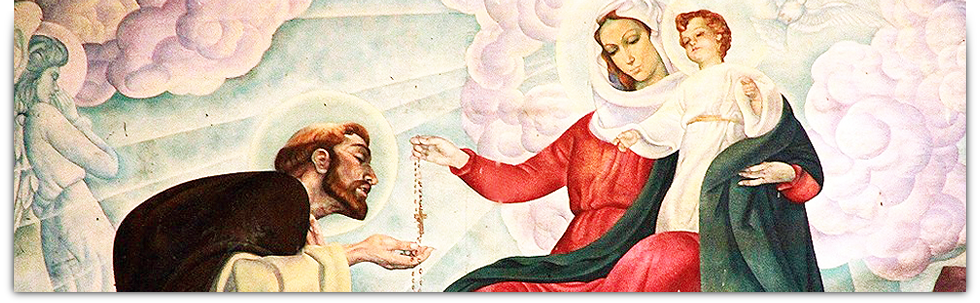
However, Mary did not stay in heaven.  She left the glories of heaven many times to continue to nurture her children.  Once, in the year 1208, she appeared to St. Dominic and said to him, “Dear Dominic do you know the weapon the Blessed Trinity  wants to use too reform the world?  It is the rosary.  I want you to preach my rosary.”  This apparition is considered the birth of the Rosary. 

MOTHER OF MERCY, OUR LIFE, OUR SWEETNESS, AND OUR HOPE

Mary as our loving Mother is calling us to heed the messages of her apparitions as they are meant for our times, especially the messages of Fatima.  We should not be caught off guard as Mary has told us how communism would spread and wars would escalate.  When we turn the news on, we are hearing the message of Fatima happening today.

She has given us the weapons to combat the evils of our day, and we need her protection by wearing the Brown Scapular and saying the rosary. 

TO THEE DO WE COME MOURNING AND WEEPING IN THIS VALLEY OF TEARS

We are praying the St. Michael prayer and three hail Mary's for the church and the Pope.

TURN THEN MOST GRACIOUS ADVOCATE YOUR EYES OF MERCY TOWARDS US

Besides the rosary Mary wants us to remember the seven Sacraments as well.  Sacramentals are one of the means the church enables us to participate in her treasures of grace and to show her love and solicitude for us.


The Sacramentals:

There are seven: the Crucifix, the Sign of the Cross, Holy Water, Blessed Candles, Blessed Palms, Scapular, and Medals.

Last month we covered the Crucifix, the sign of the Cross, and Holy Water. 

This month we will do two more: Blessed Candles and Blessed Palms.

And in September, Scapular and Medals.

O CLEMENT O LOVING O SWEET VIRGIN MARY


Blessed Candles:
It is the wish of the church that candles used in liturgical functions be made form pure beeswax.
The number of candles to be used at various services is regulated by church law.
For a solemn Mass; 4 or 6.
For a Low Mass 2.
For Benediction and Exposition 12
Solemn Exposition such [as 40 hours) 20
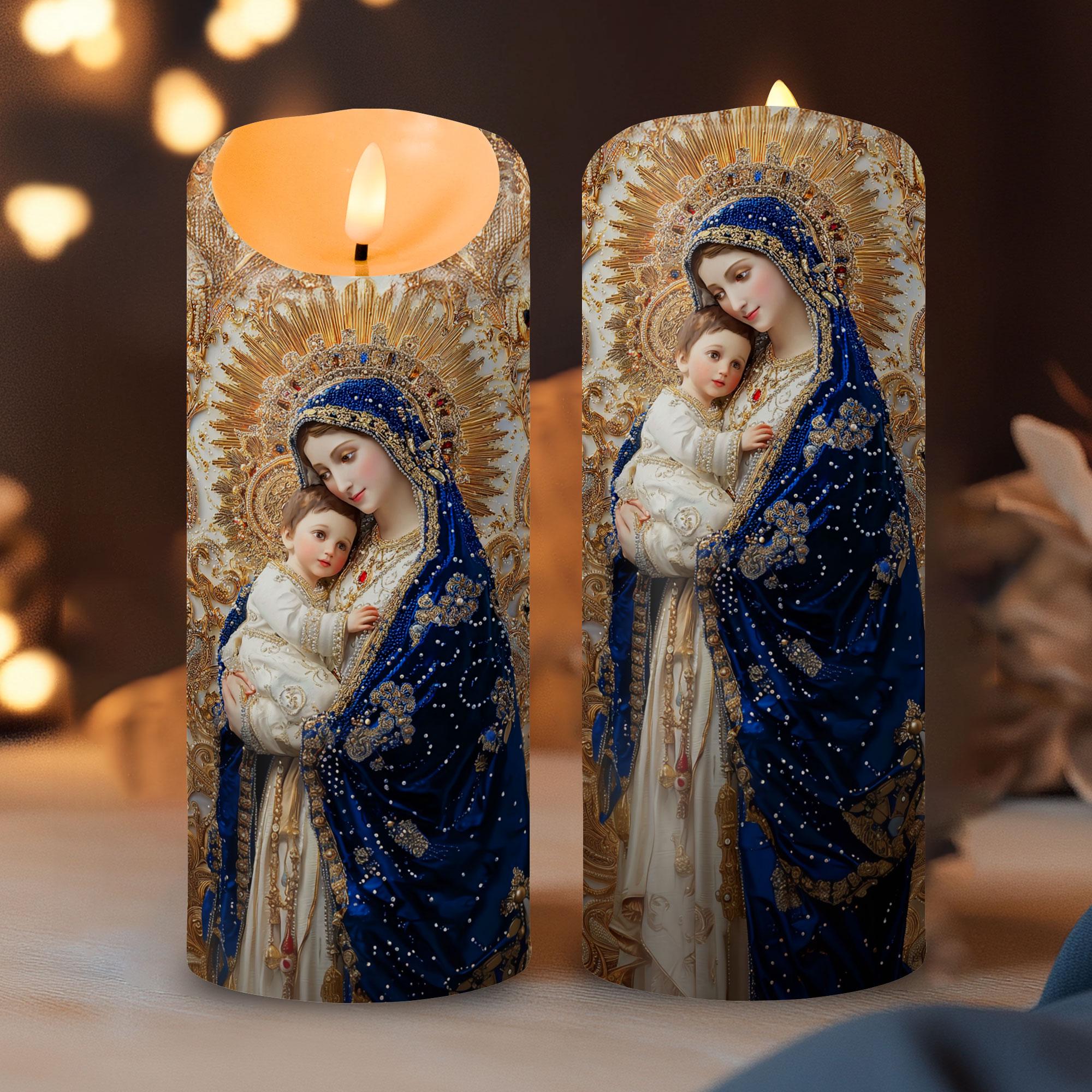

Candles are blessed and used throughout the year on the feast of the Purification of Mary symbolic of the journey of  Mary and Joseph to the Temple to present Jesus “light of the World.”

No Catholic home should be without Blessed Candles.  They should be used in times of danger, especially in storms or other calamities and also in times of sickness in order to invoke the protection of God.

Blessed candles are placed in the hand of the dying, symbol of divine light that is to guide them through the valley of death to the realm of everlasting happiness.

Candles that burn near the coffin of the departed are to remind us that the body was the temple of the Holy Ghost, that it received the grace of Baptism and will rise again through the merits of  Christ.

Pious Customs have established the practice of burning candles before the altar to honor the Divine Heart of Jesus truly present, and to plead for special graces and blessings.


Blessed Palm
Every Catholic is familiar with the ceremony of the blessing of the palms on Palm Sunday.

The ceremony recalls the triumphal entry of our Savior into Jerusalem. The palm is an emblem of Victory won by Christ over sin, death, and hell.

The church in blessing the palms refers to the olive branch brought by the dove to Noah after the subsiding of the waters as a symbol of peace established between heaven and earth and the abundant overflowing of Divine mercy.  The branches are green and symbolize grace.

Blessed palms should be reverently preserved in the home as a holy sacramental to ward off the assaults of the devil and to obtain God’s protection.  Old palms should be burned and not allowed to lie around or be cast aside where it might be disrespectfully treated.

Since August is also the feast of Edith Stein, Carmelite, it is hard not to mention her connection in this letter.  There is so much persecution of the Catholic faithful today such as in Nigeria, China, and many other places in the world.  Edith Stein is a model for those who are persecuted simply because of their nationality or religion.  She died with her arms around the little children who were dying with her in Auschwitz, a women’s motherly love embracing them in their last moments.

Mary’s motherly love is our hope for today’s world of persecution, with her rosary to defeat Satan and all his wiles and wickedness.

PRAY FOR US, O HOLY MOTHER OF GOD, THAT WE MAY BE MADE WORTHY OF THE PROMISES OF CHRIST.


Alice

Handmaid of the Handmaids and the St. Michael Warriors.…


Friday, February 21, 2025

Faith Filled Friday: Blessed Pier Giorgio’s Letter to a Friend

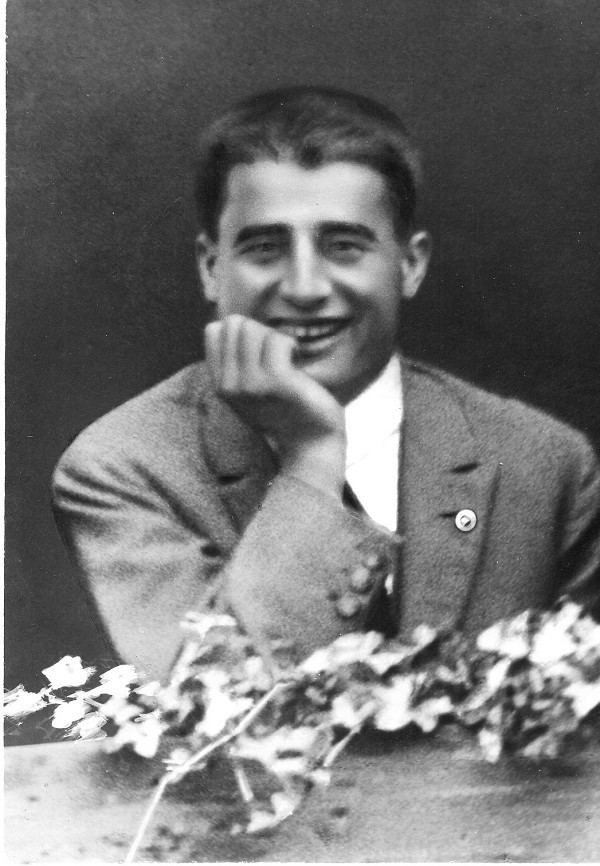
This is a letter written almost exactly one hundred years ago from Blessed Pier Giorgio Frassati to a friend.  We know that it was written early in the year 1925 since the letter in the opening paragraph refers to the year of Jubilee, and 1925 is the only year Frassati lived that had a Jubilee year.  From the reference to Advent, which seems to have just passed, the letter must have been written early in the year, possibly January or February.  Later this year, Blessed Pier Giorgio will be fully canonized into a saint. 

Blessed Pier Giorgio Frassati was a young man from Turin, Italy who came from a prominent family but spent his spare time and money secretly helping the poor. He was a devout young Catholic, a mining engineer, a Lay Dominican, a social activist, a jokester, a mountain climber, a pipe and cigar smoker, and a friend to all.  He died at the tender age of 24, but after his death his life of charity became public, even surprising his parents.  He was beatified by Pope St. John Paul II in 1990 and is slated to be canonized this summer by Pope Francis.  There is a website devoted to his memory where you can find a lot more information about his wonderful life.  


As a Lay Dominican I hold a special bond with Blessed Pier Giorgio.  Not only was he a Lay Dominican, but also like me he was an engineering student and a person who studied literature and theology.  We have a lot in common.  You will see references to all that in this excerpt of one of his letters, a letter to a friend.  Another thing you could notice in the letter is how affectionate a friend he was.  He starts the letter with some reference to a possible bit of friction with the friend, all of which seems nothing to him. 


Dearest friend, no ill feelings, as they are not worthy of the Holy Year; since the Vicar of Christ has indeed opened the Holy Doors I offer you the olive branch which is the sign of peace….In fact, during Advent I prepared for the Holy Year by reading Saint Augustine, reading which I haven’t yet finished, but from which I have received immense happiness, a profound joy, which until now unfortunately had not penetrated my soul.  I’m also doing some literary studies…and then I’ll move to studies of philosophy, if I find a good translation of the works of Thomas Aquinas.  You see that my plans for the Holy Year are grand.  I believe that I had thus found a better way to alternate my boring study of mechanical technology with delightful readings.


And what are you doing?  When will you be coming?  Turin is anxious to hear from you….When will you return?


The year has begun well, after toasting it with my family I went to Holy Martyrs Church; there in the church, crowded with people, we prayed that there would be peace in Italy and peace among us.  And this peace, which is the burning desire of us all, we hope will come this year in which the graces of the Lord are multiplied….


I am delighted to close my student career in such a beautiful year.  And now I should bid you farewell, because study is calling me back to work and meanwhile all the best for a good prosecution, best wishes above all that you will always possess the True Peace, which is the best gift that one can possess on this earth.

The excerpt comes from the magazine Magnificat, January 2025 (Vol. 26, No. 11) edition, pages 130-31.

I love this excerpt.  We see so much into his personality.  He was studious like a good Dominican should be, and he was very gregarious and very humble.  When I pray for the well being of my friends, I appeal to the intercession of Blessed Pier Giorgio Frassati.  I don’t know if he will have this patronage, but I consider him the patron saint of friendship.  If I had realized at the time, I might have taken the name Pier Giorgio as my Lay Dominican name.  If you are a friend of mine, I have put you in my prayers through the intercession of Pier Giorgio.

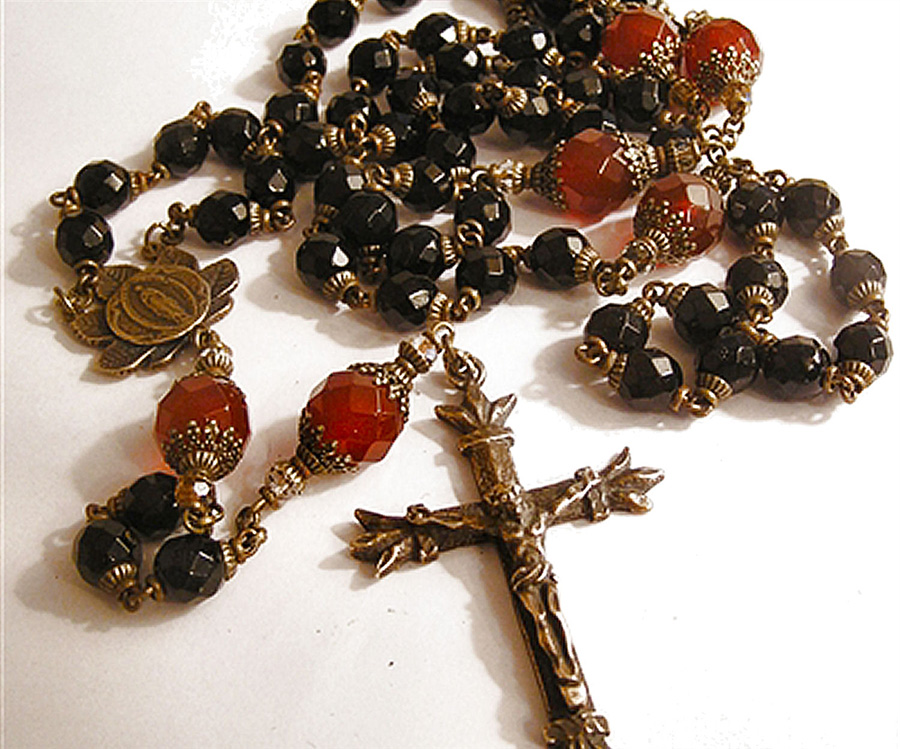
I had the good fortune last year to come across a rosary with the centerpiece comprising of a picture of Pier Giorgio and a relic (third class I think) of his.  I have been using it at my Lay Dominican chapter meetings for the praying of our rosary.  Here is a picture of it.  First with the front of his centerpiece, and second of the flip side.


The relic side states “Ex Indumentis” which is Latin for “from the clothes.”  Apparently it’s from a piece from his clothing.

Sadly, Pier Giorgio would pass away later in the year of 1925, on the fourth of July, I think. 

Blessed Pier Giorgio, soon to be saint, pray for us and pray for my friends.

Friday, October 21, 2022

Faith Filled Friday: St. Dominic Receiving the Rosary

October 7th was the Feast of Our Lady of the Rosary.  Last year I wrote up a detailed post on the history of the feast day, how it was originally called the Feast of Our Lady of Victory and linked to the Battle of Lepanto.  Read that post because it was very informative.  

I know it’s a few weeks late but I took the pictures and I want to post them.  The pastor at our parish, Fr. Eugene, loves sacramental and seems to have an affinity for statues and relics.  When the feast day of a particular saint comes around, Fr. Eugene will set up a statue of that saint off to the left side of the altar decorated with flowers.  Now this year for Our Lady of the Rosary he set up a small statue of the Blessed Mother handing St. Dominic a rosary. 

Before I get to the pictures, let me tell of the legend of how we got the rosary.  In 1208, it was held that St. Dominic prayed to the Virgin Mary for help in overcoming the Albigensian heresy in southern France and she in a vision gave him the rosary.  From John Roskoski at Catholic365:


It was during this time that the tradition of the Rosary comes to us. The form in which it has come down to us will best be stated in the words of P. Corneluis de Snecka, a disciple of the French Dominican Alan de la Roche:


We read that at the time when he was preaching to the Albigenses, St. Dominic at first obtained but scanty success: and that one day, complaining of this in pious prayer to our Blessed Lady, she deigned to reply to him, saying: ’Wonder not that you have obtained so little fruit by your labors, you have spent them on barren soil, not yet watered with the dew of Divine grace. When God willed to renew the face of the earth, He began by sending down on it the fertilizing rain of the Angelic Salutation. Therefore, preach my Psalter composed of 150 Angelic Salutations and 15 Our Fathers, and you will obtain an abundant harvest.’


The place of the revelation was the church of Prouille and the time was 1208. The claim of place and time are most strongly supported by the tradition of the Dominican Order. Pope Leo XIII affirmed over and over the Dominican origin of the Rosary and in a letter to the Bishop of Carcassone (1889), he accepts the tradition of Prouille as the place where the Blessed Virgin Mary appeared to St. Dominic, revealing this devotion. The tradition that Mary first revealed the Rosary devotion to St. Dominic is supported by 13 popes. St. Dominic went into the villages of the heretics, gathered the people, and preached to them the mysteries of salvation – the Incarnation, the Redemption, Eternal Life. As the Holy Virgin had taught him to do, he distinguished the different kinds of mysteries and after each short instruction he had ten Hail Marys recited. St. Dominic found great success in this new devotion, bringing about the conversion of the Albigensians.

Well, it is a disputed story, but we Dominicans believe it. 

Here is a picture of the statue at my parish, St. Rita’s Church in Staten Island, NY, and then a zoomed in picture.


Afterwards I asked Fr. Eugene where that statue was normally placed.  I had never seen it before.  He said it was in his office.  I found that strange.  Fr. Eugene is a Lay Carmelite.  Why would he have a statue f St. Dominic in his office?  Then I remembered.  St. Rita many years back had a chapter of Dominican Sisters at the parish, teaching at the parish school. 

Well, it made my Dominican heart jump for joy when I saw it at Mass.

Friday, October 8, 2021

Faith Filled Friday: Our Lady of the Rosary

Well it’s not quite Friday yet, but it is October 7th 2021 and besides it being the birthday of my beloved, departed father—he would have been 86 today—it is the anniversary of the Battle of Lepanto, the 450th anniversary (1571) of perhaps the greatest naval battle in history and defeat of the Ottoman Turks from overtaking Christian Europe. 

So why is today called the Feast of Our Lady of the Rosary?  It wasn’t initially.  Originally it was called the Feast of Our Lady of Victory but within two years (1573) Pope Gregory XIII changed it to the Rosary.


Christopher Check at Catholic Answers has an excellent article, “The Battle that Saved the Christian West,” outlining the stakes.  


During the five-decade reign of Soleiman the Magnificent, the Ottoman Empire grew to its fullest glory, encompassing the Caucuses, the Balkans, Anatolia, the Middle East, and North Africa. Soleiman had conquered Aden, Algiers, Baghdad, Belgrade, Budapest, Rhodes, and Temesvar. His war galleys terrorized not only the Mediterranean Sea, but the Red Sea and  the Persian Gulf as well. His one defeat was at the gates of Vienna in 1529… Soleiman’s greatest dream, however, the dream of all Turks, the dream his soldiers toasted before setting off on every campaign, was the conquest of Rome. There the Turks could transform Michelangelo’s St. Peter’s, then under construction, into a mosque, just as they had Constantinople’s Hagia Sophia more than a century before.

But the resistance was coordinated by Pope Pius V in what would be called The Holy League.


In a papacy of great achievements, the greatest came on March 7, 1571, on the feast of his fellow Dominican, St. Thomas Aquinas. At the Dominican Church of Santa Maria Sopra Minerva in Rome, Pope Pius formed the Holy League. Genoa, the Papal States, and the Kingdom of Spain put aside their jealousies and pledged to assemble a fleet capable of confronting the sultan’s war galleys before the east coast of Italy became the next front in the war between the Christianity and Islam… As the Pope prayed for Venice to answer a higher call, a new breed of fiery priests led by stirring preachers like St. Francisco Borgia, superior general of the Jesuits, inflamed the hearts of Christian Europeans throughout the Mediterranean with their sermons against Islam. Enough Venetians must have been listening, because on May 25 Venice at last joined the Holy League. By fits and starts, with hesitation and quarreling on the part of a few of the principal players, the fleet of the Holy League was forming.

But Pope Pius needed a commander and chose a most dashing soldier.


The man chosen by Pius V to serve as Captain General of the Holy League did not falter: Don John of Austria, the illegitimate son of the late Holy Roman Emperor, Charles V, and half-brother of Philip II, King of Spain. The young commander had distinguished himself in combat against Barbary corsairs and in the Morisco rebellion in Spain, a campaign in which he demonstrated his capacity for swift violence when the threat called for it and restraint when charity demanded it.

There is a lot in Check’s article I’m skipping over, but at the day of the battle divine intervention took place.


It was. At dawn on October 7, 1571, the Holy League rowed down the west coast of Greece and turned east into the Gulf of Patras. When the morning mist cleared, the Christians, rowing directly against the wind, saw the squadrons of the larger Ottoman fleet arrayed like a crescent from shore to shore, bearing down on them under full sail.


As the fleets grew closer, the Christians could hear the gongs and cymbals, drums and cries of the Turks. The men of the Holy League quietly pulled at their oars, the soldiers stood on the decks in silent prayer. Priests holding large crucifixes marched up and down the decks exhorting the men to be brave and hearing final confessions.


Then the Blessed Virgin intervened.


The wind shifted 180 degrees. The sails of the Holy League were filled with the Divine breath, driving them into battle. Now heading directly into the wind, the Turks were forced to strike their sails. The tens of thousands of Christian galley slaves who rowed the Turkish vessels felt the sharp sting of the lash summoning them up from under their benches and demanding they take hold of their oars and pull against the wind.

So why is it called the Feast of Our Lady of the Rosary?  Fr. Reginald Martin, O.P. has an article at the Dominican Friars website titled, “The Battle Of Lepanto And The Holy Rosary” which explains.  


Pius V, a Dominican friar, prayed the rosary throughout the battle and attributed the victory to the intercession of the Blessed Virgin. Hence the feast of Our Lady of the Rosary (which was first called the feast of Our Lady of Victory) on October 7. Naturally, the feast is dear to Dominicans and their friends. But the Pontiff’s were not the only prayers addressed that day to the Mother of God. The Christian troops are said to have prayed the rosary throughout the night before the battle, and some sources say that the rhythmic repetition of the prayer thoroughly frightened and demoralized the Turkish host.

And so through the Blessed Mother’s intervention Christendom was saved.  If the Turks had won that battle, Europe may have become Muslim.

Some side notes. 

(1) Miguel de Cervantes, the author of Don Quixote, fought in the battle and lost his left hand.  If he had lost his right hand he may never have been able to write.

(2) Pope Pius V was a Dominican as mentioned above.  Up until that time, Popes wore the same red robes as bishops and cardinals.  But Pope Pius V insisted on wearing his Dominican white, and so ever since Popes have worn white.

(3) Pope Pius V instituted the traditional 15 (three sets of five each) mysteries of the rosary.  It became the standard and skyrocketed as a Catholic devotion until it is now the premier Catholic devotion.  Pope John Paul II added a fourth set of five mysteries in 2002.

(4) My father, born on this day, happens to have a Marian first name, Mario.  I don't know if that was intentional or not on the part of his parents.  Either way it was Providential.  Please include his soul in your next rosary.  He passed away in 2006, fifteen years ago.

(5) Pope Pius V has a striking resemblance to my Uncle Valentino.  He too has passed away.   

(6) G. K. Chesterton’s most famous poem is on the Battle of Lepanto, titled “Lepanto.”  You can read it here.  Here is an excerpt.


The Pope was in his chapel before day or battle broke,

(Don John of Austria is hidden in the smoke.)

The hidden room in man’s house where God sits all the year,

The secret window whence the world looks small and very dear.

He sees as in a mirror on the monstrous twilight sea

The crescent of his cruel ships whose name is mystery;

They fling great shadows foe-wards, making Cross and Castle dark,

They veil the plumèd lions on the galleys of St. Mark;

And above the ships are palaces of brown, black-bearded chiefs,

And below the ships are prisons, where with multitudinous griefs,

Christian captives sick and sunless, all a labouring race repines

Like a race in sunken cities, like a nation in the mines.

They are lost like slaves that sweat, and in the skies of morning hung

The stair-ways of the tallest gods when tyranny was young.

They are countless, voiceless, hopeless as those fallen or fleeing on

Before the high Kings’ horses in the granite of Babylon.

And many a one grows witless in his quiet room in hell

Where a yellow face looks inward through the lattice of his cell,

And he finds his God forgotten, and he seeks no more a sign—

(But Don John of Austria has burst the battle-line!)

Don John pounding from the slaughter-painted poop,

Purpling all the ocean like a bloody pirate’s sloop,

Scarlet running over on the silvers and the golds,

Breaking of the hatches up and bursting of the holds,

Thronging of the thousands up that labour under sea

White for bliss and blind for sun and stunned for liberty.

Vivat Hispania!

Domino Gloria!

Don John of Austria

Has set his people free!


If you haven’t done it already, pray a rosary.  If you have, pray another!

Friday, February 12, 2016

Faith Filled Friday: Papal Mass Rosary

Back when I posted on the Papal Mass I was blessed to be able to attend at Madison Square Garden when Pope Francis came to New York last September, I mentioned I had bought as a memento the official rosary to go with the visit and I had promised to post pictures.  I think the pictures make for a good Lenten Faith Filled Friday post.

Here they are inside the little box they come in.


If you look carefully on the box you can see it says “Limited Edition Commemorative Rosary” and in the back of the box it says they were “Handmade in Italy.”  Here’s the entire rosary.


They are black beads which I assume are glass, but what I really like is that the connectors are really strong.  Here’s a close up of the crucifix and centerpiece.


Both the crucifix and the Blessed Mother in the centerpiece have a simplicity that reflects the Holy Father’s personality.  Here are the backsides.


The centerpiece has a dove with a sort of heart and cross above it, which was the logo for the visit.  The back of the crucifix is inscribed:

“FRANCIS OUR POPE
A JOURNEY OF FAITH
THROUGH THE HEART OF NEW YORK 2015”

A very nice memento indeed.

Friday, June 27, 2014

Faith Filled Friday: “a rosary,” a Personal Essay by Brian Doyle

I’ve been reading Brian Doyle’s collection of personal essays: the thorny grace of it: And Other Essays for Imperfect Catholics.  This is the first time I’ve read Brian Doyle and he’s a really fine prose writer.   I just enjoy some of his sentences.  He writes on Catholic faith, life, and culture.  I’ll probably post more in the future, but just enjoy this essay, “a rosary.”  I’ll present the entire essay since it’s short, and it really moved me.  [By the way, Doyle seems to have a thing against capitalizing titles; both the title of the book and the essays are in lower case.]
 

If you wish to read a review of the book, read Julie Davis’ at Happy Catholic.
 

a rosary
 

I’ll tell you s story about one rosary and let it stand for so very many of these lovely silent haunting companions in our pockets and cars and purses and drawers and under pillows and wrapped in the hands of the dead.   

This rosary was made eighty years ago by a boy in the woods of Oregon.  He was a timber cutter working so deep in the woods that there were no roads and the men and boys rode into camp on mules.  He was seventeen years old that summer and very lonely and one evening he began to carve rosary beads from cedar splits otherwise destined for the fire.  He tried to carve a bead a night, sitting by the fire, and with each bead he would try to remember the story of the bead as his mother had told him.  There were the joyful mysteries of good news and visiting cousins and new babies and christenings and finding children whom you feared were utterly lost.  There were the sorrowful mysteries of men weeping in the dark and men beating men and men jeering and taunting men and men torturing men and men murdering men under the aegis of the law.  There were the glorious mysteries of life defeating death and light returning against epic darkness and epiphanies arriving when no doors or windows seemed open to admit them and love defeating death and the victory of that we know to be true against all evidence that it is not. 

When he had cut a bead for each of these stories he was finished, for there were at that time no luminous mysteries on which to ponder and pray. 

He threaded thin copper wire through each of the beads, setting the mysteries apart with larger beads cut from the yew, and he carved a cross from the shinbone of an elk, and he thought about trying to carve a Christ also, but the thought of carving Christ made him uncomfortable, and anyway he did not think he had the skill, and he did not want to ask one of the older men, some of whom were superb carvers, so he left the cross unadorned, as he said, and put the rosary in his pocket, and carried it with him every day the rest of his life. 

The rosary went with him through Italy and North Africa in the war, and into the wheat fields of Oregon, and back into the woods where he again cut timber for a while, and then all through his travels as a journalist on every blessed muddy road from Canada to California, as he said, and through his brief but very happy years in retirement by the sea, where his rosary acquired a patina of salt from the mother of all oceans, as he said. 

He had the rosary in his pocket the day he was on his knees in his garden and leaned forward and placed his face upon the earth and died, almost seventy years after he finished carving the rosary in the deep woods as a boy. 

His wife carried the rosary in her pocket for the next two years until the morning she died in her bed, smiling at the prospect of seeing her husband by evening, as she told her son. 

The son carried the rosary in his pocket for the next three days until the moment when he and I were walking out of the church laughing at one of his father’s thousand salty stories of life in the woods and in the war and in the fields and on the road and by the sea, at which point the son handed it to me, and said Dad wanted you to have it, and hustled away to attend to his wife and children, brothers and nieces and nephews. 

I wept.  Sure I did.  You would weep too.  Sure you would. 

I have the rosary in my pocket now.  I hope to carry it every day the rest of my life, and jingle it absentmindedly, and pray it here and there when I have a moment in the sun, and place it ever so carefully and gently on a shelf every night before I go to bed, touching the elk-bone cross with a smile in memory of my friend George, until the morning of my own death, when I pray for a last few moments of grace in which to hand it to my own son, and then close my eyes and go to see the One for whom it was made, who made us, amen.
 

Very short, very powerful.  I can show you how the distinct images, the combination of long and short sentences, the repetitions, and the forward movement of the narrative all work together to make this a powerful piece.  But set aside craft here.  That just fills me with faith.


Friday, May 3, 2013

Faith Filled Friday: The Rosary For The Unborn

St. Michael the Archangel Organization is coordinating this weekend (May 3rd through May 5th) to gather one million people praying the rosary for the unborn.  This is a worldwide event.  You can read about it here.


You will need to register so they can tally your prayers. You can do that here.

Here is their poster.


Now I have to admit I'm not great at the rosary.  So for all those novices like me, here is a little video to refresh your memory on how to do it.  It's not hard.  Let's pray for those unborn children.