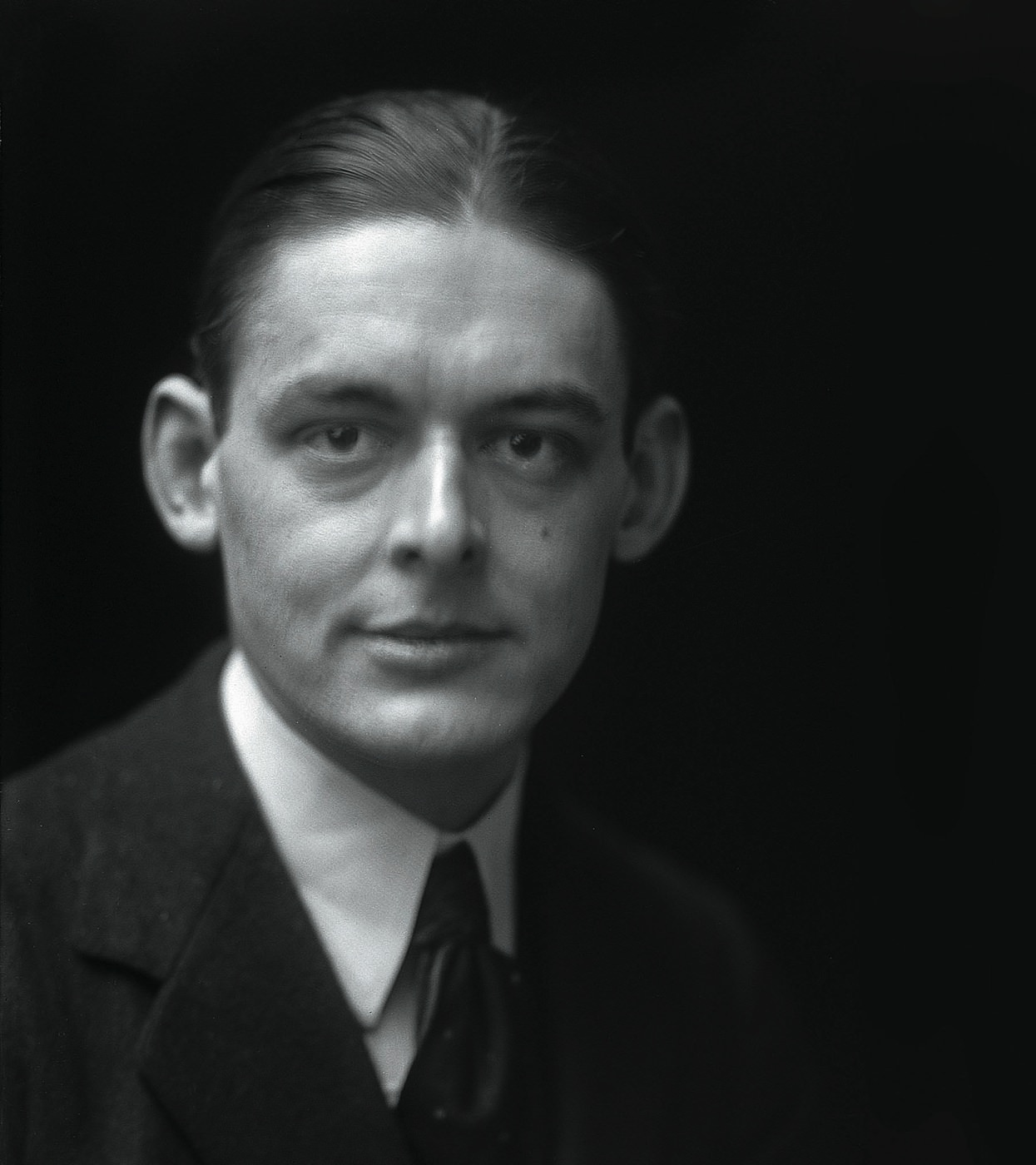
This essay was in response to a question from my Goodreads Catholic Thought book club on why modernist poetry is the way it is, that is, lacking form and meter, lacking rhyme, and generally being different than the poetry from the past. The question came from Kerstin who was responding to substack post from Anthony Esolen, who essentially says he dislikes modern poetry.
Kerstin
Comment:
This morning's blog post by Anthony Esolen starts out like this:
“I, too, dislike it,”
said Marianne Moore at the beginning of her own poem about poetry, and I’m
afraid that I’d say much the same thing about most of the work that she and her
modernist colleagues produced. I don’t mean to sound harsh, but first they gave
up singing for saying, and then their successors often gave up saying for
grunting, or for a sort of intellectual posing which is just another kind of
grunting, the kind you do at a faculty wine and cheese affair to show other
people that you, too, can be dull and fashionable all at once, and have
nobody understand what you’re saying.
But directness and simplicity in verse can be great virtues, and the best poets
avail themselves of it. “O how unlike the place from whence he fell,” says
Milton, comparing where Satan is now to where he used to be. One sentence, one
line, and that’s that. “’Tis new to thee,” says the elderly Prospero, sadly,
when his daughter Miranda, marveling at the variety of human beings that she on
their desert island has never beheld before, is overcome with wonder. “Uneasy
lies the head that wears a crown,” says Henry IV, who got that crown by shady
means, and has not found it all he had hoped for. “A little learning is a dangerous
thing,” says Alexander Pope, and don’t our current elites prove him right!
YES!!!
I have no use for the linguistic contortions mis-categorized as
"poems".
I once had a conversation with one of my husband's grand-nephews on poetry. He
was a senior in high school then and expressed his dislike of them and had no
use for them. I told him that this was not the fault of poetry, but of poorly
chosen examples with which our education system tortures students. Poetry is
the highest art of language, and a poet who understands his art expresses
things clearly in the most beautiful language. If I have to contort my brain
into a pretzel, it not only misses the mark, it is junk.
This is why I love it when we sing old hymns in church. The poetry is
accessible to all and at the same time truly beautiful and it is this beauty
that nourishes the soul.
My
Response:
I guess he doesn't like
Gerard Manly Hopkins then. Or TS Eliot.
His examples there that
he likes are from narrative poetry. What he characterizes as not liking in
today's poetry are typically lyric poetry. Narrative poetry usually will climax
to a simple line that carries punch, just like in a novel. Like anything else,
in the age you live in, there is too much to consider and evaluate. The good
poems will rise to the top and the bad will fade. I bet I could pull up poems
from Milton or Shakespeare's age that are awful. Actually I remember having to
do a term paper of a poet who was obscure from Milton's time I think (can't
even remember the name now) and it was an epic poem. It was terrible and the
professor gave me extra credit for taking on such a huge and awful opus.
I have found MarianneMoore's poetry to be elegant. She's not Milton or Shakespeare or the best of her age
(Esolen is also not comparing the same level of talent) but she's a good poet.
Here's the poem he quotes. "Poetry" by
Marianne Moore.
Poetry
By
Marianne Moore
I
too, dislike it: there are things that are important beyond all this fiddle.
Reading it, however, with a perfect contempt
for it, one discovers that there is in
it after all, a place for the genuine.
Hands that can grasp, eyes
that can dilate, hair that can rise
if it must, these things are important
not because a
high-sounding
interpretation can be put upon them but because they are
useful; when they become so derivative as to
become unintelligible, the
same thing may be said for all of us—that we
do not admire what
we cannot understand. The bat,
holding on upside down or in quest of
something to
eat,
elephants pushing, a wild horse taking a roll, a tireless wolf under
a tree, the immovable critic twinkling his
skin like a horse that feels a flea, the base—
ball fan, the statistician—case after case
could be cited did
one wish it; nor is it valid
to discriminate against “business
documents and
school-books”;
all these phenomena are important. One must make a distinction
however: when dragged into prominence by
half poets, the result is not poetry,
nor till the autocrats among us can be
“literalists of
the imagination”—above
insolence and triviality and can present
for
inspection, imaginary gardens with real toads in them, shall we have
it. In the meantime, if you demand on the
one hand, in defiance of their opinion—
the raw material of poetry in
all its rawness, and
that which is on the other hand,
genuine, then you are interested in poetry.
Kerstin
Response:
Manny wrote: "I
guess he doesn't like Gerard Manly Hopkins then. Or TS Eliot."
I was actually wondering about that. We’ll have to see if these poets will show
up in his blog.
My
Response:
Anthony Esolen I believe
is the editor of a magazine called Touchstone, and last year they had a major
article of TS Eliot's The Waste Land. It was definitely a positive review and
the article was so good I kept the issue. He didn't write the article but he is
one of the major editors.
Give me a little time. I'm going to put together a post on why I think modern poetry has evolved to what it is. You may not still like modernist poetry but at least I think you'll understand the forces at play that shaped it.
###
First, let’s try to define the era of modernism. Narrowly in literature it’s refers to works produced between the two World Wars. Broadly, however, it goes beyond that. While the subject matter and themes of post-World War II may have been different, the aesthetics were not too much different and part of it were a development from that before the war. Post-Modernism is really not that much different from modernism, and post-modernism is usually categorized from the Second World War to the end of the 20th Century. What are we in now in the 21st? I’m not sure. I’ve heard it referred to as post-Christian, which I detest, but, since we’re in the middle of it, a proper term has not been given to it. Frankly the aesthetics of modernism stretches from the First World War to today. And actually its roots go even further back into the middle of the 19th Century. Emily Dickinson, Walt Whitman, and Gerard Manly Hopkins are pre-cursors to modernism, at least in aesthetics.
It’s hard to know exactly what Anthony Esolen is criticizing there. His exemplars are from narrative poetry or from Shakespeare’s drama which intersperses poetry and speech. Is his criticism that we don’t have narrative poetry in drama anymore? Usually people who criticize modern poetry point to its the lack of form and meter as was more common before the 20th century. Robert Frost has narrative poems; TS Eliot wrote plays in verse. Lots of examples of poems in traditional forms. They are out there. When people think of modern poetry, they think free verse, that is, the line simulating natural speech, and they think of nontraditional forms, if they employ any form at all. This conception of modern poetry sticks out, but by no means is it absolute. Why is the poetry that characterizes modernism the way it is? I can think of four reasons: mass education, the addition of new genres, the aesthetics of alienation, and the evolution of intellectual history.
1. The 20th century saw an expansion of people going to universities. More people are learned today than ever before. Literary writers are writing for a public that is more educated than ever before, on the one hand, but have differences of cultivation: lowbrow poems for high school educated or less, middlebrow for college educated, highbrow for graduate or more importantly for the specialized literature reader. How do poets satisfy their readers? For lowbrow, they might write a “Casey At the Bat” poem. For a middlebrow a poet might go with a traditional form. For a highbrow, a poet would want something different or complex or even just more elitist. If you consider yourself highbrow—which is elitist, and frankly there is nothing wrong with that because it reflects a cultivation and expertise—you want something more sophisticated. So where does the market go for this? Well, there isn’t much of a market for poetry (and I’ll explain why in point number 2) to begin with. So a poet either writes ditties for the common man to read or he writes nuanced poems for a more sophisticated market. That’s how mass education has made poetry evolve.
2. The 19th and 20th centuries each had an innovation that effected the evolution of poetry. The 19th century saw the mass production of the novel. The novel became the primary literary art form. The public wanted novels; they wanted stories in a prose language. It spoke more directly to a person. Great writers that might have been poets, chose to become novelists. So there was a reduction in the interest of poetry; there was a reduction in the talent pool for poets; there was a reduction in the need for narrative poetry. Why write a narrative poem when you could write a novel or a short story? The last major narrative poem that comes to mind is Tennyson’s Idylls of the King which was published in part between 1859 to 1885. Writers just choose to not write in poetry. Tolkien’s Lord of the Rings could have been an epic poem, might have been an epic poem if written in Milton’s day, but in the 20th century Tolkien choose a novel form.
The 20th century innovation which I think effected the evolution of poetry was the recording and radio transmission of song. There was always song in the past, and poets emulated song in traditional forms, but the mass production and availability of songs made poets seek other forms to distinguish themselves for a more highbrow public. Songs have rhyme and rhythm and fixed stanzas. The mass dissemination of song form through records and radio in everyone’s ear made poets want to distinguish themselves from the common form. If a song writer could write these verses, then why did you need a poet? So poets wanted to differentiate themselves. [By the way, as an aside, there is also a relationship between the novel and film and between painting and photograph.] When Bob Dylan, a song writer, won the Nobel Prize in Literature in 2016, it was the ironic culmination of this relationship between poetry and song.
3. This perhaps is the most significant reason. The 20th century changed life in ways that were unimaginable in earlier times. Some of it started in the 19th century but it really culminated after the First World War. Beginning in the 19th century we had industrialization. Actually it started at the end of the 18th century in some places, but it really took off in the 19th. With industrialization brought rural migration into cities. What was once maybe 90% of people living in a rural environment became the opposite. Disconnected from land and reliant on technology changed society from their roots. Urbanization increased social tensions. War was never a good thing, but with industrialization the ability to kill masses of people became easy. There was always capitalism but industrialization made society more of a consumer society, which made people integrated into capital like never before. Pervasive capitalism brought an opposite reaction of socialism and communism. All of this caused dislocations, which made faith more tenuous. I don’t want to say there was a total loss of faith—even today there are more people who believe in God than don’t—but faith became less integrated. All of this added up to a sense of alienation. And the alienation was perceived from all aspects of society. Looking at it from a simple conservative/liberal perspective, the right felt alienated because of the loss of institutions, the left felt alienated because of capitalism. That’s really simplified but you can see how everyone started to look through the lens of alienation. We have that today. Just listen to both sides of the political and social divide. They may point to different sources of the problem, but everyone feels like the world has gone awry.
Given dislocation, artists required a new aesthetics. True artists, whether consciously or unconsciously, shape their art to reflect their world view, Weltanschauung in German. Compare the orderly structure of Dante’s Divine Comedy, organized into circles and layers pointing to a harmony, with a Picasso painting, where the order of the subject has been disconnected and fractured. Picasso is capturing the alienation, the disconnection, and the shift in Weltanschauung that has occurred through industrialization.
4. A fourth variable that shaped modernist poetry is the intellectual history that runs parallel with the aesthetic changes in art. From the middle of the 19th century on we have scientism, psychology, evolution, the spread of liberal democracy and dissolution of monarchies, the spread of communism, the spread of colonialism, the fall of colonialism, the fall of communism, race theories linked to genetics, race theories not linked to genetics, the rise of the nation state, the rise of individualism, the rise of radical individualism, and a loss of faith in God where today we are now considered a post-Christian culture. Certainly these effected the subject matter of poetry, but with such radical changes in worldview, in parallel with the radical changes in life initiated by the industrial revolution, writers, artists, and musicians strove to find new ways of expressing themselves. The old ways didn’t satisfy or, more importantly, implied a continuity with the past that was manifestly fragmented or, at the most extreme, severed. In the end this fragmentation accentuated the alienation from the changes caused by the industrial revolution. You can see that I find the industrial revolution to be at the heart of the modern world.
So what did this mean to the poet? One thing it meant was that the old forms no longer reflected the current worldview. Going from an agricultural, rural milieu to an urban and industrial based society meant the old forms no longer reflected the nature of life. While the general population preferred (and still does) the benefits of industrialization, the artists knew that something was now disconnected. Humanity was no longer living in a harmony with nature, with each other, and with God. Where rhyme made sense, where order was a norm, it no longer was. The foundations of order had shifted, and art reflected that shift.
In 1920, Ezra Pound, a close friend of TS Eliot, wrote a poem trying to capture the modernist poet’s worldview, a poem titled “Hugh Selwyn Mauberley.” Mauberly was an alter ego of the writer’s in the poem, trying to create poetry from the new state of his world. It’s a long poem of mixed quality but Part II states what the new poet is looking to do.
II
The age demanded an image
Of its accelerated
grimace,
Something for the modern
stage,
Not, at any rate, an
Attic grace;
Not, not certainly, the
obscure reveries
Of the inward gaze;
Better mendacities
Than the classics in
paraphrase!
The “age demanded”
chiefly a mould in plaster,
Made with no loss of
time,
A prose kinema, not, not
assuredly, alabaster
Or the “sculpture” of rhyme.
As
you can see and in sympathy with Eliot’s “The Waste Land,” Pound is not exactly
endorsing the modern world. The
“acceleration” of life in the modern world is a “grimace” in contrast to “Attic
grace.” Attic refers to ancient Greece. The poem runs through history and when it
comes the First World War, Pound writes this as Part IV but I’ll extend it into
the first four lines of Part V because I think it’s the central theme.
IV
These fought, in any
case,
and some believing, pro
domo, in any case ...
Some quick to arm,
some for adventure,
some from fear of
weakness,
some from fear of
censure,
some for love of
slaughter, in imagination,
learning later ...
some in fear, learning
love of slaughter;
Died some pro patria, non
dulce non et decor” ...
walked eye-deep in hell
believing in old men’s
lies, then unbelieving
came home, home to a lie,
home to many deceits,
home to old lies and new
infamy;
usury age-old and
age-thick
and liars in public
places.
Daring as never before,
wastage as never before.
Young blood and high
blood,
Fair cheeks, and fine
bodies;
fortitude as never before
frankness as never
before,
disillusions as never
told in the old days,
hysterias, trench
confessions,
laughter out of dead
bellies.
V
There died a myriad,
And of the best, among
them,
For an old bitch gone in
the teeth,
For a botched civilization.
First, I hope you can see that a skilled poet can make great use of modern
style. That’s really good poetry. Second, Pound captures the disconnect of the
modern world. The war, the
industrialization, the money economy (“usury”), and the disillusionment with
what the world promises. The new hero, Mauberly, is an alienated hero. That’s what is at the heart of modernist
poetry. And this goes across all
ideologies and belief systems. Ezra
Pound and TS Eliot are thought of as conservatives. Flannery O’Connor was not a poet but her
short stories are modernist stories. She
too was trying to capture this disconnect, this alienation.
So let me summarize. There was already a shift with the novel toward prose, capturing the natural voice rather than an artificially contrived voice in meter. The sound of rhyming quatrains in meter seemed fitted for a distant past. Even when life started to become normal a decade after the First World War, musical recordings dominated the ears of the public. A highbrow educated public who read poetry weren’t satisfied with poets imitating songwriters. Fragmented lines and fragmented structures reflected the disconnect of modern life and the ever shifting intellectual theories, and it provided a level of sophistication that separated cognoscenti (people who are considered to be especially well informed about a particular subject or art form) from the general public. A poet like William Butler Yeats started in the old form but he too felt the need to transition toward the modern, interestingly from his contact with Ezra Pound and from the ridicule of James Joyce who laughed at his old forms. I don’t know if Yeats cared that much about Joyce’s comments, but he eventually felt he had to move toward a different aesthetic.
There’s great poetry in modernism, just as there is great poetry in every age. We live in an age where there is so much published—what, perhaps a thousand times more than in Shakespeare’s time?—that there is a heck of lot of poor writing out there. The poor poetry, and the globs of it, can paint a negative perception. When people ridicule modern poetry, they are usually pointing to the lesser works, works that are caricatures of a general style. But there is a heck of a lot of good poetry too. The great modernist poets I would list as TS Eliot, Wallace Stevens, WH Auden, Seamus Heaney, Philip Larkin. Other poets who were lesser in general but had gems I would point to Theodore Roethke, Hart Crane, Robert Lowell, Elizabeth Bishop. There are others. These come to mind.
Let
me just end with one of my favorite 20th Century poems, “In a Dark
Time,” by Theodore Roethke. Roethke
suffered from bouts of mental illness, and he captured that alienation in this
poem.
In
a Dark Time
By Theodore Roethke
In a dark time, the eye
begins to see,
I meet my shadow in the
deepening shade;
I hear my echo in the
echoing wood—
A lord of nature weeping
to a tree.
I live between the heron
and the wren,
Beasts of the hill and
serpents of the den.
What’s madness but
nobility of soul
At odds with
circumstance? The day’s on fire!
I know the purity of pure
despair,
My shadow pinned against
a sweating wall.
That place among the
rocks—is it a cave,
Or winding path? The edge
is what I have.
A steady storm of
correspondences!
A night flowing with
birds, a ragged moon,
And in broad day the
midnight come again!
A man goes far to find
out what he is—
Death of the self in a
long, tearless night,
All natural shapes
blazing unnatural light.
Dark, dark my light, and
darker my desire.
My soul, like some
heat-maddened summer fly,
Keeps buzzing at the
sill. Which I is I?
A fallen man, I climb out
of my fear.
The mind enters itself,
and God the mind,
And one is One, free in the tearing wind.
“What’s madness but nobility of soul/At odds with Circumstance?” There is no better line that captures alienation than that, but, in the end, Roethke, through this mystical experience leads to a union with God. It’s one of my favorite poems of all time.
###
Frances
Comment:
Manny, when I think of poetry in connection with modernism, one poem always recurs to me. In it, Matthew Arnold makes his intellectual statement about life’s suffering by brooding on the sea. As he goes on, he enfolds us all:
Sophocles long ago
Heard it on the Aegean,
and it brought
Into his mind the turbid
ebb and flow
Of human misery; we
Find also in the sound a
thought,
Hearing it by this
distant northern sea.
The Sea of Faith
Was once, too, at the
full, and round earth’s shore
Lay like the folds of a
great girdle furled.
But now I only hear
Its melancholy, long,
withdrawing roar,
Retreating, to the breath
Of the night-wind, down
the vast edges drear
And naked shingles of the
world.
Ah, love, let us be true
To one another! for the
world, which seems
To lie before us like a
land of dreams,
So various, so beautiful,
so new,
Hath really neither joy,
nor love, nor light,
Nor certitude, nor peace,
nor help for pain;
And we are here as on a
darkling plain
Swept with confused
alarms of struggle and flight,
Where ignorant armies
clash by night.
— “Dover Beach,” by Matthew Arnold
My
Reply to Frances:
Francis, I was thinking of that poem too but I just couldn’t remember the title “Dover Beach.” I was thinking of including Arnold as a proto modernist but when I couldn’t remember that title I decided to not include him. Thanks.
Kerstin
Comment:
Thank you Manny for this
long explanation! You put a lot of thought into it. There are so many reasons
why we live in a time of alienation from our true nature. From the perspective
of aesthetics, we have experienced much fragmentation and ugliness, and this
gets mirrored in all the arts. Often we don’t know anymore what true beauty is.
Is it any wonder that the literary arts have reflected this?
Given the overwhelming
mass production of books these days on one hand and at the same time the
controlled marketing of carefully chosen titles on the other, that then become
“bestsellers”, how is anyone to find the genuinely deserving article?
Our school system has been scaling down the arts for many decades. It used to be normal to have to learn by heart certain poems, to recite them when there was a fitting occasion . Or to compose a poem for somebody with a special birthday or anniversary. We don’t do these things anymore. I am always astounded how much my mother knows by heart, and she had an eighth grade education.
Frances
Reply to Kerstin:
Kerstin, I agree so completely with everything you wrote. Ironically, when Matthew Arnold wrote “Dover Beach” (probably in 1851), he was grieving what he saw as the loss of meaning in the traditions of Western culture. And yet WWI hadn’t happened yet; Hiroshima hadn’t happened yet. In many ways, ‘’we are here as on a darkling plain,’’ too; without our Christian faith, we would be exactly where Matthew Arnold was.
My
Comment:
By the way, that line
from the Ezra Pound poem, "For an old bitch gone in the teeth," the
"b" word is referring to a female dog, not a woman. I just want to
make that clear.
When this conversation
started, I couldn’t remember my favorite Marianne Moore poem, though it was
sort of on the tip of my tongue. I
finally remembered. It’s “What are
Years?” and it has a religious theme.
Let me share it.
What
Are Years?
by Marianne Moore
What is our innocence,
What is our guilt? All
are
naked, none is safe. And
whence
is courage: the
unanswered question,
the resolute doubt—
dumbly calling, deadly
listening—that
in misfortune, even
death,
encourages others
and in its defeat, stirs
the soul to be strong? He
sees deep and is glad,
who
accedes to mortality
and in his imprisonment,
rises
upon himself as
the sea in a chasm,
struggling to be
free and unable to be,
in its surrounding
finds its continuing.
So he who strongly feels,
behaves. The very bird,
grown taller as he sings,
steels
his form straight up.
Though he is captive,
his mighty singing
says, satisfaction is a
lowly
thing, how pure a thing
is joy.
This is mortality,
this is eternity.
Marianne
Moore was devoutly Christian, a Presbyterian her whole life.