"Love follows knowledge."
"Beauty above all beauty!"
– St. Catherine of Siena

Showing posts with label Thomas Merton. Show all posts

Friday, August 30, 2024

Poetry Analysis: “The Quickening of John the Baptist” by Thomas Merton

Yesterday, August 29th was the Memorial of the Passion of St. John the Baptist, and you can read and pray more about it here at Catholic Culture.  

In my reading of the accolades to St. John the Baptist, I was also directed to a poem Thomas Merton wrote on St. John, not on his beheading but on his leap in his mother's womb when the Blessed Virgin arrived at her visitation to Elizabeth. I was absolutely floored by the beauty of this poem, "The Quickening of John the Baptist."  I want to present it here and provide a little analysis.  First the poem.


The Quickening of John the Baptist

On the Contemplative Vocation

By Thomas Merton


Why do you fly from the drowned shores of Galilee,

From the sands and the lavender water?

Why do you leave the ordinary world, Virgin of Nazareth,

The yellow fishing boats, the farms,

The winesmelling yards and low cellars

Or the oilpress, and the women by the well?

Why do you fly those markets,

Those suburban gardens,

The trumpets of the jealous lilies,

Leaving them all, lovely among the lemon trees?


You have trusted no town

With the news behind your eyes.

You have drowned Gabriel’s word in thoughts like seas

And turned toward the stone mountain

To the treeless places.

Virgin of God, why are your clothes like sails?


The day Our Lady, full of Christ,

Entered the dooryard of her relative

Did not her steps, light steps, lay on the paving leaves

like gold?

Did not her eyes as grey as doves

Alight like the peace of a new world upon that house, upon

miraculous Elizabeth?


Her salutation

Sings in the stone valley like a Charterhouse bell:

And the unborn saint John

Wakes in his mother’s body,

Bounds with the echoes of discovery.


Sing in your cell, small anchorite!

How did you see her in the eyeless dark?

What secret syllable

Woke your young faith to the mad truth

That an unborn baby could be washed in the Spirit of God?

Oh burning joy!


What seas of life were planted by that voice!

With what new sense

Did your wise heart receive her Sacrament,

And know her cloistered Christ?


You need no eloquence, wild bairn,

Exulting in your hermitage.

Your ecstasy is your apostolate,

For whom to kick is contemplata tradere.

Your joy is the vocation of Mother Church’s hidden children -

Those who by vow lie buried in the cloister or the hermitage;

The speechless Trappist, or the grey, granite Carthusian,

The quiet Carmelite, the barefoot Clare, Planted in the night of

contemplation, Sealed in the dark and waiting to be born.


Night is our diocese and silence is our ministry

Poverty our charity and helplessness our tongue-tied sermon.

Beyond the scope of sight or sound we dwell upon the air

Seeking the world’s gain in an unthinkable experience.

We are exiles in the far end of solitude, living as listeners

With hearts attending to the skies we cannot understand:

Waiting upon the first far drums of Christ the Conqueror,

Planted like sentinels upon the world’s frontier.


But in the days, rare days, when our Theotokos

Flying the prosperous world

Appears upon our mountain with her clothes like sails,

Then, like the wise, wild baby,

The unborn John who could not see a thing

We wake and know the Virgin Presence

Receive her Christ into our night

With stabs of an intelligence as white as lightning.


Cooled in the flame of God’s dark fire

Washed in His gladness like a vesture of new flame

We burn like eagles in His invincible awareness

And bound and bounce with happiness,

Leap in the womb, our cloud, our faith, our element,

Our contemplation, our anticipated heaven

Till Mother Church sings like an Evangelist.


The poem is in free verse with ten stanzas, or perhaps more accurately, ten sections that are separated by a space since they are so irregular I’m not sure “stanza” would apply.  The poem starts with the Virgin Mary off on her visitation to her cousin Elizabeth, who pregnant with St. John the Baptist.  If you number the sections of the poem from one through ten, I can summarize the narrative flow and gist of each.  Here is my section by section gist.

1 – Addressing the Blessed Virgin, the poet asks why are you traveling across the country?

2 – Still addressing the Virgin, the poet highlights points on the journey and asks her why her clothes are like sails?

3 – The poet narrates her arrival.

4 – The poet narrates Mary’s greeting and the awakening of St. John in the womb at the sound of her voice.

5 – The poet addresses John and asks how in his enclosed space could he see and hear the Blessed Mother?

6 – The poet still addressing John asks what her voice did to him, and to know she was carrying Christ?

7 – Still addressing John, the poet acknowledges the child’s in ability to speak except through the kick in the womb.

8 – Perhaps the key section of the poem where the poet contemplates John’s silence and enclosure and identifies it with the plight of humanity.

9 – The poet continuing his contemplation connects John’s pre-birth existence with the existential nature of humanity.

10 – The poet concludes his contemplation with a final identification of John, the poet, and the reader before Christ.

 “The Quickening” in the title refers to the moment St. John in the womb is enlivened by the presence and voice of the Virgin carrying her own child, the Christ.  So much of the poem is about contemplation.  The subtitle of the poem is “On the Contemplative Vocation,” which identifies John as fetus, in a contemplative vocation.  Perhaps all fetuses have the vocation—at least for those “cloistered” nine months—of a contemplative.  Indeed, in section seven, Merton identifies contemplative and cloistered religious orders: Trappists, Carthusians, Carmelites, and Poor Clares.  We know that Merton himself was a Trappist monk bound to the Abbey of Our Lady of Gethsemani in Kentucky.  And while it is not true that Trappists are never allowed to speak, they are required to limit their speech to only what is necessary.  So you can see how Merton as poet connects with John in the womb, the “small anchorite.”  An anchorite (or anchoress for feminine) is someone who is locked in a cell for the rest of their lives to pray and contemplate.  

There is also the contemplation identified with the Blessed Mother of God.  “But Mary kept all these things and pondered them in her heart” (Lk 2:19).  The Blessed Mother was witness to most of Christ’s life and His death, and so contemplated much.  Contemplation for Catholics starts with Mary.  In the poem she is identified with the sea—which connects with her title as Stella Maris, Our Lady of the Sea.  The vast sea has often through the ages been seen as an instrument that inspires contemplation.  To be on the sea and on a boat is to be isolated from society, and of course being submerged or drowned is a metaphor for the act of contemplation or being lost in thought.  (See the poem, “The Love Song of J. AlfredPrufrock” by T. S. Eliot and how he associates drowning with contemplation.)  When in section two Merton addresses Mary as having “drowned Gabriel’s word in thoughts like seas,” he is referring the Archangel’s words to Mary at the Annunciation.  She hasn’t discarded Gabriel’s words, but submerged them in her consciousness for later meditation.  Why are her clothes like sails?  Because she is navigating an ocean of introspective thought.

###

The first seven sections of the poem establishes the context for the last three sections as they culminate to a thesis.  Let’s look at the last three more closely.

“Night is our diocese and silence is our ministry/Poverty our charity and helplessness our tongue-tied sermon.”

Who is “our” referring to?  The poet as he identifies with St. John in the womb, and I would venture all of us reading who can similarly identify.  The darkness constitutes their church, and silence the ministry, that is the administering of a religious action.  “Poverty” and “helplessness” convey a beatitude in the limitations of transmitting the message, almost an echo of “Blessed are the poor in spirit” (Mt5:3). 

“Beyond the scope of sight or sound we dwell upon the air/Seeking the world’s gain in an unthinkable experience.”

Again, the “we” unifies the poet, St. John, and the reader, caught in a moment of anticipation, waiting for what I would guess is the incarnation of the second Person of the Trinity, building to the last four lines which need to be quoted together:


We are exiles in the far end of solitude, living as listeners

With hearts attending to the skies we cannot understand:

Waiting upon the first far drums of Christ the Conqueror,

Planted like sentinels upon the world’s frontier.

Absolutely breath-taking lines.  The reference to exiles is twofold at least.  Not only are they exiles because they are contemplatives in a world that is hardly contemplative—or perhaps even anti contemplative—they are exiles from their true home of heaven where the first parents were cast out to be exiles.  They (and we) are the “poor banished children of Eve,” but now “sentinels” on the “frontier” waiting for Christ to come and conquer death.  That moment of anticipation has now come, as we see in the ninth section.


But in the days, rare days, when our Theotokos

Flying the prosperous world

Appears upon our mountain with her clothes like sails,

Then, like the wise, wild baby,

The unborn John who could not see a thing

We wake and know the Virgin Presence

Receive her Christ into our night

With stabs of an intelligence as white as lightning.

Perhaps that is the poem’s climax; “We wake and know the Virgin Presence/Receive her Christ into our night.”  The statement is not just referring to the contemporaneous moment for St. John in the womb, but for all of us when every moment we realize and contemplate the incarnation, when in prayer the Blessed Mother visits us to bring Christ to us.

Finally in the tenth section we have a denouement.


Cooled in the flame of God’s dark fire

Washed in His gladness like a vesture of new flame

We burn like eagles…

Purified in fire and water presumably from contemplation, we now become like eagles, a symbol of transformed strength. 


…in His invincible awareness

And bound and bounce with happiness,

Leap in the womb, our cloud, our faith, our element,

Our contemplation, our anticipated heaven

Till Mother Church sings like an Evangelist.

We too in Christ’s awareness leap with joy at our now knowledge of our anticipated return to “home.” 

What a brilliant poem.  I have to admit I laughed out loud to this line in section seven: “Your ecstasy is your apostolate,/For whom to kick is contemplata tradere.”  As a Lay Dominican, I particularly understand the reference.  One of the Dominican Order’s mottos is Contemplata aliis trader, which translates into English as "to hand down to others the fruits of contemplation."  A Dominican is not supposed to just contemplate, but the fruits of that contemplation are supposed to be passed on to others.  So Merton refers to St. John’s kick in the womb as a passing on the fruit of the fetus’s contemplation.  I thought that was funny.

Finally John Michael Talbot turned that extraordinary eighth section into a song, “We Are the Exiles.” 


John Michael must have found that passage breathtaking as well.  It's a beautiful song but he did take some liberties with the lyrics to fit it better into song form.  I did find this blog post by an unfamiliar blog called Peaceable Wisdom where he posted the lyrics as sung as sung by JMT.  If you’re interested in the lyrics, you can check it out.


Thursday, August 10, 2023

Notable Quote: “For with one shot the whole hunt is ended!”

This quote will require some context.  It comes from a poem by Thomas Merton, the Trappist monk, mystic, writer, and poet.  His prose writing is quite good, known for his spiritual biography, The Seven Story Mountain, but also known for his books on the contemplative life, social issues, literary works, and whole host of other topics.   His poetry in my opinion is hit and miss, but his hits can be exceptional.  I think this poem is exceptional. 

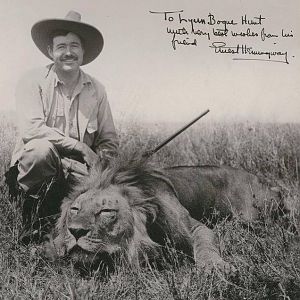
The first thing to keep in mind is that the poem was written subsequent to Ernest Hemingway’s suicide by self-inflicted shotgun shot.  The second thing to remember is that Merton was influenced by Hemingway as a young man.  Merton was born in 1915, and had wanted to be a writer from a very young man.  Hemingway was perhaps the central writer of the post WWI era, commonly called “the lost generation” which documented the trauma of the war.  Merton as a young man felt the post war angst and ultimately led him to reject his atheism, convert to Catholicism, and become a Trappist monk at the monastery, Abbey of Our Lady of Gethsemani in Kentucky.  His life perhaps flows in the opposite direction from Hemingway’s life.  The third thing to remember is that Merton, now twenty years a monk, and also a writer, can identify as Hemingway’s doppelgänger, his literary twin but with a very different side.


An Elegy For Ernest Hemingway

By Thomas Merton

.
Now for the first time on the night of your death
your name is mentioned in convents, ne cadas in
obscurum
.

Now with a true bell your story becomes final. Now
men in monasteries, men of requiems, familiar with
the dead, include you in their offices.

You stand anonymous among thousands, waiting in
the dark at great stations on the edge of countries
known to prayer alone, where fires are not merciless,
we hope, and not without end.

You pass briefly through our midst. Your books and
writing have not been consulted. Our prayers are
pro defuncto N.

Yet some look up, as though among a crowd of prisoners
or displaced persons, they recognized a friend
once known in a far country. For these the sun also
rose after a forgotten war upon an idiom you made
great. They have not forgotten you. In their silence
you are still famous, no ritual shade.

How slowly this bell tolls in a monastery tower for a
whole age, and for the quick death of an unready
dynasty, and for that brave illusion: the adventurous
self!

For with one shot the whole hunt is ended!


The poem is not written in meter but in straight prose, which I think is a nice tip of the cap to Hemingway’s great prose, which at its best could be poetic.  There are several references to monastery life that one should know to fully understand the poem.  In the first stanza, he mentions that now that Hemingway has died, the convents will be adding his name to the prayers for the dead, ne cadas in obscurum, “unless they fall into the darkness.”  It is a line from a Mass for the dead, and the line can be translated as “Deliver them from the lion's mouth, lest hell swallow them up, lest they fall into darkness.”  It is noteworthy that Hemingway had hunted lions and featured them in a couple of his short stories.

The second stanza is an elaboration of the first.  Now that Hemingway’s story has become final, he will be included in the monk’s daily “offices,” which refer to the Liturgy of the Hours which monastics pray seven times a day.

The third stanza I believe is an allusion to Dante’s Divine Comedy, where Hemingway’s soul stands among thousands of those entering the afterlife, especially referring to Purgatory here since he hopes the fires will end.  The fourth stanza refers to prayers prayed for the deceased, “pro defuncto,” N referring to a name to be added, Nominatim.  The interspersing of Latin and the slow prosaic lines gives the poem a praying quality, as if it were Gregorian chant.  I can see this poem being chanted.

The fifth stanza is Merton’s homage to Hemingway.  In the crowd of souls he is recognized, and a reference is made to Hemingway’s post WWI novel, The Sun Also Rises, and to Hemingway’s great prose that captured the trauma of the war.

If the fifth stanza is a homage, the sixth stanza captures the tragedy of Hemingway’s life.  It also alludes to another of Hemingway’s novels, For Whom the Bell Tolls, and to the unquenchable desire for adventure that consumed Hemingway’s life.  It alludes to a morbid fascination that Hemingway had with death, both with killing animals in hunts or in bull fights and with killing people in wars, and with his own death which in his adventures could be seen as a death wish.  Merton refers to these adventures as “brave illusions, which seen from Merton’s religious point of view was a sign of a hurt inside of Hemingway’s heart which was never healed from the trauma of the First World War.  Merton healed his hurt through his Catholic faith.

Which brings us to the final one line seventh stanza, which ends the poem like the gunshot it alludes to.  “For with one shot the whole hunt is ended!”  The hunter hunts himself!  Ernest Hemingway killed himself on July 2nd, 1961 bringing his adventures, his writing, and his life to an end.


###

Postscript:

As I’ve thought about this more, the parallels between Hemingway and Merton are even stronger.  It’s not that widely known but Hemingway converted to Catholicism, and though he considered himself a bad Catholic, he he never left it.  He was instrumental it seems in leading Gary Cooper, one of his best friends, into also converting.  A very good article on Hemingway’s Catholicism is “The troubled Catholicism of Ernest Hemingway,” by Robert Inchausti.  From the article:


Hemingway was raised in a Congregationalist Protestant home, and his first conversion to Catholicism occurred when he was a 19-year-old and volunteer ambulance driver in Italy during World War I. Two weeks into the job, he was delivering candy to soldiers on the frontlines when he was hit by machine-gun fire and more than 200 metal fragments from an exploding mortar round. An Italian priest recovered his body, baptized him right on the battlefield and gave him the last rites.


Hemingway later described what happened this way:


“A big Austrian trench mortar bomb of the type that used to be called ash cans, exploded in the darkness. I died then. I felt my soul or something come right out of my body, like you’d pull a silk handkerchief out of a pocket by one corner.  It flew around and then came back and went in again and I wasn’t dead anymore.”


After having been anointed, Hemingway described himself as having become a “Super-Catholic.” It was a near-death experience that changed the course of his life. After the war, he went to work as a foreign correspondent in Paris. And eight years later — after his first marriage failed — he undertook a second, more formal conversion process in preparation for marriage to his second wife, devout Catholic Pauline Pfieffer.


It was at this time that Hemingway changed the title of his unpublished first novel, tentatively titled “Lost Generation,” to “The Sun Also Rises.” And writing to another friend, he declared, “If I am anything I am a Catholic . . . I cannot imagine taking any other religion seriously.”


He attended Mass (albeit irregularly) for the rest of his life and went on pilgrimages, received confession, had Masses said for friends and relatives, and raised his three sons as Catholics. Most of his novels are set in Catholic countries, and his last great hero (Santiago of “The Old Man and the Sea”) was a devout suffering servant, much in the cruciform mold of most of his heroes. When he won the Nobel Prize for Literature in 1954, he gave away the medal as a votive offering to “Our Lady of Cobre” in Havana.

But Hemingway considered himself a bad Catholic, one who could not live up to the discipline of the Christian life.  Again from the Inchausti article:


In a letter to his friend Father Vincent Donavan in 1927 just before he married his second wife, Hemingway wrote, “I have always had more faith than intelligence or knowledge and I have never wanted to be known as a Catholic writer because I know the importance of setting an example — and I have never set a good example.”


Unlike James Joyce, Hemingway didn’t renounce his faith; and unlike Flannery O’Connor, he never promoted it. He thought of himself, like many of his protagonists (Nick Adams, Jake Barns, Robert Jordan, Francis McComber and Santiago), as a man struggling to live with grace and die a good death in a violent, unforgiving world where all of us must suffer.

Though not a formal Catholic ceremony, the graveside services were conducted by Rev. Robert J. Waldmann, pastor of St. Charles Roman Catholic Church in Hailey and of Our Lady of the Snows in Ketchum as stated in this contemporaneous NY Times article.  

So the parallels and differences are stark.  Hemingway converted to Catholicism but led a seeker’s life of “brave illusions.”  Merton converted to Catholicism but settled into a monastic life, which is a life of total stability, the very opposite of the restless heart. 

“Our hearts are restless, O Lord, until they rest in you.”  -St. Augustine of Hippo.


Friday, January 30, 2015

Faith Filled Friday: “After the Night Office” by Thomas Merton

January 31st 2015, tomorrow, marks the one hundredth anniversary of Thomas Merton’s birth.  I have not read much of Merton, and his much acclaimed autobiography The Seven Story Mountain has been on my to read list for a while.  I was surprised to read in his Wikipedia entry that he had published “more than 70 books.”  Given he lived to only 53, that’s impressive.  A Catholic convert, a mystic, a proponent for interfaith discourse, an advocate for social justice, poet, writer, and of course Trappist Monk, he led an interesting life to say the least.  In surveying some of his poetry, I particularly thought highly of this one.  Let this be in commemoration of tomorrow.

After the Night Office – Gethsemani Abbey
By Thomas Merton

It is not yet the grey and frosty time
When barns ride out of the night like ships:
We do not see the Brothers, bearing lanterns,
Sink in the quiet mist,
As various as the spirits who, with lamps, are sent
To search our souls’ Jerusalems
Until our houses are at rest
And minds enfold the Word, our Guest.

Praises and canticles anticipate
Each day the singing bells that wake the sun,
But now our psalmody is done,
Our hasting souls outstrip the day:
Now, before dawn, they have their noon.
The Truth that transubstantiates the body’s night
Has made our minds His temple-tent:
Open the secret eye of faith
And drink these deeps of invisible light.

The weak walls
Of the world fall
And heaven, in floods, comes pouring in:
Sink from your shallows, soul, into eternity,
And slake your wonder at their deep lake spring.
We touch the rays we cannot see,
We feel the light that seems to sing.

Go back to bed, red sun, you are too late,
And hide behind Mount Olivet—
For like the flying moon, held prisoner,
Within the branches of the juniper,
So in the cages of consciousness
The Dove of God is prisoner yet:
Unruly sun, go back to bed.

But now the lances of the morning
Fire all their gold against the steeple and the water-tower.
Returning to the windows of our deep abode of peace,
Emerging at our conscious doors
We find our souls all soaked in grace, like Gideon’s fleece.


Without too much analysis let me highlight that he captures that moment after evening prayer, but it’s what the prayer has done that is the focus of the poem.  It has opened his mind (“The Truth that transubstantiates the body’s night/Has made our minds His temple-tent”) so that “The weak walls/Of the world fall/And heaven, in floods, comes pouring in.”  Every stanza has a reference to mind or consciousness either to set up that flood from heaven or to describe the effect, especially the “Dove of God” that becomes trapped in the conscious.  That is a really engaging poem.