I am starting a new series of posts on J.R.R. Tolkien’s The Lord of the Rings, hereby the acronym, LotR. As you may know, the LotR is divided into three volumes, each a novel length work in itself. It is a modern day epic, and some call it the greatest novel of the 20th century. I would not go that far, but it is a great work. The three volumes go under the titles, The Fellowship of the Ring (Vol I), The Two Towers (Vol II), and The Retrurn of the King (Vol III).
The LotR became a
recurring read at my Goodreads Catholic Thought Book Club. A recurring read is a book that is too long
for one group read, and so broken down into segments. We read one segment, pause to read other
books in a cycle of genres, and when the cycle returns to the recurring read we
pick up where we left off for another segment.
The natural divisions of the LotR made it natural to read a
volume for each segment. Last year we
read The Fellowship of the Ring.
The posts that come out for this volume came out of that discussion. We are currently reading The Two Towers,
and eventually I will be posting those discussions. I expect the discussions for The Return of
the King may be ready for posting next year. The series of posts will be linked to each
volume of the trilogy.

Introduction
It’s hard to write an introduction on The Lord of the Rings. Everyone has either read it, saw the movie, or heard people talking about it. Heck, it’s referenced even in a few of Led Zeppelin songs, most famously in “Ramble On.”
I ain't tellin' no lie
Mine's a tale that can't be told
My freedom I hold dear
How years ago in days of old
When magic filled the air
T'was in the darkest depths of Mordor
I met a girl so fair
But Gollum and the evil one
Crept up and slipped away with her
Her, her, yeah
Ain't nothing I can do, no
The song doesn’t really
have much to do with LotR, but the
allusion to Mordor is fascinating. I
remember hearing the song as a teen before I had heard of LotR, and the allusion certainly went over my head. Allusions to LotR are in a number of Zeppelin songs: “Ramble On,” “Stairway to
Heaven,” “Misty Mountain Hop,” “The Battle of Evermore,” and “Bron-Y-Aur.”
When one of the greatest and most popular rock bands, who’s morals and themes are hardly in line with that of J.R.R. Tolkien, has a love of LotR, it is evident that the cultural influence of LotR is deep and wide.
As an introduction, I’m not going to highlight the story. What I’m going to provide can certainly be found on the internet, but I am mostly going by a biography I read last year on Tolkien, Tolkien, Man and Myth: A Literary life by Joseph Pearce. It’s a good bio and I recommend it.
The background Tolkien provides in the Prologue—that is, that the story is a sequel to Tolkien’s previous work, The Hobbit, and that the story is part of a prehistory where the earth is in a stage in time called “Middle-Earth,” where humanoids called hobbits, elves, dwarves, and several other categorizations, including men, lived upon the earth. As I write that, some doubt on that sentence enters my mind. I’m not exactly sure Tolkien considers all those categories humanoids. I will go with that until proven otherwise, but the story is certainly fantastic.
The novel is considered a fantasy novel, but it is also considered an epic. It fits the form of ancient epics, and it’s scope is most certainly vast and epic! The novel starts as a quest, utilizes the narrative form of a journey, and before the end is achieved a war between forces of good and evil rages around the questing hero. There are struggles against outer forces and there are internal struggles within many of the characters, especially Frodo, the questing hero. The continuity with the predecessor book is explained early. Bilbo Baggins, a hobbit from the shire, on an adventure of his own some sixty years prior finds a magic ring that allows the wearer of the ring to become invisible. Suffice it to say Bilbo returns prosperous from his adventures and lives a comfortable life in the shire. But in his old age and with coming death he gives the ring to his nephew Frodo. In time Frodo learns of the danger associated with the ring and is asked to dispose of it. We’ll get into these details as the novel unfolds.
###
Kerstin Comment:
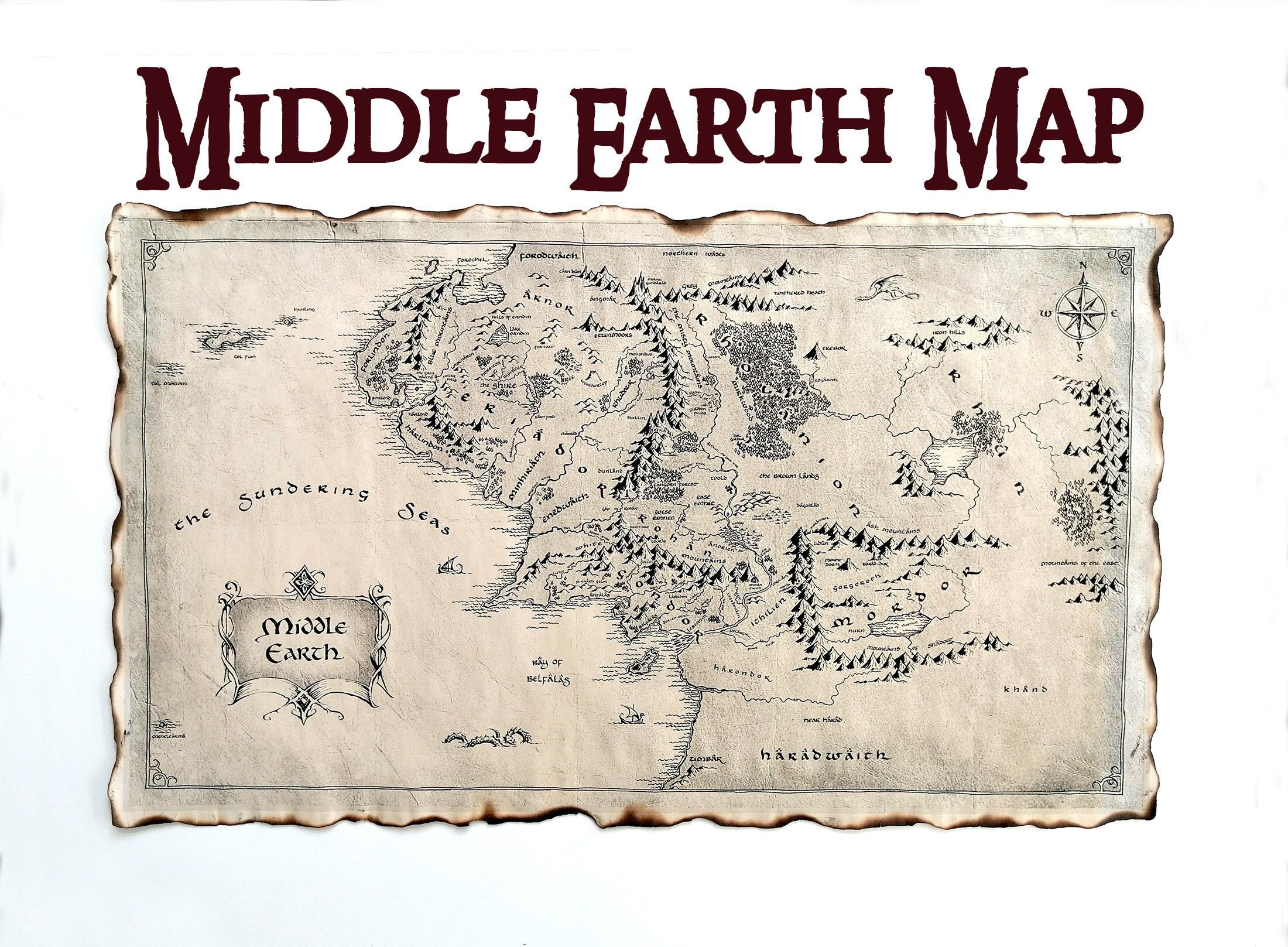
We'll encounter a lot of geography reading this book. Both hardcopies and electronic versions of the book contain at least the Middle Earth map, and maybe even the Shire segment, though they may be hard to read. On my ancient kindle maps are worthless. Last time I read the book l printed out various segments, though I don't remember the exact websites. There is plenty online. An interesting one is an interactive map where you can map out the journeys of the various characters.
My Reply to Kerstin:
Thanks Kerstin. That's quite amazing. It will probably take me weeks to figure out how to interact with the map.
###
J.R.R. Tolkien
The author’s biography is pertinent to this work. Here are some raw facts. John Ronald Reuel (J.R.R.) Tolkien was born in 1892 in what I think now is South Africa. His father was a bank manager there and married Mabel, who had come out be with him, in the Anglican Church. JRR’s younger brother Hilary was also born in that same region of South Africa, but because of JRR’s health, Mabel took the children back to England, outside the city of Birmingham, in 1896. That same year, the father dies in South Africa, leaving Mabel impoverished trying to sustain two small boys. She received help from several of her and her husband’s family members.
Mabel and her sister became interested in Catholicism, and both converted in 1900, taking along her two boys. There was a huge push back from their families, and Mabel’s sister was forced to abandon her new faith by her husband. Mabel refused to leave Catholicism, and most of the financial help she was getting from her family was stopped. She really struggled and fought for her faith, and this left a strong impression on JRR. Because she did not have the money to send her boys to school and because she was herself apparently well educated (she could speak four languages including Latin) she became the primary educator of her boys. JRR’s love of languages must have had its source from his mother.
Mabel moved to Birmingham to be closer to a Catholic Church, and it was there the family became friends with Fr. Francis Xavier Morgan. The contrast between the country life outside of Birmingham and the city life inside of the city also made a strong impression on Tolkien. He hated the city with its trams, busy street life, smoking factories, and railroads. All of Tolkien’s life he would despise automobiles.
In 1903 Mabel died from what appears to be complications of diabetes. So at the age of eleven, JRR and his brother, a couple of years younger, were left orphans. They were taken in by Fr. Francis, who Mabel had made sure would prevent her and her husband’s families from taking away their Catholicism. Fr. Francis turned out to be a very good foster father to the boys, encouraging their learning, their faith, and their development. The boys helped in the church, and so learned their faith very well.
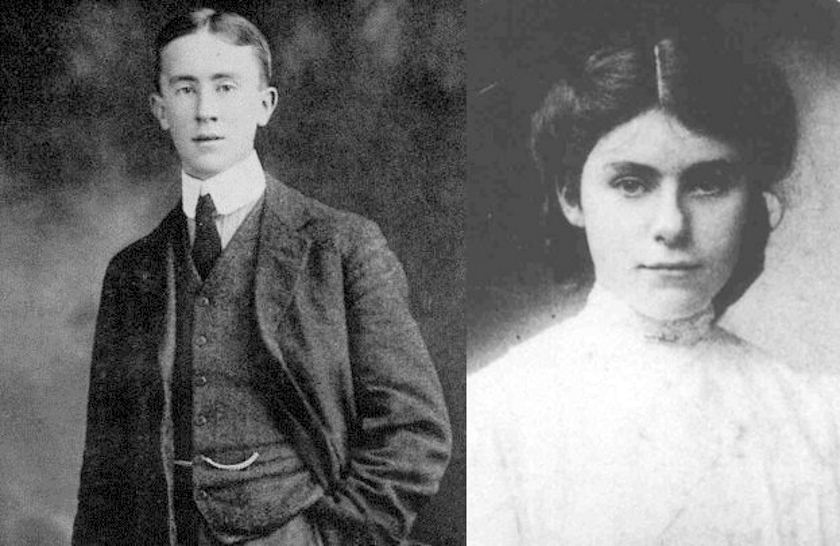
In 1909 JRR met a young lady, Edith, who was three years older, and fell in love. Tolkien was only eighteen at the time, and this was a big issue for Fr. Francis who refused to allow JRR to pursue this relationship. As far as I can tell, it was strictly because Fr. Francis felt JRR was not old enough to be in a romantic relationship. He forbid JRR to pursue it and forced him to break it off until JRR was legally independent at the age of twenty-one. JRR honorably did as he was ordered, but upon immediately turning twenty-one, re-located Edith (in 1913) and asked to resume the relationship. She happened to now be involved with another man, but she broke that off and returned to JRR. Despite anger from her family, she converted to Catholicism in 1914.
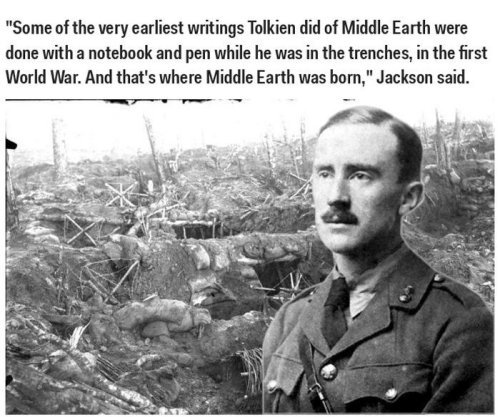
JRR was also now in college at Oxford, and they put marriage off until he could be stably employed, but then the Great War (WWI) had started. Upon completing his degree in 1915, Tolkien enlisted in the Army and married Edith in 1916. He saw action at the front throughout this time. Many of his friends were killed in the war. Late in 1916 he contracted Trench Fever, a disease transmitted by lice and was sent home as an invalid. Trench Fever is a recurring bacterial infection, and apparently it led to Tolkien being emaciated. He remained invalid for the remainder of the war.
His marriage was by all accounts a good marriage. They had four children: John (b. 1917), Michael (1920), Christopher (1924), and Priscilla (1929). He became a professor of philology and literature, a translator, a scholar of ancient works, a writer of stories, novels, and poetry. He was a college professor at several universities, most notably Oxford. At Oxford he became friends with C. S. Lewis, and was instrumental in Lewis’s conversion from atheism to Christianity. The two with other literary professors at Oxford formed a group called the Inklings where they met twice weekly and shared their ideas and writings. I’m reminded of a story of Tolkien reading from his drafts of LotR, and one of the Inklings, Hugo Dyson, an important Shakespeare scholar, who in the middle of Tolkien reading blurted out, “Oh no, not another [expletive] elf!”
Tolkien published The Hobbit in 1937. He said he wrote it as a children’s book for his children. He, and many others, distinguish the narrative between The Hobbit and LotR by stipulating that the former is a children’s book while LotR is an adult book. Frankly I can’t tell the difference. As far as I’m concerned, The Hobbit can be read as adult story, and the LotR can be and is enjoyed by many children. I don’t know what makes one a children’s book and one an adult. The Hobbit is a finely crafted book with subtle themes, superbly structured, and great character insights. I’ve said in the past that I thought The Hobbit was the greater novel, but I’m looking forward to being persuaded otherwise in this read.
###
Patrick Comment:
WWI affected Tolkien tremendously. Reading about his wartime experience helped me understand LOTR better. Courage is a major theme.
Ellie Comment:
Thank you for the introduction, Manny, it was super interesting! Earlier this year I read a spiritual biography called Tolkien's Faith by Holly Ordway and I definitely recommend that to everybody here, it was amazing to learn how Tolkien's faith had evolved and how it shaped his stories, too.
My Reply to Ellie:
Oh I know of Holly Ordway. I read her biographical, conversion story Not God's Type: An Atheist Academic Lays Down Her Arms. I thought I wrote a review for Goodreads, but apparently I forgot. In fact I don't even have it marked as read. I will have to update that. It was a good read and I recommend it.
###
What can we say about LotR as a work? It was written over an extended time period, from 1936 to 1949. World War II certainly had a hand in inspiration of the work, as well as Tolkien’s experience in the First World War. Tolkien insisted that the work was not “allegorical nor topical.” Tolkien states in the introduction his intention.
The prime motive was the desire of a tale-teller to try his hand at a really long story that would hold the attention of readers, amuse them, delight them, and at times maybe excite them or deeply move them.
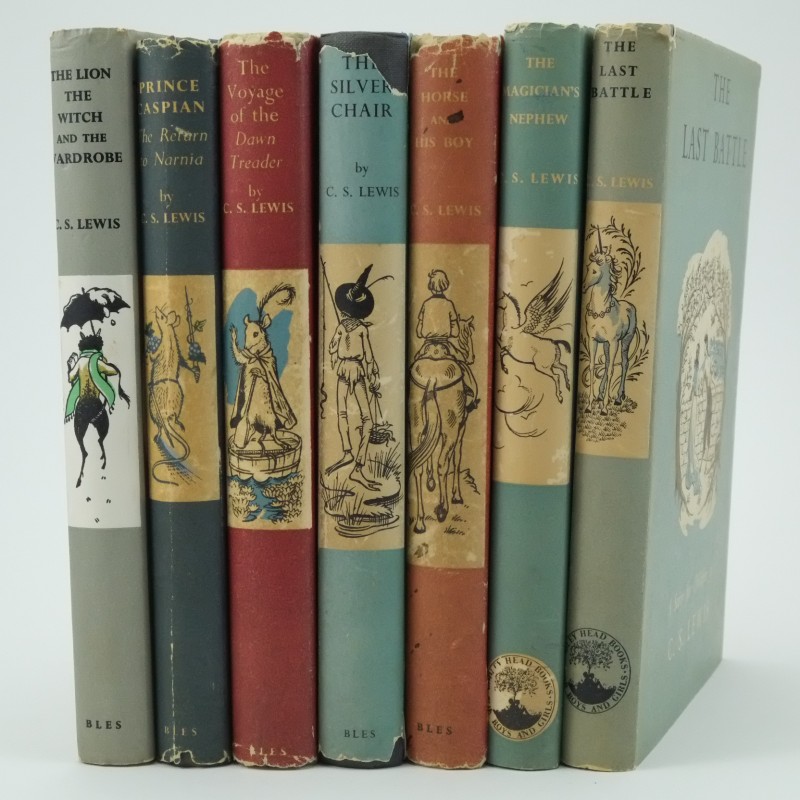
It should be noted that Tolkien despised allegory, and he did not like most of the fiction of his friend C. S. Lewis, who’s Narnia Chronicles rely on allegory. That statement of intention is a statement of the pure aesthetics of fiction. Tolkien first and foremost wants to tell a story of epic proportions. In this epic narrative, the author creates several languages, a prehistory to humanity, a geography of an earth prior to the current continental positions, and a world populated with different humanoids and fantastical creatures. It really is epic in proportion.
Though Tolkien states
there is no allegory, it’s very hard not to spot some. “Middle-Earth” is suggestive of Middle
English, a time period before the modern.
A war takes place in LotR
which seems to be analogous to either of the World Wars. The fellowship of the central characters
seems to suggest Tolkien’s biographical Inklings. The history of Middle-Earth seems to parody
prehistorical movements. The hobbit
shire life seems analogous to small town country English life, current and
past. The various classes of humanoids
seem to suggest an analogy to racial differences between actual humans. Tolkien insisted that there was not a racial
component to the book, and I believe him in the sense of the negative
associations with race. The racial
component I think should be associated with linguistic family groups such as
Germanic, Slavic, Romance languages. I
think—and I’m just speculating—that Tolkien’s philological knowledge of
language groups inspired him to create imagined, similar humanoid groups. Perhaps Tolkien might dispute my speculations. Here is his statement on use of analogy.
Other arrangements could be devised according to the tastes or views of those who like allegory or topical reference. But I cordially dislike allegory in all its manifestations, and always have done so since I grew old and wary enough to detect its presence. I much prefer history, true or feigned, with its varied applicability to the thought and experience of readers. I think that many confuse ‘applicability’ with ‘allegory’; but the one resides in the freedom of the reader, and the other in the purposed domination of the author.
Perhaps I am confusing “applicability” with allegory, but I don’t know what he means by that and he never explains it. While what I perceive as allegory in LotR is not a strong corresponding allegory (there are levels of allegorical correspondence), I still perceive some. Frankly this subtle allegory I think helps the novel, and perhaps is what he means by “applicability.” Perhaps we are in some agreement.
Some of the themes we will see is good versus evil, the power of evil to disorder our inner being, the fellowship between friends, the simplicity of rural life, and the richness of folklore of common folk. I think LotR is part of the folkloric Renaissance and artistic movements that began with Romanticism in the 19th century and has blossomed since then. Indeed, Tolkien in LotR uses folklore and creates the folklore of the characters in a way that is truly remarkable. I personally am not so interested in the fantasy aspect of the novel, but I captivated by the folkloric elements, taken from real life and imagined.
I’m sure there is more to point out, and I look forward to discussing them, but we need to leave the introduction here.
I hope that’s a satisfactory introduction.
###
Kelly’s Comment:
I read somewhere that CS Lewis also denied that the
Narnia books used allegory. For some reason the idea of one's works containing
allegory suggests putting limits on what the reader might experience? Which I
take as using the term applicability -- the way in which you can read something
and I can read something and both go away with something different.
And you're right Manny, this is my (at least) fifth
reading of this series, PLUS having seen the movies several times, and still I
come away with something new each time!
I am using my old set of physical books, which I have
to turn pages very gingerly. I got the Kindle version as backup, haha.
Happy reading!
Bruce’s Reply to Kelly:
That depends on how you define allegory. If CS Lewis did say that Narnia was not allegory, maybe it was because he saw the allusions in Narnia as so obvious that it was like hitting the reader in the head with a 2X4.
My Reply to Kelly:
Well, there is a stronger level allegory in the Narnia
books than LotR. I understand Tolkien's point about over use of allegory. I
think Tolkien's dislike is just a little quirky on this. Great works of
literature have used allegory. Dante's Divine Comedy, the greatest. Gawain and
the Green Knight, which Tolkien translated from the Middle English, has strong
levels of allegory. Why Tolkien dislikes allegory is there at the end of the
quote I put up; he dislikes the "domination of the author." Yes, as
you point out, allegory forces the reader to a particular way of reading, and
Tolkien prefers a multiplicity of way of reading a book.
Funny you should mention old hardcopy books. I too am reading from my old hardcopy from some forty years ago. It was read twice, so not as flimsy as yours but it's still delicate. To my surprise, I had no notes inside the book. It was from so long ago it was before I started writing notes in the pages. I always do that now, and I am now writing notes in this old hardcopy!
Frances’s Comment:
There’s a lovely, informative video on You Tube which adds color to the story of Tolkien, LOTR and Tolkien’s role in leading C.S. Lewis to Christianity. The video is only 13 minutes long. Just Google: You Tube, “On the Power of Fiction, Tolkien, Lewis.”
Michelle’s Comment:
Word on Fire has an article today on The Fellowship of the Ring.
My Reply to Michelle:
That really is a good article. “Celebrating the
Epochal Publication of “The Fellowship of the Ring” 70 Years On” by Holly Ordway. The relinquishing of power as the central
theme. Yes, I had not thought about it in that way before, and it is spot on.
Thank you Michelle. Here is an excerpt:
According to Eugene Vinaver, Tolkien once said that “his typical response upon reading a medieval work was to desire not so much to make a philological or critical study of it as to write a modern work in the same tradition.”4 Tolkien was not an antiquarian whose eye is forever fixed on his rearview mirror, but a translator who looks both ahead and behind, aiming to preserve the best that history had to offer by making it accessible to contemporary readers. And to achieve that translation, he had to know both languages, as it were—tongues ancient and modern.
###
What I hope to do from
here is go one to three chapters at a time, give a chapter summary, provide my
thoughts on the chapters, and provide pertinent discussion of the book that
happened at the book club. I aim to put
out a post per week. Stay tuned.