"Love follows knowledge."
"Beauty above all beauty!"
– St. Catherine of Siena

Monday, September 2, 2013

Matthew Monday: Baby Antonio's Baptism


I mentioned I was to be Godparent to my recently born nephew, Antonio. I'll follow up with that personal note within this Matthew Monday post.

 
The baptism went well, and we had a nice little party at a restaurant afterward. The only thing of note that I can mention is that Father Veras's (our pastor performing the baptism) little homily at the baptism quoted the recently published encyclical, Lumen Fidei. Not only did he quote it, but he quoted the very passage I highlighted in one of my posts on the encyclical. 

“Baptism makes us see, then, that faith is not the achievement of isolated individuals; it is not an act which someone can perform on his own, but rather something which must be received by entering into the ecclesial communion which transmits God’s gift. No one baptizes himself, just as no one comes into the world by himself. Baptism is something we receive.”

I thought that was prophetic in a tiny way.  As you can see from the party afterward, the baptism was part of a gathering of friends and family.  We are not isolated individuals.
Well, here are some pictures.  I did say Antonio was one of the prettiest babies I've ever seen, so here you go, judge for yourselves.

Here he is in his mother's lap.


And here he is being carried by the proud Nonna, my mother.


Of course Matthew had to give him a kiss.


And finally, this is Matthew's space on my blog, so here is Matthew drinking a chocolate milk at the party.  He does look handsome here I must admit, quite the grown little man.


By the way, Sunday was Matthew's fourth birthday, and Monday is our Gotcha Day.  More on that next week.


Saturday, August 31, 2013

Literature In The News: Poet Seamus Heaney Dies

When I saw Seamus Heaney passed away yesterday, I felt a wave of sadness.  From BBC News:
Seamus Heaney, acclaimed by many as the best Irish poet since WB Yeats, has died aged 74.
Heaney was awarded the Nobel Prize for Literature in 1995 "for works of lyrical beauty and ethical depth, which exalt everyday miracles and the living past".
Over his long career he was awarded numerous prizes and received many honours for his work.
He recently suffered from ill health.
 
And then from the official obituary from BBC News. 
Seamus Heaney was internationally recognised as the greatest Irish poet since WB Yeats. Like Yeats, he won the Nobel Prize for literature and, like Yeats, his reputation and influence spread far beyond literary circles.
Born in Northern Ireland, he was a Catholic and nationalist who chose to live in the South. "Be advised, my passport's green / No glass of ours was ever raised / To toast the Queen," he once wrote.
He came under pressure to take sides during the 25 years of the Troubles in Northern Ireland, and faced criticism for his perceived ambivalence to republican violence, but he never allowed himself to be co-opted as a spokesman for violent extremism.
His writing addressed the conflict, however, often seeking to put it in a wider historical context. The poet also penned elegies to friends and acquaintances who died in the violence.
Describing his reticence to become a "spokesman" for the Troubles, Heaney once said he had "an early warning system telling me to get back inside my own head".
Born on 13 April, 1939, on a family farm in the rural heart of County Londonderry, he never forgot the world he came from. "I loved the dark drop, the trapped sky, the smells / Of waterweed, fungus and dank moss," he recalled in Personal Helicon.
He was a translator, broadcaster and prose writer of distinction, but his poetry was his most remarkable achievement, for its range, its consistent quality and its impact on readers: Love poems, epic poems, poems about memory and the past, poems about conflict and civil strife, poems about the natural world, poems addressed to friends, poems that found significance in the everyday or delighted in the possibilities of the English language.
 
The BBC obit seems to focus on the Catholic/Protestant conflicts that has consumed Ireland.  I did not really see that side of his work, since I’m neither Irish or British ethnicity.  My appreciation of Heaney’s poetry really focused on his nature and rural life themes.  Here’s a poem that highlights for me what makes his poetry unique and spectacular.  In regard to the copywrite laws, I’ll only post the first half of this two part poem.
 

Mossbawn 1. Sunlight


By Seamus Heaney


For Mary Heaney

I. Sunlight


There was a sunlit absence.
The helmeted pump in the yard
heated its iron,
water honeyed

in the slung bucket
and the sun stood
like a griddle cooling
against the wall

of each long afternoon.
So, her hands scuffled
over the bakeboard,
the reddening stove

sent its plaque of heat
against her where she stood
in a floury apron
by the window.

Now she dusts the board
with a goose's wing,
now sits, broad-lapped,
with whitened nails

and measling shins:
here is a space
again, the scone  rising
to the tick of two clocks.

And here is love
like a tinsmith's scoop
sunk past its gleam
in the meal-bin.


Notice the unique but simple diction, a farmer’s diction but stilled charged with freshness.  There is nothing in there that smacks of cliché, even though it appears to be describing a common activity.  I love the short lines, suggesting a simple person.  I love the cacophony of hard sounding consonants: pump, bucket, griddle, bakeboard, plaque, scone, tick, scoop.  Short words with hard consonants suggest an elemental simplicity, recalling early English or Gaelic roots.  Mary Heaney is his wife, and in her simple rural baking he sees love.

You can read about tributes here and obits from The Indepedent and The New York Times , each with some more information.
 

I would also be remiss if I didn’t mention that Heaney had a fine translation of Beowulf in verse, which I enjoyed reading very much.

 Finally here is a nice memorial to him.
 
May he rest in peace.

Friday, August 30, 2013

Faith Filled Friday: Lumen Fidei, Part 5


You can read the first installment of my excerpts of Lumen Fidei here, second here,  third here, and fourth here.  The first includes an introduction and links to an overview. 
 

I’ll repeat the structure of the encyclical to orient you for the next excerpt.  Numbers in parentheses indicate the paragraph number.

 
Introduction (1-7)
Chpt 1: We Have Believed In Love (8-22)
Chpt 2: Unless You Believe, You Will Not Understand (23-36)
Chpt 3: I Delivered To You What I Also Received (37-49)
Chpt 4: God Delivers A City For Them (50-60)


While Chapter One develops the history of the faith, Chapter Two develops why the faith is important, and Chapter Three develops the transmission of the faith, especially through the church, Chapter Four develops the benefits to society of faith.   I don’t know if it’s just me, but Chapter Four seems to have a different voice than the previous chapters.  Could this be where Pope Francis picked up from Pope Benedict?  We may never know but if anyone noticed it too I would like to hear. 

 
Paragraph 51 I think summarizes not just Chapter Four but seems to serve as a compact summation of the entire encyclical.  It is worth reading thoroughly. 


51. Precisely because it is linked to love (cf. Gal 5:6), the light of faith is concretely placed at the service of justice, law and peace. Faith is born of an encounter with God’s primordial love, wherein the meaning and goodness of our life become evident; our life is illumined to the extent that it enters into the space opened by that love, to the extent that it becomes, in other words, a path and praxis leading to the fullness of love. The light of faith is capable of enhancing the richness of human relations, their ability to endure, to be trustworthy, to enrich our life together. Faith does not draw us away from the world or prove irrelevant to the concrete concerns of the men and women of our time. Without a love which is trustworthy, nothing could truly keep men and women united. Human unity would be conceivable only on the basis of utility, on a calculus of conflicting interests or on fear, but not on the goodness of living together, not on the joy which the mere presence of others can give. Faith makes us appreciate the architecture of human relationships because it grasps their ultimate foundation and definitive destiny in God, in his love, and thus sheds light on the art of building; as such it becomes a service to the common good. Faith is truly a good for everyone; it is a common good. Its light does not simply brighten the interior of the Church, nor does it serve solely to build an eternal city in the hereafter; it helps us build our societies in such a way that they can journey towards a future of hope. The Letter to the Hebrews offers an example in this regard when it names, among the men and women of faith, Samuel and David, whose faith enabled them to "administer justice" (Heb 11:33). This expression refers to their justice in governance, to that wisdom which brings peace to the people (cf. 1 Sam 12:3-5; 2 Sam 8:15). The hands of faith are raised up to heaven, even as they go about building in charity a city based on relationships in which the love of God is laid as a foundation.

 
“The light of faith is capable of enhancing the richness of human relations, their ability to endure, to be trustworthy, to enrich our life together… The hands of faith are raised up to heaven, even as they go about building in charity a city based on relationships in which the love of God is laid as a foundation.”

 
That ends my excerpts of Lumen Fidei.  I hope you enjoyed it.  May God bless you.


Wednesday, August 28, 2013

Book Excerpt: A Soldier of the Great War by Mark Helprin, Part 2

You can read Part 1 of Book Excerpt: A Soldier of the Great War by Mark Helprin here.

I’ve been behind with posting on my readings, but it has been a busy summer.  Let me try to catch up with two more posts on Helprin’s novel.  This will be the first.

It is difficult to present the full scope of this large scale novel.  This being my first reading I feel hesitant to flesh out the major themes.  What I can say is that Helprin strives to show that life is a sequence of difficulties, pain, agonies, and tragedies—grouped as a sorrowful or dark side of life—contrasted with the moments of luck, blessings, happiness, joy, and love—grouped as a luminous side of life.  It is through Allessandro’s full life and through the microcosm of the war that both these groupings become acute.  Ultimately we understand that these two groupings are not just two opposite sides of a coin, but integrated strands that lead one to a transcendent fulfillment, to become part of a divine whole.  With this and one more post I hope I can give one a glimpse of Helprin’s vision.
 
It is no coincidence that many parts of the novel have allusions to paintings and music.  Alessandro after all is a professor of aesthetics.  Art, in its fullest sense, is a representation in the novel of the divine creation that is life.  I mentioned in my first blog on this novel that Helprin starts so many threads within the first two hundred pages that it seems he has attention deficit issues and questioned whether all these threads will ever be consummated.  I believe all the threads do come to culmination, supporting this vision of an integrated whole.  All those threads make life appear as complicated, but the complexity does fit within wholeness.  This wholeness completes a canvass of a very complex picture so that through Alessandro we see beyond our own curtailed faculties, that our lives are much more integrated than random events.  Helprin’s vision is of unity, not fragmented disorder.

I am not going to be able to show the nuances and subtleties of the novel from this first reading.  The details are not on my fingertips.  The dark sequences of the novel are apparent: the war battles, the deaths of friends, the injuries, hardships, even being taken  to prison for treason and facing a firing squad, separation from his family, including his love who he erroneously believes was killed, and so on.  What I’m going to present in this post are three scenes that show Helprin’s rationale for keeping faith in life’s transcendence.

Here is a scene where Alessandro is locked in prison with a Marxist, Ludovico.  Both are scheduled for execution.
 

Ludovico now began what appeared to be a series of desperate calculations.  It was as if he felt that in a clarified understanding of the working of economics he could make himself comfortable with the notion of eternity—but due to the minimal relation of economics and eternity, he was forced to calculate faster and faster, and to no avail.

 
“Marxism won’t carry you into the next world,” Alessandro said.  And then he asked, “How can you reserve your most sacred beliefs for a descriptive system, and one that is imperfect at that?  I can’t imagine myself believing in trigonometry or accounting, and yet you guide your soul according to a theory of economics.”

 
“It won’t fail me as surely as your system will fail you.”

 
“I don’t have a system.”

 
“Theology is your system.”

 
“Not my theology.”

 
“Then what is it?”

 
“What is it?  It’s the overwhelming combination of all that I’ve seen, felt, and cannot explain, that has stayed with me  and refused to depart, that drives me again and again to a faith of which I am not sure, that is alluring because it will not stoop to be defined by so inadequate a creature as man.  Unlike Marxism, it is ineffable, and it cannot be explained in words.”

 
“Well,” said Ludovico, “socialism is effable, which is what I like about it.  It’s solid.  Very little of it is conjecture.  It may be limited, but it’s honest and down-to-earth and you can prove it.  It gives me something I know I can hang on to.”

 
“Why don’t you hang on to a toilet?”

 
“I’d rather hang on to a toilet than believe in a collection of wishful thoughts.”

 
“The, in that case,” Alessandro answered, “all you need to do is secure yourself a toilet and you will have solved the mysteries of the universe.  It would be easy enough to provide every man with a toilet at his death, or a porcelain amulet, and then the world would be perfect.  Husbands would not grieve for their wives or wives for their husbands, children would not suffer the loss of parents, nor parents the loss of children, as long as production were regulated and the workers controlled the economy.”

 
“To tell you the truth, Alessandro,” Ludovico said combatively, “I’m not concerned with what happens after life on earth, since I believe that nothing does happen.  I’m concerned with what I’ve been allowed, and screw the end.  It only takes a second.  Why waste time worrying about it?”

 
“The answer is simple.” 

 
“The church has a simple and unprovable answer for everything.”

 
“I don’t care what the church says.  This is a simple answer that comes from my own heart.  I’ve seen and felt many things that I cannot believe are material artifacts.  They so clearly transcend all that is earthly that I have no doubt that they can run rings around death.”

 
“What things?”

 
“Had you been with me, Ludovico, for the last twenty-seven years, I could have shown them to you, one by one.  They exist everywhere.  They’re as simple as music, or the wind.  You need only see them in the right way.  Perhaps I could not have shown you.  The question that comes to me is why would you need to be shown?  Why haven’t you already seen?”

 
“What, exactly, are you talking about?”

 
“I’m talking about love.”

 
“I’m unconvinced.”

 
“I wasn’t attempting to convince you.  I’m now sufficiently tranquil not to have to convince anyone of anything.”

 
“Will you be tranquil in front of a firing squad?”

 
“I don’t know.  We’ll see tomorrow.  You’ll be able to watch from the window.”  Alessandro winked at Ludovico, to show him that he was undisturbed.

 
“The way you winked,” Ludovico said accusingly, “the way you winked at me was just like a religious fanatic.”

 
“Sorry,” Alessandro said.  “I’ll try to wink like a Marxist.”  [p. 479-81]


Here is a very different scene.  Alessandro and his beloved wife to be, a nurse who has cared him back to health from a war wound, steal away into the mountains for some intimate time together.  The painting that is alluded, Giorgione’s La Tempesta is perhaps a single visual representation of this vast novel.
 

The slope from Gruensee to the Adige was white without imperfection.  Alessandro and Ariane skated down and across it for an hour.  Falling brought not pain but surprise, for the snow was powdery and dry, and even when they fell they stayed warm.  Though the glare hurt the back of their eyes, and they were quickly sunburnt, they felt like angels who inhabit the cool air above a flume, and who, with nothing to do but sing, give to the water its tranquil and hypnotic sound.

 
On the riverbank they found a bare concave rock facing south, and stayed there for as long as the sun warmed them, lost in lovemaking in which sometimes Ariane’s hair hung over the edge of the rock and was lapped by the ice-cold Adige as it surged and relaxed.  The river roared, and on their granite platform it was so hot and bright that they leaned down to cup the cold water in their hands and drink. 

 
“What is the name of the painting?” Ariane asked as if she had suddenly realized that she hadn’t remembered. 

 
“It’s called La Tempesta, and it’s in Venice, in the Gallerie dell’Accademia.  They say, what could it mean, a woman with a child, disrobed, and the soldier, standing apart from her, disconnected.  But I know exactly what to make of it.  Today I saw a lovely sight—the nurses lacing their boots, brushing their hair, fastening their earrings.  If I were a painter, I would have wanted to paint it.  So with Giorgione.  He intended to praise elemental things, and to show a soldier on the verge of return.  I’m not surprised that scholars and critics don’t understand it.  Giorgione live in the time of the plague, and the scholars and critics, for the most part, have had to do without plague or war, which make the simple things one takes for granted shine like gold.  What does the painting mean?  It means love.  It means coming home.”

 
Alessandro had been ordered to a unit of Alpini far to the north of Gruensee.  “When the war is over,” he said as he held her, full of hope, “we’ll marry, we’ll live in Rome, and we’ll have children.”

 
She cried.  [p. 569-70]

 
In my previous post on this novel, I mentioned how Helprin employs a circular structure, the story being  a reflection back starting from Alessandro’s old age, a telling of his experience to a young man, Nicolò.  At the end of the novel, Alessandro tries to explain to Nicolò how the intellect, the spirit, and the flesh come together to give life meaning.  Again it is through an art medium that leads to insight.  Alessandro asks:
 

“Are you familiar with the ‘Madre, non dormi…’ from Il Trovatore?” 

 
‘No.”

 
“When you get home, seek it out.  It begins with a nine-bar harmonic progression from D-flat major through A major and back to D-flat.”

 
“And what is that?”

 
“A bunch of tones.”

 
“And?”

 
“And, my son had a top.  If you pumped it up it would spin and generate precisely the sequence from the ‘Madre, non dormi…’  How it dropped and went up again I don’t know.  Perhaps, as it slowed, an internal gate fell back and opened a new passage for a higher register.  I don’t know how it did it, but it did.  It was designed with a mysterious and enchanting brilliance.

 
“The sequence of notes at the beginning of the song is one of the saddest and most beautiful things I have ever known.  Listening to its melancholy, lucid progression has the effect of stopping time.  It made the faces of the children infinitely touching, infinitely beautiful, and infinitely sad.  When I used to listen to it with Paolo, it transported me to the point where we would separate forever, which I thought would be when I died.

 
“That simple progression had a power far out of proportion to its elements, for it came close to the elemental truth in which hope, remembrance, and love are joined.  After a lifetime of thinking a great deal about the question of beauty—I have found nothing that illumines or conveys it save another beauty.  No better gloss upon a painting than a song, no better gloss upon a song than its lyric.  And in the end, perhaps nothing is as beautiful as a song, perhaps because nothing can be as sad.

 
“I realized both too early and too late—a long time ago, and yet when I was old enough to have this tremor in my hand—that what I had been seeking in a thousand beauties was one, and that I had had it, and it might never have been better, sitting on the floor in Paolo’s nursery, helping him push his top.

 
I asked myself, why do I love, and what is the power of beauty, and I understood that each and every instance of beauty is a promise and example, in miniature, of life that can end in balance, with symmetry, purpose, and hope—even if without explanation.  Beauty has no explanation, but its right perfection elicits love.  I wondered if my life would be the same, if at the end of the elements would come together just enough to give rise to a simple melody as powerful as the one in Paolo’s top, a song that, even if it did not explain the desperate and painful past, would it make it worthy of love.

 
“Of course, I still don’t know.  God help me to have a moment of his saddest beauty in which I do.

 
“Perhaps I am wandering.  Perhaps that was my intent.  No matter.  I can wander, because my notion of what it is to come to rest is clear and unencumbered, and I may yet find it.

 
“The top, you see, that my little boy, at the age of three, twirled round and round, played a beautiful song—a song that, from time to time, I still hear.  What is the song?  The song is love.  [p. 793-5]


What all three very different scenes have in common is that at the heart of understanding human experience is love, and that love is connected to the transcendence.  Let me return to that scene with the Marxist, Ludovico.  An argumentive statement trying to describe the ineffable transcendence to life falls flat, so Alessandro resorts to assertion: “I’ve seen and felt many things that I cannot believe are material artifacts.  They so clearly transcend all that is earthly that I have no doubt that they can run rings around death…Had you been with me, Ludovico, for the last twenty-seven years, I could have shown them to you, one by one.  They exist everywhere.  They’re as simple as music, or the wind.  You need only see them in the right way.”  It is only after reflecting on the two other scenes that we can now make sense of this from Alessandro’s argument.  Love and beauty shape life toward the divine, toward more than the earthly.

Monday, August 26, 2013

Matthew Monday: Dutch Wonderland

Here are some more pictures from our vacation to Lancaster, Pennsylvania, this from the amusement park called Dutch Wonderland.  If you want to read the first blog of the vacation, read here

Dutch Wonderland is not large like Disneyland, but it's large enough for an almost four year old to be enthralled.  He just loved driving this car.  I pressed the gas petal since he couldn't reach it while he steered.  The car was on a track so he couldn't make too many mistakes.


This tractor was a simple ride, but he did like trying to mauenver the plow up and down.


He loved this  - not sure what it was called - whirl buggy.


And he was really concentrating on this train that he hand powered.


My future fighter pilot...lol.


This was a very tall slide that we had to go down together.


There were a number of other rides that he just loved but were difficult to photograph.  His favorite was the bumper cars, but he also really enjoyed the water flume, a couple of boat rides, and others.  He still talks about them.

Saturday, August 24, 2013

Personal Note: I Will Be A Godparent

This Sunday I will be a Godparent for the first time.  We will be part of my nephew's Christening.  He's five months old and must be the most beautiful baby I have ever seen.  I don't have a picture but I will after the Baptism.  And all the older relatives, such as my mother, claim he looks just like me when I was an infant.  No, I'm not looking for compliments, just stating the facts.  ;)  Anyway, please pray for the two of us. 

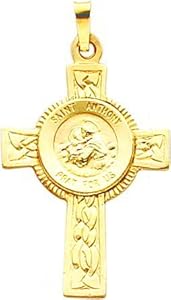
Oh and my gift to the little guy is this beautiful cross with a St. Anthony medal in the center.  The child's name is Antonio, so I thought it would be very appropriate.  I hope he treasures it for the rest of his life.


If you can't tell, that's St. Anthony holding the child Jesus in the center with the words "Saint Anthony Pray For Us" around the perimeter, and of course I have a matching gold chain to go with it.

May he grow in the faith, and now as his Godparent I have a responsibility in guiding him to it.  St. Anthony, pray for both of us.

Friday, August 23, 2013

Faith Filled Friday: Lumen Fidei, Part 4


You can read the first installment of my excerpts of Lumen Fidei here, second installment here, and third installment here.  The first includes an introduction and links to an overview. 


I’ll repeat the structure of the encyclical to orient you for the next excerpt.  Numbers in parentheses indicate the paragraph number.


Introduction (1-7)
Chpt 1: We Have Believed In Love (8-22)
Chpt 2: Unless You Believe, You Will Not Understand (23-36)
Chpt 3: I Delivered To You What I Also Received (37-49)
Chpt 4: God Delivers A City For Them (50-60)
 

While Chapter One develops the history of the faith, and Chapter Two develops why the faith is important, Chapter Three develops the transmission of the faith and the central importance of the church in transmitting it. 


I’m going to quote two paragraphs from Chapter Three since they are both excellent I can’t make up my mind which I prefer best.
 

38. The transmission of the faith not only brings light to men and women in every place; it travels through time, passing from one generation to another. Because faith is born of an encounter which takes place in history and lights up our journey through time, it must be passed on in every age. It is through an unbroken chain of witnesses that we come to see the face of Jesus. But how is this possible? How can we be certain, after all these centuries, that we have encountered the "real Jesus"? Were we merely isolated individuals, were our starting point simply our own individual ego seeking in itself the basis of absolutely sure knowledge, a certainty of this sort would be impossible. I cannot possibly verify for myself something which happened so long ago. But this is not the only way we attain knowledge. Persons always live in relationship. We come from others, we belong to others, and our lives are enlarged by our encounter with others. Even our own knowledge and self-awareness are relational; they are linked to others who have gone before us: in the first place, our parents, who gave us our life and our name. Language itself, the words by which we make sense of our lives and the world around us, comes to us from others, preserved in the living memory of others. Self-knowledge is only possible when we share in a greater memory. The same thing holds true for faith, which brings human understanding to its fullness. Faith’s past, that act of Jesus’ love which brought new life to the world, comes down to us through the memory of others — witnesses — and is kept alive in that one remembering subject which is the Church. The Church is a Mother who teaches us to speak the language of faith. Saint John brings this out in his Gospel by closely uniting faith and memory and associating both with the working of the Holy Spirit, who, as Jesus says, "will remind you of all that I have said to you" (Jn 14:26). The love which is the Holy Spirit and which dwells in the Church unites every age and makes us contemporaries of Jesus, thus guiding us along our pilgrimage of faith.

 
“Because faith is born of an encounter which takes place in history and lights up our journey through time, it must be passed on in every age. It is through an unbroken chain of witnesses that we come to see the face of Jesus.”
 

41. The transmission of faith occurs first and foremost in baptism. Some might think that baptism is merely a way of symbolizing the confession of faith, a pedagogical tool for those who require images and signs, while in itself ultimately unnecessary. An observation of Saint Paul about baptism reminds us that this is not the case. Paul states that "we were buried with him by baptism into death, so that, just as Christ was raised from the dead by the glory of the Father, we too might walk in newness of life" (Rom 6:4). In baptism we become a new creation and God’s adopted children. The Apostle goes on to say that Christians have been entrusted to a "standard of teaching" (týpos didachés), which they now obey from the heart (cf. Rom 6:17). In baptism we receive both a teaching to be professed and a specific way of life which demands the engagement of the whole person and sets us on the path to goodness. Those who are baptized are set in a new context, entrusted to a new environment, a new and shared way of acting, in the Church. Baptism makes us see, then, that faith is not the achievement of isolated individuals; it is not an act which someone can perform on his own, but rather something which must be received by entering into the ecclesial communion which transmits God’s gift. No one baptizes himself, just as no one comes into the world by himself. Baptism is something we receive.


“Baptism makes us see, then, that faith is not the achievement of isolated individuals; it is not an act which someone can perform on his own, but rather something which must be received by entering into the ecclesial communion which transmits God’s gift. No one baptizes himself, just as no one comes into the world by himself. Baptism is something we receive.”