O Lord, you search me and you know me, you know my resting and my rising, you discern my purpose from afar. You mark when I walk or lie down, all my ways lie open to you.
Can’t you just feel God within you, probing
you, as you read that? But the words
that are at the crux of this is, “you know me.”
What does it mean for God to know you?
I
want to go back to the scene where Sebastian and Charles first drive out to country
and ultimately see Brideshead Castle for the first time.
At Swindon we turned off
the main road and, as the sun mounted high, we were among drystone walls and
ashlar houses. It was about eleven when
Sebastian, without waring, turned the car into a cart track and stopped. It was hot enough now to make us seek the
shade. On a sheep-cropped knoll under a
clump of elms we ate the strawberries and drank the wine—as Sebastian promised,
they were delicious together—and we lit fat, Turkish cigarettes and lay on our
backs, Sebastian’s eyes on the leaves above him, mine on his profile, while the
blue-gray smoke rose, untroubled by any wind, to the blue-green shadows of
foliage, and the sweet scent of the tobacco merged with the sweet summer scents
around us and the fumes of the sweet, golden wine seemed to lift us a finger’s
breadth above the turf and hold us suspended.
“Just the place to bury a
crock of gold,” said Sebastian. “I should like to bury something precious in
every place where I’ve been happy and then, when I was old and ugly and
miserable, I could come back and dig it up and remember.” (p. 24)
The
beautiful countryside, the summer scents, the delicious tobacco, and the sweet
wine, which here is benevolent as opposed to the malignancy it takes on when
Sebastian becomes an alcoholic, creates
a sense of paradise. These sensations
lift them up and “suspend” them above the earth. Even the crock of gold suggests the heaven at
the end of a rainbow.
In
the digression from that scene, Charles describes his mental state as he
entered Oxford.
But I was in search of
love in those days, and I went full of curiosity and the faint, unrecognized
apprehension that here, at last, I should find that low door in the wall, which
others, I knew, had found before me, which opened on an enclosed and enchanted
garden, which was somewhere, not overlooked by any window, in the heart of that
gray city. (p. 32)
What
Charles was looking for, like most twenty-year olds in college, was place where
the inner love in one’s heart can flourish and come out. Consider that place a Garden of Eden. And he found such love through
Sebastian. He goes on to describe
Sebastian: “He was entrancing, with that epicene beauty which in extreme youth
sings aloud for love and withers at the first cold wind.” Set aside the implied homosexuality there; we
can deal with that later.
Then
there is the trip to Brideshead Castle, and Charles is led into a world of
upper class beauty. The castle itself
with its magnificent architecture, the artistic decorations, the luxurious
lifestyle, the good friend, it’s like living in a cooking show in wine
country. For Charles, who is an art
student and aesthete himself, this is as close to heaven and its innocence as
possible. Years later Ryder would understand it from the loss of innocence of
his adulthood.
That is the full account
of my first brief visit to Brideshead; could I have known then that it would
one day be remembered with tears by a middle-aged captain of infantry? (p. 42)
We
see what this friendship and life at Oxford and Brideshead is for Charles. But what is it for Sebastian? Why does Sebastian avoid his family? Why does his mood change as the two head away
from Bisdeshead?
His mood was lightening
now. The further we drove from Brideshead, the more he seemed to cast off his
uneasiness—the almost furtive restlessness and irritability that had possessed
him. The sun was behind us as we drove
on, so that we seemed to be in pursuit of our own shadows. (p. 42)
Why
is Sebastian happy to run away from Brideshead?
This is the central mystery of the novel.
###
My
Reply to Mark:
First, you're not late
Mark, and I am interested in your reading of the novel. I can see grace working throughout the
novel. That would be how I would read it
too. One thing I don't see that you
suggest in your reading is that psychological damage is not an issue to the
characters. If that is what you are
saying then why does Sebastian go around with a Teddy Bear, is obsessed with
his Nanny, and hates his mother? These
are clearly authorial details to suggest a psychological problem, or as I like
to put it, a psychological trauma. Waugh
is writing this in the 1940s. He is well
aware of the psychological novel.
The way I read it, which
is what I was building toward, is that the characters are damaged, like all
human beings are damaged. It is a fallen
world, and outside a moment in time where our joy approximates heaven's joy, we
are forever trying to recapture that joy, that which most brings us to heaven,
and forever falling short. Yes, graces
are being offered continuously but for the most part we are blind to those
graces. We don’t realize they are all
around us. It will only be through the
graces offered in the sacraments of the Catholic Church that we can heal. That is how I see the general theme. It's been some twenty years since I last read
the novel, so this reading is pretty fresh for me. I could be wrong of course. I can't wait to read on.
###
Book
1, Chapter 4
Part
1: Charles spends the summer at Brideshead Castle with Sebastian while
Sebastian’s foot heals. This is the
height of Ryder’s joy of the Brideshead experience. He draws and paints the beautiful
architecture of the castle, leaving his oil painting on a wall. The two explore wines in the wine cellar and
learn to wine taste. We meet Bridey and
Cordelia and have a dinner conversation over faith.
Part
2: When Sebastian’s foot heals, he offers Charles a trip to visit his father in
Venice. We meet Lord Marchmain and his
mistress, Cara. Charles and Cara have a
private conversation where Cara seems to have profound insight into the Flyte
family.
Book
1, Chapter 5
Part
1: Autumn and back at Oxford for the new school year. The partying is now greatly diminished. Charles has settled to focus on passing;
Sebastian drifts into listlessness. Mrs.
Marchmain has taken a liking to Charles, which has caused a rift with
Sebastian. Julia now has a high society
boyfriend in the Canadian, Rex Mottram.
Part
2: At a Christmas party hosted by Mottram, Boy Mulcaster convinces Sebastian
and Charles to slip the party and go to a lower class nightclub. They drive there, meet some loose women, take
them out to the car for a drive, and Sebastian, driving terribly drunk, nearly
gets into an accident and is stopped by the police. All three of the men are arrested.
Part
3: The three get locked up but Mottram gets them out with minimal penalty. Sebastian continues to drift into alcoholism,
feeling the need to drink continuously.
At the Easter party at Brideshead, Sebastian gets smashing drunk for all
to realize he has a problem. Charles is
given the book Mrs. Marchmain has commissioned Mr. Samgrass to write on her
three brothers who died in the World War.
He reads it on his return train ride to Oxford.
Part
4: Toward the end of the school year, Mrs. Marchmain comes to Oxford to force
Sebastian to reside with Mgr. Bell, the university’s Catholic priest, for the
next school year. Sebastian leaves with
her for Brideshead for the summer.
Charles, at his father’s house for the summer, receives a letter from
Mr. Marchmain that Sebastian has left for his father but has agreed to go with
Mr. Samgrass to the Levant to tour the Orthodox monasteries. He is to return to Oxford after Christmas.
###
Chapter
four of Book 1 is I think the height of happiness in the novel for both Charles
and Sebastian. Here Charles comes to
take care of Sebastian given his injured foot, and the two spend a glorious
summer together isolated from the rest of the world and from
responsibility. I would like to provide
some extensive quotes from that chapter.
The languor of Youth—how
unique and quintessential it is! How quickly, how irrecoverably, lost! The
zest, the generous affections, the illusions, the despair, all the traditional
attributes of Youth—all save this—come and go with us through life. These
things are a part of life itself; but languor—the relaxation of yet unwearied
sinews, the mind sequestered and self-regarding—that belongs to Youth alone and
dies with it. Perhaps in the mansions of Limbo the heroes enjoy some such
compensation for their loss of the Beatific Vision; perhaps the Beatific Vision
itself has some remote kinship with this lowly experience; I, at any rate,
believed myself very near heaven, during those languid days at Brideshead.
Book
1, Et In Arcadia Ego, which
translates to "Even in Arcadia, there am I,” narrates the illusions and
glory of youth, the irresponsibility of youth.
Arcadia was a region in Classical Greece that had a reputation of being
“unspoiled, harmonious wilderness.” It
was considered a sort of Eden on earth.
So we see these early chapters an earthly paradise, a place of
innocence. The quote, Et In Arcadia Ego,
actually comes from a painting by Nicolas Poussin (see here), and the quote in itself implies a momento
mori, a reminder that one, despite the pleasures of life, will ultimately
die and face providential judgement. It
is quite clear that this is what Waugh intends with the quote. It is written on the head of a skull in Charles’
dorm in one of the early chapters. The
quote captures both the “Arcadia” of Charles’ life, and a reminder that this is
not the end of life. It captures both
innocence and pending judgement.
It is thus I like to
remember Sebastian, as he was that summer, when we wandered alone together
through that enchanted palace; Sebastian in his wheel-chair spinning down the
box-edged walks of the kitchen gardens in search of alpine strawberries and
warm figs, propelling himself through the succession of hot-houses, from scent
to scent and climate to climate, to cut the muscat grapes and choose orchids
for our button-holes; Sebastian hobbling with a pantomime of difficulty to the
old nurseries, sitting beside me on the threadbare, flowered carpet with the
toy-cupboard empty about us and Nanny Hawkins stitching complacently in the
corner, saying, “You’re one as bad as the other; a pair of children the two of
you. Is that what they teach you at College?”
Sebastian supine on the sunny seat in the colonnade, as he was now, and
I in the hard chair beside him, trying to draw the fountain. (p.88)
Here
are the two friends living out their moment of joy. This is like Tom Sawyer and Huck Finn (or
perhaps Huck and Jim living on the Mississippi might be the better analogy) or
Frodo and Sam (The Lord of the Rings),
or some other classic literary friendship.
Here the two live out their friendship in the love (leave the homosexual
suggestions aside still) that holds all true friends together, something beyond
the earthly, something transcendent. For
Charles this is the joy he will try to recapture in subsequent years. For Sebastian, this is a recapturing of an
earlier joy, something rooted in his childhood as the Teddy Bear and the
returning to Nanny (always returning to Nanny) suggests.
###
I
found the book Lady Marchmain has written on her three brothers who died in the
World War to be fascinating and pregnant with meaning. It’s a detail that’s rather oddly thrown in,
and to my knowledge (I am only half way in the book) gets picked up later. It’s sort of like graphic off to the side of
a painting that really doesn’t play into the painting’s drama but somehow adds
meaning to it. This is what Lady
Marchmain says to Charles as she hands him a copy.
“I should like you to
have a copy. May I give you one? They were three splendid men; Ned was the best
of them. He was the last to be killed, and when the telegram came, as I knew it
would come, I thought: “Now it’s my son’s turn to do what Ned can never do
now.” I was alone then. He was just going to Eton. If you read Ned’s book
you’ll understand.” (p. 156)
First,
the book about the deaths of the three brothers is actually another momento mori, a reminder of each
person’s eventual death. Second, the
son Lady Marchmain is referring to (“Now it’s my son’s turn to do what Ned can
never do now.”) is Sabastian. What Waugh
has done is set up a parallel, a doublet, between Sebastian and Ned. As Charles reads the book on his train ride
back to Oxford, he has these thoughts:
Mr. Samgrass’s deft
editorship had assembled and arranged a curiously homogeneous little body of
writing—poetry, letters, scraps of a journal, an unpublished essay or two,
which all exhaled the same high-spirited, serious, chivalrous, other-worldly
air and the letters from their contemporaries, written after their deaths, all
in varying degrees of articulateness, told the same tale of men who were, in
all the full flood of academic and athletic success, of popularity and the
promise of great rewards ahead, seen somehow as set apart from their fellows,
garlanded victims, devoted to the sacrifice. These men must die to make a world
for Hooper; they were the aborigines, vermin by right of law, to be shot off at
leisure so that things might be safe for the traveling salesman, with his
polygonal pince-nez, his fat wet hand-shake, his grinning dentures. (p. 157-158)
The
brothers are men of promise who with their sacrifice will secure the safety of
the modern world. Now back when Charles
and Sebastian are visiting Sebastian’s father in Venice, Charles recalls
Sebastian commenting on war.
I remember Sebastian
looking up at the Celleoni statue and saying, “It’s rather sad to think that
whatever happens you and I can never possibly get involved in a war.” (p. 112)
Now
let’s compare Ned and Sebastian. Ned has
academic success, a future with promise, and a character who willing makes the
ultimate sacrifice. Sebastian flunks out
of college, cares nothing about his future, shuns the thought of fighting in a
war. They are complete opposites, and
yet Lady Marchmain entertained the thought that Sebastian could be another
Ned. There is a motif that runs through
the novel of “responsibility.” Recall
Jasper lecturing Charles about responsibility at college; recall Charles’
father teaching him about the responsibility of managing his money. When Charles and Sebastian go back to Oxford
for their second year there is this.
Thus soberly dressed and
happily employed I became a fairly respectable member of my college.
With Sebastian it was
different. His year of anarchy had filled a deep, interior need of his, the
escape from reality, and as he found himself increasingly hemmed in, where he
once felt himself free, he became at times listless and morose, even with me. (p.
120)
One
of the ways we can contrast the characters is by their level of
responsibility. Ned, for the little bit
we learn of him, is the height of responsibility. Lord Marchmain fails to live up to his
responsibilities. Charles starts as
irresponsible but is learning to be responsible. Julia too starts as irresponsible and by the
end reaches a level of responsibility.
Lady Marchmain is also a pillar of responsibility. Bridey too is all responsibility and no
charm. Sebastian, though all charm, at
least at first, has no ability to be responsible. Drinking to drunkenness and fleeing are seen
in the novel as the means to avoid responsibility.
###
Perhaps
now is a good time to address in what appears is the homosexuality in the
novel. Is Charles and Sebastian’s
relationship homosexual? It’s certainly
characterized as such whenever this novel is brought up, and I do think the
secular readership is convinced of it.
The several dramatizations of the novel strongly suggest so. I’m not so convinced. The reason the dramatizations can only
suggest it is because narratively it’s not there. There is no rendering of it, nor any direct
articulation of it. So let’s go over the
reasons for either it being homosexual or not, and I’d love to hear your
opinions.
Let’s
start for a case for their relationship being homosexual. Well, Sebastian and Charles are rather chummy
and do spend a lot of solo time together.
We do get that quote that from Charles when he first met Sebastian at
Oxford.
But I was in search of love
in those days, and I went full of curiosity and the faint, unrecognized
apprehension that here, at last, I should find that low door in the wall, which
others, I knew, had found before me, which opened on an enclosed and enchanted
garden, which was somewhere, not overlooked by any window, in the heart of that
gray city. (p. 32)
If
he was in search of love, it’s rather curious that he settles with a man, Sebastian. There is also the warning Jasper gives
Charles in that first year of Oxford: “Beware of the Anglo-Catholics—they’re
all sodomites with unpleasant accents.” ( p.27). Certainly homosexuality was in the air at
Oxford in the 1920s. That has been
documented and on which I’ll expand on further down. Sebastian is not an Anglo-Catholic but a full-fledged
Catholic, but it’s not too big a leap to think that the two groups being close
and in some sort of sympathy would tend to flock together. Anthony Blanche is clearly homosexual. He tells Charles at that dinner they had
together that he was “accused of unnatural vices.” And he tells of his response to those
accusers, ‘My dear, I may be inverted but I am not insatiable. Come back when
you are alone.’ (p. 53). And when his accusers were going to get rough
with him, he responds with ‘Dear sweat clodhoppers, if you knew anything of
sexual psychology you would know that nothing could give me keener pleasure
than to be manhandled by you meaty boys. It would be an ecstasy of the very
naughtiest kind. So if any of you wishes to be my partner in joy come and seize
me.” Blanche is part of the Oxford clique that Sebastian and Charles belong to,
and again it’s not much of a leap to link Blanche’s homosexuality is also with
the two central characters.
Indeed,
a lot of these Oxford characters are based on real people that Waugh knew while
attending Oxford in the 1920s. Book 1 is
very biographical. Waugh is known to
have homosexual experiences while at Oxford.
If you read this article on Waugh, he had three male lovers there, and one of
them, Alistair Graham, would later become the model for Sebastian. I have not read a detailed biography of
Waugh’s life, but from the little I know (and I could be misinformed) he was
homosexual as a young man but he considered it a phase of his life that passed
after Oxford. It was something that was part of the Oxford culture at the
time. Again it’s not a difficult leap
then to link his biography to the novel.
So
what’s the case against Sebastian and Charles having a homosexual
relationship? Well just because some
details of an author’s life make their way into a novel, it does not mean that
every detail is meant to be carried over.
Remember, this was written some twenty years from Waugh’s Oxford
experiences and by then he has converted to Catholicism, has married twice—the
first time in 1928 just a few years after Oxford—and has fathered children,
seven in all in his lifetime. It’s quite
possible, maybe even likely, that he may have wanted to capture the homosexual
atmosphere of Oxford of the period but found homosexuality in the central
characters to be contrary to his themes.
Second,
there is no homosexuality narrated or dramatized or confessed by the central
characters. It just isn’t there. Waugh easily could have made Sebastian in
tension between this homosexuality and his Catholic faith. In many ways it would have been more
plausible than whatever childhood trauma caused him to avoid adult
responsibilities. But he didn’t.
Third,
if homosexuality were an unmentioned and semi-hidden theme in the novel, then
why would Lady Marchmain and Bridey and Cordelia approve of the
friendship? It wouldn’t make sense for
devout Catholics to go about as if nothing were wrong, especially given their
reaction to Rex’s divorce.
Fourth,
why would Waugh be so indiscrete about the homosexual relationship? He feels open enough to mention Julia’s
pre-marital sex with Rex, and Rex’s sexual relationship with Brenda
Champion. He’s pretty clear on Anthony
Blanche’s homosexuality. If it were
important to the central characters, then it wouldn’t be hidden. If indeed it were important, then Waugh would
have an obligation to make it clear.
Fifth,
Charles as first person narrator is very honest about everything he
narrates. Why would he distort
this? It would go against his honesty as
a narrator, and while some narrators are dishonest there is usually a point to
the dishonesty. I don’t see any point
for Charles to be dishonest on this. So
then why did he say he went looking for love at Oxford? Well, lots of college boys find it a time of
looking for love, and lots still spend most of their college years with male
friends.
We
do get an independent observation of Sebastian and Charles’ relationship, and
it comes from Cara, Lord Marchmain’s mistress.
However, I wonder how accurate it is.
In Venice, she says to Charles in their private discussion.
“I think you are very
fond of Sebastian,” she said.
“Why, certainly.”
“I know of these romantic
friendships of the English and the Germans. They are not Latin. I think they
are very good if they do not go on too long.”
She was so composed and
matter-of-fact that I could not take her amiss, but I failed to find an
answer. She seemed not to expect one but
continued stitching, pausing sometimes to match the silk from the work-bag at
her side.
“It is a kind of love
that comes to children before they know its meaning. In England it comes when you
are almost men; I think I like that. It is better to have that kind of love for
another boy than for a girl. (p.
112-113)
Cara
considers Sebastian and Charles to have a “romantic friendship.” I find that a strange coupling of adjective
and noun. Romantic (small “r”) implies
sexual but friendship implies platonic.
The combination I think implies a friendship that innocently extends to
some sort of physical caress but short of cognizant sex. You can then see that Charles was about to
rebut some part of her comment. He
“could not take her amiss,” and fails “to find an answer.” I don’t think Charles considers it a
“romantic” relationship. And then I
think Cara hits on the perfect characterization: “It is a kind of love that
comes to children before they know its meaning.” That implies innocence. At its heart Sebastian and Charles’
relationship is innocent.
And
that’s where I fall on this. If Waugh
wanted us to believe it was a homosexual relationship, he would have been clear
about it. As I see it the relationship
is akin to Tom and Huck (Tom Sawyer)
or Huck and Jim (Huckleberry Finn) or
Frodo and Sam (Lord of the Rings). Since it’s set in 1920s Oxford and is
filtered through Waugh’s personal life, I think that biases our
perception.
But
this is my reading. I admit it’s
ambiguous. What do you think?
###
Christine
Replied:
No they are not lovers. I
wonder if Sebastian would have wanted it to be so and that navigating
homosexuality and Catholicism is the caues for all his pain.
This may be dated
information, so please feel free to comment if you know more, however something
in my relative youth I learned that is a normal part of a persons development
to fall in love with a member of the same sex prior to entering puberty. Now Charles
and Sebastian are well beyond puberty, however so much of their actions in
their first year of Oxford seem juvenialle I wonder if the premise still
applies to 'cultural puberty'.
I would still like to
understand why Sebastian is so tortured that he needs to be numb all of the
time. His facial expressions in the BBC rendition are heartbreaking
My
Reply to Christine:
Hi Christine. Two parts
to your comment that I'll respond to.
Is it "normal"
for youths to "fall in love" with a person of the same sex prior to
puberty? It is common as far as I can tell for youth to have a very strong
friendship with a person of the same sex prior to puberty. I have heard that it
is not uncommon to have an attraction to a person of the same sex while in
puberty. Is it "normal" depends on what you mean by normal. My
perception is it's a minority of youth, not the majority, but still probably a
significant minority. But I am not a psychologist and wouldn't know how
frequent. I can tell you it did not happen to me. I also don't know the
definition of "falling in love." An attraction is not necessarily the
same as falling in love. Again I'm not an expert. Look at my comment above and
see the quote from Cara. I do think it is supposed to be taken as a youth
attraction which she claims happens late in the English.
As to Sebastian, I'm
beginning to think that there is no particularly single reason for what I
called his psychological trauma. I've been trying to list all the
possibilities. Here's what I've come up with:
Father abandoning family
when he was a child
Overbearing mother
Constricting Catholicism
to his freedom
Fear of responsibility,
which is akin to fear of growing up
Unfulfilled homosexual
desire
Anything else?
Perhaps it is all or
perhaps it is none, as Mark was trying to say. Or perhaps Waugh means it as a
mystery of the human condition that cannot be discerned. I'm just beyond half
way, so there is more to read but it should have been clearer by now.
I will say that for me it
is unlikely it's the unfulfilled homosexual desire. Or even the homosexual
feelings in tension with his Catholicism. If that was it, then Waugh would be
playing games with the reader. He would have had the obligation to make the
homosexuality clear. If it were that, I think it would be a flawed novel.
As I've continued to
think on this, I am still holding with my original thought, that Sebastian has
some fear of growing up and accepting responsibility. Read my comment from a
prior post on Ned and responsibility and the contrast with Sebastian.
We
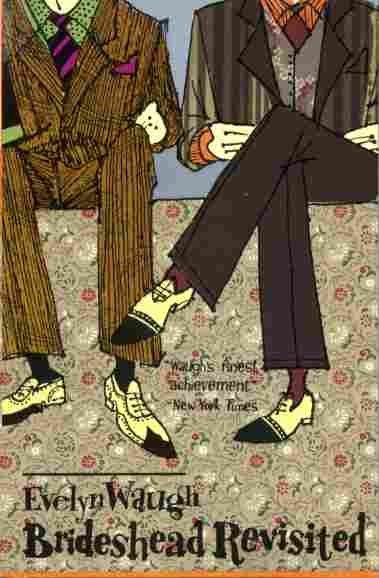
read Brideshead Revisited by Evelyn Waugh at Catholic Thought Book Club. I’m going
to have a series of posts on my thoughts and comments. I will also provide chapter summaries.
I
should say that my earlier ideas may not have been revised as we read along and
got a fuller understanding of the novel.
I will place a [this thought has been revised] in
red font where I find these thoughts.
Why not just delete the thought that has been revised? There may be value in the logic of the first
thought, and perhaps the first thought is correct while the revision is
off. I’ll leave it for the reader.
The
full title of the work is actually, Brideshead
Revisited, The Sacred & Profane Memories of Captain Charles Ryder, and it tells the
story from Charles Ryder’s first person point of view, covering his college
years at Oxford, where he makes a friend, Sebastian Brideshead, a British Lord
and Catholic, covering the interwar years where he is welcomed as a family
friend in the Brideshead household, and ending with his service in the Second
World War.
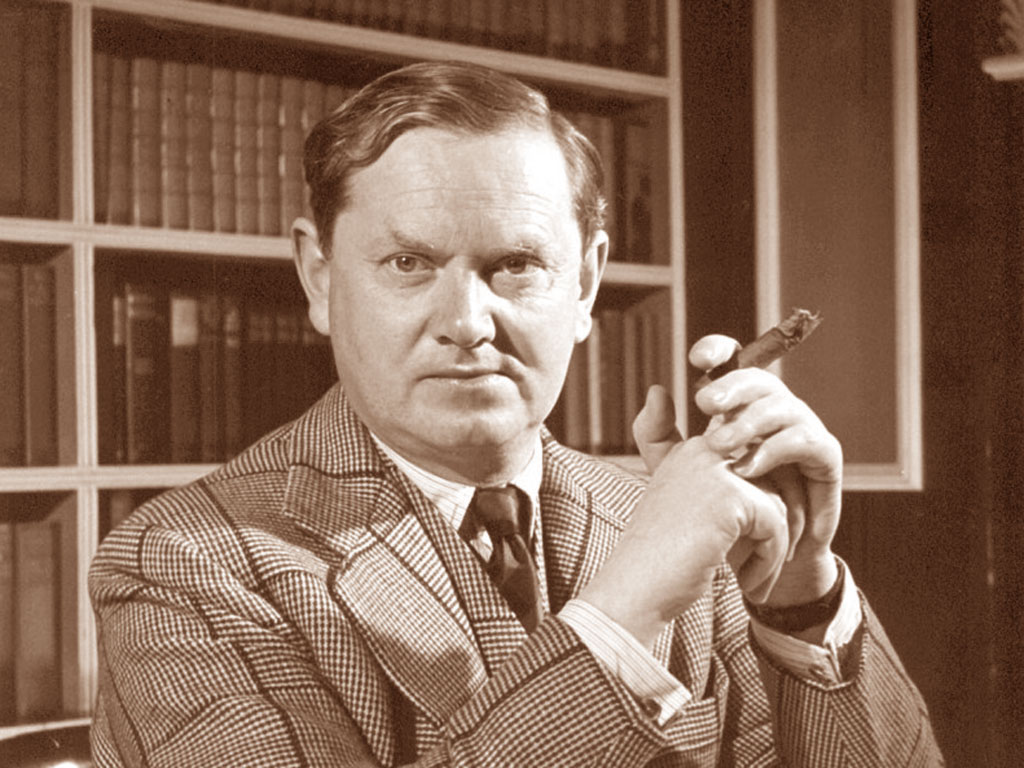
Evelyn Waugh came from a
family with an aristocratic past, was a convert to Catholicism, and was a
prolific writer. Waugh too went to
Oxford which had a profound impact to his life.
Much of the novel is autobiographical.
Summary
Prologue
It
is in the midst of World War II, and Charles Ryder is a Captain in charge of C
Company of a Battalion. They are
stationed in Scotland outside of Glasgow on a farm where they have been in
training, and the Battalion has been directed to travel south to England by
train. They arrive at their destination
in the dark of the night and, after spending the night, they travel to their final
station in trucks (lorries). Settling
into camp Ryder finally understands that he has arrived in Brideshead, a place
he knew quite well and had been the formation of his adult life.
Book
1, Chapter 1
Ryder
through a flashback goes on to describe his first visit to Brideshead, but he
takes a circuitous and digressive route to that visit. We learn of Ryder’s attendance at Oxford, his
living quarters there, and his poor grades.
We see Sebastian luring Ryder into a motor car ride to the country for a
picnic of strawberries and wine. Then
there is a flashback inside the flashback where Ryder’s cousin Jasper provides
advice on finances and proper living at Oxford.
This leads to a memory of meeting the type of students who Jasper warned
about, and in that crowd was Sebastian.
Ryder describes that first meeting with Sebastian and of their subsequent
friendship. Finally the Ryder’s
narrative returns to that picnic where Sebastian makes an impulsive decision to
drive Ryder to see the house ”where [his] family lives,” and especially to meet
Sebastian’s nanny. Finally the chapter
concludes with a short tour of Brideshead.
Book
1 Chapter 2
Jasper
meets up with Ryder and rebukes him (the “Grand Remonstrance”) over his
lifestyle, profligate spending, and friends he has made at Oxford. Later, on an Easter vacation Ryder reflects
and approves of his lifestyle. Ryder
then describes Anthony Blanche and their dinner together, where the
conversation turns to Blanche offering his observations of Sebastian and
Sebastian’s individual family members.
His portrayal of the family is ghastly at best, and Ryder doesn’t know
what to believe. The next day, Sunday,
Ryder walks about Oxford as everyone else seems to be going to some church
service. He meets Sebastian coming from
Mass and he tells him of his conversation with Blanche the evening before.
Book
1 Chapter 3
Everyone
at Oxford has dispersed for what I take is the summer vacation, and Ryder not
having any money returns to his father’s home.
He hints at squeezing money from his father but his father plays dumb
and offers none. His relationship with
his father degenerates into a sort of passive-aggressive battle where his
father seeks seclusion free from social and even family connection while Ryder
just wants some money. Finally he
receives a letter from Sebastian that he has been injured and to come to his
place quickly. He does so, happy to
break away from his father, and finds Sebastian has only broken a small bone in
his foot. He is coaxed to keep Sebastian
company while he cannot walk, which is for the rest of the summer. By doing so, he relieves Julia so that she
can go off for her summer vacation.
###
Before
I get into themes and understanding of the characters, there are two things I’d
like to say about the writing. My
goodness, this is some of the best prose writing in English of the 20th
century. He’s as good as Nabakov,
Fitzgerald, D.H. Lawrence, Cormac McCarthy.
He may have equals, but I don’t think anyone surpasses him. And it’s not just a lyrical passage here and
there. It’s constant, throughout.
Second,
I’m amazed at his narrative control as he weaves back and forth through
flashbacks and digressions. It’s
effortless. Chapter one is a masterpiece
of narrative. His movement of through
time is stunning. I don’t know if I’ve
come across a chapter like that before.
One has to look to William Faulkner that kind of depth of
narrative. I’ve never read anything else
by Evelyn Waugh except a few short stories, but his artistry and his skill is
of the highest order.
I
have read this novel before, but it’s been a while. I remember the writing being good, but I
don’t remember it being this good. It’s
breathtaking.
###
I
know when you look at some of the commentary for this novel, you find people
speak about the unmerited grace that befalls the characters, and that Waugh
himself says the novel “deals with what is theologically termed 'the operation
of Grace.'” Yes, there is grace in many
places in the novel but ultimately the novel has to be about more than
that. You can’t just have a four hundred
page novel where a whole bunch of action occurs and then at the end things are
resolved by grace. There has to be an
ordering principle to those four hundred pages of narrative.
I
see at least two large themes in the novel.
There are more perhaps, but this is what I’ve zeroed in on. First I think there is the theme of what I
shall call that of arrested development.
In everyone’s life there eras that are so formative that we return to
them in some way. We become rooted to a
time and place in our lives. But most of
us grow out of that formative period and develop further. Those that don’t grow remain in psychological
arrestment, a damaged psyche. Think of
Hemingway with World War I and its aftermath.
Even when Hemingway wasn’t writing about WWI, it always seemed to be
there in the background, and his failed marriages and ultimate suicide speak of
a damaged individual. [Edit: In retrospect, I have re-assessed this theme. While I still think there is a psychological
desire to return to a time and place, the implication of a modern psychology of
“a damaged psyche” is not what Waugh wants to say. I develop this further in a subsequent post
where instead of modern psychological terms I address this as a Catholic
psychological model.]
In
this novel, Sebastian’s childhood seems to have caused an arrestment of
psychological development. The energy of
his life seems to be of desiring that innocence of childhood. He has this silly Teddy Bear he keeps around
to pull him back into that comfort. Whatever
the formative events of his childhood, pleasure or trauma, it has locked him
into that mental state. He does not deal
well with the adult world, and the alcohol, the flightiness, and the
homosexuality (consummated or not, we don’t know) are his means of building a
wall against that adult world.
Charles
Ryder too seems to be arrested in some way, but his arrestment is not from
childhood I think but from those university years in Book 1. Certainly his childhood has not been a good
one. From what I gather his childhood
was deprived of affection: his mother died while he was young and his father
was emotionally distant. It seems like
his childhood was one deprived of innocence, which in some ways is the opposite
of Sebastian. He is like many young
people once they go off to college and experience the freedom of young
adulthood, finding it exhilarating, and to some that exhilaration is
formative. I didn’t go away for college
but even with me living in New York City during my college years I experienced
the freedom of cheap restaurants, college bars, and hip clubs with a new set of
college friends. I grew out of that
eventually but even with me it took a while and it too was formative for me in
some way that I don’t know if I’ve ever completely outgrown it. Charles Ryder is being formed in these early
years of Oxford that will stunt his development later on.
Another
character too that is being formed to some level of arrested development I
think is Julia. Here she is in the early
chapters, about eighteen-ish; she is now out in the world as a lovely “debutant,’
rich, beautiful, perhaps blossoming into her sexuality, and the center of
attention. She’s like a southern belle,
the queen of the parade, the prima donna of the ball. It is an exhilaration from which her persona
will have difficulties in outgrowing. Perhaps
now is the moment the dysfunctions of her future life are formed.
The
second big theme I see is that of Catholicism.
But what about Catholicism?
Catholicism is just a subject, and a properly articulated theme requires
a subject and a predicate. Could one say
possibly say that Catholicism is the source of the Flyte family dysfunction? After all, Mrs. Marchmain, devout Catholic
and mother, is the shaping persona of the children. But Catholicism seems to be a positive entity
in the novel, at least so far, so that doesn’t seem right. I’m not ready to dismiss it, but I think we
better look for more possibilities.
Could it be that Catholicism in contact with a modern world leads to
some sort of disorientation, or worse, dislocation? Could it be that the values of the modern
world make Catholicism impossible to adhere to and drown even those who sense
its truth? It’s too early in the novel
to reach any conclusion. Let’s see how
this pans out. Let’s return periodically
and see if we can discern and articulate how Catholicism is at the core of the
novel.
###
My
Reply to Madeleine:
Madeleine
wrote: "Just throwing this out there: I'm wondering about the names in the
story, as many authors employ connotative suggestions or meanings to fit their
characters. Ryder, Flyte, Marchmain maybe?"
Yes in general they seem
to have some sort of echo of significance, but I can say there is some
correspondence to some idea. Flyte is perhaps the one than one best can wrap
one's arms around but only if you limit yourself to Sebastian. I don't know if
the other family members are flight-y. I guess the father maybe.
And what about Charles as
Ryder? Ryder of what?
The only name I can
really pin down to have meaning is "Brideshead." Brideshead for
bride, marriage, the Church as the bride of Christ. I'm pretty confident that's
what Waugh wants to suggest.
Marchmain sounds
aristocratic, but I can't pin any meaning to it.
As to first names,
Sebastian was a famous martyr and saint. I think that more or less fits. Julia
was also a saint but more obscure. Cordelia from King Lear perhaps but so what?
The good daughter?
As I said above, the
names seem to echo some significance but rather not directly. Which I think is
very skillful.
My
Reply to Blake:
Blake wrote: "One of the things I most appreciate from the Prologue
is Charles's association with the popular zeitgeist and trends of the day with
Hooper. I can find myself doing the same with the young adults I..."
Yes, and from some note I saw somewhere, Hooper is of the
lower classes rising up after the war.
My
Reply to JT:
Jt wrote: "One theme which emerges in the book is the problem of modernity
and tradition: how is our world changing and what are the implications of these
changes?."
I agree. I was being coy in my comment above. The central
theme seems to be the conflict and tension of traditional Catholicism in
contact with modernity.
My
Reply to Frances:
Frances wrote: "I think another theme is nostalgia, the yearning
for the past. In this regard, it’s interesting to study how Waugh employs the
sense of hearing to access the past:
“‘What’s this place called
?’
“He ..."
Don't you think, Frances, that "nostalgia" is not a
strong enough word to describe what is going on? Sebastian doesn't carry a
Teddy Bear around because he is nostalgic for his childhood. There is some
psychological trauma that has happened. Above I called it "arrested
development." Later when Ryder's marriage fails, is it because of
nostalgia or because there is some formative experience that has led him to be
dysfunctional?[Edit: I re=assessed this also. Nostalgia does have a purpose in this novel.]
###
Christine
brings up a good point. Why is this a
Catholic novel? First for those that
don’t know, Evelyn Waugh was a convert to Catholicism, and that conversion was
the fundamental to life. From his
Wikipedia entry:
On 29 September 1930,
Waugh was received into the Catholic Church. This shocked his family and
surprised some of his friends, but he had contemplated the step for some time.
He had lost his Anglicanism at Lancing and had led an irreligious life at
Oxford, but there are references in his diaries from the mid-1920s to religious
discussion and regular churchgoing. … In 1949, Waugh explained that his
conversion followed his realisation that life was "unintelligible and
unendurable without God"
Second,
the Flyte family are Catholic in a way that is central to their lives. Each of the four Marchmain children are
shaped by the mother’s very strong Catholicism.
In fact, one might wonder if her Catholicism hasn’t brought about the
dysfunctions of the family. But I don’t
think so. Third, both Ryder and Lord
Marchmain, the family’s estranged father, are converts to Catholicism with the
span of the novel’s narrative. Fourth I
would put that Catholicism is hovering in the background of every scene. In that dinner between Anthony Blanche and
Ryder, where Anthony describes the Marchmain family, this is what he recalls of
his early days with Sebastian:
He and I were both
Catholics, so we used to go to mass together. He used to spend such a time in
the confessional, I used to wonder what he had to say, because he never did
anything wrong; never quite; at least, he never got punished. Perhaps he was
just being charming through the grille. (p.
55). Little, Brown and Company. Kindle Edition.
Everything
seems to either deal with Catholic values, Catholic rituals, or Catholic
theology. Catholicism is everywhere,
mentioned or not mentioned. Certainly Catholicism
is central to the novel.
###
Also,
if people didn't know, the BBC created a for TV dramatization of the novel.
It's fantastic. It's been called by some the finest for TV dramatization ever.
I think it was produced in the 1980s. I highly recommend it. It's has its own
Wikipedia entry.
It's
also on Amazon Prime. If you subscribe to Amazon Prime, it's free. It's eleven
hours long and I've been watching. It's remarkably faithful to the novel, scene
by scene. Here is a trailer.
Fromthe Divine Office, Ordinary Time, Evening Prayer, Monday’s Week II, Psalm
Prayer.
When you took on flesh, Lord Jesus, you
made a marriage of mankind with God.
For
those who don’t pray the Divine Office—and I encourage taking up the discipline
of praying the Divine Office, otherwise known as the Liturgy of the Hours—there
are prayers at the end of every psalm.The
first sentence of Monday’s evening prayer at the end of the second week in the
cycle was rich for meditation.It
certainly illumines the Christ as bridegroom metaphor.
I
am nearing the end of my four or five year journey through Ford Madox Ford’s Parade’s End tetralogy. The fourth novel of the series is titled The Last Post. Perhaps the overly deliberate pace I’ve been
reading has caused to make me lose sight of the novel’s themes, but it’s still
a wonderfully written work. In technique
and skill, this is one of the highest achievements of modernist literature. But for now let me just highlight another wonderful
passage.
Here
we have Sylvia Tietjens again. Her
husband Christopher has finally left her because of her infidelity. Christopher had come back from the war (WWI)
and taken up with a young lady, Valentine Wannop, having
fallen in love with before he went to the war, but in which he did not consummate
the relationship. He was honorable and
had intended to stay with his wife before the war, but the war seemed to have
changed everything.
In
order to grasp the context of this passage, you have to understand a few
things. Sylivia is Catholic, and despite
her many sinful actions, she is a believer.
Christopher is High Anglican, and he too is a believer. Christopher, unlike the other upper class
British in the novel, is chivalrous to the point of being saintly. Sylvia actually calls him a saint in this
passage. Father Consett is a priest who
had known Sylvia for most of her life and had died sometime during the
war.
Sylvia
in this passage is bitter that Christopher has left her, and she contemplates
some sort of revenge. Gunning is a yeoman
farmer on their estate and he makes the suggestion to Sylvia that she could induce
a miscarriage to Christopher and Valentine’s baby that Valentine is carrying. It took some contemplation before Sylvia
realized what exactly Gunning was suggesting.
We
also see in this passage the modernist technique of narration that Ford
uses. It’s in third person narration but
in free indirect discourse style. That means
the author speaks in a third person point of view but shifts in and out of a
character’s mind using the character’s interior thoughts to move the
narration. It’s almost like a stream of
conscious narration but controlled by the author’s third person view. I marvel at how Ford executes it with such
skill throughout the novel. So much of
what passes through Sylvia’s mind resonates with events her life that Ford has
built a detailed mind filled with psychological depth. Here Ford starts with Sylvia thinking about
religion and morality and ends with her horror struck when she realizes what
Gunning has actually suggested.
Anyhow the case had been
a fiasco and for the first time in her life Sylvia had felt mortification; in
addition she had felt a great deal of religious fear. It had come into her mind in Court—and it
came with additional vividness there above the house, that, years ago in her
mother’s sitting-room in a place called Lobscheid, Father Consett had predicted
that if Christopher fell in love with another woman, she, Sylvia, would
perpetrate acts of vulgarity. And there
she had been, not only toying with the temporal courts in a matter of marriage,
which is a sacrament, but led undoubtedly into a position that she had to
acknowledge she was vulgar. She had
precipitately left the Court when Mr. Hatt had for the second time appealed for
pity for her—but she had not been able to stop him.…Pity! She appeal for pity! She had regarded herself as—she had certainly
desired to be regarded as—the sword of the Lord smiting the craven and the
traitor to Beauty! And was it to be
supported that she was to be regarded as such a fool as to be decoyed into an
empty house! Or as to let herself be
thrown downstairs!...But qui facit per
alium is herself responsible and there she had been in a position as
mortifying as would have been that of any city clerk’s wife. The florid periods of Mr. Hatt had made her
shiver all over and she had never spoken to him again.
And her position had been
broadcast all over England—and now, here in the mouth of his gross henchman it
had recurred. At the most inconvenient
moment. For the thought suddenly
recurred, sweeping over with immense force: God had changed sides at the
cutting down of Groby Great Tree,
The first intimation she
had had that God might change sides had occurred in that hateful court and had
as it were, been prophesied by Father Consett.
That dark saint and martyr was in Heaven, having died for the Faith, and
undoubtedly had the ear of God. He had
prophesied that she would toy with the temporal courts. Immediately she had felt herself degraded, as
if strength had gone out of her.
Strength had undoubtedly
gone out of her. Never before in her
life had her mind not sprung to an emergency.
It was all very well to say that she could not move physically either
backwards or forwards for fear of causing a stampede amongst all the horses and
that, therefore, her mental uncertainty might be excused. But it was the finger of God—or of Father
Consett, who as saint and martyr, was the agent of God…Or, perhaps, God,
Himself, was here really taking a hand for the protection of His Christopher,
who was undoubtedly an Anglican saint….The Almighty might well be dissatisfied
with the relatively amiable Catholic saint’s conduct of the case in which the
saint with the other persuasion was involved.
For surely Father Consett might be expected to have a soft spot for her
whereas you could not expect the Almighty to be unfair even to Anglicans….At
any rate, up over the landscape, the hills, the sky, she felt the shadow of
Father Consett, the arms extended as if in a gigantic cruciform—and then above
and behind that an…an August Will!
Gunning, his bloodshot
eyes fixed on her, moved his lips vindictively.
She had, in face of those grossly manifestations across hills and sky, a
moment of real panic. Such as she had
felt when they had been shelling near the hotel in France when she had sat
amidst palms with Christopher under a glass roof….A mad desire to run—or as if
your soul ran about inside you like a parcel of rats in a pit an unseen
terrier.
What was she to do? What the devil was she to do?...She felt an
itch….She felt the very devil of a desire to confront at least Mark
Tietjens…even if it should kill the fellow.
Surely God could not be unfair!
What was she given beauty—the dangerous remains of beauty!—for if not to
impress it on the unimpressible! She
ought to be given the chance at least once more to try her irresistible ram
against that immovable post…. She was aware….
Gunning was saying
something to the effect that if she caused Mrs. Valentine to have a miscarriage
or an idiot child ‘Is Lordship would flay all the flesh off ‘er bones with ‘is
own ridin’ crop.’ ‘Is Lordship ‘ad fair
done it to ‘im, Gunning ‘isself, when ‘e lef ‘is misses then eight and a ‘arf
munce gone to live with old Mother Cressy! The child was bore dead.
The words conveyed little
to her….She was aware….She was aware….What was she aware of? She was aware that God—or perhaps it was
Father Consett that so arranged it, more diplomatically, the dear!—desired that
she should apply to Rome for the dissolution of her marriage with Christopher
and that she should be freed as early as possible, Father Consett suggesting to
Him the less stringent course.
A fantastic object was
descending at a fly-crawl the hill road that went almost vertically up to the
farm amongst the breeches. She did not
care!
Gunning was saying that
that wer why ‘Is Lordship giv ‘im the sack.
Took away the cottage an’ ten bob a week that ‘Is Lordship allowed to
all as had been in his service thritty yeer.
She said: ‘What! What’s that?’
Then it came back to her that Gunning had suggested that she might give
Valentine a miscarriage….
Her breath made in her
throat a little clittering sound like the trituration of barely ears; her
gloved hands, reins and all, were over her eyes, smelling of morocco leather;
as felt as if within her a shelf dropped away—as the platform drops away from
beneath the feet of a convict they are hanging.
She said: ‘Could…’ Then her mind
stopped, the clittering sound in her throat continuing. Louder.
Louder.
Descending the hill at
the fly’s pace was the impossible. A
black basket-work pony phaeton, the pony—you always look at the horse first—four
hands too big; as round as a barrel, as shining as a mahogany dining table, pacing
for all the world like a haute école circus
steed and in a panic bumping its behind into that black vehicle. It eased her to see…But,…fantastically
horrible, behind that grotesque coward of a horse, holding the reins, was a
black thing, like a funeral charger; beside it a top hat, a white face, a buff
waistecoat, black coat, a thin Jewish beard.
In front of that a bare, blond head, the hair rather long—on the front
seat, back to the view. Trust Edith
Ethal to be accompanied by a boy-poet cicisbeo!
Training Mr. Ruggles for his future condition as consort!
She exclaimed to Gunning:
‘By God, if you do not
let me pass I will cut your face in half…’
It was justified! This in effect was too much—on the part of
Gunning and god and Father Consett. All
of a heap they had given her perplexity, immobility and a dreadful thought that
was gripping her vitals….Dreadful!
Dreadful!
She must get down to the
cottage. She must get down to the
cottage.
She said to Gunning:
‘You damn fool….You damn fool….I want to save…’
He moved up—interminably—sweating
and hairy from the gate on which he had been leaning, so that he no longer
barred her way. She trotted smartly past
him and cantered beautifully down the slope.
It came to her from the bloodshot glance that his eyes gave her that he would
like to outrage her with ferocity. She
felt pleasure.
She came off her horse
like a circus performer to the sound of ‘Mrs. Tietjens! Mrs. Tietjens’, in several voices from
above. She let the chestnut go to
hell.
It seemed queer that it
did not seem queer. A shed of
long-parings set upright, the gate banging behind her. Apple branches spreading down; grass up to
the middle of her grey breeches. It was
Tom Tiddler’s Grounds; it was near a place called Gemmenich on the Fourth of
August 1914…But just quietude: quietude.
Mark regarded her boy’s
outline with beady, inquisitive eyes.
She bent her switch into a half loop before her. She heard herself say:
‘Where are all these
fools? I want to get them out of here!’
He continued to regard
her, beadily, his head like mahogany against the pillows. An apple bough caught in her hair.
She said:
‘Damn it all, I had Groby Great Tree torn down: not
that tin Maintenon. But, as God is my
Saviour I would not tear another woman’s child in the womb!’
He said:
‘You poor bitch! You poor bitch! The riding has done it!’
She swore to herself
afterwards that she had heard him say that, for at the time she had had too
many emotions to regard his speaking as unusual. She took indeed a prolonged turn in the woods
before she felt equal to facing the others.
Tietjens had its woods onto which the garden gave directly.
Her main bitterness was
that they had this peace. She was
cutting the painter, but they were going on in this peace; her world was
waning. It was the fact that her friend
Bobbie’s husband, Sir Gabriel Blantyre—formerly Bosenhair—was cutting down
expenses like a lunatic. In her world
there was the writing on the wall. Here
they could afford to call her a poor bitch—and be in the right of it, as like
as not! (p. 873-7)
What
I think Ford wants you to see in this passage is Sylvia’s mind integrating her immediate
action of riding a horse, her recent bitterness at her husband leaving her, with
Gunning’s proposal of a future revenge, and with the morality established in
her core as a child. Perhaps this is not
the most exciting passage in terms of events, but it’s one of great skill.