"Love follows knowledge."
"Beauty above all beauty!"
– St. Catherine of Siena

Wednesday, October 8, 2014

2014 Reads, Update #3

The third quarter was a tough quarter to do a lot of reading.  It seems I actually read less during the summer, which I think is not what happens with most people, but this summer was even more complicated.  We had the kitchen, dining and living rooms remodeling, and that did take up time.  It made living at home difficult, which made reading difficult.  (I haven’t forgotten that I promised to post pictures of the remodeled rooms.  It came out very nice, and I’ll post soon.)   Plus, the Baltimore Orioles, my favorite baseball team of which I’ve been a fan since I was eight years old, had a magnificent season, and I was on the computer following almost every game.  They had a great ending to the season where they pulled away from their division rivals and won by double digits.  Now they’ve won their division playoff and will be playing for the American League Championship.  If they win that, they’ll be going to the World Series.  So they could be playing for the whole month of October still.  I’m praying that they do!  It’s been 31 years since the Orioles won the World Series, which is a considerable part of my adult life.  So all summer long, reading has taken a lower priority in my past time.

So what have I accomplished?  Well, I read six short stories, which is about par for three months.  I read one book of the Old Testament (Second Maccabees), and I completed three full length books—a novel, a non-fiction work, and a book of personal essays—which would be about average as well except that two of them I was already half way when the quarter started.  I have started Dante’s Paradiso.  I’m only through canto ten, which is just less than a third.  But when you count the commentary, it’s over a couple of hundred pages of reading.  Just like last year’s read of Purgatorio, it’s slow reading, though good reading.  It’s poetry in translation, and I occasionally try my hand on the Italian, and then there are about two pages of commentary to every page of poetry. 

To my credit I did get beyond half way on this year’s read on writing, Lanham’s Style: An Anti Textbook.  I’ve posted twice on it.  The novel read was Stephan King’s The Shining, which I had promised to post my thoughts, and I haven’t.  I hope I can remember enough of it.  The book of personal essays was Brian Doyle’s The Thorny Grace of It, and I have posted on it, but I have thoughts for one more post.  The non-fiction work was an unplanned read, a book of sociology on why and how faith has diminished in western civilization.  I don’t plan on posting on it, but let me just say it’s an important work.  Mary Eberstat’s thesis has more to do with the breakdown of the family rather than any conventional theory that’s out there now.  Of course I was still reading Hopkins’ poetry, and putting out a few posts on some poems.  I did put out a really detailed analysis of which I’m proud of in two separate posts on his great poem “The Windhover.”  I did not read at all this quarter my historical read for this year, Goldsworthy’s biography, Julius Caesar: Life of a Colossus.  I remain about a quarter into the book.  I keep starting and then stopping the Kipling short story.  Not that it’s bad or anything like that, but I keep getting distracted.  It’s on the longer side for a short story.

So what’s left for my final quarter?  I have to finish Dante’s Paradiso, Lanham’s Style: An Anti Textbook, the Hopkins poetry, and the Goldsworthy biography.  If I’m going to read 24 short stories for the year, I need seven more.  I went looking and I’ve listed seven that have caught my eye, including a Sherlock Holmes and a Father Brown detective stories.  I am definitely going to read Shakespeare’s The Tempest.  I have to get one play read this year.  I do want to read Jane Austen’s Mansfield Park and Goethe’s The Sorrows of Young Werther.  It’s a lot, but not impossible.  We’ll see how far I get.  What’s left over will go into next year. 


Read in Previous Quarters:

“The Doom of the Griffiths,” a short story by Elizabeth Gaskell.
The Book of Tobit, a book of the Old Testament.
“Rappaccini’s Daughter,” a short story by Nathaniel Hawthorne.
Life on the Mississippi, a memoir by Mark Twain.
The Book of Judith, a book of the Old Testament.
“The Ransom of Red Chief,” a short story by O. Henry.
Washington Square, a novel by Henry James.
84, Charing Cross Road, a collection of correspondence by Helene Hanff.
“Fifty Grand,” a short story by Ernest Hemingway.
“A Simple Enquiry,” a short story by Ernest Hemingway.
“The Pitcher,” a short story by Andre Debus.
“After Twenty Years,” a short story by O. Henry.
Happy Catholic, a non-fiction devotional by Julie Davis.
The Imitation of Christ, a non-fiction devotional by Thomas à Kempis.
“Paul’s Case,” a short story by Willa Cather.
Reading Dante: From Here to Eternity, a non-fiction work of literary criticism by Prue Shaw.
The Book of Esther, a book of the Old Testament.
“Wee Willie Winkie,” a short story by Rudyard Kipling.
Fantine, the 1st Volume of Les Misérables, a novel by Victor Hugo.
“The Peach Stone,” a short story by Paul Horgan.
Some Do Not…, the 1st novel of the Parade’s End Tetralogy by Ford Madox Ford.
First Book of Maccabees, a book of the Old Testament.
“Ten Indians, a short story by Ernest Hemingway.


Read This Past Quarter:

“The Wood-Sprite,” a short story by Vladimir Nabokov.
The Shining, a novel by Stephan King.
How the West Really Lost God: A New Theory of Secularization, a non-fiction work of sociology by Mary Eberstadt.
Second Book of Maccabees, a book of the Old Testament.
The Thorny Grace of It: And Other Essays for Imperfect Catholics, a collection of personal essays by Brian Doyle.
“Russian Spoken Here,” a short story by Vladimir Nabokov.
“Greenleaf,” a short story by Flannery O’Connor.
"Sredni Vashtar,” a short story by Saki (H.H. Munro).
“The Gift of Cochise,” a short story by Louis L’Amour.
“A Canary for One,” a short story by Ernest Hemingway.

Currently Reading:

Gerard Manly Hopkins: Poems and Prose, Selected and Edited by W. H. Gardner.
Julius Caesar: Life of a Colossus, by Adrian Goldsworthy.
Style: an Anti-Textbook, a non-fiction book on writing by Richard A. Lanham.
Paradisio, the 3rd Cantica of Dante Alighieri’s The Divine Comedy, a Verse Translation by Robert Hollander and Jean Hollander.
 “The Drums of the Fore and Aft,” a short story by Rudyard Kipling.
"A Letter to the Romans, " an epistle by Paul in the New Testament, KLB and NAB Translations.
"First Letter to the Corinthians," an epistle by Paul in the New Testament, KLB and NAB Translations.


Upcoming Plans:

Mansfield Park, a novel by Jane Austen.
The Sorrows of Young Werther, a novel by Johan Wolfgang von Goethe.
The Tempest, a play by William Shakespeare.
“The Letter to the Romans,” an epistle by St. Paul.
“The First Letter to the Corinthians,” an epistle by St. Paul.
“The Gentleman from Cracow,” a short story by Isaac Bashevis Singer.
“ Colorado,” a short story by Ann Beattie.
“Jacob’s Ladder,” a short story by F. Scott Fitzgerald.
“The Walk with Elizanne,” a short story by John Updike.

“A Scandal in Bohemia, a Sherlock Holmes short story by Arthur Conan Doyle.
“The Queer Feet,” a Father Brown short story by G. K. Chesterton.

UPDATE: Oops, forgot to include my read through the Bible.  Last quarter is always devoted to New Testament and I'm up to Paul's Epistles.  I wasn't sure if I should read them in chronological order (as historians best date them) or pick and choose on whim or as ordered in the New Testament.  I decided on the latter, so I'm reading the first two.  For New Testament I read both KJB and NAB translations, with commentary from NAB/Catholic theologians.


You can read my initial 2014 reading plans heremy first quarter update hereand my second quarter update here.   Do I seem like too much of a project manager?  J


Tuesday, October 7, 2014

Music Tuesday: “Sara” by Fleetwood Mac

Sara” has always been one of my favorite Fleetwood Mac songs, but I have to say the lyrics have always baffled me.  It seemed disconnected.  I guess there was a rumor as to the meaning of the song that had been spoken of for years, but I had never heard it.  A couple of weeks ago, Stevie Nicks,   the composer and lead singer of the song, confirmed the rumor.  The song was about an aborted child she had conceived with Don Henley, the lead singer of The Eagles.  From Life News.

Fleetwood Mac’s Stevie Nicks has confirmed that she was once pregnant with Don Henley’s child.

The Eagles singer has said in interviews that Fleetwood Mac song ‘Sara’ was dedicated “to the spirit of the aborted baby” they conceived together.

In a new interview with Billboard, Nicks confirmed Henley’s story. “Had I married Don and had that baby, and had she been a girl,” she said, “I would have named her Sara. But there was another woman in my life named Sara, who shortly after that became Mick’s wife, Sara Fleetwood.”

“It’s accurate,” she added, referring to Henley’s suggestion of the song’s meaning, “but not the entirety of it.” Nicks wrote the song in 1979, when it appeared on the band’s Tusk album.

 Now it all made sense, but as I listened to the song, the chorus section just about choked me up. 

Sara, you’re the poet in my heart
 Never change, never stop
 And now it’s gone
 All I ever wanted
 Was to know that you were dreaming
 (There’s a heartbeat
 And it never really died)


Here’s the song. 


This to me was so sad.  For shear convenience.  So that her life wouldn’t be altered.  Love does alter one’s life.  I’m reminded of this post by these Dominican Friars at their blog, Dominicana, titled “Lessons of Love.”  In that post they go through some of the theology of the great Dominican saint, Catherine of Siena, the patron saint of my blog.  In Catherine we find the notion that “Love makes room. In love we forget about ourselves and make room for another.”  Ultimately an abortion is a failure of love.  We can always make room for another.  I’m getting too close to preaching.  Peace.

Sunday, October 5, 2014

Matthew Monday: Rosie!

Today we picked up Rosie.  The breeder lived was about an hour and three quarters drive from home.  We hit the road at 9 AM and had a nice drive into the country to northern New Jersey, just short of the New York State border.  The area around there is very hilly, but it was a crisp, beautiful day.  The leaves on the trees had just started to turn to fall colors, and we wound through some curvy country roads. 

Linda the breeder was an extraordinarily nice lady.  We had two pups to choose from, and after some consideration see how Matthew interacted with them, Linda recommended the more mellow of the two.  The more active one really didn’t pay us that much attention, and went off in the kitchen.  The more mellow one was lady like and affectionate, and let us come to her, and so we felt that Linda was right.  So Rosie was the more mellow of the pups, and actually Linda’s favorite of the litter.  She loved the name we picked and she was glad Rosie was headed for a good home. 


OK, here are some pictures.  These first two are at the breeders.  That's my wife holding Rosie.


The next are back home, Matthew being silly.  And Rosie really does have a good disposition.  Not many Labrador Retriever pups would tolerate this.


But Rosie's no wall flower.  As soon as Matthew starts running, she runs right after him.  They had a blast playing in the backyard with a beach ball.


Let's see if this video upload works.  I've never done it before.


And finally, a close up.


Saturday, October 4, 2014

Poetry: “The May Magnificant” by Gerard Manly Hopkins


Another Hopkins poem, and I post this not because it’s so overwhelming a poem—it’s a nice poem, but not great—but because it gave me insight into the Flannery O’Connor short story, “Greanleaf” which I’ve been analyzing.

First the poem.


The May Magnificat
by Gerard Manly Hopkins

MAY is Mary’s month, and I
Muse at that and wonder why:
    Her feasts follow reason,
    Dated due to season—

Candlemas, Lady Day;                      5
But the Lady Month, May,
    Why fasten that upon her,
    With a feasting in her honour?

Is it only its being brighter
Than the most are must delight her?   10
    Is it opportunest
    And flowers finds soonest?

Ask of her, the mighty mother:
Her reply puts this other
    Question: What is Spring?—           15
    Growth in every thing—

Flesh and fleece, fur and feather,
Grass and greenworld all together;
    Star-eyed strawberry-breasted
    Throstle above her nested                 20

Cluster of bugle blue eggs thin
Forms and warms the life within;
    And bird and blossom swell
    In sod or sheath or shell.

All things rising, all things sizing           25
Mary sees, sympathising
    With that world of good,
    Nature’s motherhood.

Their magnifying of each its kind
With delight calls to mind                       30
    How she did in her stored
    Magnify the Lord.

Well but there was more than this:
Spring’s universal bliss
    Much, had much to say                        35
    To offering Mary May.

When drop-of-blood-and-foam-dapple
Bloom lights the orchard-apple
    And thicket and thorp are merry
    With silver-surfèd cherry                     40

 And azuring-over greybell makes
Wood banks and brakes wash wet like lakes
    And magic cuckoocall
    Caps, clears, and clinches all—

This ecstasy all through mothering earth     45
Tells Mary her mirth till Christ’s birth
    To remember and exultation
    In God who was her salvation.

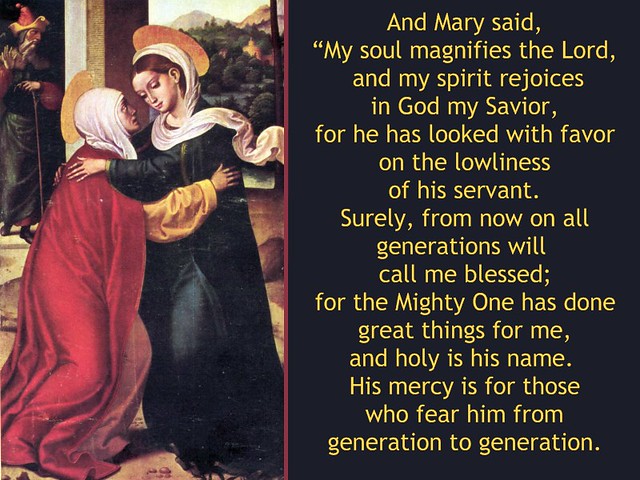
For those that may not know, “The Magnificant” refers to the Canticle of Mary that our blessed mother sings (or speaks) on her visit to her cousin Elizabeth in Luke’s Gospel, 1:46-55.  The poem also refers to the Liturgical Calendar’s dedication of the month of May to the Blessed Virgin.  As you can read, Hopkins starts the poem as a meditation.

If read the first part of my of my analysis of O’Connor’s short story, “Greanleaf,” I wondered why O’Connor named the central character “Mrs. May.”  I don’t know if O’Connor read this poem—it’s quite likely—but the fertility that Hopkins associates with Mary here (she is pregnant with Jesus) is clearly alluded to in the O’Connor short story.  That Mrs. May stands for sterility in the story makes her name ironic and paradoxical.  The word “greenworld” in the 18th line of the poem echoes the name of the family that stands in contradistinction to Mrs. May, the Greanleafs.


I’ll flesh this out in my part two post of the “Greanleaf” analysis but for now just enjoy this wonderful poem.


Wednesday, October 1, 2014

Lines I Wished I’d Written: Angie and the Apaches

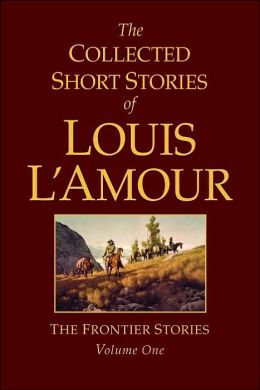
This is from the short story, “The Gift of Cochise” by Louis L’Amour.  Amazon had one of those specials where a collection of L’Amour’s short stories were either free or ninety-nine cents.  I’ve never read anything by L’Amour but I do know he’s a western fiction genre writer.  According to Wikipedia he prefers to call his fiction frontier stories and not westerns.  I was intrigued and the price was right.  So I read this first story, and it is definitely a genre fiction with its limitations, but I did appreciate some of the passages.  L’Amour creates many tense moments.  I can see why he was successful.  There are those that snub genre fiction, but all writing, even so called “literary writing” is “genre” in some way.  Good writing and good story telling comes in all forms.  I try to expand my universe of reading, especially with short stories since they are not as time consuming.

I’m going to highlight the opening scene where Angie, left alone with two small children on a homestead in a remote valley, confronts a dozen Apache warriors, Cochise being the chief.

Tense, and white to the lips, Angie Lowe stood in the door of her cabin with a double barreled shotgun in her hands. Beside the door was a Winchester '73, and on the table inside the house were two Walker Colts.

Facing the cabin were twelve Apaches on ragged calico ponies, and one of the Indians had lifted his hand, palm outward. The Apache sitting the white-splashed bay pony was Cochise.

Beside Angie were her seven-year-old son Jimmy and her five-year old daughter Jane.
 
Cochise sat his pony in silence; his black, unreadable eyes studied thewoman, the children, the cabin, and the small garden. He looked at the two ponies in the corral and the three cows. His eyes strayed to the small stack of hay cut from the meadow, and to the few steers farther up the canyon.

Three times the warriors of Cochise had attacked this solitary cabin and three times they had been turned back. In all, they had lost seven men, and three had been wounded. Four ponies had been killed. His braves reported that there was no man in the house, only a woman and two children, so Cochise had come to see for himself this woman who was so certain a shot with a rifle and who killed his fighting men.

These were some of the same fighting men who had outfought, outguessed and outrun the finest American army on record, an army outnumbering the Apaches by a hundred to one. Yet a lone woman with two small children had fought them off, and the woman was scarcely more than a girl. And she was prepared to fight now. There was a glint of admiration in the old eyes that appraised her. The Apache was a fighting man, and he respected fighting blood.

"Where is your man?"

"He has gone to EI Paso." Angie's voice was steady, but she was frightened as she had never been before. She recognized Cochise from descriptions, and she knew that if he decided to kill or capture her it would be done. Until now, the sporadic attacks she had fought off had been those of casual bands of warriors who raided her in passing.

"He has been gone a long time. How long?"

Angie hesitated, but it was not in her to lie. "He has been gone four months."

Cochise considered that. No one but a fool would leave such a woman, or such fine children. Only one thing could have prevented his return. "Your man is dead," he said.

Angie waited, her heart pounding with heavy, measured beats. She had guessed long ago that Ed had been killed but the way Cochise spoke did not imply that Apaches had killed him, only that he must be dead or he would have returned.

"You fight well," Cochise said. "You have killed my young men."

"Your young men attacked me." She hesitated, then added, "They stole my horses."

"Your man is gone. Why do you not leave?"

Angie looked at him with surprise. "Leave? Why, this is my home. This land is mine. This spring is mine. I shall not leave."
"This was an Apache spring," Cochise reminded her reasonably.

"The Apache lives in the mountains," Angie replied. "He does not need this spring. I have two children, and I do need it."

"But when the Apache comes this way, where shall he drink? His throat is dry and you keep him from water."


The very fact that Cochise was willing to talk raised her hopes. There had been a time when the Apache made no war on the white man. "Cochise speaks with a forked tongue," she said. "There is water yonder."

She gestured toward the hills, where Ed had told her there were springs. "But if the people of Cochise come in peace they may drink at this spring."


The Apache leader smiled faintly. Such a woman would rear a nation of warriors. He nodded at Jimmy. "The small one-does he also shoot?"

"He does," Angie said proudly, "and well, too!" She pointed to an upthrust leaf of prickly pear. "Show them, Jimmy."

The prickly pear was an easy two hundred yards away, and the Winchester was long and heavy, but he lifted it eagerly and steadied it against the doorjamb as his father had taught him, held his sight an instant, then fired. The bud on top of the prickly pear disintegrated.

There were grunts of appreciation from the dark-faced warriors. Cochise chuckled. "The little warrior shoots well. It is well you have no man. You might raise an army of little warriors to fight my people."

"I have no wish to fight your people," Angie said quietly. "Your people have your ways, and I have mine. I live in peace when I am left in peace. I did not think," she added with dignity, "that the great Cochise made war on women!"

The Apache looked at her, then turned his pony away. "My people will trouble you no longer," he said. "You are the mother of a strong son."

"What about my two ponies?" she called after him. "Your young men took them from me."

Cochise did not turn or look back, and the little cavalcade of riders followed him away. Angie stepped back into the cabin and closed the door. Then she sat down abruptly, her face white, the muscles in her legs trembling.

Admiring courage and strength, Cochise lets her stay on the homestead in peace, his gift.  But the story follows other twists and turns.  You can read the entire story on the internet, here.

 It’s enjoyable, and if you take the time to read it, let me know what you think.


Sunday, September 28, 2014

Matthew Monday: Puppy Announcement

Ever since our beloved Yellow Lab, Brandi, passed on in December (see here and here), we’ve been waiting for the right time to get a new dog. 

Well, that time has come.  We’ve put down a deposit on a female Black Labrador Retriever pup from a breeder in northern New Jersey, called Lynnwood Retrievers.  Our pup was born on August 12th, and if you search around the website you’ll find she came from a litter of twelve, eleven black and one yellow.  Here’s the page on the litter with the parents.

We let Matthew pick out a name, and to our surprise he picked “Rosie.”  I guess it’s a good name for a dog, though it sounds a bit too human.  I think it came from a cartoon he watches, Peppa Pig.  I guess there’s a character in there that’s named Rosie.  So Rosie it is!

Here are a few pictures of the litter the breeder sent us.  Of course we don’t know which pup is ours.


We pick her up on Sunday!

Saturday, September 27, 2014

Poetry: “Spring and Fall” by Gerard Manly Hopkins, Part 2

A friend of mine, Kerry, read my post of the Hopkins poem from the other day, “Spring and Fall” and questioned my comment on accents in English.  This led me to contemplation, a little research, and enough of new thoughts to create a second post.  First let me present our email exchange and then I’ll have to modify my comment on accenting.

Kerry:
 So just read your latest piece.  Interesting thought on the accent.  You mention preferring to let the language run naturally, but what is naturally?  As I watch more and more British television, I notice that the syllables stressed in English English is different than American English and even Scottish English and Irish English.  So natural for whom?

Manny:
Hmm good question.  I'm not aware of stress differences.  I thought the differences between American and English English are vowel sounds.  I'll have to look into that.

Kerry:
The one standing out in my mind right now is garage.

Manny:
Holy smoke, you're right.  There are stress differences between the two.  Check here:

Kerry:
I knew it!  See... all that BBC America watching is paying off.  Plus my "Mock the week" viewing on YouTube.  I do not know how to write out the accent though.  Just that when we say garage it is more of "ga rage" versus British "gar age"

Manny:
Apparently the British tend to accent the first syllable while we accent the second on most two letter words that have a French origin.  So they must say GAHrage  while we say gaRAGE.  The accent does effect the vowel pronunciation.


I was surprise to find that on certain type of words, the pronunciation differences between British English and American English is not only vowel sounds, but actual syllabic stress differences.  I was so surprised that I went back to my graduate class text book (I never throw textbooks out) on the evolution of the English language to see what it said about this.  I have The Origins and Development of the English Language, Third Edition by Thomas Pyles and John Algeo published back in 1982.  I wonder when I took the class.  Must have been some time in the 1990s.  You can find later editions on Amazon.  Now to vindicate my original thought, Pyles and Algeo have a whole chapter on British and American language differences and while they do go through vowel pronunciation differences, they never mention differences due to syllabic stress.  Apparently they didn’t think this a significant issue.

Granted the stress differences seem to be mostly on French loan words.  What’s interesting (and counter intuitive to me) is that the American stresses follow the French stress pattern of second syllable stress, while it’s the British that have altered the French pattern by pulling the stress to the first syllable.  Two reasons why that might be, and this is speculation on my part.  But first some context.  Pyles and Algeo do go through the history of French words entering English, and it has an interesting history.  French words entered English in periodic waves.  Prior to 1066, no French words had entered the language, but with the subsequent Norman Conquest a large number of French words not only came in but became prominent, since French became the language of the aristocracy.  French loan words that entered into the language during the middle ages over time became synthesized into English.  That should not be a surprise given the Great Vowel Shift that dramatically altered English pronunciation during the fifteenth and sixteenth centuries.  It is noteworthy that those French loan words are accented similarly between Americans and British. 

The differences in syllabic stress seem to be in words that came into English during the seventeenth centuries and later.  This shouldn’t be a surprise.  British Americans had settled the colonies by then and their language was evolving.  Actually, to be more precise, both the English  language of the old country and the English language of the colonies were evolving, and to some degree evolving separately.  The British speech of the eighteenth century, say that of Samuel Johnson, is markedly different than that of the sixteenth century, say of William Shakespeare.  Pyles and Algeo make the claim, and I’ve seen the claim elsewhere, that American English is actually closer to Shakespeare’s English than today’s British English.

My two speculations as to why Americans stress these later French loan words as the French while the British changed the stress are as follows.  (1) First these words probably came into the language through England, and the Americans probably first came in contact with these new loan words through print.  Since there was no audio to spread pronunciation, the Americans observing the etymology assumed French-esk pronunciation.  (2) The colonies had more direct contact with French than the British in the seventeenth and eighteenth centuries.  What is today our Midwest was part of the Louisiana Purchase, a French colony which the US bought from Napoleon in 1803.  In addition, our northern states had a large French settlement, a remnant of the French and Indian War (1754-63), as Quebec does today in Canada.  Given this closer contact with French speakers, it perhaps should not be a surprise that American English follows the French stressing of these late French loan words.

So how does this change how to look at the Hopkins poem.  Since it’s short enough, let me post it again.

Spring and Fall
by Gerard Manley Hopkins
           to a young child

Márgarét, áre you gríeving
Over Goldengrove unleaving?
Leáves, like the things of man, you
With your fresh thoughts care for, can you?
Ah! ás the heart grows older
It will come to such sights colder
By and by, nor spare a sigh
Though worlds of wanwood leafmeal lie;
And yet you will weep and know why.
Now no matter, child, the name:
Sórrow’s spríngs áre the same.
Nor mouth had, no nor mind, expressed
What heart heard of, ghost guessed:
It ís the blight man was born for,
It is Margaret you mourn for.

In the previous post I said Hopkins’ accents would not have altered my pronunciation of any of the words.  My friend Kerry questioned whether my pronunciation would be consistent for all English speakers, especially British speakers.  Hopkins obviously would have been a British speaker, so possibly he might have pronounced those words differently without the accents and then felt the need to add them.

Hopkins accents nine syllables over eight words in the poem.  Let’s look at each of them.

He accents Margaret on the first and third syllables, “Márgarét.”  Here is possibly the one word where Hopkins accenting makes a difference to the poem.  The name happens to be a French loan word, but it’s an old French dating back to circa 1300.  Dictionary offers two pronunciation alternates, mahr-guh-rit, or mahr-grit and the Collins dictionary offers a British alternative, ːɡrət.  By Hopkins accenting the first and third syllables, he is making clear he wants all three syllables pronounced, wants the first syllable to be accented as one would, but by accenting the last syllable wants the “ret” sound rather than a weakened “rit” sound.  As I mentioned in Part 1, the “ret” sound rhymes nicely with the “and yet” of the ninth line.

Hopkins accents “are” in the first line.  The reason I think he accents this little word is to force the reader articulate the line, “ARE you grieving” instead of “are YOU grieving.”  Does it matter?  The only result that I see is a different pacing to word flow.  And what difference does that make?

Hopkins accents the first syllable of grieving in that first line, “gríeving.”  Does it matter?  How else would you pronounce this?  Again I don’t see why it should. 

Hopkins accents the first syllable of “leaves” in the third line, “Leáves.”  I have no idea why he does.  How else would you pronounce this? 

Hopkins accents “as” in the fifth line.  The only reason I can see for doing so is to prevent the reader from pronouncing “as the heart” as an anapest, two unstressed syllables followed by a stress (uu/).  He wants the iambic (/u/) meter in that line.  Does it matter?  Given he doesn’t hold constant meter anyway, I don’t see why it would.

Hopkins accents the first syllable of sorrow’s in the eleventh line, “Sórrow’s.”  Sorrow is an Old English word and both alternative pronunciation already accent that first syllable, sor-oh, sawr-oh.  Again, I don’t see why the accent would be needed.

Hopkins accents springs in the eleventh line.  Again, I’m at a loss as to what difference it makes.  It’s a strong one syllable word that under all conditions would be pronounced with an accent.

Hopkins accents “are” again in the eleventh line.  Here again he’s trying to prevent an anapest meter, “are the SAME” (uu/) and forcing a cretic meter, “ARE the SAME (/u/).  Does it matter?

After all this analysis, my original position still holds.  Other than the accenting on Márgarét, Hopkins could have done away with the accenting.  They don’t add anything to the poem.


Here, it’s a joy to listen to the poem well read.