
This is the second post
of a series of posts on J. R. R. Tolkien’s The Lord of the Rings. This series focuses on the first volume
of the trilogy, The Fellowship of the Ring.
You can find the first
post here.
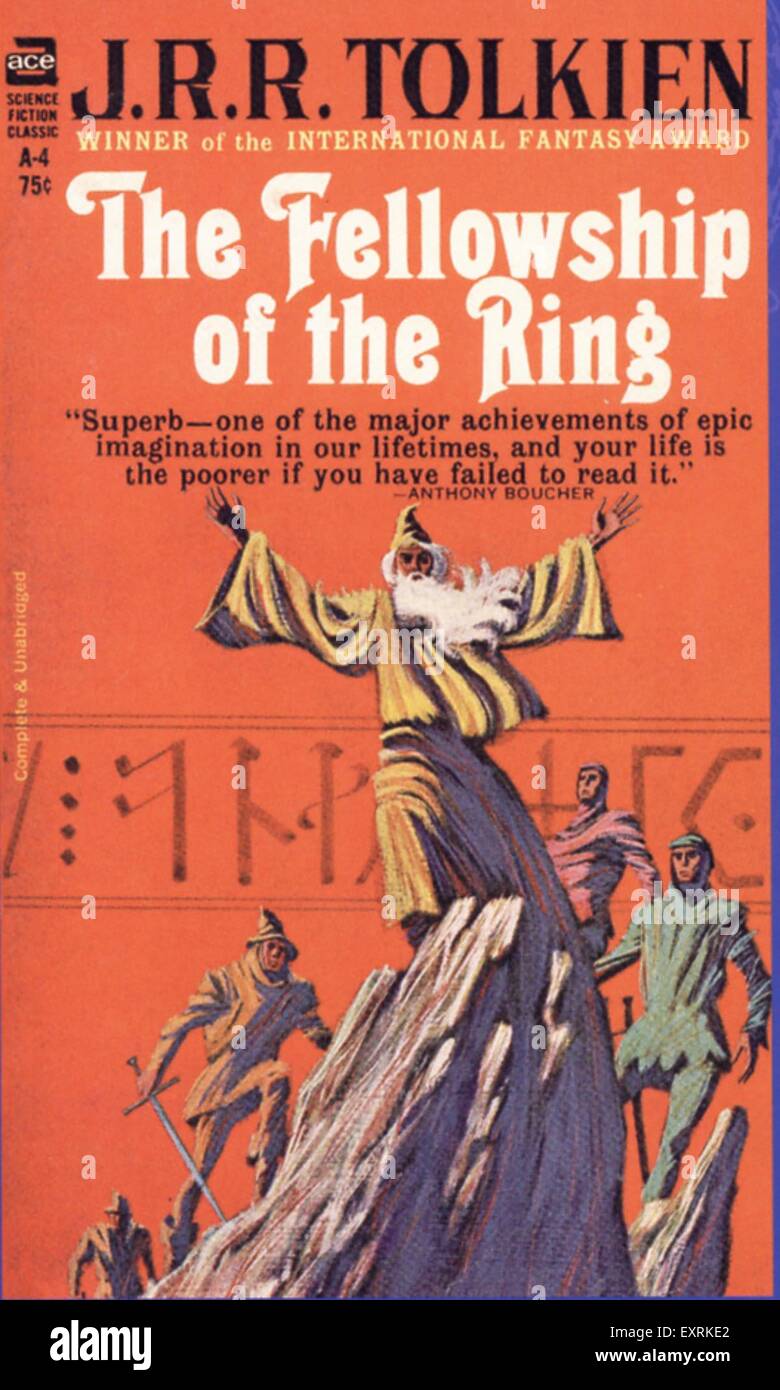
Summary: Prologue & Bk1 Ch1
Prologue: The Prologue is divided into four
parts.
1. Concerning Hobbits
This is an expository section. He learn about Hobbits, their size and good nature, their simple life, and their love of eating. We learn of their architecture and farming mode of life. We learn about their pre-history, their migration westward, the three types of early hobbits, their relations with men, elves, and dwarves, and their predominantly family oriented life styles. We learn some of the key historical events and the settlement into the shire. We learn of a relationship with a king of the men, who allowed them to settle into the shire and made an agreement with them. The king of the men has long disappeared but the hobbits honor that agreement still.
2. Concerning Pipe-weed
Another expository section. Hobbits learned a great deal of skills and industry from elves, dwarves, and men but the one invention they claim for their own is the use of a nicotine herb used for smoking in pipes. We learn how it was it was brought over to shire and how it was produced into variations of different flavors. Pipe smoking is the one “art” that hobbits take credit for. This art seems to have been picked up by many other non-Hobbit people.
3. Of the Ordering of the Shire
Another expository section. We learn of the four sections, called farthings, of the shire: North, South, East, and West. We learn of the relatively lack of government in the shire, and though lacking government is still “well-ordered.” We learn that the kings have been missing for over a thousand years, and of the one aristocratic hobbit family, given the title of Thain, the Took family. We learn of the lack of police needed. All that is needed to manage the misdeeds—one can hardly even call it crimes—are three sheriffs per farthing. There is body of hobbits who patrol the boundaries—called Bounders—ensuring that outsiders do not cause trouble. We learn—and this is actually the very start of the story—that since Bilbo had returned to the Shire many more Bounders were needed to address the increasing reports of complaints, strange people and creatures entering their homeland. The increase over the years had not gone unnoticed but none seemed to know what it was about.
4. Of the Finding of the Ring
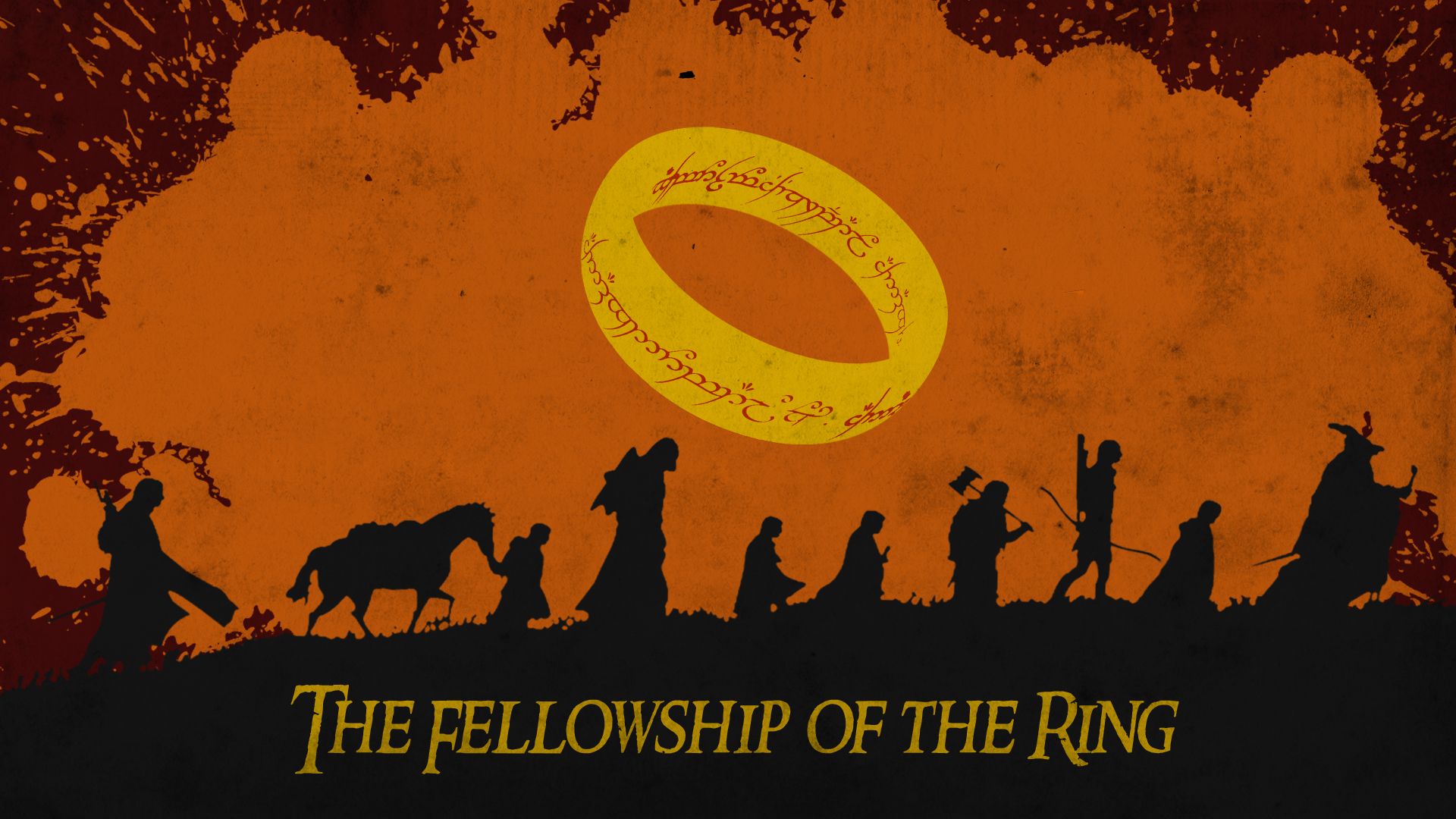
This is still expository but with back narrative. Here we are provided the details of how Bilbo came across the ring and brought it back. On his adventure, while trying to escape an attack from orcs, he got lost in the mine maze below the misty mountains. While groping in the dark on his hands and knees, he put his hand, quite by luck so it seemed, on a ring. Not being able to look at it in the dark, he put it in his pocket and continued on. The inhabitant of the dark underworld maze was a creature called Gollum, and he owned the ring but did not realize it yet he had lost it. Under normal circumstances Gollum would kill intruders and eat them, using the invisibility the ring provided whoever wore it, but not having the ring on him he decided to try to trick Bilbo into submitting. They would play a riddle game and whoever lost would submit to the other. Gollum had no intention of playing fair. When Bilbo asked what he had in his pocket, Gollum was unable to answer, and so decided to go get his ring to turn invisible and thereby slay Bilbo. When Gollum could not find the ring, he realized that was what Bilbo had in his pocket. In a panic he went back to kill Bilbo but by chance—again seemingly by chance—Bilbo slid the ring on his finger and discovered its magic power. Gollum thinking that Bilbo was trying to escape the underworld ran toward the entrance to head him off. Invisible, Bilbo followed him and was able to get to the entrance and escape. Bilbo would go on to use the ring to complete his quest and gain great wealth. Gollum swore he would get his “precious” back.
Sixty years had passed since that adventure, Bilbo always keeping the ring in his pocket, and never telling anyone about the ring. He would leave a written record of how he got the ring for posterity, but what he wrote was not entirely true. Only Gandalf the Wizard was able to draw the true story from him. We now come to his 111th birthday party where the narrative of LotR commences. It should be noted that the action of the novel starts in S.R. 1401—per the method of shire dating.
###
Note on the Shire Records
Another expository section before the beginning of the actual story. We learn of the libraries in the “Reunited Kingdom,” which if you pay close attention to the details occurred after the events of the LotR. If you notice Frodo brought back written accounts of the War of the Ring in 1420-21, some twenty years after the Bilbo’s 111th birthday celebration. Indeed we learn that from 1403 to 1418 Bilbo himself translated from the Elves books the Elder history. We learn of other collections in the library, seeming written by characters we will encounter in the story. So this short section is actually a flash forward in time.
###
Book I, Chapter 1: The Long-Expected Party
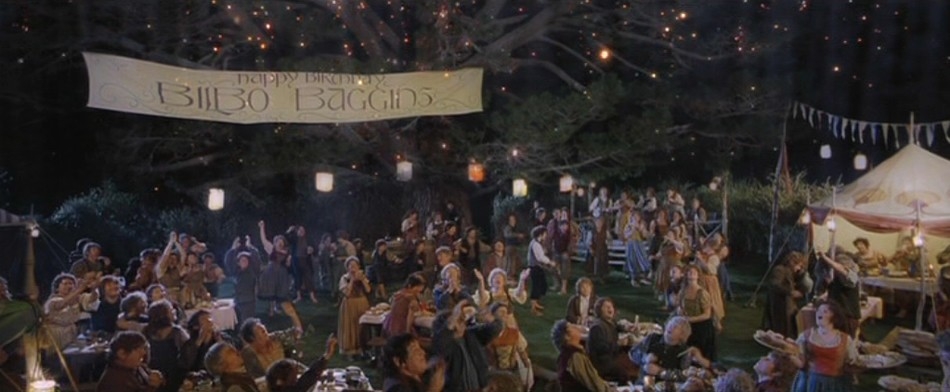
The story begins with Bilbo Baggins ready to celebrate his 111th birthday. He has sent out invitations to 144 friends and family, arranged for the festivities, including fireworks, and assembled presents to give each of the guests. (In hobbit culture, the one celebrating the birthday gives out the presents.) Bilbo has also arranged to leave his possessions to his adopted nephew, Frodo Baggins, and has made for a surprise, which he has told no one and will be announced at the party. The birthday falls on September 22nd, and seemingly by chance, it is also Frodo’s birthday. Frodo turns thirty-three. We are told that when Frodo was a child, both his parents drowned in a boating mishap, leaving Frodo an orphan. It was then that Bilbo adopted the child. At thirty-three, Frodo, according to hobbit culture, is now of adult maturity.
On the day of the party, Bilbo greeted all the guests, provided a feast of food, and let Gandalf, the Wizard, display his assortment of fireworks. After the fireworks, Bilbo served supper and at the climax of the affair came time for Bilbo’s speech. After thanking the guests and hoping they were enjoying themselves, he said he had three things to tell them. First he gave his love to all who had come and told them it did not feel as if 111 years had passed. Second to say that Frodo too is celebrating a birthday and that today he comes into his inheritance. Third, to announce that this is the end and is leaving and they will never see him again. Stepping down from the platform, with a flash of light he vanished into thin air.
In his invisibility, Bilbo returned to his home unnoticed to complete his packing and leave Frodo his ring. But instead of putting the ring into the prepared envelope he put it in his pocket. When just about finished packing, Gandalf enters his home and the two discuss Bilbo’s surprise departure of the shire. Gandalf wants to make sure that Bilbo leaves the ring for Frodo, and after Bilbo being caught in a lie that he has is forced by Gandalf to put the ring in the envelope. The two reach heated words because Bilbo really does not want to leave it. He says that it is his possession, and even uses Gollum’s word in reference to the ring as being his “precious.” It is only through the threat of Gandalf’s larger physical stature that Bilbo concedes and leaves behind the ring. With that, Bilbo grabs his favorite walking stick, calls out the three dwarves who will be helping him carry what possessions he will take, and departs for the open road.
Back at the party, the guests take their identified presents that Bilbo has tagged with their names. Most of the guests seem to have turned their noses at Bilbo and the whole affair. Frodo returns to his home and finds Bilbo gone but Gandalf waiting for him. Gandalf explains to him that Bilbo is gone and has left him the ring. Gandalf warns him about the dangers of the ring, and that he should limit its use. Gandalf tells Frodo he doesn’t fully understand the ring, and that he’s going to be gone for a while in order to find out. Frodo expected him to stay a while, but Gandalf tells him he has had to change his plans, and with that departs into the night.
###
Michelle Comment:
Wow, that's a good summary. You must take a gazillion
notes while your reading!
I must admit something. I've completely lost track that I was supposed to be looking for the religious imagery. I'm up to the scene with the ringwraiths. It's the kind of comfortable story that I just get lost in my reading!
My Reply to Michelle:
Well, in this first chapter, I think I can identify
two. First, the easy one: Frodo is 33 years old when the story starts, and
that's the age of Jesus when He started His ministry. Frodo then becomes
identified as a Christ-figure, and those of us who have read the book or saw
the movie know that he will be a suffering servant.
Second is the dark possessive nature of the ring on its bearer. It has transformed Bilbo to a possessive person and when it comes to giving up the ring, he will lie (a sin) to keep it. Perhaps more on this later.
Ellie Comment:
Thank you for this, Manny! Like Michelle, I also got
lost in the story, because it's just that good and brings about so much
nostalgia... But it's going to be interesting to approach this book from the
religious point of view and go past the general Christian theme of good versus
evil. I am definitely going to read more slowly so I can pick up on all the
imagery along the way!
One thought though, I always thought that Aragorn was the Christ-figure in the book, although both Frodo and Gandalf make sense to me, also
Michelle’s Reply to Ellie:
I think there are several Christ-like figures. I always noticed it when Galadriel says something Jesus did, " Do not let your hearts be troubled".
My Reply to Ellie:
Yes, Ellie, I agree with Michelle. There are several Christ figures throughout the novel, as we are all called to be suffering servants and Christ figures. Aragorn is most definitely a Christ figure.
Kerstin Comment:
The Shire is an interesting place. It is a land that
time and worldly cares forgot. The Hobbits live there for centuries taking care
of their gardens and their families. There are socio-economic differences, but
not enough to cause much tension. They love feasting. They have some technology
to aid in daily work, but not too much to be dominated by it. At birthday
parties the one having the birthday gives out presents, he does not receive
any. Hobbits value their history and the everyday items they use. If something
gets too old to be used, it is brought to a museum.
The Shire represents many Catholic ideals and there
are echoes of the Garden Eden here.
And then, very quietly, the outside world penetrates into this well-ordered society. Bilbo Baggins gets a hankering for traveling, something completely outlandish for a home-body Hobbit. He leaves on adventures, and when he comes back he brings with him a contagion, the Ring. Along with it he brings back riches no other Hobbit had seen before, and before long tensions rise. Ultimately, Bilbo decides to leave the Shire again. He is restless and doesn't quite feel himself anymore and he knows he doesn't quite fit into its quaint life anymore. He does so clandestinely with the magical powers of the Ring, which makes him invisible. Just like Adam, he cannot remain in the place that was destined for him.
My Reply to Kerstin:
What would you say are the Catholic ideals? Do you mean specific to Catholics and not to Protestants? After all, England was mostly Protestant, even the countryside, when Tolkien was growing up and writing. Of course Tolkien could have been thinking pre-Reformation. Still I can't think of anything that would be specific for Catholics and would not apply to Protestants.
Kerstin’s Reply:
In my comment I wrote "echoes of the Garden
Eden" for the very same reason you make here.
I find it interesting that the rising tensions within
the society started when the Ring was brought in. This is in parallel with the
snake entering the Garden. By the time we have Bilbo's birthday party it had
been there for 60 years. Bilbo left and only reluctantly left the Ring behind,
so the contagion is still there.
Another parallel to the Garden Eden are the gardens and cultivated fields of the Shire. A garden is not a wilderness. It is a carefully tended and cultivated place to provide nourishment but also leisure and enjoyment. In Genesis God walks in the Garden in the cool of the evening suggesting an enjoyable activity. You need caretakers to achieve this, to grow and harvest food as well as tending to livestock, to create an environment one finds joy in. The first tear in this carefully tended fabric was Bilbo leaving on his adventure. He no longer tended his garden. One other person who didn't tend the Garden was Adam.
My Reply to Kerstin:
Oh I'm sorry Kerstin. I read your comment incorrectly. I think we're in complete agreement then.
Patrick’s Comment:
The Hobbits live in a world secured by others. Though
their ancestors migrated and fought to build the Shire, current generations
live in abundance. Food, shelter, peace, no struggle.
It is Edenic, in a way. There are still jealousies and
rivalries, present in all fallen human communities.
Yet wolves and travelers walk the boundaries. They
sometimes even enter.
There’s no need for adventures or courage, but Bilbo
and Frodo reveal the restlessness within us. The spark of risk, of seeing the
mountains despite the fear, lives in all people. The majesty of the numinous.
I do want to keep in mind Tolkien’s adversion to allegory. He was a firm believer in letting the reader discover without the author’s coercion into certain themes.
###
There was one part of the
Prologue that I found puzzling and interesting and gave me something to ponder. Tolkien says that the Shire was a
“well-ordered” place. He uses that term
several times, including in the title of the third section of the Prologue, “Of
the Ordering of the Shire.” But it’s in
the first section of the Prologue where the Shire is described that Tolkien
emphasizes it being “well-ordered.”
Forty leagues it stretched from the Far Downs to the Brandywine Bridge, and fifty from the northern moors to the marshes in the south. The Hobbits named it the Shire, as the region of the authority of their Thain, and a district of well-ordered business; and there in that pleasant corner of the world they plied their well-ordered business of living, and they heeded less and less the world outside where dark things moved, until they came to think that peace and plenty were the rule in Middle-earth and the right of all sensible folk. They forgot or ignored what little they had ever known of the Guardians, and of the labours of those that made possible the long peace of the Shire. They were, in fact, sheltered, but they had ceased to remember it.
Notice Tolkien uses
“well-ordered” twice in that paragraph.
But then we learn in section three that there is no government, and that
the region has lacked a king for a thousand years.
The Shire at this time had hardly any ‘government’.
Families for the most part managed their own affairs. Growing food and eating
it occupied most of their time. In other matters they were, as a rule, generous
and not greedy, but contented and moderate, so that estates, farms, workshops,
and small trades tended to remain unchanged for generations.
There remained, of course, the ancient tradition concerning the high king at Fornost, or Norbury as they called it, away north of the Shire. But there had been no king for nearly a thousand years, and even the ruins of Kings’ Norbury were covered with grass. Yet the Hobbits still said of wild folk and wicked things (such as trolls) that they had not heard of the king. For they attributed to the king of old all their essential laws; and usually they kept the laws of free will, because they were The Rules (as they said), both ancient and just.
No government, no police force (as we learn a few paragraphs later), and no King. We don’t today live in a monarchy so we may not quite pick up the significance of a lack of a king. A king is usually the symbol of order in a country, a God anointed centralizing figure from which everyone else orients itself. And yet the Shire is “well-ordered” without a king for a thousand years. So whatever laws were established back a thousand years prior have been maintained through tradition and charity. This certainly strikes me as strange, maybe impossible, but it’s there. You can look at almost any European culture, medieval or otherwise, and within almost any hundred years span you can find the disintegration of order, let alone over a thousand years. How is the Shire well-ordered? Is it supposed to suggest Eden, as Kerstin alluded?
So I pondered this for a while. I came to the conclusion that hobbits are not men and there must be a more innate virtue in hobbits that allows them to not take advantage of lacking an enforcing social principle in their society. They is no need for a police force because they don’t steal or resort to violence. So does it represent Eden, or some sort of primitive ideal?
I don’t think it represents Eden. At Bilbo’s birthday celebration we see a fair amount of snipping between hobbits within Bilbo’s family. We see envy and superciliousness. They may not resort to violence but they are not sinless. However, it’s hard to picture hobbits as some sort of noble savage, but I think there is a touch of that. They are more virtuous than humans and seem to lack the drive for violence or greed. In that sense they do resemble the noble savage elsewhere in literature. They are also primitive in the sense of their resistance to technology. But where I think Tolkien is coming from is that they are an idealized people from the Middle Ages. They are yeomen and peasants and country folk who live by rituals and traditions, and thereby can sustain a well-ordered society.
###
I wanted to highlight
this passage because it shows hobbits are not saints, and so the Shire is not
Eden, but mainly because it was so well captured. This is from Bilbo’s speech.
My dear People,
began Bilbo, rising in his place. ‘Hear! Hear! Hear!’ they shouted, and kept on
repeating it in chorus, seeming reluctant to follow their own advice. Bilbo
left his place and went and stood on a chair under the illuminated tree. The
light of the lanterns fell on his beaming face; the golden buttons shone on his
embroidered silk waistcoat. They could all see him standing, waving one hand in
the air, the other was in his trouser-pocket.
My dear Bagginses
and Boffins, he began again; and my dear Tooks and Brandybucks, and Grubbs, and
Chubbs, and Burrowses, and Hornblowers, and Bolgers, Bracegirdles, Goodbodies,
Brockhouses and Proudfoots. ‘Proudfeet!’ shouted an elderly
hobbit from the back of the pavilion. His name, of course, was Proudfoot, and
well merited; his feet were large, exceptionally furry, and both were on the
table.
Proudfoots,
repeated Bilbo. Also my good
Sackville-Bagginses that I welcome back at last to Bag End. Today is my one
hundred and eleventh birthday: I am eleventy-one today! ‘Hurray! Hurray!
Many Happy Returns!’ they shouted, and they hammered joyously on the tables.
Bilbo was doing splendidly. This was the sort of stuff they liked: short and
obvious.
I hope you are all
enjoying yourselves as much as I am. Deafening cheers.
Cries of Yes (and No). Noises of trumpets and horns, pipes and flutes, and
other musical instruments. There were, as has been said, many young hobbits
present. Hundreds of musical crackers had been pulled. Most of them bore the
mark dale on them; which did not convey much to most of the hobbits, but they
all agreed they were marvellous crackers. They contained instruments, small,
but of perfect make and enchanting tones. Indeed, in one corner some of the
young Tooks and Brandybucks, supposing Uncle Bilbo to have finished (since he
had plainly said all that was necessary), now got up an impromptu orchestra,
and began a merry dance-tune. Master Everard Took and Miss Melilot Brandybuck got
on a table and with bells in their hands began to dance the Springle-ring: a
pretty dance, but rather vigorous.
But Bilbo had not finished. Seizing a horn from a
youngster nearby, he blew three loud hoots. The noise subsided. I shall not keep you long, he cried.
Cheers from all the assembly. I have
called you all together for a Purpose. Something in the way that he said
this made an impression. There was almost silence, and one or two of the Tooks
pricked up their ears.
Indeed, for Three
Purposes! First of all, to tell you that I am immensely fond of you all, and
that eleventy-one years is too short a time to live among such excellent and
admirable hobbits. Tremendous outburst of approval.
I don’t know half
of you half as well as I should like; and I like less than half of you half as
well as you deserve. This was unexpected and rather difficult.
There was some scattered clapping, but most of them were trying to work it out
and see if it came to a compliment.
Secondly, to
celebrate my birthday. Cheers again. I should say: our birthday. For it is, of
course, also the birthday of my heir and nephew, Frodo. He comes of age and
into his inheritance today. Some perfunctory clapping by the
elders; and some loud shouts of ‘Frodo! Frodo! Jolly old Frodo,’ from the
juniors. The Sackville-Bagginses scowled, and wondered what was meant by
‘coming into his inheritance’.
Together we score
one hundred and forty-four. Your numbers were chosen to fit this remarkable
total: One Gross, if I may use the expression. No
cheers. This was ridiculous. Many of the guests, and especially the
Sackville-Bagginses, were insulted, feeling sure they had only been asked to
fill up the required number, like goods in a package. ‘One Gross, indeed!
Vulgar expression.’
It is also, if I
may be allowed to refer to ancient history, the anniversary of my arrival by
barrel at Esgaroth on the Long Lake; though the fact that it was my birthday
slipped my memory on that occasion. I was only fifty-one then, and birthdays
did not seem so important. The banquet was very splendid, however, though I had
a bad cold at the time, I remember, and could only say ‘thag you very buch’. I
now repeat it more correctly: Thank you very much for coming to my little
party. Obstinate silence. They all feared that a song or
some poetry was now imminent; and they were getting bored. Why couldn’t he stop
talking and let them drink his health? But Bilbo did not sing or recite. He
paused for a moment.
Thirdly and finally, he said, I wish to make an ANNOUNCEMENT. He spoke this last word so loudly and suddenly that everyone sat up who still could. I regret to announce that – though, as I said, eleventy-one years is far too short a time to spend among you – this is the END. I am going. I am leaving now. GOOD-BYE!
I so loved that passage. The interplay between the speaker and the crowd and also specific people in the crowd was captivating and fun. Notice that Bilbo who we think is a positive character actually insults part of his guests (“and I like less than half of you half as well as you deserve” and “together we score one hundred and forty-four. Your numbers were chosen to fit this remarkable total”). So many of the guests were picked not out of love but to make some coincidental number! And the guests are not exactly saintly either. Some of the young hobbits strike up music before Bilbo finishes speaking, and a male and female start dancing to the music on top of the platform. Young people dancing tends to suggest sexual overtones, and you can imagine the chaos. This is hardly “well-ordered.” Bilbo has to get a bull horn to bring everyone back to focus. And then there are those who like the Sackville-Bagginses only attended to expect an inheritance.
Isn’t that just a very human—I know, they’re hobbits—passage? It’s just so well delineated that shows Tolkien’s skill as a narrator.
By the way, do you think there is any significance to 144? Tolkien is really highlighting it in this passage. It is a rather perfect number in that it is the square of twelve. The only association I can come up with is the 144,000 in the Book of Revelation, from chapters seven and fourteen. There I think the 144,000 represent the entire people of God or perhaps the entire people of Israel (12 tribes times 12,000 each tribe) or perhaps it just means a lot of people. Could Tolkien be using it in this way? I don’t know.
###
Michelle Comment:
"The first tear in this carefully tended fabric
was Bilbo leaving on his adventure. He no longer tended his garden. One other
person who didn't tend the Garden was Adam."
I hadn't looked at it like that until you mentioned it!
My Comment:
A garden is definitely a "well-ordered" space. I still think the reference is more toward an idealized medieval (or at least pre-modern) lifestyle than the Garden of Eden. But I could be wrong. Could be both I suppose.
Kelly’s Comment:
My impression is similar to what was mentioned earlier, that the Hobbits had an innate love of routine mainly centered around food and family. Even though there were plenty of eccentrics and vices on display, like the greed of those plundering Bilbo's house, they seemed to not have real malice, but opportunism and certainly felt entitled to his wealth. Much of what was imaginary!
Michelle Comment:
I have always enjoyed that passage as well! The Shire may seem idyllic, but hobbit interactions are just like those of humans.
Ellie’s Comment:
I have honestly never thought of the Shire as Eden;
it's an interesting thought, and there can be found some similarities, but
while I think the Shire is an idealized version of some medieval society, it's
not without sin (as fun as it might be to live there).
I do like Manny's thought about number 144. I don't think it's accidental that Tolkien chose this number, but I can't really point to what it means exactly.
Kerstin’s Reply:
Yes. It is 12 x 12 and means the fullness of
perfection. It can also simply mean a number that is really big, beyond
comprehension.
Twelve is a significant number in the Bible chiefly the 12 tribes and the 12 Apostles. Many European cathedrals have 12 major columns to represent the Apostles.
###
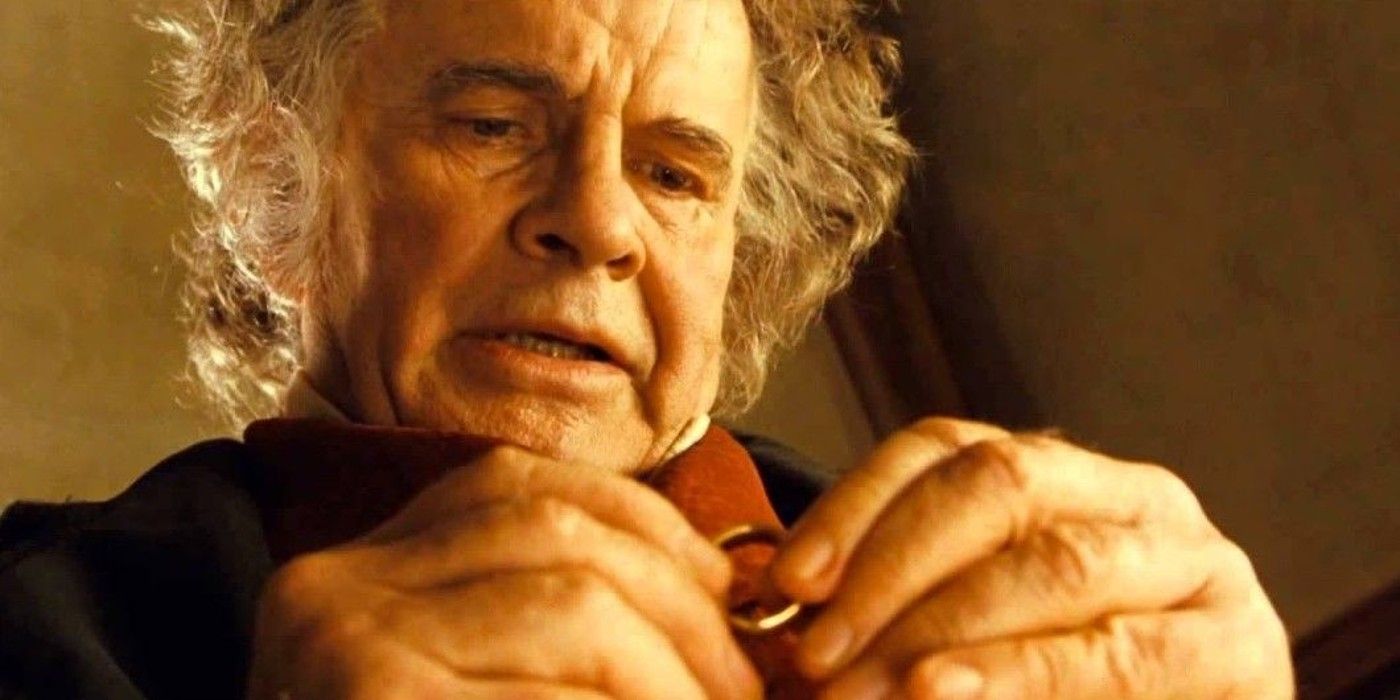
There is one more passage
that must be discussed in some detail before we move on, and that is the
confrontation between Gandalf and Bilbo over the ring. This was a moment of high conflict and with
real tension. When Bilbo has nearly
finished his packing and Gandalf enters his hobbit hole, Bilbo explained why he
is leaving the Shire and will be leaving everything to Frodo.
‘Everything?’ said Gandalf. ‘The ring as well? You
agreed to that, you remember.’
‘Well, er, yes, I suppose so,’ stammered Bilbo.
‘Where is it?’
‘In an envelope, if you must know,’ said Bilbo
impatiently. ‘There on the mantelpiece. Well, no! Here it is in my pocket!’ He
hesitated. ‘Isn’t that odd now?’ he said softly to himself. ‘Yet after all, why
not? Why shouldn’t it stay there?’
Gandalf looked again very hard at Bilbo, and there was
a gleam in his eyes. ‘I think, Bilbo,’ he said quietly, ‘I should leave it
behind. Don’t you want to?’
‘Well yes – and no. Now it comes to it, I don’t like
parting with it at all, I may say. And I don’t really see why I should. Why do
you want me to?’ he asked, and a curious change came over his voice. It was
sharp with suspicion and annoyance. ‘You are always badgering me about my ring;
but you have never bothered me about the other things that I got on my
journey.’
‘No, but I had to badger you,’ said Gandalf. ‘I wanted
the truth. It was important. Magic rings are – well, magical; and they are rare
and curious. I was professionally interested in your ring, you may say; and I
still am. I should like to know where it is, if you go wandering again. Also I
think you have had it quite long enough. You won’t need it any more, Bilbo,
unless I am quite mistaken.’
Bilbo flushed, and there was an angry light in his
eyes. His kindly face grew hard. ‘Why not?’ he cried. ‘And what business is it
of yours, anyway, to know what I do with my own things? It is my own. I found
it. It came to me.’
‘Yes, yes,’ said Gandalf. ‘But there is no need to get
angry.’
‘If I am it is your fault,’ said Bilbo. ‘It is mine, I tell you. My own. My Precious. Yes, my Precious.’
So as I mentioned in the summary, we see the effect of the long term possession of the ring on Bilbo. “His kindly face grew hard.” It is not just a keepsake or even a tool to use to overcome dangers. It has become a talisman, an idol, and finally an addiction. The possession is so powerful that he who possesses it becomes possessed by it. (Someone said to me that our cell phones had become our ring!) I don’t recall if Tolkien had described the full extent of the power of the ring in the previous novel, The Hobbit, where it first made its appearance, but we see here what the ring does to the owner. A genial man becomes a liar and then rabid in the way he turns on a friend who is only thinking the best for him by asking him to give up the ring. That Bilbo calls it his “precious” echoing Gollum shows that the possessor is powerless to resist the effect of the ring.
After the two nearly get
into a physical altercation, Bilbo offers an apology.
Bilbo drew his hand over his eyes. ‘I am sorry,’ he
said. ‘But I felt so queer. And yet it would be a relief in a way not to be
bothered with it any more. It has been so growing on my mind lately. Sometimes
I have felt it was like an eye looking at me. And I am always wanting to put it
on and disappear, don’t you know; or wondering if it is safe, and pulling it
out to make sure. I tried locking it up, but I found I couldn’t rest without it
in my pocket. I don’t know why. And I don’t seem able to make up my mind.’
‘Then trust mine,’ said Gandalf. ‘It is quite made up.
Go away and leave it behind. Stop possessing it. Give it to Frodo, and I will
look after him.’
Bilbo stood for a moment tense and undecided.
Presently he sighed. ‘All right,’ he said with an effort. ‘I will.’ Then he
shrugged his shoulders, and smiled rather ruefully. ‘After all that’s what this
party business was all about, really: to give away lots of birthday-presents,
and somehow make it easier to give it away at the same time. It hasn’t made it
any easier in the end, but it would be a pity to waste all my preparations. It
would quite spoil the joke.’
‘Indeed it would take away the only point I ever saw
in the affair,’ said Gandalf.
‘Very well,’ said Bilbo, ‘it goes to Frodo with all
the rest.’ He drew a deep breath. ‘And now I really must be starting, or
somebody else will catch me. I have said good-bye, and I couldn’t bear to do it
all over again.’ He picked up his bag and moved to the door.
‘You have still got the ring in your pocket,’ said the
wizard.
‘Well, so I have!’ cried Bilbo. ‘And my will and all
the other documents too. You had better take it and deliver it for me. That
will be safest.’
‘No, don’t give the ring to me,’ said Gandalf. ‘Put it
on the mantelpiece. It will be safe enough there, till Frodo comes. I shall
wait for him.’
Bilbo took out the envelope, but just as he was about to set it by the clock, his hand jerked back, and the packet fell on the floor. Before he could pick it up, the wizard stooped and seized it and set it in its place. A spasm of anger passed swiftly over the hobbit’s face again. Suddenly it gave way to a look of relief and a laugh.
Notice how like an
addict, Bilbo tries to manipulate the situation to keep his addiction. Isn’t it also surprising how Gandalf is also
afraid of it? He knows there is more to
the power of the ring than what is apparent with Bilbo. Let me forward to the end of the night where
Frodo has said goodbye to the guests and is left with Gandalf. In their final conversation, the ring comes
up.
‘That’s interesting,’ said Gandalf. ‘Well, what did
you think of it all?’
‘If you mean, inventing all that about a “present”,
well, I thought the true story much more likely, and I couldn’t see the point
of altering it at all. It was very unlike Bilbo to do so, anyway; and I thought
it rather odd.’
‘So did I. But odd things may happen to people that
have such treasures – if they use them. Let it be a warning to you to be very
careful with it. It may have other powers than just making you vanish when you
wish to.’
‘I don’t understand,’ said Frodo.
‘Neither do I,’ answered the wizard. ‘I have merely
begun to wonder about the ring, especially since last night. No need to worry.
But if you take my advice you will use it very seldom, or not at all. At least
I beg you not to use it in any way that will cause talk or rouse suspicion. I
say again: keep it safe, and keep it secret!’ ‘You are very mysterious! What
are you afraid of?’
‘I am not certain, so I will say no more. I may be able to tell you something when I come back. I am going off at once: so this is good-bye for the present.’ He got up.
Frodo is completely
unaware of the full power of the ring and suspects nothing more than just an
innocent magical novelty, perhaps a trinket.
Gandalf suspects way more than that, and has seen the effect on its
habitual wearers, but is unsure of the significance and power of the ring. He will go on his own personal quest to find
out. And so we should also now look at
the novel’s epigraph, which I did not bring up yet.
Three Rings for the Elven-kings under the sky,
Seven for the
Dwarf-lords in their halls of stone,
Nine for Mortal Men doomed to die,
One for the
Dark Lord on his dark throne
In the Land of Mordor where the Shadows lie.
One Ring to
rule them all, One Ring to find them,
One Ring to
bring them all and in the darkness bind them
In the Land of Mordor where the Shadows lie.
Let’s not discuss what all this means now. Part of the journey of the novel is learning the significance of the ring. But just as Gandalf suspects, we glean here that there is more to it and that it is even something darker than what it does to the possessor.
###
Kerstin’s Comment:
Bilbo keeps the ring secret for 60 years before it is
passed on to Frodo. He keeps it on a chain in his pocket. He must have sensed
that this ring is more than a party trick. I also find it curious that he
didn't just stuff it away somewhere where no outsider would find it like you
would any type of valuable you want to keep safe. He wants to stay in control
on the whereabouts of the ring.
A ring symbolizes a binding of some sort, a belonging
to someone or some other affiliation. Wearing a wedding ring is the visible
sign of being bound to a spouse in an exclusive life-long union, the couple
having given a solemn promise before God and men. Clergy wear rings, including
bishops and popes symbolizing their belonging to the Church. We also have class
rings, signifying a right of passage, of having accomplished a certain amount
of schooling. We wear these rings out of our own free will to communicate to
the world something about ourselves.
Without going too deep into this, I find it interesting that Bilbo and Frodo keep the ring on a chain. With the chain the ring itself is bound. This is its weakness. It still has power, but it can get transported without it having complete control over the bearer. So already in these early chapters we know the ring is not all-powerful.
My Reply to Kerstin:
Kerstin, I think the ring possess them. I think the
power of the ring is such that the owner does not want to be separate from it.
I think we see this in the next chapter with Frodo. Call it separation
response. ;)
As to the symbol of the ring, I had been scratching my head and trying to make it fit in the sense of a marriage ring. If you read the Wikipedia entry on the Ring you'll see several theories if you scroll down to "Origins." Apparently it comes out of Norse mythology and shares its concept with Richard Wagner's opera cycle Der Ring des Nibelungen. It seems that in Norse mythology a ring symbolizes power as opposed to a bond of some sort. Very interesting. Tolkien also denied his LotR ring was similar to Wagner's ring, though they both may have had similar inspiration. I don't know anything about Der Ring des Nibelungen.
Michelle Comment:
One thing came to me. Frodo has been chosen to carry the ring. The ring is malevolent and evil, like sin. It's like he's bearing the ring/evil to Mordor, as our Lord bore our sins to Golgotha.
My Reply to Michelle:
I think that fits. I think that's a great insight,
Michelle.

No comments:
Post a Comment