Today,
December 16th is sometimes attributed to be the birthday of Ludwig
van Beethoven, perhaps the greatest musical composer who ever lived.There’s no official birthday since there is
no record.There is a record of him being
baptized on the 17th, and so they assume he was born the day
before.[I like to think he was born two
days before actually, the 15th, and so it would make him born on my
birthday!]It’s not just any birthday;
it’s the 250th anniversary of his birth, and should be a moment for
reflection.When one thinks of
Beethoven, one’s thoughts have to go toward just how great a composer he
was.We know of his greatness: the nine
symphonies, the five piano concertos, the one violin concerto, the sixteen
string quartets, the countless sonatas of various instrumentation, and so on,
all of the highest craftsmanship and sublimity.
And
his ego went along with all of that greatness.He knew he was great, and he acted on the belief that fate had led him
to greatness.Even as a young man when he
came to Vienna to study under the almost equally great composer and his senior,
Joseph Hayden, and let us say that after some lessons the twenty year old
Beethoven began to scorn at his elder.Their two styles are very different.Hayden seems to always strive for a certain elegance and order, and even
humor, while Beethoven can be dark, chaotic, and brooding.I’ve always felt that Beethoven’s innovation
of making the third movement of his symphonies into a scherzo was a direct mock
at Joseph Hayden.Typically, before
Beethoven, and perfected by Hayden, the third movement of symphonies was
traditionally set as a Minuet and Trio, a highly ordered and stylized dance
genre.Scherzo means joke in Italian and Beethoven, as Romantic era
egoist, by overturning the tradition with a “joke”is ridiculing the order and
formulaic style of the classical era.
And
this brings me to my quote of the day, "a great man is always willing to
be little,” articulated by the Romantic era essayist, and perhaps also a bit of
an egoist, Ralph Waldo Emerson.Now by
egoist I don’t mean to say Beethoven was necessarily selfish.I don’t believe he was.By egoist I mean to say that his aesthetic
was built on the ego of the individual and the greatness that one perceives the
artist to be.He was bold and
self-affirming, and thought of himself as a “great man.”The roots of the artist as a self-inspired
genius might be traced to Beethoven.
And
yet, later in life, we get a sense that he had gained humility.He was not in good health for most of his later
years, and he only lived to 56.His
output was immense, so one gets a sense of a man having lived a long life.But that is not so.Besides his deafness, he had intestinal
problems, kidney problems, probably Paget’s Disease of the bone, and some sort
of virus (perhaps measles) that kept recurring.All these ailments produced an irritable man who drove people away.He couldn’t hear them, and they didn’t want
to hear him.
But
in 1825, two years before his death, he had an intestinal issue which brought
him close to death.From that near-death
experience came what some call his greatest musical composition, the third
movement of his String Quartet in A minor Op. 132 (No. 15), the third movement given
the name “Hymn of Thanksgiving.”You can
read about his illness and the composition here in this BBC article by Andrea Valentino, “Beethoven 250: The ultimate songof health after illness.”
In
the piece, the great man becomes small.The full name of the movement that Beethoven himself gave it is "Holy
song of thanksgiving of a convalescent to the Deity, in the Lydian mode" ("Heiliger
Dankgesang eines Genesenen an die Gottheit, in der lydischen Tonart").The piece is slow, meditative, a conversation
with God, thanking him for his recovery.What I get is pure humility, the early dissonance resolving into harmonious
psalm.Valentino from the article tries to
describe the piece.
How, then, to explain the
Heiliger Dankgesang? Perhaps the
fifth and final part of the movement can help. At the end of the second New
Strength section, the slow pace returns again – but only for a moment. From
there the original eight-note chorale is reduced to five notes, then three,
then two, then one. At the same time, the simple accompanying prelude becomes
more complex, turning the whole soundscape into a floating world of
transcendental emotion, the composer ordering musicians to play with the
“utmost, deepest, and sincere feeling”.
On
his 250th anniversary of his birth, please listen to a great man turn small
before the face of God.
Very
few of us will ever be acknowledged on the 250th anniversary of our
birth.I know I won’t.Only a great man will have such
acknowledgments.But remember, even a
great man returns to the littleness of dust, and unto dust we shall all return.
Edit: If I may point out something about the composition, the fifth and final part of the piece that Valentino refers to starts at about 10:20 and is about a third of the entire length. Leading up to 10:20 you have sections that could be described as slow/fast/slow/fast, and I think they are supposed to reflect illness, semi-recovery, relapse, recovery. The fifth part is an expression of thanks to the Almighty for his ultimate recovery. The melody in that fifth part is heart wrenching. When one puts it into the context, the psalm – as I called it – is a beautiful prayer of gratitude.
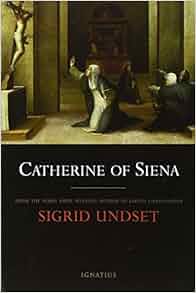
This
is the second read of this great biography of my beloved patron saint and
patron saint of this blog.Indeed it was
this book that made me aware of St. Catherine of Siena in the first place.It was in my first year of this blog that I
read Catherine of Siena written by
the great Nobel winning author, Sigrid Undset.That was in 2013, and between March and April of that year I wrote four posts on the book.I called them “Book Excerpts” back then but
they are essentially the same type of posts I have been writing on books that
you see now.To my surprise the Catholic
Thought Book Club and Goodreads selected Undset’s book for a recent read and I happily
participated.In this and several
following posts I will post my thoughts and comments from the second read.I don’t know if I’ve had a book read twice
while I’ve been blogging.I think this
is the first.I don’t know if I’m
repeating myself, contradicting myself, or adding new observations that reflect
a more devout person from seven years ago.Someday I may compare. But I have no intention now.I want this to be fresh, as if I had not
written on my St. Catherine before.First let me start with an introduction to the saint.
Introduction
to St. Catherine of Siena
Bishop
Baron in the first group of his Pivotal Players series had only six men and
women who he considered important enough to be considered pivotal to
Catholicism, and included in those six was St. Catherine of Siena, the only
woman I may add.Why did he include St.
Catherine with Saints Thomas Aquinas and St. Frances of Assisi?Well, you probably have to watch his video of
her life and teachings to hear his answer, but I think by reading this book you
will come to a similar conclusion: St. Catherine of Siena incorporates into her
being every element of sainthood possible.She lived a life of uncompromising holiness.You may be surprised to learn she was not a
consecrated religious, but a Third Order Dominican.Prayer was the foundation of her life, which
then led to an active ministry of taking care of the sick and the poor.She was a mystic who had who supernatural
experiences on an almost daily basis but was involved in the issues and
politics of her day.Though uneducated,
she learned Catholic theology so well she was correcting theologians, and she went
on to write—at some point she learned to read and write either mystically or
through perseverance—one of the great Catholic theological classics, her Dialogue.I marvel at her writings—mostly her
letters—for her intense prose and wonderful imagery.She was a natural poet.She was a little woman from a non-aristocratic
family who became so influential she was offering advice to kings and queens,
and her greatest accomplishment was in persuading Pope Gregory XI to return the
papacy to Rome after almost a century in Avignon.
I
once put together for my Lay Dominican chapter an outline of her life.I’ll share it with you here.I broke it down to four parts: her biography,
her mysticism, her ministry, and her writings and theology.And then for good measure I ended it with a
number of her quotes.Perhaps this will
be useful as you read her biography.
1)Biography
a)Born
March 25, 1347 with a twin sister (Giovanna) as the 23rd and 24th
children of Jacopo di Benincasa and Lapa di Puccio Piagenti.
b)She
has a vision of Christ at the age of six and at seven vows to virginity.
c)At
the age of fifteen she cuts off her hair to prevent being married.
d)At
the age of sixteen she joins the Dominican Sisters of Penance, otherwise known
as the Mantellate.
e)From
the age of seventeen to twenty she is confined to a small room, ostensibly as
punishment for not willing to marry.This is her “cell” in which she performed many performed many
austerities and penances.This is when
she started her extreme fasting.
f)Throughout
her life she went around performing many acts of mercy but especially from the
age of twenty, when she symbolically comes out of her cell, through age
twenty-eight when the most recent plague ends.It is the activities in this period that led her to be the patron saint
of nurses.
g)At
the age of 29 at the behest of the Florentines she travels to the Pope in Avignon
to resolve a dispute between the Papacy and Florence.There she urges the Pope to return the Papacy
back to Rome.
h)Her
fasting led her not keep any food down; she lived for a number of years
entirely on the Eucharist.
i)At the age of 33 dies in Rome on April 29,
1380.She is buried in Rome (Basilica of
Santa Maria sopra Minerva) except for her head and thumb which were sent to
Siena and reside at the Basilica of San Domenico.
j)She was canonized in 1461 and made a
Doctor of the Church in 1970.
2)Mysticism
a)Vision
of Christ in papal garb at the while walking in Siena (age 6).
b)Mystical
marriage with Christ (age 20?).
c)Vision
and conversation with Christ who forces her to come out of her cell (age 20).
d)Mystical
exchange of hearts with Christ (age 23).
e)Mystical
death (age 23).
f)Receives
the Invisible Stigmata (age 28).
g)Soul
separation from her body (age 32).
h)Whenever
at Mass the experience would be so intense that she would faint and go into a
trance.
i)Whenever in that trance state, she would
babble off her conversations with Christ.Her followers would jot down whatever they could gather from her
mumblings.It is in this state that we
get her prayers and her theological book called The Dialogue.
3)Ministry
a)Corporal
works of mercy as part of the Montellate,
especially taking care of the sick and dying.
b)Tirelessly
helped in care of those inflamed with the Black Death plague of the mid
fourteenth century.
c)She
attracted a band of followers which she called her spiritual family who went
around and helped and fulfilled her acts of mercy.The group included religious and secular,
poor and rich, peasantry and nobility.It was through her personality, gregarious and upbeat, that so many
people listened and followed her.
d)Through
her letters and preaching, she led many people to return and enrich their
faith.
e)She
intervened to resolve disputes between various Italian City States, including
the Papal State.
f)She
was instrumental in convincing Pope Gregory XI.She even had the chutzpa to tell the Pope to “be a man” when he was
wavering in fear.
g)She
tried to resolve The Great Schism that broke out after Pope Gregory XI’s death,
where ultimately three different Popes claimed the papal title.She was unsuccessful and perhaps contributed
to her loss of strength and subsequent death.
4)Writings and Theology
a)It
should be noted that she was uneducated and either through miracle or through
self-teaching, learned to read and write.I don’t know for sure if she physically wrote down things herself.From what we know she had scribes that wrote
her words down.
b)She
wrote elaborate prayers of which 26 survive, many of which seem like poems.
c)She
wrote hundreds of letters to all strata of people, the Pope, religious,
secular, soldiers, rulers, and aristocracy, both men and women, either
imploring them to do some good action or preaching some theological point.380 letters survive.
d)She
dictated The Dialogue, a series of
conversations she had in a trance with God the Father which consolidated her
theological ideas.Among these ideas is
the notion of the Christ Bridge—Christ crucified as a bridge between earth and
heaven.
e)Her
writing is filled with intense imagery, almost like that of a poet.
Famous
Quotes:
"You
know...that to join two things together there must be nothing between them or
there cannot be a perfect fusion. Now realize that this is how God wants our
soul to be, without any selfish love of ourselves or of others in between, just
as God loves us without anything in between."Letter T164
"The
human heart is always drawn by love." Dialogue 26
"In
your nature, eternal Godhead, I shall come to know my nature. And what is my
nature, boundless Love? It is fire, because you are nothing but a fire of love.
And you have given humankind a share in this nature for by the fire of love you
created us." Prayer 12
"It
is the nature of love to love as much as we feel we are loved and to love
whatever the one we love loves." Letter T299
You,
eternal Trinity, are a deep sea. The more I enter you, the more I discover, and
the more I discover, the more I seek you." Dialogue 167.
"You
are a fire always burning but never consuming; you are a fire consuming in your
heat all the soul's selfish love; you are a fire lifting all chill and giving
light." Dialogue 167.
"This
[painful thing] happens to me with the permission of God, according to His
providence, as in all things that befall me, all tribulation that He sends me
He wills only one single thing: my sanctification." Spiritual Document
(William of Flete's account of a meeting with St. Catherine at which she
briefly summarized her doctrine).
"O
God eternal, Oh boundless Love! Your creatures have been wholly kneaded into
you and you into us--through creation, through the will's strength, through the
fire with which you created us, and through the natural life you gave
us."Prayer 14
"Love
follows knowledge." Dialogue 1
###
To
get a feel for her writing, let me give you a sample, this from one of her
letters.It’s in my personal notes and
unfortunately I didn’t write down which letter this came from.this little passage outlines one of her most
profound theological ideas, Christ crucified as a ladder to holiness, a ladder
to God.She would go on to develop this
further in her great work, The Dialogue.
And if you ask, “What is
the way?” I will tell you it is the way Christ chose, the way of disgrace,
suffering, torment, and scourging.“And
how?”Through genuine humility and blazing
charity, an indescribable love by which we renounce all worldly riches and
ambition.And from humility we progress
to obedience, as I have said.Upon such
obedience follows peace, since obedience frees us from all suffering and gives
us every joy—for the selfish will, the source of suffering, has been done away
with.
To make it possible to
climb to this perfection, Christ actually made for us a staircase of his body.
If you look at his feet,
you see that they are nailed fast to the cross to form the first stair.This is because we have first to rid
ourselves of all selfish will.For just
as the feet carry the body, desire carries the soul.Reflect that we can never have any virtue at
all if we don’t climb this first stair.Once you have climbed it, you arrive at deep and genuine humility.
Climb the next stair
without delay and you come to the open side of God’s Son.There you find the fiery abyss of divine
charity.At this second stair, his open
side, you find a storehouse filled with fragrant spices.There you find the God-Man.There your soul is so sated and drunk that
you lose all self-consciousness, just like a drunkard intoxicated with wine;
you see nothing but his blood, shed with such blazing love.
Then, aflame with desire,
you get up and climb to the next stair, his mouth.There you find rest in quiet calm; there you
taste the peace of obedience.A person
who is really completely drunk, good and full, falls asleep, and in that sleep
feels neither pleasure nor pain.So too
the spouse of Christ, sated with love, falls asleep in the peace of her
Bridegroom.Her feelings too are asleep
so that, even if all sorts of troubles befall her, they don’t disturb her at
all.If she is materially well off she
feels no disproportionate pleasure, because she has already stripped herself of
all that is at the first stair.This,
then, is where she finds herself conformed with Christ crucified, united with
him.
Now
mind you, this is a woman with no formal education.Notice how vivid the imagery and how the
imagery develops into abstract ideas.So
much there in just a handful of words.
But the day of the Lord will come
like a thief, and then the heavens will pass away with a mighty roar and
the elements will be dissolved by fire, and the earth and everything done on it
will be found out.
-2
Peter 3:10
That simile, to “come like a thief,” has such
great resonance.It is so powerful, and
then the imagery of disintegration sends shivers down ones spine.Peter is referring to the end of times of
course but it can also be read as our mortal end.
For
the feast day of Christ the King, which was a couple of Sundays ago (November
22nd), we read the encyclical, Quas primas,by Pius XI, written in 1925, on the institution of the Feast of Christ the King.Here are some of my thoughts.You can read the encyclical here.
First, Pius lays out the scriptural justification of the title and feast:
8. Do we not read
throughout the Scriptures that Christ is the King? He it is that shall come out
of Jacob to rule,[3] who has been set by the Father as king over Sion, his holy
mount, and shall have the Gentiles for his inheritance, and the utmost parts of
the earth for his possession.[4] In the nuptial hymn, where the future King of
Israel is hailed as a most rich and powerful monarch, we read: "Thy
throne, O God, is for ever and ever; the scepter of thy kingdom is a scepter of
2 righteousness."[5] There are many similar passages, but there is one in
which Christ is even more clearly indicated. Here it is foretold that his
kingdom will have no limits, and will be enriched with justice and peace:
"in his days shall justice spring up, and abundance of peace...And he
shall rule from sea to sea, and from the river unto the ends of the
earth."[6]
9. The testimony of the
Prophets is even more abundant. That of Isaias is well known: "For a child
is born to us and a son is given to us, and the government is upon his
shoulder, and his name shall be called Wonderful, Counselor, God the mighty,
the Father of the world to come, the Prince of Peace. His empire shall be
multiplied, and there shall be no end of peace. He shall sit upon the throne of
David and upon his kingdom; to establish it and strengthen it with judgment and
with justice, from henceforth and for ever."[7] With Isaias the other
Prophets are in agreement. So Jeremias foretells the "just seed" that
shall rest from the house of David - the Son of David that shall reign as king,
"and shall be wise, and shall execute judgment and justice in the
earth."[8] So, too, Daniel, who announces the kingdom that the God of
heaven shall found, "that shall never be destroyed, and shall stand for
ever."[9] And again he says: "I beheld, therefore, in the vision of
the night, and, lo! one like the son of man came with the clouds of heaven. And
he came even to the Ancient of days: and they presented him before him. And he
gave him power and glory and a kingdom: and all peoples, tribes, and tongues
shall serve him. His power is an everlasting power that shall not be taken
away, and his kingdom shall not be destroyed."[10] The prophecy of Zachary
concerning the merciful King "riding upon an ass and upon a colt the foal
of an ass" entering Jerusalem as "the just and savior," amid the
acclamations of the multitude,[11] was recognized as fulfilled by the holy
evangelists themselves.
10. This same doctrine of
the Kingship of Christ which we have found in the Old Testament is even more
clearly taught and confirmed in the New. The Archangel, announcing to the
Virgin that she should bear a Son, says that "the Lord God shall give unto
him the throne of David his father, and he shall reign in the house of Jacob for
ever; and of his kingdom there shall be no end."[12]
11. Moreover, Christ
himself speaks of his own kingly authority: in his last discourse, speaking of
the rewards and punishments that will be the eternal lot of the just and the
damned; in his reply to the Roman magistrate, who asked him publicly whether he
were a king or not; after his resurrection, when giving to his Apostles the
mission of teaching and baptizing all nations, he took the opportunity to call
himself king,[13] confirming the title publicly,[14] and solemnly proclaimed
that all power was given him in heaven and on earth.[15] These words can only
be taken to indicate the greatness of his power, the infinite extent of his
kingdom. What wonder, then, that he whom St. John calls the "prince of the
kings of the earth"[16] appears in the Apostle's vision of the future as
he who "hath on his garment and on his thigh written 'King of kings and
Lord of lords!'."[17] It is Christ whom the Father "hath appointed
heir of all things";[18] "for he must reign until at the end of the
world he hath put all his enemies under the feet of God and the
Father."[19]
Paragraphs
ten and eleven make the case for Christ as king from New Testament, but what
really makes the argument solid is the justification presented from the Old
Testament prophets, mostly in paragraph nine.Let me quote P9 in its entirety.
9. The testimony of the
Prophets is even more abundant. That of Isaias is well known: "For a child
is born to us and a son is given to us, and the government is upon his
shoulder, and his name shall be called Wonderful, Counselor, God the mighty,
the Father of the world to come, the Prince of Peace. His empire shall be
multiplied, and there shall be no end of peace. He shall sit upon the throne of
David and upon his kingdom; to establish it and strengthen it with judgment and
with justice, from henceforth and for ever."[7] With Isaias the other
Prophets are in agreement. So Jeremias foretells the "just seed" that
shall rest from the house of David - the Son of David that shall reign as king,
"and shall be wise, and shall execute judgment and justice in the
earth."[8] So, too, Daniel, who announces the kingdom that the God of
heaven shall found, "that shall never be destroyed, and shall stand for
ever."[9] And again he says: "I beheld, therefore, in the vision of
the night, and, lo! one like the son of man came with the clouds of heaven. And
he came even to the Ancient of days: and they presented him before him. And he
gave him power and glory and a kingdom: and all peoples, tribes, and tongues
shall serve him. His power is an everlasting power that shall not be taken
away, and his kingdom shall not be destroyed."[10] The prophecy of Zachary
concerning the merciful King "riding upon an ass and upon a colt the foal
of an ass" entering Jerusalem as "the just and savior," amid the
acclamations of the multitude,[11] was recognized as fulfilled by the holy
evangelists themselves.
Those
numbers are footnotes, which I’m not going to provide but you can find them in
the text.Christ is the son of David, and
perhaps more importantly the fulfillment of the typology presented in the Old
Testament.As David is the great King of
Israel, Christ stemming from David’s lineage is the great King of heaven and
earth.
###
I
found paragraph 18 to be extremely powerful.It starts off with a quote from Pope Leo XIII.
18. Thus the empire of our
Redeemer embraces all men. To use the words of Our immortal predecessor, Pope
Leo XIII: "His empire includes not only Catholic nations, not only
baptized persons who, though of right belonging to the Church, have been led
astray by error, or have been cut off from her by schism, but also all those
who are outside the Christian faith; so that truly the whole of mankind is
subject to the power of Jesus Christ."[28]
So
Christ is not just the King of Roman Catholics or the King of Christians.He is the King of all.Pope Leo XIII must be thinking of Paul’s
Epistle to the Philippians:
…though he was in
the form of God, did not regard equality with God something to be grasped.Rather, he emptied himself, taking the form
of a slave, coming in human likeness;and found human in appearance,he humbled himself,becoming obedient to death, even death on
a cross.Because of this, God
greatly exalted him and bestowed on him the namethat is above every
name,that at the name of Jesus every knee should bend,of
those in heaven and on earth and under the earth,and every tongue
confess that
Jesus Christ is Lord,to the glory of God the Father.(Phil 2:6-10)
When
we refer to Jesus Christ is Lord, we do mean king.A king is the highest lord of a nation, and
Jesus is “King of Kings, Lord of Lords.”The paragraph continues.
Nor is there any
difference in this matter between the individual and the family or the State;
for all men, whether collectively or individually, are under the dominion of
Christ. In him is the salvation of the individual, in him is the salvation of
society. "Neither is there salvation in any other, for there is no other
name under heaven given to men whereby we must be saved."[29] He is the
author of happiness and true prosperity for every man and for every nation.
"For a nation is happy when its citizens are happy. What else is a nation
but a number of men living in concord?"[30]
Christ
as King then is at the crux of salvation of the individual, the prosperity of
society, and the happiness of people.It
is through the authority of His divinity that upholds everything.That’s powerful stuff.The paragraph continues, now focused on the
responsibility of earthly kings.
If, therefore, the rulers
of nations wish to preserve their authority, to promote and increase the
prosperity of their countries, they will not neglect the public duty of
reverence and obedience to the rule of Christ. What We said at the beginning of
Our Pontificate concerning the decline of public authority, and the lack of
respect for the same, is equally true at the present day. "With God and
Jesus Christ," we said, "excluded from political life, with authority
derived not from God but from man, the very basis of that authority has been
taken away, because the chief reason of the distinction between ruler and
subject has been eliminated. The result is that human society is tottering to
its fall, because it has no longer a secure and solid foundation."[31]
Earthly
rulers then (and I would imagine that would include today’s presidents and
legislators) must act in “reverence and obedience” to Christ the King in order
to derive legitimate authority.Otherwise illegitimate authority leads to an unstable society.That last sentence, a quote I think from one
of Pius XI’s earlier encyclical, deserves repeating: “The result is that human
society is tottering to its fall, because it has no longer a secure and solid
foundation."
If
Pope Pius XI wrote that in the 1920’s, can you imagine what he would say
today?Society without Christ, let alone
as Christ as King, has no foundation.Since the 1920’s society has tottered and fallen several times.We are no better today.Actually we are worse.
###
The
first sentence paragraph 19 I think sums up why acknowledging Christ as king is
so important: “When once men recognize, both in private and in public life,
that Christ is King, society will at last receive the great blessings of real
liberty, well-ordered discipline, peace and harmony.”But why actually have a feast day of Christ
the King?Pius acknowledged earlier that
Christ has been revered as king since Christ walked on earth.What does having a feast day accomplish?He explain in paragraph 23.
21. That these blessings
may be abundant and lasting in Christian society, it is necessary that the
kingship of our Savior should be as widely as possible recognized and
understood, and to the end nothing would serve better than the institution of a
special feast in honor of the Kingship of Christ. For people are instructed in
the truths of faith, and brought to appreciate the inner joys of religion far
more effectually by the annual celebration of our sacred mysteries than by any
official pronouncement of the teaching of the Church. Such pronouncements
usually reach only a few and the more learned among the faithful; feasts reach
them all; the former speak but once, the latter speak every year - in fact,
forever. The church's teaching affects the mind primarily; her feasts affect
both mind and heart, and have a salutary effect upon the whole of man's nature.
Man is composed of body and soul, and he needs these external festivities so
that the sacred rites, in all their beauty and variety, may stimulate him to
drink more deeply of the fountain of God's teaching, that he may make it a part
of himself, and use it with profit for his spiritual life.
In
other words, it takes a feast day to promulgate the word, to instruct those not
learned, and to work the notion into the rhythm of life.It takes a feast day to transfer it from an
intellectual concept into the heart and soul.It becomes a spiritual concept as well as an intellectual one.
###
With
paragraph 30 Pius outlines the expectations of instituting the Christ the King
feast day.
30. We would now,
Venerable Brethren, in closing this letter, briefly enumerate the blessings
which We hope and pray may accrue to the Church, to society, and to each one of
the faithful, as a result of the public veneration of the Kingship of Christ.
And
then he provides three paragraphs, each with an expectation of a benefit.Let me just sum them in a sentence each:
Par
31: By honoring the dignity of Christ with the feast, men will in turn respect
and give due freedom to the Church from the power of the state.
Par
32: By creating the feast nations will be reminded that their ultimate allegiance
and obedience is to Christ.
Par
33: The faithful will through the feast will gain great strength and allow
Christ to reign in their hearts.
As
I think over these three, I have to say society has roundly failed in the first
two.Across the world countries have limited
and denied religious freedom, especially to the Catholic Church.Look at the Covid restrictions of recent
times on religious services, of which they have not been denied to other forms
of gatherings.In fact I was struck by
this sentence in paragraph 31: “The State is bound to extend similar freedom to
the orders and communities of religious of either sex, who give most valuable
help to the Bishops of the Church by laboring for the extension and the
establishment of the kingdom of Christ.”Ha!Think of the Obama administration’s
limiting of the freedoms to the Sisters of the Poor!Even in this country we have been limiting
religious freedoms.
And
as to nations having obedience to Christ, well the almost one hundred years now
since the encyclical we have not seen it.Well, shortly after the encyclical we had the Second World War, the Cold
War, and now the rise of terrorism.There
have not been too many nations since the encyclical that have been obedient to
Christ.Of course in due time the work
of grace from this encyclical can change hearts and the world.I pray that it be so.
As
to strengthening the hearts of the faithful, I can tell you it had a wonderful
effect on me.I had not known the
details of Christ the King feast.Indeed, it has enlarged my understanding of Christ in my heart.What a great encyclical.
###
My final
Goodreads review.
At
only eleven pages, this is a great short read.Why do encyclicals now have to be a hundred to two hundred pages?Short and elegant is beautiful and clear, and
Quas primas is certainly that.In English, the title translates roughly to “That
Which is First,” and what is first is Christ kingship.The encyclical by Pope Pius XI in 1925 established
the feast on the last Sunday in October (later moved to the final Sunday of the Church year, the Sunday before Advent) of Christ the King.
The
encyclical acknowledges that Christ as King is at the crux of salvation of the
individual, the prosperity of society, and the happiness of people.It is through the authority of His divinity
that upholds everything.From that
essential premise, earthly rulers then have an obligation to acknowledge Christ
as their ultimate guide, and only by such allegiance can they derive their true
authority.“When once men recognize,
both in private and in public life, that Christ is King, society will at last
receive the great blessings of real liberty, well-ordered discipline, peace and
harmony.”Acknowledging Christ is king
is the first step of allowing Christ to reign in one’s heart.
Establishing
the feast day, then to Pius, is critical to acknowledging the graces that flow
from such reverence.It takes a feast
day to promulgate the word, to instruct those not learned, and to work the
notion into the rhythm of life.It takes
a feast day to transfer it from an intellectual concept into the heart and
soul.It becomes a spiritual concept as
well as an intellectual one.
Pius
hoped the feast would strengthen the hearts of the faithful, and I can tell you
it had a wonderful effect on me.I had
not known the details of Christ the King feast.Indeed, it has enlarged my understanding of Christ in my heart.What a great encyclical.
I’m
torn between four and a half and five stars.I rounded to five.Waugh’s
gorgeous prose is the deciding factor.
What
is this novel about?I can’t help
feeling that the central, controlling concept of the novel is
displacement.There is in the novel the
displacement of Edwardian England by the force of the First World War.We see this through the lives of Lord and
Lady Marchmain, Charles’ father, and the deaths of Lady Marchmain’s
brothers.There is the displacement of
inter war England by the Second World War.Lives are displaced, Charles enters the army, and Brideshead castle is damaged
and the furniture is packed away upstairs.There is the displacement of the upper classes as middle and lower
classes gain in status.We see this in
Hooper and Mottram.And there is the
displacement of something in each of the main characters which fractures their
sense of being.
For
Sebastian, the displacement seems to have occurred in childhood. At first I seemed to be drawn to some sort of
causal link between some event in his childhood that could be at the root of
his unhappiness and alcoholism.Waugh
even gives us possible suggestions for that causal link: a father who abandoned
his family when Sebastian was a child, an overbearing mother, a Catholicism
that constricts his freedom, fear of responsibility, which is akin to fear of
growing up, and perhaps, as many dramatizations of this novel seem to imply, an
unfulfilled homosexual desire.Now it
may be all of these things or it may be none.The novel is not intended to be that kind of psychological
examination.The mystery of Sabastian’s
nature leads the reader to try to solve the mystery, but Waugh makes sure it’s
unsolvable.What the reader is left with
is the fact of displacement from a happy, Edenic time to a fallen state.This is still psychology—all studies of human
nature must involve psychology (there was psychology as early as in the writing
of Homer’s Iliad; there’s psychology
in Adam and Eve)—but not as we think of psychology in the 20th
century sense.Call this displacement,
Catholic psychology.
For
Charles his Edenic moment is in that summer with Sebastian at Brideshead.It is at this time he feels the near freedom
of adulthood but still the wonder of a boy.He explores a beautiful world, lives an epicurean life-style, and shares
Sebastian’s friendship, a friendship based on mutual love.Though they are a bit older than just mere
boys, I’m convinced their friendship and love is boyish and platonic.It would have to be for the novel to make
sense.Though not everything they do is
holy, such friendship is ultimately holy, a grace that works in their hearts.
And
then a displacement comes.Sebastian
sinks into alcoholism.He cannot bear to
live with his family.Perhaps boyhood
ends.Perhaps pubescent longings mature
into sex drives.Perhaps the
responsibility of adulthood—the responsibility that led Lady Marchmain’s
brothers to die in WWI—pulls Sebastian and Charles away from that love.But a displacement occurs.Sebastian leaves England altogether and
Charles becomes a semi-famous though mediocre painter.
Such
displacement leaves a hole in their being.They try to fill it.Sebastian
with alcohol and a needy lover.Charles
with his work, lovers, a wife, and an affair. Displacement incurs a longing to return.His affair with Julia, who happens to look
very much like Sebastian, is an attempt to return to that holy love of that
first Brideshead summer.Sebastian was
“the first” not because there was sex involved but because with Sebastian
Charles had found holy love.Julia too
has her own displacement.She finds
grace in her young womanhood.She wants
to marry Catholic, but the events of life just displace her away from
that.In the midst of their affair,
Julia asks Charles if he had forgotten Sebastian and Charles tells her, “He was
a forerunner.”And then Charles thinks
about that, contemplates it deeply.
“Perhaps,” I thought,
while her words still hung in the air between us like a wisp of tobacco smoke—a
thought to fade and vanish like smoke without a trace—“perhaps all our loves
are merely hints and symbols; vagabond-language scrawled on gate-posts and
paving-stones along the weary road that others have tramped before us; perhaps
you and I are types and this sadness which sometimes falls between us springs
from disappointment in our search, each straining through and beyond the other,
snatching a glimpse now and then of the shadow which turns the corner always a
pace or two ahead of us.” I had not forgotten Sebastian. He was with me daily
in Julia; or rather it was Julia I had known in him, in those distant Arcadian
days.(p. 349)
That
thought is at the heart of the narrative.Let me complete his thought in this way: “Perhaps all our loves are
merely hints and symbols” of a greater
love of a distant home where we were as full of our being as God created us to
be.That's what I think he means in
direct prose.Call that place heaven,
our true home, and call our journey in this life a striving to return, a journey
to return to heaven, to return to our full being, a return to our true home.The name of the novel even provides an
association of it: Brideshead > Bridegroom > Christ > Heaven.Revisited > Return > Home.The novel is a return to Brideshead, which is
a return to home, a home with all the pregnant meaning that Waugh has put into
it.This is why nostalgia figures so in
the novel.It is a longing to go home.
It
is no coincidence, then, that the novel’s climax is with Lord Marchmain’s
return to Brideshead.Having been
displaced by the First World War, and subsequently self-displaced from his
family and ancestral home, in the end he returns home.In one sense it completes the circle of his
life, and, then having reconciled with God and his Catholic faith, he goes on
to his eternal home.When he makes the
sign of the cross, he fully returns home and the displacement of
twenty-something years has been righted.
This
longing to return home is the grace that works on all the characters.Allow me to paraphrase one of Jesus’s
sayings:“If you make my word your home,
you will know the truth, and the truth will make you free” (John 8:31-32).Displacement is the first experience when we
are born.It is beyond our memory, but
the sense of that memory remains.It is
a memory of being loved, the mystery of being loved, which leads us to home in
all its metaphorical senses.Remembering
this sense of home leads us to a deeper longing, the longing to be
complete.The sense of nostalgia is an
inkling to a greater desire, the desire to be free and to reach our eternal
home.This is what I think this novel is
about.
###
Some
really fine excerpts to highlight Evelyn Waugh’s beautiful prose.
Form
the Prologue, the opening paragraphs:
When I reached “C”
Company lines, which were at the top of the hill, I paused and looked back at
the camp, just coming into full view below me through the gray mist of early
morning. We were leaving that day. When we marched in, three months before, the
place was under snow; now the first leaves of spring were unfolding. I had
reflected then that, whatever scenes of desolation lay ahead of us, I never
feared one more brutal than this, and I reflected now that it had no single
happy memory for me.
Here love had died
between me and the Army.
Here the tram lines
ended, so that men returning fuddled from Glasgow could doze in their seats
until roused by their journey’s end. There was some way to go from the
tram-stop to the camp gates; quarter of a mile in which they could button their
blouses and straighten their caps before passing the guard-room, quarter of a
mile in which concrete gave place to grass at the road’s edge. This was the
extreme limit of the city. Here the close, homogeneous territory of housing
estates and cinemas ended and the hinterland began.(p. 2-3)
From
Book 1, Chapter 1, Chares and Sebastian drive out to the country.
At Swindon we turned off
the main road and, as the sun mounted high, we were among dry-stone walls and
ashlar houses. It was about eleven when Sebastian, without warning, turned the
car into a cart track and stopped. It was hot enough now to make us seek the
shade. On a sheep-cropped knoll under a clump of elms we ate the strawberries
and drank the wine—as Sebastian promised, they were delicious together—and we
lit fat, Turkish cigarettes and lay on our backs, Sebastian’s eyes on the
leaves above him, mine on his profile, while the blue-gray smoke rose, untroubled
by any wind, to the blue-green shadows of foliage, and the sweet scent of the
tobacco merged with the sweet summer scents around us and the fumes of the
sweet, golden wine seemed to lift us a finger’s breadth above the turf and hold
us suspended.
“Just the place to bury a
crock of gold,” said Sebastian. “I should like to bury something precious in
every place where I’ve been happy and then, when I was old and ugly and
miserable, I could come back and dig it up and remember.” (p. 24-25)
From
Book 1, Chapter 2, Charles looking back at his first year at Oxford.
In the event, that Easter
vacation formed a short stretch of level road in the precipitous descent of
which Jasper warned me. Descent or ascent? It seems to me that I grew younger
daily with each adult habit that I acquired. I had lived a lonely childhood and
a boyhood straitened by war and overshadowed by bereavement; to the hard
bachelordom of English adolescence, the premature dignity and authority of the
school system, I had added a sad and grim strain of my own. Now, that summer
term with Sebastian, it seemed as though I was being given a brief spell of
what I had never known, a happy childhood, and though its toys were silk shirts
and liqueurs and cigars and its naughtiness high in the catalogue of grave
sins, there was something of nursery freshness about us that fell little short
of the joy of innocence. At the end of the term I took my first schools; it was
necessary to pass, if I was to remain at Oxford, and pass I did, after a week
in which I forbade Sebastian my rooms and sat up to a late hour, with iced
black coffee and charcoal biscuits, cramming myself with the neglected texts. I
remember no syllable of them now, but the other, more ancient lore which I
acquired that term will be with me in one shape or another to my last hour. “I like
this bad set and I like getting drunk at luncheon”; that was enough then. Is
more needed now?(p. 47-48)
From
Book 1, Chapter 4, Charles reflecting on his summer with Sebastian.
The languor of Youth—how
unique and quintessential it is! How quickly, how irrecoverably, lost! The
zest, the generous affections, the illusions, the despair, all the traditional
attributes of Youth—all save this—come and go with us through life. These
things are a part of life itself; but languor—the relaxation of yet unwearied
sinews, the mind sequestered and self-regarding—that belongs to Youth alone and
dies with it. Perhaps in the mansions of Limbo the heroes enjoy some such
compensation for their loss of the Beatific Vision; perhaps the Beatific Vision
itself has some remote kinship with this lowly experience; I, at any rate,
believed myself very near heaven, during those languid days at Brideshead. (p.
87)
From
Book 2, Chapter 2, Charles becomes infatuated with Julia.
That night and the night
after and the night after, wherever she went, always in her own little circle
of intimates, she brought a moment of joy, such as strikes deep to the heart on
the river’s bank when the kingfisher suddenly flares across the water.
This was the creature,
neither child nor woman, that drove me through the dusk that summer evening,
untroubled by love, taken aback by the power of her own beauty, hesitating on
the cool edge of life; one who had suddenly found herself armed, unawares; the
heroine of a fairy story turning over in her hands the magic ring; she had only
to stroke it with her fingertips and whisper the charmed word, for the earth to
open at her feet and belch forth her titanic servant, the fawning monster who
would bring her whatever she asked, but bring it, perhaps, in unwelcome shape.
She had no interest in me
that evening; the jinn rumbled below us uncalled; she lived apart in a little
world, within a little world, the innermost of a system of concentric spheres,
like the ivory balls laboriously carved in China; a little problem troubling
her mind—little, as she saw it, in abstract terms and symbols. She was wondering,
dispassionately and leagues distant from reality, whom she should marry. Thus
strategists hesitate over the map, the few pins and lines of colored chalk,
contemplating a change in the pins and lines, a matter of inches, which outside
the room, out of sight of the studious officers, may engulf past, present, and
future in ruin or life. She was a symbol to herself then, lacking the life of
both child and woman; victory and defeat were changes of pin and line; she knew
nothing of war. (p. 207-208)
From
Book 3, Chapter 1, Charles reflects on his ten years since last at Brideshead.
My theme is memory, that
winged host that soared about me one gray morning of war-time.
These memories, which are
my life—for we possess nothing certainly except the past—were always with me.
Like the pigeons of St. Mark’s, they were everywhere, under my feet, singly, in
pairs, in little honey-voiced congregations, nodding, strutting, winking,
rolling the tender feathers of their necks, perching sometimes, if I stood
still, on my shoulder; until, suddenly, the noon gun boomed and in a moment,
with a flutter and sweep of wings, the pavement was bare and the whole sky
above dark with a tumult of fowl. Thus it was that morning of war-time.
For nearly ten dead years
after that evening with Cordelia I was borne along a road outwardly full of
change and incident, but never during that time, except sometimes in my
painting—and that at longer and longer intervals—did I come alive as I had been
during the time of my friendship with Sebastian. I took it to be youth, not
life, that I was losing. My work upheld me, for I had chosen to do what I could
do well, did better daily, and liked doing; incidentally it was something which
no one else at that time was attempting to do. I became an architectural
painter.(p. 260-261)
From
Book 3, Chapter 3, Charles reflects on his two year relationship with Julia.
It had been an afternoon
of low cloud and summer squalls, so overcast that at times I had stopped work
and roused Julia from the light trance in which she sat—she had sat so often; I
never tired of painting her, forever finding in her new wealth and delicacy—until
at length we had gone early to our baths and, on coming down, dressed for
dinner, in the last half-hour of the day, we found the world transformed; the
sun had emerged; the wind had fallen to a soft breeze which gently stirred the
blossom in the limes and carried its fragrance, fresh from the late rains, to
merge with the sweet breath of box and the drying stone. The shadow of the
obelisk spanned the terrace.
I had carried two garden
cushions from the shelter of the colonnade and put them on the rim of the
fountain. There Julia sat, in a tight little gold tunic and a white gown, one
hand in the water idly turning an emerald ring to catch the fire of the sunset;
the carved animals mounted over her dark head in a cumulus of green moss and
glowing stone and dense shadow, and the waters round them flashed and bubbled
and broke into scattered flames.(p.
318-319)
From
Book 3, Chapter 5, Lord Marchmain returns to Brideshead.
Julia gave a little sigh
of surprise and touched my hand. We had seen him nine months ago at Monte
Carlo, when he had been an upright and stately figure, little changed from when
I first met him in Venice. Now he was an old man. Plender had told us his
master had been unwell lately: he had not prepared us for this.
Lord Marchmain stood
bowed and shrunken, weighed down by his great-coat, a white muffler fluttering
untidily at his throat, a cloth cap pulled low on his forehead, his face white
and lined, his nose colored by the cold; the tears which gathered in his eyes
came not from emotion but from the east wind; he breathed heavily. Cara tucked
in the end of his muffler and whispered something to him. He raised a gloved
hand—a schoolboy’s glove of gray wool—and made a small, weary gesture of
greeting to the group at the door; then, very slowly, with his eyes on the
ground before him, he made his way into the house.
They took off his coat
and cap and muffler and the kind of leather jerkin which he wore under them;
thus stripped he seemed more than ever wasted but more elegant; he had cast the
shabbiness of extreme fatigue. Cara straightened his tie; he wiped his eyes
with a bandanna handkerchief and shuffled with his stick to the hall fire.
There was a little
heraldic chair by the chimney-piece, one of a set which stood against the
walls, a little, inhospitable, flat-seated thing, a mere excuse for the
elaborate armorial painting on its back, on which, perhaps, no one, not even a
weary footman, had ever sat since it was made; there Lord Marchmain sat and
wiped his eyes.(p. 364-365)
From
the Epilogue, Charles goes to the chapel to pray, the final lines of the novel.
There was one part of the
house I had not yet visited, and I went there now. The chapel showed no
ill-effects of its long neglect; the art-nouveau paint was as fresh and bright
as ever; the art-nouveau lamp burned once more before the altar. I said a
prayer, an ancient, newly-learned form of words, and left, turning towards the
camp; and as I walked back, and the cook-house bugle sounded ahead of me, I
thought:
“The builders did not
know the uses to which their work would descend; they made a new house with the
stones of the old castle; year by year, generation after generation, they
enriched and extended it; year by year the great harvest of timber in the park
grew to ripeness; until, in sudden frost, came the age of Hooper; the place was
desolate and the work all brought to nothing; Quomodo sedet sola civitas.
Vanity of vanities, all is vanity.
“And yet,” I thought,
stepping out more briskly towards the camp, where the bugles after a pause had
taken up the second call and were sounding “Pick-em-up, pick-em-up, hot
potatoes,” “and yet that is not the last word; it is not even an apt word; it
is a dead word from ten years back.
“Something quite remote
from anything the builders intended, has come out of their work, and out of the
fierce little human tragedy in which I played; something none of us thought
about at the time; a small red flame—a beaten-copper lamp of deplorable design
relit before the beaten-copper doors of a tabernacle; the flame which the old
knights saw from their tombs, which they saw put out; that flame burns again
for other soldiers, far from home, farther, in heart, than Acre or Jerusalem.
It could not have been lit but for the builders and the tragedians, and there I
found it this morning, burning anew among the old stones.”
I quickened my pace and
reached the hut which served us for our ante-room.
“You’re looking unusually
cheerful today,” said the second-in-command.(p. 408-410)