On the Third Sunday in Ordinary Time in Year
C we get moving into the Gospel of Luke.The Gospel reading actually leaps in its start.It starts with the opening lines of the first
chapter of Luke and then leaps into the fourth chapter where Jesus declares He
is the fullfiment of the Word.
Since many have
undertaken to compile a narrative of the events
that have been
fulfilled among us,
just as those who were
eyewitnesses from the beginning
and ministers of the
word have handed them down to us,
I too have decided,
after investigating
everything accurately anew,
to write it down in an
orderly sequence for you,
most excellent
Theophilus,
so that you may
realize the certainty of the teachings
you have received.
Jesus returned to
Galilee in the power of the Spirit,
and news of him spread
throughout the whole region.
He taught in their
synagogues and was praised by all.
He came to Nazareth,
where he had grown up,
and went according to
his custom
into the synagogue on
the sabbath day.
He stood up to read and was handed a
scroll of the prophet Isaiah.
He unrolled the scroll and found the
passage where it was written:
The Spirit of the Lord is upon me,
because he has anointed me
to bring glad tidings to the poor.
He has sent me to proclaim liberty
to captives
and recovery of sight to the blind,
to let the oppressed go free,
and to proclaim a year acceptable to
the Lord.
Rolling up the scroll, he handed it
back to the attendant and sat down,
and the eyes of all in
the synagogue looked intently at him.
He said to them,
"Today this
Scripture passage is fulfilled in your hearing."
~Lk 1:1-4, 4:14-21
Let’s get a complete
background on the Gospel of Luke, it’s author, and today’s reading from the
homilist that gives the best background and context, Fr. Geoffrey Plant.
Fr. Geoffrey gives us
a lot of fascinating facts, but perhaps the most fascinating might be the distinguishing
of how each Gospel initiates Jesus’s public ministry.Let’s list them.
Matthew: The Sermon
on the Mount
John: The Wedding
Feast at Cana
Mark: The Casting Out
of the Unclean Spirit at Capernaum
Luke: The Declaration
of Fulfillment at the Synagogue at Nazareth
In back to back weeks, then, we have read two
of the four initiations of Jesus’ public ministry.Did you also hear the understanding of how
one should interpret Biblical tests?Through a twofold process of (1) exegesis and (2) hermeneutics.Let’s also list Fr. Plant’s definition of
both.
Exegesis: What did the text mean in the
original context?
Hermeneutic: What does this the text saying
to us now?
And now, Dr. Brant Pitre will provide the exegesis
of the Gospel.
Are we not in a Jubilee year this year?
Neither Fr. Geoffrey’s homily nor Dr. Pitre’s
exegesis really served as a pastoral application of today’s Gospel, and I was
going to skip it, but Fr. Cajetan Cuddy’s homily was so perfect as a pastoral
application I have to include it.
Sunday Meditation: “Today this
Scripture passage is fulfilled in your hearing.”
Finally the hymn will be a brand new hymn,
written very recent to celebrate the Jubilee year.Here is the official hymn for the 2025
Jubilee, "Pilgrims of Hope".
Actually I see it’s already over a year old
in composition.Lyrics by Msgr.
Pierangelo Sequeri and music by Maestro Francesco Meneghello.Recording performed by the Choir of the
Basilica of the National Shrine of the Immaculate Conception, Washington, DC, Peter Latona, Director.
On the Second Sunday in Ordinary Time in Year
C we get the Sign of the Wedding Feast at Cana.I purposely titled this post “The Bridegroom at Cana” because it seems
to me that the bridegroom of the actual wedding is transposed by the Eternal
Bridegroom.Here Jesus performs the miracle—called
a “sign” by the John Evangelist—of transforming water into wine when at the
wedding they are attending in the nearby village of Cana the wine has run
out.Notice how the headwaiter gives
credit to the bridegroom for the good wine but in actuality it was the Bridegroom
who provided the gift.
There was a wedding at Cana in
Galilee,
and the mother of Jesus was there.
Jesus and his disciples were also
invited to the wedding.
When the wine ran short,
the mother of Jesus said to him,
“They have no wine.”
And Jesus said to her,
“Woman, how does your concern affect
me?
My hour has not yet come.”
His mother said to the servers,
“Do whatever he tells you.”
Now there were six stone water jars
there for Jewish ceremonial washings,
each holding twenty to thirty
gallons.
Jesus told them,
“Fill the jars with water.”
So they filled them to the brim.
Then he told them,
“Draw some out now and take it to
the headwaiter.”
So they took it.
And when the headwaiter tasted the
water that had become wine,
without knowing where it came from
— although the servers who had drawn
the water knew —,
the headwaiter called the bridegroom
and said to him,
“Everyone serves good wine first,
and then when people have drunk
freely, an inferior one;
but you have kept the good wine
until now.”
Jesus did this as the beginning of
his signs at Cana in Galilee
and so revealed his glory,
and his disciples began to believe
in him.
~Jn 2:1-11
Fr. Terrance Chartier
of the Franciscan Friars of the Immaculate provides a profound homily on the meaning
of this miracle.He gives us observations
I never realized here and I will bet you haven’t either.
I think the world of
Fr. Terrance.Have you ever connected
the Wedding Feast at Cana with the Marriage Feast of the Lamb in the Book of
Revelation?I haven’t.The observation of the imperfect number six
of the jars leads one to connect the wine as the fulfillment of water as Jesus
is the fulfillment of the Old Testament.
Fr. Patrick Briscoe O.P. of Our Sunday
Visitor gives a wonderful pastoral homily
With confidence, let us turn to our Blessed
Mother for the hope we have in Christ, the Bridegroom.
Sunday Meditation: “The headwaiter
called the bridegroom and said to him, “Everyone serves good wine first, and
then when people have drunk freely, an inferior one.”
No hymn this week, but the video clip from
the episode on the Wedding Feast at Cana from The Chosen.
Perhaps not the best exegesis of the Gospel
passage, but well done nonetheless.
So
it’s been three years since I listed my annual reads.I have felt very guilty on not posting them but
I got out of the habit of tracking my reads.After all, my guilt is exacerbated because this was the major reason for
my blog.I really want to keep a log of
my reading whether for the blog or not.I
am going to try to track down to the best of my knowledge what I read for the
years 2022 through 2024.2022 will be
the easiest because I still had most of that list.But I have means of compiling the other lists.I sometimes set aside the finished books in specific
spots; I have my discussions on Goodreads; and I have what we discussed at the
Adult Faith Formation class I lead at my parish.If I don’t get the exact list, I will come
close.
These
blog posts on my annual reads will not come with any analysis of what types of
books I read or their genres.Just a straight
listing.
First Quarter:
Magnificat,
January 2022, a monthly Catholic devotional.
“The
Traveler,” a short story by Wallace Stegner.
“The
Curtain Blown by the Breeze,” a short story by Muriel Spark.
Magnificat,
February 2022, a monthly Catholic devotional.
“Chef’s
House, a short story by Raymond Carver.
“Petrified Man,” a short story by Eudora
Welty.
Jesus
and the Jewish Roots of Mary: Unveiling the Mother of the Messiah,
a non-fiction book by Brant Pitre.
Confessio,
a short autobiographical testimonial by St. Patrick.
The
City of God Books 11-16, by St. Augustine of Hippo, translated
by William Babcock.
Magnificat,
March 2022, a monthly Catholic devotional.
Second Quarter:
Magnificat,
April 2022, a monthly Catholic devotional.
How
Catholic Art Saved the Faith: The Triumph of Beauty and Truth in
Counter-Reformation Art, a non-fiction book by Elizabeth
Lev.
Magnificat,
May 2022, a monthly Catholic devotional.
The
Timeless Dominic: A Commentary on the O Lumen, a biographical devotional
by Richard T.A. Murphy, O.P.
Walking
with Mary: A Biblical Journey from Nazareth to the Cross,
a devotional by Edward Sri.
Magnificat,
June 2022, a monthly Catholic devotional.
Third Quarter:
Magnificat,
July 2022, a monthly Catholic devotional.
The
Early Church Was the Catholic Church : The Catholic Witness of the Fathers in
Christianity's First Two Centuries, a Non-Fiction book by Joe
Heschmeyer.
Magnificat,
August 2022, a monthly Catholic devotional.
Apologia
Pro Vita Sua, a confessional memoir by St. John Henry
Newman.
Book
of Genesis, a book from the Old Testament, RSV Translation.
Magnificat,
September 2022, a monthly Catholic devotional.
Fourth Quarter:
Magnificat,
October 2022, a monthly Catholic devotional.
Come
Rack! Come Rope!, an historical novel by Robert Hugh
Benson.
The
Gospel of Luke, a book of the New Testament, RSV
Translation.
Magnificat,
November 2022, a monthly Catholic devotional.
The
Quest for Shakespeare, a biography by Joseph Pearce.
Measure
for Measure, a comic play by William Shakespeare.
“Ligeia,”
a short story by Edgar Allen Poe.
The
Crucified Rabbi: Judaism and the Origins of Catholic Christianity,
a Non-Fiction Book by Taylor R. Marshall.
Desiderio
Desideravi, an apostolic letter by Pope Francis.
Magnificat,
December 2022, a monthly Catholic devotional.
Unfinished Reading:
The
Intellectual Life: It’s Spirits, Conditions, Methods,
a non-fiction work by A.G. Sertillanges, O.P.
Wisdom
of the Desert Fathers and Mothers: Ancient Advice for the Modern World,
a non-fiction book by Philip G. Bochanski.
K:
A History of Baseball in Ten Pitches, a Non-Fiction book by
Tyler Kepner.
Whose
Body? A Lord Wimsey Story, a detective story by Dorothy L.
Sayers.
The
Dialogue, A Book of Spirituality by St. Catherine of Siena,
Translated and Edited by Suzanne Noffke.
And so Christmas is over, and we begin with
Ordinary Time once more, but on the First Sunday we immediately start with a
Feast.Today we celebrate the Baptism of
the Lord. Let’s just watch the Gospel in film clip from the great Jesus of Nazareth movie.
The opening of heaven with the Voice of the
Father and the descent of the Holy Spirit is a theophany.
The people were filled with
expectation,
and all were asking in their hearts
whether John might be the Christ.
John answered them all, saying,
“I am baptizing you with water,
but one mightier than I is coming.
I am not worthy to loosen the thongs
of his sandals.
He will baptize you with the Holy
Spirit and fire.”
After all the people had been
baptized
and Jesus also had been baptized and
was praying,
heaven was opened and the Holy
Spirit descended upon him
in bodily form like a dove.
And a voice came from heaven,
“You are my beloved Son;
with you I am well pleased.”
~Lk 3:15-16, 21-22
That is such a moving
clip from the most iconic of Jesus movies.Now let the video gel in your mind and then listen to Bishop Barron give
the best explanation of why Jesus had to be baptized in his homily this week.
It is not just
because Jesus sanctifies the water for all to undergo baptism, though it is
that too.He was baptized to prepare
Himself as the Lamb of God to take away the sins of the world.That homily knocked my socks off.That is one of Bishop Barron’s all-time best.
I like to pair an exegesis homily with a homily
that draws out the pastoral significance of the passage. This week I present from
St. Leo the Great Catholic Church in Lancaster, PA Fr. Peter Hahn’s homily.
Sunday Meditation: “Heaven was
opened and the Holy Spirit descended upon him in bodily form like a dove.”
For the hymn this week, let’s go with the
Negro Spiritual, “Wade in the Water.”
Negro spirituals are so good.I love that hymn.I don’t know Cynthia Liggins Thomas but that
is beautiful.
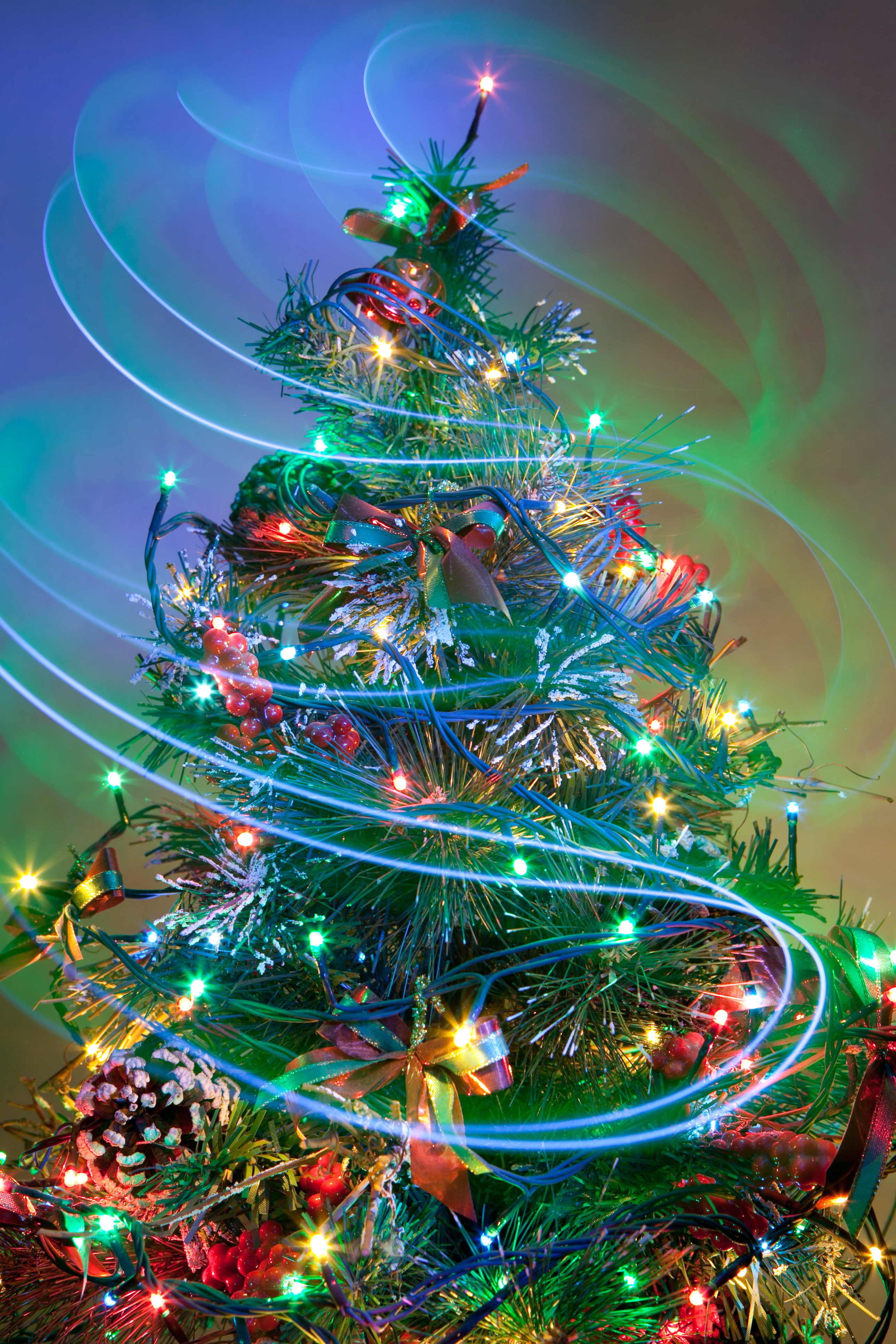
Now
that the Christmas season is over—December 25th to Epiphany—the holiday
decorations have come down, and it is noticeable.And so this poem is fitting.I heard this poem read on the The Daily Poem podcast which is a
production from Goldberry Studios, hosted by Sean Johnson.This is a wonderful podcast that you don’t
have to be an expert in poetry to enjoy a poem every day.I find Sean Johnson very knowledgeable and
very likable.Each episode I would
estimate to be roughly ten minutes, so it’s easy for a quick listen or to binge
on a series when you have fallen behind.The episode for this poem can be found here.
My
analysis below will be independent of Sean Johnson’s comments, though we pretty
much have the same reading of the poem.You’ll get double insight by reading my post and listening to his
podcast comments.
The
Christmas Tree
by C. Day-Lewis
Put out the lights now!
Look at the Tree, the
rough tree dazzled
In oriole plumes of
flame,
Tinselled with twinkling
frost fire, tasseled
With stars and moons—the
same
That yesterday hid in the
spinney and had no fame
Till we put out the
lights now.
Hard are the nights now:
The fields at moonrise
turn to agate
Shadows as cold as jet;
In dyke and furrow, in
copse and faggot
The frost’s tooth is set;
And stars are the sparks
whirled out by the north wind’s fret
On the flinty nights now.
So feast your eyes now,
On mimic star and
moon-cold bauble;
Worlds may wither unseen,
But the Christmas Tree is
a tree of fable,
A phoenix in evergreen,
And the world cannot
change or chill what its mysteries mean
To your heart and eyes
now.
The vision dies now
Candle by candle: the
tree that embraced it
Returns to its own kind,
To be earthed again and
weather as best it
May the frost and the
wind.
Children, it too had its
hour—you will not mind
If it lives or dies now.
I
had never heard of Cecil Day-Lewis, not to be confused with C.S. Lewis.Both were British, both Anglo-Irish, and both
lived approximately contemporaneous with each other but I do not believe they
were related.Day-Lewis was actually a
Poet Laureate of the United Kingdom for the last four years of his life, and
yet I have never heard of him before.This is the one and only poem of his that I have read, and I think a
very good one.
The
poem has a fascinating structure, four stanzas of seven lines each (called a heptastich
or septet) with a rhyme scheme of ABCBCCA.The first and seventh lines of all four stanzas end with the word “now.”The second through fifth lines form a
quatrain of BCBC and the sixth line repeats the C sound, forming an inner
quintain (five line poem).Perhaps the
most well known quintain is “To a Skylark” by Percy Bysshe Shelley.Interestingly Day-Lewis also has an analogy of a bird in his poem, an oriole in
the third line.This inner quintain is
then framed by the two lines ending with the repeated word “now.”While septet stanzas are popular in English
literature (Chaucer, Spenser, Herbert, and others) I could not find another
example of this rhyme scheme.Seven
lines is half a sonnet, and it does have the feel of an incomplete sonnet.Typically septets tend to allude to the
mysterious or numinous, seven being the number of days of creation in
Genesis.This poem certainly does that.
The
line lengths are also rather interesting.They alternate between a short line of five to seven syllables and a
long line of nine to fourteen syllables.The first line of a stanza is always a five syllable line ending with “now,”
and the last line is short line with an extra syllable or two ending with “now.”The short lines seem to anchor the stanza
lyrically while the long lines tend to unwind into a contemplative recitative.The meter of the lines are varied and what I can only see as sprung rhythm,a natural unfixed pattern based on the
number of stressed syllables per line.I
did not decompose the poem into the number of stressed syllables per line, but
it would not surprise me if there was a pattern.(If someone does that decomposing and finds
the pattern, please let us know.)
So
what is this poem about?Let’s
understand the progression of thought from stanza to stanza.
In
the first stanza we are presented with a decorated Christmas tree, magnificently
“dazzled/In oriole plumes of flame.”“Put
out the lights now” seems to be an imperative command to shut the lights in the
room so that one can fully absorb the dazzling brightness of the decorated
tree, a tree that only yesterday stood in its natural environment, “in the
spinney.”“Put out the light” can also
refer to the extinguished lights on the tree at the end of the poem when the holiday
is over and the tree taken down.That
gives the poem a circular structure.
In
the second stanza, in the “now,” with the tree dazzling inside, we are
presented with the “hard” world outside with its winter hardships, where even
the shadows are cold and stars are sparks blown about by the north wind.
In
the third stanza, in the “now,” and again presented with the dazzling Christmas
tree, we see the tree in its mystery capable of overcoming nature’s
disintegrating forces, worlds withering and such.The tree is a “phoenix in evergreen,” the
phoenix being a symbol of resurrection rising from burning ashes.
In
the fourth and final stanza, the “now” is gone, the vision “dies” as does the
tree as it is tossed into the outside world of frost and wind to decompose in
the natural elements.The decorations
are “candle by candle” put out as the holiday has passed.The tree “had its hour” but that hour has
passed and will shortly go out of mind.
The
circular aesthetic is brought out.So
the tree, like Christmas, will be over, and come next year, the “Tree”
(capitalized to represent a universal, platonic tree) will phoenix like be resurrected
in another tree.The poem incorporates a
tension between a “now” and a timeless moment that is re-presented before us
every Christmas.“Tree” is capitalized twice—in
the second line of the first stanza and fourth line of the third stanza.It is contrasted with the lower case “tree,”
which stands for the specific tree of this specific Christmas.
This
little drama is set within the cosmic context of moon and stars, fields and
copses, nights and frost, shadows and north wind whirling.These represent the forces of nature that
wish to degenerate, but they also represent the mystical forces that regenerate.That which disintegrates will also
regenerate.
I
believe the poem alludes to two famous Shakespearean soliloquies.First, there is the “put out the light”
allusion in Othello where just before
Othello smothers Desdemona he speaks this famous soliloque.
Yet she must die, else
she’ll betray more men.
Put out the light, and
then put out the light:
If I quench thee, thou
flaming minister,
I can again thy former
light restore,
Should I repent me: but once
put out thy light,
Thou cunning’st pattern
of excelling nature,
I know not where is that
Promethean heat
That can thy light
relume.
Othello, Act 5,
Scene 2, ll. 6-13
Here
the extinguishing of light refers to death, a death that cannot be brought back
to life.The other allusion is to the “Tomorrow
and Tomorrow” soliloquy from Macbeth.Macbeth upon hearing of his wife’s death
falls into this despair.
Tomorrow, and tomorrow,
and tomorrow,
Creeps in this petty pace
from day to day
To the last syllable of
recorded time,
And all our yesterdays
have lighted fools
The way to dusty death.
Out, out, brief candle!
Life’s but a walking
shadow, a poor player
That struts and frets his
hour upon the stage
And then is heard no
more: it is a tale
Told by an idiot, full of
sound and fury.
Macbeth, Act 5,
Scene 5, ll. 19-28
This
too is about death, and a nihilistic sense of the lack of meaning of life.Day-Lewis’s poem takes elements from these
two Shakespearean soliloquies and contrasts the nihilism of their message
(Shakespeare is not a nihilist; it’s the characters of the play who are
expressing their despair) with the universal hope of Christmas coming round
every year.While Desdemona’s “light” is
put out, and the tree’s lights snuffed out, the Tree’s lights will not end and,
indeed, will return.While the “lighted
fool” of Macbeth will “strut and fret
its hour upon the stage/And then is heard no more,” and the light
of the “tree” will extinguish, the light of the “Tree” will return.
The
central theme of Day-Lewis’s poem I think can be found in the third stanza:
Worlds may wither unseen,
But the Christmas Tree is
a tree of fable,
A phoenix in evergreen,
And the world cannot
change or chill what its mysteries mean
To your heart and eyes
now.
The
“fable” is not referring to a false story but alludes to what is always true.The Christmas Tree is always true because
Christmas will return and a new tree will be put up.
Here
are some of my favorite lines from the poem.From the first stanza: “Look at the Tree, the rough tree dazzled/In
oriole plumes of flame/Tinselled with twinkling frost fire, tasseled/With stars
and moons.”From the second stanza: “In
dyke and furrow, in copse and faggot/The frost’s tooth is set;/And stars are
the sparks whirled out by the north wind’s fret/On the flinty nights now.”I already gave that key sentence from the
third stanza, and from the fourth stanza we have this: “the tree that embraced
it/Returns to its own kind,/To be earthed again and weather as best it/May the
frost and the wind.”
Sean
Johnson did make one observation I missed.The “oriole plumes of flame” in the first stanza connect with the rising
phoenix of the third stanza.The oriole
is a bird plumed in black and orange, and so can seem like a bird in flames.I really appreciate that given that in
baseball I am a Baltimore Orioles fan.
There
is an audio clip of Cecil Day-Lewis reading this poem himself.I hope you enjoy it.
I
hope you had a wonderful Christmas.Until next year, keep Christmas in your heart and before your eyes now.