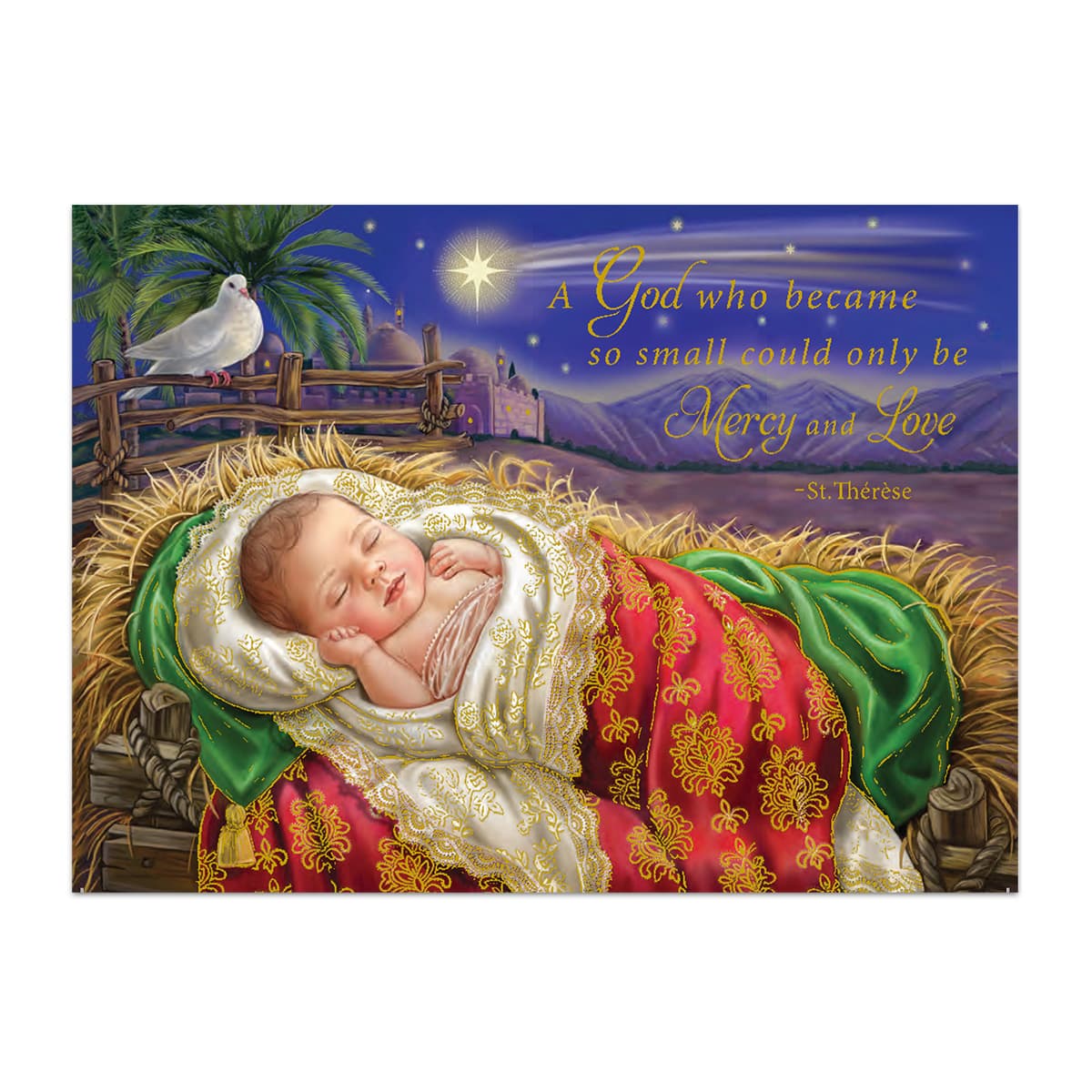
"Love follows knowledge."
"Beauty above all beauty!"
– St. Catherine of Siena

Sunday, January 5, 2025

Solemnity Meditation: The Magi

On this second Sunday of Christmas, we celebrate the Solemnity of the Epiphany of the Lord.  Who were these strange men—the Gospel does not say they were kings—who followed a star to baby Jesus?  Well I had four blog posts on the reading of Fr. Dwight Longenecker’s book, The Mystery of the Magi.  If you really want to know who these mysterious men were—not the fable of Balthazar, Caspar, and Melchior—but the real history, read my posts.  Here is blog post #4 on Fr. Longenecker’s book, and from there are links to Posts one, two, and three.  The real history is more astonishing than the legend. 

However, Matthew’s spiritual significance is just what epiphany means.   Epiphany is a revelation of God, a theophany, and here the Magi reveal to the world that baby Jesus is the Christ, King of the Jews.


When Jesus was born in Bethlehem of Judea,

in the days of King Herod,

behold, magi from the east arrived in Jerusalem, saying,

“Where is the newborn king of the Jews?

We saw his star at its rising

and have come to do him homage.”

When King Herod heard this,

he was greatly troubled,

and all Jerusalem with him.

Assembling all the chief priests and the scribes of the people,

he inquired of them where the Christ was to be born.

They said to him, “In Bethlehem of Judea,

for thus it has been written through the prophet:

And you, Bethlehem, land of Judah,

are by no means least among the rulers of Judah;

since from you shall come a ruler,

who is to shepherd my people Israel.”

Then Herod called the magi secretly

and ascertained from them the time of the star’s appearance.

He sent them to Bethlehem and said,

“Go and search diligently for the child.

When you have found him, bring me word,

that I too may go and do him homage.”

After their audience with the king they set out.

And behold, the star that they had seen at its rising preceded them,

until it came and stopped over the place where the child was.

They were overjoyed at seeing the star,

and on entering the house

they saw the child with Mary his mother.

They prostrated themselves and did him homage.

Then they opened their treasures

and offered him gifts of gold, frankincense, and myrrh.

And having been warned in a dream not to return to Herod,

they departed for their country by another way.

~Mt 2:1-12


Fr. Geoffrey Plant as usual does a thorough of explaining the historical and biblical significance of the Epiphany.


Fr. Geoffrey gives a handful of theories of where the Magi came from but none of them agree with Fr. Longenecker’s research.  I would go with Fr. Longenecker. 

Now for a sermon on the spiritual significance of the epiphany, let’s turn to Jeff Cavins.


It occurs to me that the light given off by Christ shines through the Magi.  Let the light of Christ shine through you.  Let your person be a manifestation of Christ, an epiphany to the world.

We don’t see much of how the Magi are transformed by their visit, but the poet T.S. Eliot speculates on how one particular Magus (singular for Magi) is transformed in his great poem “The Journey of the Magi.”  I provided a detailedanalysis of the poem here if you wish to read and understand this great work of poetry.    


Solemnity Meditation: “Where is the newborn king of the Jews?  We saw his star at its rising and have come to do him homage.”


Instead of a hymn this week, I am going to provide a reading by someone named Arthur L. Wood of T.S. Eliot’s he Journey of the Magi.” 


I selected this clip since it provided the words, but that is also an excellent reading.

Wednesday, January 1, 2025

Solemnity Meditation: The Blessed Virgin Mary, the Mother of God

January 1st is celebrated as a religious holiday either to commemorate Christ’s circumcision or to commemorate His Blessed Mother as the Mother of God, the Theotokos.  From Wikipedia:


The Second Vatican Council stated: "Clearly from earliest times the Blessed Virgin is honoured under the title of Mother of God." and at an early stage the Church in Rome celebrated on 1 January a feast that it called the anniversary (Natale) of the Mother of God. When this was overshadowed by the feasts of the Annunciation and the Assumption, adopted from Constantinople at the start of the 7th century, 1 January began to be celebrated simply as the octave day of Christmas, the "eighth day" on which, according to Luke 2:21, the child was circumcised and given the name Jesus.


In the 13th or 14th century, 1 January began to be celebrated in Rome, as already in Spain and Gaul, as the feast of the Circumcision of the Lord and the Octave of the Nativity, while still oriented towards Mary and Christmas, with many prayers, antiphons and responsories glorifying the maternity of Mary. Pope John XXIII's General Roman Calendar of 1960 removed the mention of the circumcision of Jesus and called 1 January simply the Octave of the Nativity.

There is even more to the history, which you can read for yourself.  Today’s Gospel reading:


The shepherds went in haste to Bethlehem and found Mary and Joseph, 

and the infant lying in the manger.

When they saw this, 

they made known the message 

that had been told them about this child.

All who heard it were amazed 

by what had been told them by the shepherds.

And Mary kept all these things, 

reflecting on them in her heart.

Then the shepherds returned, 

glorifying and praising God 

for all they had heard and seen, 

just as it had been told to them. 


When eight days were completed for his circumcision, 

he was named Jesus, the name given him by the angel 

before he was conceived in the womb.

~Lk 2:16-21

It is interesting that the shepherds “went in haste” where Luke uses the same word as in just the previous chapter where Mary “went in haste” to visit her cousin Elizabeth.

Here is a wonderful homily from Fr. James McCurry OFM Con of the Companions of St. Anthony, a Franciscan Friar Conventional association.  (Someday I will figure out the various divisions of the Franciscans, but it always escapes me.) 


The homily was delivered in 2021, so don’t be thrown by his best wishes for the new year of 2021.  It is now 2025!

Now for a second homily by another Franciscan, Fr. Terrance of the Franciscan Friars of the Immaculate.  This is a little longer but there is a wealth of knowledge here.


My, my two Franciscans highlighted by a Lay Dominican.  What is the world coming to.  Peace might just ring out…lol. 😋

I love Fr. Terrance.  I have been trying to get one of his homilies into one of these Sunday Meditations ever since I learned of him a little over a year ago.  He is extremely smart.  Notice he even quotes a Dominican, St. Thomas Aquinas at the 9:33 mark where Fr. Terrance provides Aquinas’s definition of love: “love is to will the good of the other.”  (You can read about Aquinas' definition of love in this Word on Fire article by Dr. Tom Neal.)  Fr. Terrance also mentions the Sub tuum praesidium the third century papyrus fragment with the earliest Marian prayer. 


Solemnity Meditation: “And Mary kept all these things, reflecting on them in her heart.”


For today’s hymn, what better than the Sub tuum praesidium in an ancient Gregorian chant, performed here by the sacred music group, Floriani. 


Here are the lyrics in Latin:


Sub tuum praesidium

confugimus,

Sancta Dei Genetrix.

Nostras deprecationes ne despicias

in necessitatibus,

sed a periculis cunctis

libera nos semper,

Virgo gloriosa et benedicta

Here is the English translation.


We fly to thy protection,

O Holy Mother of God;

Do not despise our petitions

in our necessities,

but deliver us always

from all dangers,

O Glorious and Blessed Virgin.

You may recognize fragments of the prayer in the more contemporary (only 500 years old!) Memorare prayer.  

Happy New Year!


Sunday, December 29, 2024

Sunday Meditation: Feast of the Holy Family

Merry Christmas.  Again!  It is still Christmas season, and how appropriate that the first Sunday after Christmas Day, the birth of our Lord and Savior, we celebrate the family through the invocation of the Holy Family.  I carry four religious medals on a chain on my chest, and one of them is that of the Holy Family, Jesus, Mary, and Joseph.  Jesus is depicted as a boy and stands in front of His parents.  It must be alluding to today’s Gospel passage.


Each year Jesus’ parents went to Jerusalem for the feast

of Passover,

and when he was twelve years old,

they went up according to festival custom.

After they had completed its days, as they were returning,

the boy Jesus remained behind in Jerusalem,

but his parents did not know it.

Thinking that he was in the caravan,

they journeyed for a day

and looked for him among their relatives and acquaintances,

but not finding him,

they returned to Jerusalem to look for him.

After three days they found him in the temple,

sitting in the midst of the teachers,

listening to them and asking them questions,

and all who heard him were astounded

at his understanding and his answers.

When his parents saw him,

they were astonished,

and his mother said to him,

“Son, why have you done this to us?

Your father and I have been looking for you with great anxiety.”

And he said to them,

“Why were you looking for me?

Did you not know that I must be in my Father’s house?”

But they did not understand what he said to them.

He went down with them and came to Nazareth,

and was obedient to them;

and his mother kept all these things in her heart.

And Jesus advanced in wisdom and age and favor

before God and man.

~Lk 2:41-52


Fr. Geoffrey Plant outdoes himself with explaining this passage.  It is outstanding.


That is the exegesis homily.  Now for the significance homily I want to provide this from Fr. Peter Marsalek of the Society of Our Lady of the Most Holy Trinity, abbreviated as SOLT. 


I had not known of the Society of Our Lady of the Most Holy Trinity before.  I had seen SOLT, but I did not know what it stood for.  Their website says they were founded in 1958 and their stated charism is “Disciples of Jesus through Mary, living in Marian-Trinitarian communion, serving on ecclesial family teams in areas of deepest apostolic need.”  Headquartered in Corpus Christi, Texas but founded by Fr. James Flanagan, within the Archdiocese of Santa Fe, New Mexico, SOLT includes priests, religious brothers and sisters, and even a lay association.  It sounds like a wonderful order.  Fr. Peter gave a great homily.


Sunday Meditation: “Why were you looking for me?  Did you not know that I must be in my Father’s house?”


For today’s hymn, I’m going to go off the beaten path to a song I have never heard, “Lord, I'm Amazed (The Holy Family Song).” The song was presented by Country House Media, and I have no clue who they are or whether they wrote and performed the song. 


It’s a really lovely song and they provide the lyrics for you at their channel:


Son of God, You became man

Born of a woman conceived without sin

Mary entrusted with hands full of grace

To hold our Messiah

Lord, I'm amazed.


Son of Man, come down from heaven

Given a father of highest honor

Joseph entrusted with hands full of faith

To teach how to labor

Lord, I'm amazed.


O, Jesus, Mary, and Joseph

So pure and holy, image of love

A family entrusted with hearts set ablaze 

To guide us forever

Lord, I'm amazed.


They seem Catholic, but even that I’m not totally sure.  I love this little song!

Wednesday, December 25, 2024

Christmas Meditation: He Was In The World

Merry Christmas!  Christmas Mass presents us with four sets of readings: for the Vigil, for the midnight, for during the day, and for the evening.  They are all very beautiful.  I am going to present for meditation the Gospel reading of the Christmas Mass During the Day.  The reading is the exquisite first half of the first chapter of John’s Gospel.  This might be my favorite passage in all the bible.


In the beginning was the Word,

        and the Word was with God,

        and the Word was God.

    He was in the beginning with God.

    All things came to be through him,

        and without him nothing came to be.

    What came to be through him was life,

        and this life was the light of the human race;

    the light shines in the darkness,

        and the darkness has not overcome it.

The true light, which enlightens everyone, was coming into the world.

    He was in the world,

        and the world came to be through him,

        but the world did not know him.

    He came to what was his own,

        but his own people did not accept him.


But to those who did accept him

he gave power to become children of God,

to those who believe in his name,

who were born not by natural generation

nor by human choice nor by a man’s decision

but of God.

    And the Word became flesh

        and made his dwelling among us,

        and we saw his glory,

        the glory as of the Father’s only Son,

        full of grace and truth.

~Jn 1:1-18

I am sure everyone is Christmas’d out, so just one video clip.  I am going to let Bishop Barron give a little exegesis on John's first chapter.  As he says in the video, books can be written to explain these eighteen lines fully.  His fifteen minutes just touches on the subject,


Sunday Meditation: “And the Word became flesh and made his dwelling among us, and we saw his glory, the glory as of the Father’s only Son, full of grace and truth.”


For today's hymn, let’s select the most holy of Christmas songs, “Silent Night,” here sung by Josh Groban.


This is one of my favorite Christmas Carols, and I found out today that it’s Pope Francis’ favorite.  You can read about that here.  And this lovely video clip explains the history of the carol.


Tuesday, December 24, 2024

Music Tuesday: Tu scendi dalle stele

What song should we have at Christmas Eve but a Christmas Carol, and I’m going to post the most popular Christmas Carol in all of Italy, the beautiful “Tu scendi dalle stele.” 

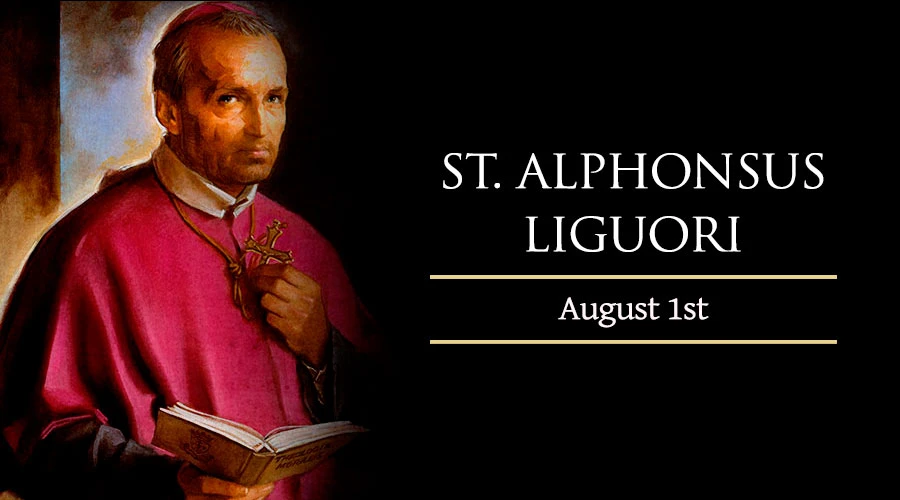
There is a little back history to this song.  The melody and original lyrics were written by St. Alphonsus Liguori, a priest and eventually bishop who lived through most of the 18th century (1696-1787).  He was a prolific writer and eventually made a Doctor of the Church.  He was born in the Campania region which is the region where I was also born.  In fact his Cathedral as Bishop was in the city of Benevento, which is not far from where I was born.  In addition he was the founder of the Congregation of the Most Holy Redeemer, commonly called the Redemptorists. He was canonized in 1839, just some fifty or so years after his death.  That’s quite a history.  

Most Catholics today know him for his Marian devotional books, but his noteworthy publications deal with moral theology.  It’s on that basis he was made a Doctor of the Church. 


But he also wrote songs.  Obviously he was a man of learning.  I can’t find the original lyrics but I will provide the ones that have been so popular in Italy with the English translation


1. Tu scendi dalle stelle,

O Re del Cielo,

e vieni in una grotta,

al freddo al gelo.


O Bambino mio Divino

Io ti vedo qui a tremar,

O Dio Beato

Ahi, quanto ti costò

l’avermi amato!


2. A te, che sei del mondo

il Creatore,

mancano panni e fuoco;

O mio Signore!


Caro eletto Pargoletto,

Quanto questa povertà

più mi innamora!

Giacché ti fece amor

povero ancora!


English


1. From starry skies descending,

Thou comest, glorious King,

A manger low Thy bed,

In winter’s icy sting;


O my dearest Child most holy,

Shudd’ring, trembling in the cold!

Great God, Thou lovest me!

What suff’ring Thou didst bear,

That I near Thee might be!


2. Thou art the world’s Creator,

God’s own and true Word,

Yet here no robe, no fire

For Thee, Divine Lord.


Dearest, fairest, sweetest Infant,

Dire this state of poverty.

The more I care for Thee,

Since Thou, O Love Divine,

Will’st now so poor to be.


First I’ll embed a children’s chorus, because it’s so made for children to sing.


That is such an endearing melody.  I’ll also post a more sophisticated rendition, the tempo slowed down just enough to give it a contemplative tone, sung by the incredible Andrea Bocellli.


 That brings tears to my eyes.  It must be the Italian.

Merry Christmas! 


Sunday, December 22, 2024

Sunday Meditation: Blessed is the Virgin

The fourth and final Sunday of Advent is reserved for the honor of the Blessed Virgin Mary, and in Year C we read of Mary’s visitation to her kinswoman Elizabeth.  Here Mary has just been given this startling news of her supernatural conception, which undoubtedly is going to put her life at risk since it is a pregnancy without a human father, and the first thing she does is “in haste” rush to care for her elderly cousin who is also pregnant.  I find this one of the most touching scenes in all the New Testament. 


Mary set out

and traveled to the hill country in haste

to a town of Judah,

where she entered the house of Zechariah

and greeted Elizabeth.

When Elizabeth heard Mary’s greeting,

the infant leaped in her womb,

and Elizabeth, filled with the Holy Spirit,

cried out in a loud voice and said,

“Blessed are you among women,

and blessed is the fruit of your womb.

And how does this happen to me,

that the mother of my Lord should come to me?

For at the moment the sound of your greeting reached my ears,

the infant in my womb leaped for joy.

Blessed are you who believed

that what was spoken to you by the Lord

would be fulfilled.”

~Lk 1:39-45


First, Kimberly Hahn, Scott’s wife, provides a detailed exegesis of this passage.


Fabulous sermon.  Kimberly is a better preacher than her husband!

Next Bishop Barron provides a wonderful homily on the importance of the Blessed Mother in our spiritual life.


Next I am going to give you a third clip, a homily from a Fr. Anthony Craig that takes the meaning of the passage and the significance of the Blessed Mother as we have heard in the first two clips, and provides the moral on which we can be transformed.


Did you catch that at the beginning?  Check the 40 second mark.  Christ’s first action incarnate in the world while still in the womb is an act propelling the bearer to service and charity.  How important is that to contemplate?  I don’t think I have ever heard that before.

Finally if you still have the energy, a couple of months ago I provided an analysis of Thomas Merton’s poem, “The Quickening of John the Baptist” which is a meditation on the Visitation and St. John’s the Baptist’s leap for joy.  It’s a wonderful poem well worth reading and very fitting for today's Gospel passage.  l


Sunday Meditation: “And how does this happen to me that the mother of my Lord should come to me?”


John Michael Talbot put the “Hail Mary” to music and it’s outstanding.


I had never heard it before.  My goodness, that is just so lovely.  It should be more widely played.