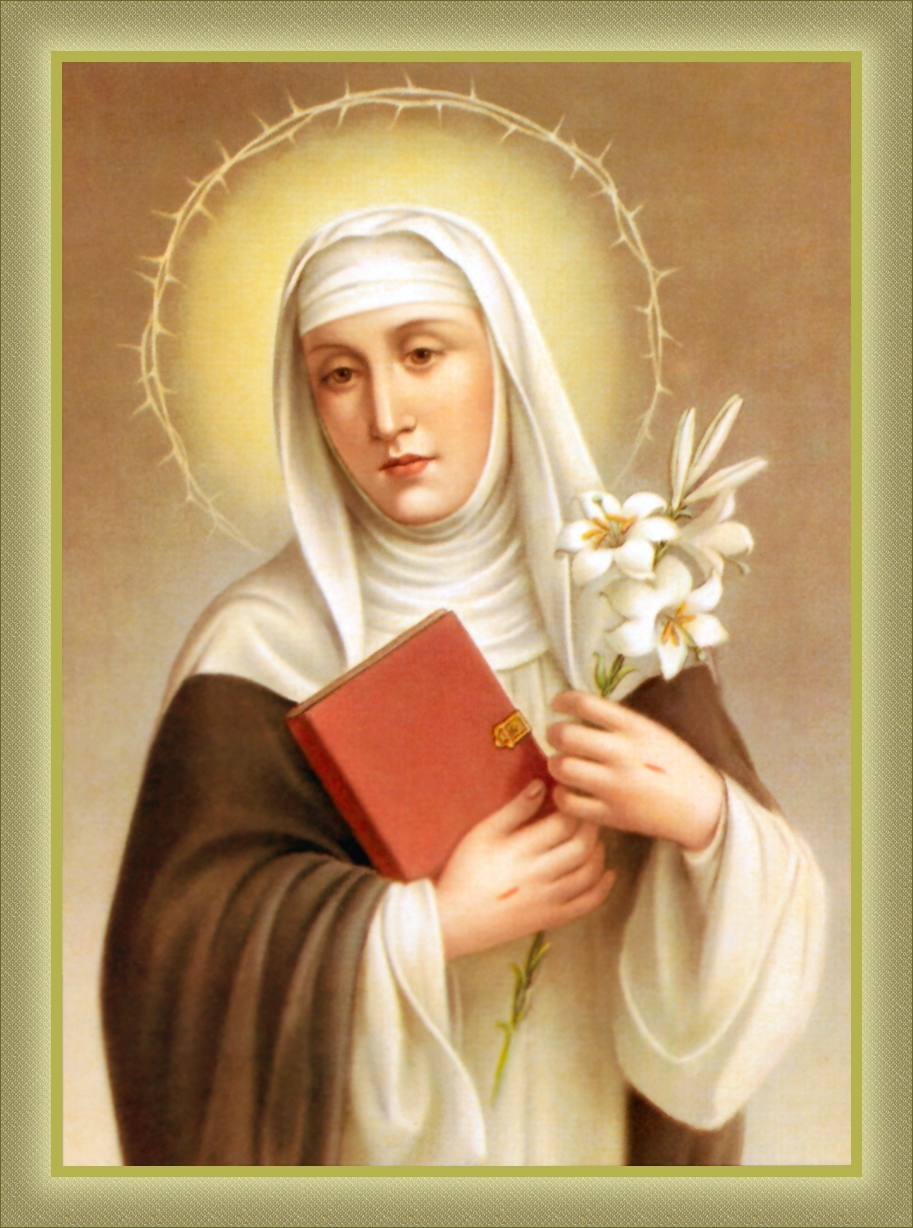
"Love follows knowledge."
"Beauty above all beauty!"
– St. Catherine of Siena

Thursday, May 8, 2014

Literature in the News: J. F. Powers, A Retrospective

I came across this article on J. F. Powers the other day from The American Conservative, which has a nice Arts & Letters tab.  It seems like all these cultural sites with a political view point, both on the right and on the left, put out literary/artsy articles these days.  The internet has given us both positive and negative developments, but the extra literature articles at one’s easy access is certainly a positive, at least for me.

I did not know much about J. F. Powers, other than he was a fiction writer from the middle part of the past century, and that he wrote from a very Catholic perspective.  Until a couple of years ago when I read the one piece by Powers I've read, a short story called “Lions, Harts, Leaping Does,” I had never even heard of him.  But that story caught my attention in the anthology, The Best American Catholic Short Stories (I have anthologies of short stories from many perspectives—I adore short story anthologies with a particular angle.), a rather eclectic collection of stories from writers that make up what was a flowering of post WWII Catholic letters.  For a perspective on what I’ll call the American Catholic Renaissance and its decline, read this fine essay by Dana Gioia, “The Catholic Writer Today” in First Things. 

The article on Powers has much to offer.   

J.F. Powers was the sort of writer destined for serial critical retrospectives. Producing slow-cured stories with lazy irregularity over the course of 30 years—a process punctuated but once by a novel, Morte D’Urban, in 1962, and brought to brilliant exhaustion with the publication of another, Wheat That Springeth Green, in 1988, just over a decade before his death—Powers gave his readers plenty of time to forget and then remember him. Critically acclaimed almost from the start, praised as what he would drolly call “America’s cleanest lay author”—one who wrote almost exclusively about the dingy and disheveled lives of Midwestern Catholic clergy—Powers was an indispensable player in the Catholic literary revival that blossomed during the middle of the last century. 

His name has been revived now thanks to a spate of articles scrutinizing the diminished role of religion in contemporary fiction: Powers consistently rounds out a list that includes the likes of Flannery O’Connor and Evelyn Waugh as one of the early comic masters of modern Catholic letters. With them, he is submitted as evidence that fiction could once be good and Catholic and very funny. More so even than James Joyce, he showed that the quotidian details of Catholic life could furnish great stories. When Wheat was published more than two decades ago, and again when all his books were reissued at the turn of this new century, reviewer after reviewer stole away to revel in his stories once more simply for the pleasures they provided. 

The authorities all agree, then. Powers merits consideration because he represents a distinguished literary period, one that swells ever grander with distance from our own time’s unsatisfactory excuses for art and religious culture. His prose—athletic, lyrical, constrained—and his fiction—episodic, understated, deliberately draped over weak storylines to showcase the better his ear for Midwestern speech, eye for the arresting image, and ironic instinct for the farcical vanity and spiritual comedy of his characters—make him one of the great minor writers of the last century.
 

The reason for this retrospective is a collection of family letters recently published by his daughter.  But the article provides a lot of information to Powers that is hard to acquire from a simple Wikipedia entry, information that might illuminate the themes and nuances of his fiction.
 

James Farl Powers was born in Jacksonville, Illinois, in 1917. The scion of an Irish Catholic family, his sensibility was thoroughly American, yet glazed with the qualities of the Irish male of his day: deferential, if irreverent, around priests; possessed by sports and gambling, especially horse races; doggedly traditional regarding the habits, doctrine, and liturgies of Catholic practice, while not obviously prayerful or meditative himself. 

Dismayed by the “business sense” and indecorousness of the times—the advent of jeans bothered him enough to provide a satirical scene for Wheat—his writings manifested a comedy so subtle as to leave the reader guessing where the author really stood. Powers liked to drink, wander, and putter about the house, but he was also taciturn, maddeningly inefficient, and inclined to turn down a ready opportunity to make a living in order to chase a dream of artistic independence he had no reason to believe was even possible.
 

It goes on to say how Powers was a conscientious objector to WWII, even going to prison for it, and had what I would consider a very mid western post depression outlook, colored over with his Catholic faith.  Having built up a reputation with a National Book Award he also was familiar with many of the writers of his day.
 

The letters reveal a man comfortable in a curious pair of subcultures, while ill at ease in several others. Powers seems to have preferred the company of priests, particularly of Garrelts and Father Harvey Egan. Like them, he was “officially” unworldly and doubtful toward the materialism and business culture of modern America, which he dismissed under the heading of “Standard Oil”—though this critical attitude was checked at the gate of baseball stadiums and racetracks. 

Powers also serves as a case in point that writers are the one social class that may fulfill Marx’s dream of natural solidarity. After two residencies at Yaddo—a “retreat for artists” in Saratoga Springs—he became drinking partners with Robert Lowell and Theodore Roethke, made the obligatory pilgrimage of any late-modernist American author to St. Elizabeth’s Hospital to marvel at Ezra Pound, and dropped in on John Crowe Ransom at Kenyon.
 

But he was also at odds with many parts of the changing American subculture, which perhaps defined his work more so that where he fit in.  
 

Nor did Powers entirely fit in with another subculture to which, like his family, he would nonetheless long remain attached—that of the Movement, the Catholic intellectual, liturgical, and cultural reformers who swelled the rural diocese of what Powers called the “Big Missal Country” in Minnesota. These were his friends, the Catholic statesman Eugene McCarthy most prominent among them, and his letters from Ireland show a Powers anxious to maintain such connections, though always with a comic, distancing smile. He was repelled by the prospect of the “dialogue mass,” such as that through which Catholics have awkwardly slurred for the last half-century. After an initial enthusiasm for the Catholic Rural Life Movement, he and Betty hurried back to her parents’ house in town, conscious that the labor and deprivation of spiritual agrarians, though beguiling, were not for them. 

On these Catholic intellectual connections, the letters are fascinating and suggestive, but largely uninformative of detail. For again the editor has brought her focus to bear primarily on Powers’s character as a father. He was a brilliant but idle and dreaming man, whose resistance to the realities of life caused his wife and children to suffer. Passages like this one to Father Egan shape that story: “I personally dislike this stretch of life ahead of me: the father of numerous children; the husband of a woman with no talent for motherhood (once she’s conceived); and the prospect of making no more money than in the past.” Behind the unhappiness that makes this mostly personal story of “family life” ironic, if not cruel, a whole line of historical inquiry begs exploration.
 

You’ll have to read the rest of the lengthy article to get a glimpse into the personal and intellectual conflicts that shaped his life and ultimately his work.   

I would like conclude with an excerpt from his “Lions, Harts, Leaping Does” story.  This is the story of a Father Didymus, an aging priest who turned down an opportunity to see his brother one last time, and then suffers a debilitating stroke.  Here is the ending of the story where Didymus, disabled, asks a fellow Franciscan, Brother Titus, to read to him.  Beside them is a canary that Titus got for Didymus to keep him company once his incapacity limited him to sitting in a chair.
 

“Take down a book, any book, Titus, and read.  Begin anywhere.” 

Roused by his voice, the canary fluttered, looked sharply about and buried its head once more in the warmth of his wing. 

“’By the lions,’” Titus read, “’are understood the acrimonies and impetuosities of the irascible faculty, is as bold and daring in its acts as are the lions.  By the harts and leaping does is understood the other faculty of the soul, which is the concupiscible—that is—‘” 

“Skip the exegesis,” Didymus broke in weakly.  “I can do without that now.  Read the verse.”  

Titus read: “Birds of swift wing, lions, harts, leaping does, mountains, valleys, banks, waters, breezes, heats and terrors that keep watch by night, by the pleasant lyres and by the siren’s song, I conjure you, cease your wrath and touch not the wall…’” 

“Turn off the light, Titus.” 

Titus went over to the switch.  There was a brief period of darkness during which Didymus’s eyes became accustomed to a different shade, a glow rather, which possessed the room slowly.  Then he saw the full moon had let down a ladder of light through the window.  He could see the snow, strangely blue, falling outside.  So sensitive was his mind and eye (because his body, now faint, no longer blurred his vision?) he could count the snowflakes, all of them separately, before they drifted, winding, below the sill. 

With the same wonderful clarity, he saw what he had made of his life.  He saw himself tied down, caged, stunted in his apostolate, seeking the crumbs, the little pleasure, neglecting the source, always knowing death changes nothing, only immortalizes…and still ever lukewarm.  In trivial attachments, in love of things, was death, no matter the appearance of life.  He had always known this truth, but now he was feeling it.  Unable to move his hand, only his lips, and hardly breathing, was it too late to act? 

“Open the window, Titus,” he whispered. 

And suddenly he could pray.  Hail Mary…Holy Mary, Mother of God, pray for us sinners now and at the hour of our death…finally the time to say, pray for me now—the hour of my death, amen.  Lest he deceive himself at the very end that this was the answer to a lifetime of praying for a happy death, happy because painless, he tried to turn his thoughts from himself, to join them to God, thinking how at last he did—didn’t he now?—prefer God above all else.  But ashamedly not sure he did, perhaps only fearing hell, with an uneasy sense of justice he put himself foremost among the wise in their own generation, the perennials seeking God when doctor, lawyer, and bank fails.  If he wronged himself, he did so out of humility—a holy error.  He ended, to make certain he had not fallen under the same old presumption disguised as the face of humility, by flooding his mind with maledictions.  He suffered the piercing white voice of the Apocalypse to echo his soul: But because thou art lukewarm, and neither cold nor hot, I will begin to vomit thee out of my mouth.  And St. Bernard, firey-eyed in a white habit, thundered at him from the twelfth century: “Hell is paved with the bald pates of priests!” 

There was a soft flutter, the canary flew to the windowsill, paused, and tilted into the snow.  Titus stepped too late to the window and stood gazing dumbly after it.  He raised a trembling old hand, fingers bent in awe and sorrow, to his forehead, and turned stealthily to Didymus. 

Didymus closed his eyes.  He let a long moment pass before he opened them.  Titus, seeing him awake, fussed with the window latch and held a hand down to feel the draught, nodding anxiously as though it were the only evil abroad in the world, all the time straining his old eyes for a glimpse of the canary somewhere in the trees. 

Didymus said nothing, letting Titus keep his secret.  With his whole will he tried to lose himself in the sight of God, and failed.  He was not in the least transported.  Even now he could find no divine sign within himself.  He knew he still had to look outside, to Titus.  God still chose to manifest Himself most in sanctity. 

Titus, nervous under his stare, and to account for staying at the window so long, felt the draught again, frowned, and kept his eye hunting among the trees. 

The thought of being the cause of such elaborate dissimulation in so simple a soul made Didymus want to smile—or cry, he did not know which…and could do neither.  Titus persisted.  How long would it be, Didymus wondered faintly, before Titus ungrievingly gave the canary up for lost in the snowy arms of God?  The snowflakes whirled at the window, for a moment for all their bright blue beauty as though struck still by lightening, and Didymus closed his eyes, only to find them there also, but darkly falling.
 

The combination of pathos and comic humor makes for a very moving ending to a brilliant short story.  The freed bird into the cold snow is so suggestive of the coming end.  I need to find more J. F. Powers stories.


Tuesday, May 6, 2014

Music Tuesday: Lo ferm voler qu'el cor m'intra by Arnaut Daniel

In my third post on Dante’s Purgatorio, in a close analysis of canto xxvi, I mentioned the remarkable ending of that canto with a quote where Dante has the 12thcentury Provencal poet/troubadour, Arnaut Daniel,  speak in his native Provencal. Provencal was a Romance language dialect spoken in what is today northwest Italy, southern France, and even in southeast Spain. Linguists refer to it as Occitan, and I was surprised to find that there are still localized enclaves where it is spoken today.

As I mentioned in my Purgatorio, Part 3 post, Arnaut was called by Ezra Pound the greatest poet to ever have lived, and Ezra Pound knew poets. For this Music Tuesday, I want to post a rendition of one of Arnaut’s compositions. As I said Arnaut is in purgatory repenting for his erotic love poetry, and this is a very sultry piece. I guess Arnaut was a sort of rock lyricist of his day, but with far more sophistication than rock lyrics.

Before I get to the piece, let me also say I love Medieval music. I spent a few years trying to learn as much as I could. It is not all religious. There is very much a secular tradition, though it seems that a great deal of the secular music might have been lost. There was no repository like the Catholic Church to preserve secular music. That’s a pity, because both secular and religious, medieval music is wonderful. As always, Wikipedia has an excellent site on medieval music.

The title of this piece is taken from the song’s first line, “Lo ferm voler qu'el cor m'intra,” which translates to “The firm will that my heart enters.”


Here are the first three stanzas in Arnaut’s Provencal:

Lo ferm voler qu'el cor m'intra
no'm pot ges becs escoissendre ni ongla
de lauzengier qui pert per mal dir s'arma;
e pus no l'aus batr'ab ram ni verja,
sivals a frau, lai on non aurai oncle,
jauzirai joi, en vergier o dins cambra.

Quan mi sove de la cambra
on a mon dan sai que nulhs om non intra
-ans me son tug plus que fraire ni oncle-
non ai membre no'm fremisca, neis l'ongla,
aissi cum fai l'enfas devant la verja:
tal paor ai no'l sia prop de l'arma.

Del cor li fos, non de l'arma,
e cossentis m'a celat dins sa cambra,
que plus mi nafra'l cor que colp de verja
qu'ar lo sieus sers lai ont ilh es non intra:
de lieis serai aisi cum carn e ongla
e non creirai castic d'amic ni d'oncle.

And here is the translation of those three stanzas.
The firm will that my heart enters
can't be scraped by beak nor by nail
of slanderer who damns with ill speaking his soul;
since I don't dare beat them with bough or rod,
at least, secretly, where I won't have any uncle,
I'll enjoy pleasure, in the garden or in the room.

When I remember the room
where, to my scorn, I know no man enters
-instead they are all to me more than brother or uncle-
I have no limb that doesn't shake, not even the fingernail,
just as a child is before the rod:
such is my fear of not being close to her soul.

Were I close to her body, not to her soul,
were she to let me hide in her room,
since it hurts my heart more than strike of rod
that her servant isn't there where she enters:
I'll be with her what flesh is to nail
and I won't follow advice of friend or of uncle.

Oh do read the entire translated song.

Sunday, May 4, 2014

Purgatorio by Dante Alighieri, Part 3

You can read Parts 1 and 2 here of my examination of Dante’s Purgatorio here and here. 

The middle section of Purgatorio takes place in what is considered purgatory proper, where the purgation of sins actually occurs.  There are seven terraces around the purgatory mountain, each terrace a place for therapy for each of the seven deadly sins.  I say “therapy” because one should remember that they are not punishments but reforms to make one appropriate for entering heaven.  Those that have entered Purgatory are saved; they will enter heaven.  Their souls just require adjustments. 

Before Dante the character leaves Ante Purgatory, night falls and he sleeps and dreams of being lifted up (Canto 9).  When he awakes he finds himself and Virgil at the entrance of purgatory proper.  He has been lifted up by eagles.  This is not without significance.  It dramatizes that we individuals require God’s grace to be saved; we cannot do it by ourselves.  At the gate an angel welcomes them in.  The gate is in the shape of an eye of a needle, which of course recalls Matthew 19:24, getting into heaven is more difficult than a camel passing through the eye of a needle. 

Cantos 10 through 27 constitute the purgatorial journey up, as Thomas Merton calls it, the seven story mountain.  Canto 17, through Virgil, provides the philosophic understanding of sin, its relationship to love, and how the seven terraces are arranged. 

Not the creator nor a single creature,
as you know, ever existed without love,
the soul’s love or the love that comes by nature.
The natural love is just and cannot rove.
The soul’s love strays if it desires what’s wrong
or loves with too much strength or not enough.
When toward its prime good it is led aright
and keeps good measure in the second goods,
it cannot be the cause of bad delight
But when it twists to evil, or does not
race for a good with the appropriate care,
the Potter finds rebellion in the pot.
Hence you can understand how love must be
the seedbed where all virtuous deeds must grow,
with every act that warrants punishment.
                        -Canto 17, ll 91-105 (Esolen Translation)

“Hence you can understand how love must be/the seedbed…” is the critical line.  Love not only moves the world (God’s love) but love is what shapes human nature, and in this case the incorrect use of love causes us to sin.  Esolen, explicating Virgil, who of course is presenting Dante the poet’s argument, states in his notes: “Evil enters the world only when we choose either to love what we should not love, or to love what we should love, but with either insufficient or excessive love or otherwise disordered ardor” (p. 453).  The first three terraces harbor the sinners of improper love (pride, envy, anger), the fourth the sinners of insufficient love (sloth), and the final three the sinners of excessive and disordered love (avarice, gluttony, lust).  At each terrace there is a therapeutic practice meant to untrain the sin that fixed our nature.  I think of it as a vine who by ties to a trellis is trained to grow a particular way.  Sin has trained the soul in a particular way, and the purgatorial exercise retrains the soul to be in God’s righteousness.  Unlike in Inferno, where souls are forever in a single realm, souls in Purgatorio, traverse all seven terraces.  All souls suffer from all seven root causes, and so undergo all seven exercises, but the time duration for each varies on how deep that sin is ingrained.   

At the gate of the seven terraces, an angel inscribes the letter “p” seven times on Dante the pilgrim’s forehead, the “p” standing for either for peccata (Italian) or peccatum (Latin) which both translates to sin—seven for the seven root sins.  After Dante the pilgrim traverses each terrace, an angel wipes away one of the p’s, so that by the end of the climb they are all wiped away, and so Dante the pilgrim, though not a soul, has performed some sort of penance. 

There is a pattern, then, to the passage through the seven terraces.  At the beginning of each terrace there is an angel that welcomes the pilgrims; there is at least one example of the virtue that is to be learned by the penitent souls; Dante observes the corrective exercise at the terrace; he meets a person or group undergoing the exercise; a penitent or more converses with Dante in a sort of confessional moment; the pilgrims move on where as they leave the terrace a “p” is cleared off of Dante’s forehead.  An example of the corresponding virtues to the root sins (humility, kindness, patience, diligence, charity, temperance, chastity) always include an example from the life of Blessed Virgin Mary.  Unlike the souls in hell, where they are hiding or being deceptive with information, the souls in purgatory honestly confess.  Also, within each terrace, there is some hymn being sung that that reflects the corrective virtue. 

So for example, in the first terrace of pride, there are three statues that demonstrate the virtue of humility: that of the Virgin’s Annunciation, that of King David holding the ark of the covenant, and that of the Emperor Trajan conceding to the appeal of a poor widow.  The Our Father prayer is chanted, and the penitents must bear a huge stone on their necks so that they walk stooped over.  Dante meets three penitents—Omberto degli Aldobrandeschi, Oderisi da Gubbio, and Provenzano Salvani—the first a prideful aristocrat, the other two prideful artists.  The hymn that is sung is the Beatitude, “Blessed are the poor in spirit,” and placed in the ground are carvings of examples of pride punished.

I’m fascinated by a particular canto in this middle section that I want to go through in close analysis.  I can’t say I will be able to answer all the questions I raise, but it’s a particularly rich moment.  It’s canto xxvi, the last of the seven terraces, the terrace of the lustful.  Here the penitent souls are in a purgative fire, and the pilgrims, Dante, Virgil, and now Statius, standing as far from the wall of fire as they can, but there is not very much room.  Inside the wall of fire they can see a host of souls walking by, and there is another host of souls walking in the other direction inside the wall.  One particular soul inside the fire starts a conversation with Dante over Dante being a living person.  After an exchange, Dante asks that soul who are all the souls about him.  The soul responds.
 

“…Now you know our deeds and what our sin was:
if you wish to know who we are by name,
there is not time to tell, and I could not.
I will rid you of your ignorance of me” I am
Guido Guinizelli, and now I purge myself here
because I repented well, before the last.”
            -ll 88-93, Durling Translation 

GuidoGuinizelli was a poet from Florence in the generation before Dante’s.  Dante did not know him personally but had read his work extensively and admired and emulated much of his poetry.  Here is Dante’s reaction when he hears it’s Guinizelli. 

Such as in Lycurgus’ grief the two sons became,
seeing their mother again: so did I become—
though I do not rise so high—
when I hear our father name himself, the father
of me and of the others, my betters, who ever used
sweet and graceful rhymes of love,
and without hearing or speaking I walked full of
thought, gazing at him a long time, but because of
the fire I approached no closer.
When I had fed myself with gazing, I offered
myself all eager to serve him, with the kind of
affirmation that gains belief.
            -ll 94-105, Durling Translation 

The simile of the two sons comes from the Latin poem the Thebaid, written by the very person walking by Dante, Statius.  The sons are grateful for seeing their captive mother alive.  So what Dante is saying is that as the sons are emotional over seeing their mother, he is as emotional in seeing “the father/of me and of others, my betters, who ever used/sweet and graceful rhymes of love.”  Guinizelli is Dante’s poetic father, and he wishes to embrace him with affection but the fire prevents him.  But instead he offers him words of endearment.  Guinizelli replies.


And he to me: “You are leaving such a trace in
me because of what I hear, and so clear a one, that
Lethe cannot take it away or make it fade.
But if your words swore truly just now, tell me
the reason why you show by your speech and your
gaze that you hold me dear.”
And I to him: “Your sweet poems, which, as
long as modern usage lasts, will make precious
their very ink.”
            -ll 106-114, Durling Translation 

When Guinizelli asks why Dante holds him so dear, Dante replies because his “sweet poems” make the “very ink precious.”  The background information is that Guinizelli had developed the new poetic style, dolce stil novo, or in English, the new sweet style, that Dante and his best friend Guido Cavalcanti took up in the subsequent generation.  The dolce stil novo  was a philosophic love poetry and it was in the vernacular Italian.  To be specific it was in the Florentine Italian, and so you can see how Guinizelli is Dante’s “father” in several ways.  One understands then how Dante wants to embrace Guinizelli, and except for the fire he would have done so. 

So what’s important about this.  First, it is interesting that Dante identifies what amounts to a second poetic father.  Virgil is the first, the poetic father in Latin, and Guinizelli the second in the vernacular.  And yet Dante strangely never encounters his flesh and blood father anywhere in the Commedia.  He encounters his poetic fathers and his great-great grandfather, Cacciaguida, who died in one of the crusades, in Paradiso. 

But more importantly Dante the poet constructs a number of parallel poetic “father-son” relationships throughout the Purgatorio.  In canto ii, we meet the song writer who set Dante’s poetry to music; we can think of Dante as Casella’s poetic father.  In canto vi we meet Sordello da Goita, a Mantuan poet who identifies Virgil as his poetic father.  In canto xxi we meet Statius, who also identifies Virgil as his poetic father.  Now we have Dante’s poetic father in Guinizelli. 

Guinizelli, as a good penitent, continues by deflecting the compliment with humility. 

“O my brother,” he said, “he I point out to you
with my finger,” and he indicated a spirit further
on, “was a better fashioner of his mother tongue.
All verses of love and romances in prose he
surpassed, no matter what the fools say who think
that the one from near Limoges is better.
They turned their faces more to reputation than to
the truth, and thus they fix their opinion before
listening to art or reason.
Thus of old many with Guittone, still
praising him in cry after cry, until the truth
overcame him in the judgements of more people.
Now if you have such ample privilege that you
are permitted to go to the cloister where Christ is
abbot of the college,
say a Paternoster to him for me, as much of one
as we in this world need, where the power to sin is
no longer ours.”
                        -ll 114-132, Durling Translation 

There is so much going on there too.  Guittone was a writer who appealed to the masses, who in turn praised him, but whose work lacked the “the truth” of art.  Guinizelli points to a fellow penitent as being the “better fashioner of his mother tongue.”  That’s a famous line, sometimes translated as “the better craftsman,” and in Italian, “il miglior fabbro del parlar materno.”    But why are they all in purgatory?  Because their poetry was on love and romance.  Recall in Inferno, canto v, where Francesca and Paulo are condemned in the pit of the lustful.  It was through reading romance poetry that led to their committing adultery, and ultimately confinement to hell.  Dante faints at the end of that canto because he realizes what he has written leads others to sin.  So that is, love and romance poetry trains the human soul away from God and toward lust.  Here Guinizelli has repented and is undergoing purgation for his poetry, as is the man who he points out as the better craftsman, Arnaut Daniel.  Then Guinizelli fades back into the fire as a “fish into water” and Arnaut steps forward to speak with Dante.   

Then, perhaps to make room for another who
was near him, he disappeared into the fire like a
fish into the water when it goes to the bottom.
I went forward a little to the one he had pointed
out, and said that my desire was preparing a
gracious place for his name.
He began freely to say: “So pleasing to me is your
courteous request, that I cannot nor will not hide myself
from you.
I am Arnaut, who weep and go singing; with chagrin I
view my past folly, and rejoicing I see ahead the joy I hope for.
Now I beg you, by the Power that guides you to the
summit of the stairway, remember my suffering at the
appropriate time!”
Then he hid himself in the fire that refines them.
            -ll 132-148, Durling Translation 

Arnaut was a 12th century troubadour poet from Provencal who wrote in his Provencal vernacular.  He is not only called the “better craftsman” here, but Ezra Pound in the 20th century called him the greatest poet to have ever lived.  And so, another father-son poetic relationship is established.  As Dante the pilgrim turns to Guinizelli as his poetic father, Guinizelli turns to Arnaut as his poetic father.  Arnaut wrote a particularly erotic love poetry, but here he states with repentance that he views his past as folly.  As with Guinizelli just before, he asks Dante to pray for him. 

Arnaut’s speech in the Divine Comedy quoted above is in italics because Dante the poet does something there that is absolutely remarkable.  Every character that Dante the pilgrim meets throughout the entire Divine Comedy speaks in Italian, no matter what their original language was in life.  The only language we come across in the Commedia that is not Italian is an occasional Latin.  That is, except for here.  Arnaut is given the pride of place to speak in a third language, his native Provencal, a language that by the way Dante knew and had also used.  In this little touch, Dante has emphasized his decision to write his epic in his vernacular.  The vernacular becomes a poetic statement.   

I’ll concluding this post with Arnaut’s actual Provencal. 

“Tan m'abellis vostre cortes deman,
qu'ieu no me puesc ni voill a vos cobrire.
Ieu sui Arnaut, que plor e vau cantan;
consiros vei la passada folor,
e vei jausen lo joi qu'esper, denan.
Ara vos prec, per aquella valor
que vos guida al som de l'escalina,
sovenha vos a temps de ma dolor.” 

If you wish to sample a piece from Arnaut's music, listen to this rendition. 

The sultry lyrics with translation can be found here. 

Friday, May 2, 2014

Faith Filled Friday: Setting the World on Fire!

Allow me to combine a Faith Filled Friday post with a Notable Quote post.  And to show you the wizardry of my blogging abilities (I’m kidding) I’m going to combine the St. Catherine of Siena Feast Day (April 29th) with the canonization this past week (April 27th) of St. Pope John Paul II (see double canonization of Popes John Paul II and John XXIII), a sort of double combination.  First here is the quote by St. Catherine, and notice how she again uses one of her favorite images, that of fire.


If you are what you should be, you will set the whole world on fire!

          -St. Catherine of Siena


This quote was used by Pope John Paul II on January 4th, 2001 speaking in St. Peter’s Square speaking to Regnum Christi Movement and the Legionaries of Christ.  

In a secularized world such as our own, built in large part on neglect of transcendent truths and values, the faith of many of our brothers and sisters is sorely tried.

Because of this, there is a need today more than ever for a confident proclamation of the Gospel, which, casting aside all crippling fears, announces with intellectual depth and with courage the truth about God, about man, about the world.

To you, Legionaries of Christ and members of Regnum Christi, I repeat the words of St. Catherine of Siena which I proposed to the young people at the World Youth Day: “If you are what you should be, you will set the whole world on fire!”
 
Now how many doubles did I use? I count three. Impressed?


Tuesday, April 29, 2014

Poetry: My Nature is Fire by St. Catherine of Siena

Today, April 29th is the feast day of what has become my personal patron saint, St. Catherine of Siena.  I read a biography of her life written by the Nobel Prize winning author, Sigrid Undset last year, and I blogged four posts on the work, and you can access them all here.  The biography was consequential for me.  Now I admire many saints, possibly all of them, but for several reasons. Catherine is the first saint that strikes me as a kindred spirit.  And I have to say that when I can I promote her importance.    

Well, I keep going deeper and deeper in learning about St. Catherine.  Everyone seems to know her biography, especially that she was able to convince the Pope at the time to return to Rome after the Papacy had been displaced to Avignon for sixty-five years.   

But personally I think her greatest achievement is her immense writing in so short a life time, especially when you consider she had no formal education.  In 1970, along with St. Theresa of Avila, St. Catherine became the women to be recognized as Doctors of the Church.  This is a title not given lightly.  One has to have expanded the church’s understanding of its theological doctrine.  When at a time it was rare for women to know how to read and write, let alone write books and letters, Catherine either taught herself to read, or, as her hagiography goes, was given the gift by God as an adult.   

And what writing.  I’m not qualified to speak to the theology and the Church doctrine, but I can speak to her writing skills.  Her output is her treatise The Dialogue, 385 letters (collected to be four volumes) to Popes, leaders across Europe, and religious and lay people, and a collection of prayers, which amounts to a complete book.  All in a short life of thirty-three years.  I can’t speak to the quality of her Italian, which is considered by experts to be among the best of her day, but what stands out for me in the translations is her ability to generate sparkling imagery and metaphor.  She was a natural poet. 

Last year Judy Keane at Catholic Exchange had this piece on the newly translated letters that encapsulates her accomplishments, her personality, and why the letters should be read:     

Each letter Catherine wrote gives us a greater understanding of her personality, humor, charm and deep spiritual wisdom.  Miracle worker, mystic, contemplative, stigmatic, humanitarian, Doctor of the Church, activist, and counselor – this is a woman whose letters you want to spend some time with!  Why? Because they are letters that allow us to peer deeply inside the soul of a celebrated saint.  They are a gift from her to us from across the centuries – filled with spiritual and practical advice – from her troubled times to ours.  Ultimately, they contain the simple gift of being able to learn from a saint and in doing so, hopefully, become saints ourselves. 

I haven’t read them yet, but in time.  I have spent a little time with her collected prayers.  What I’ve done below is taken one of her prayers, posted at the marvelous St. Catherine of Siena website, Drawn by Love, and shaped it into the form of a free verse poem.  Other than the shaping the line lengths and organizing the strophes (irregular stanzas) I have not changed a single word except for one.  In the very first line, the actual word provided is “Godhead” but I simplified it to God.  I don’t have access to the Italian, so I don’t know exactly what word Catherine used for the translator to come up with “Godhead” but there is no distinction between the nouns “God” and “Godhead,” and I have never been fond of the term “Godhead.”  


My Nature is Fire
Prayer 12 (XXII)*

by St. Catherine of Siena 
 

In your nature, eternal God,
I shall come to know my nature. 

And what is my nature, boundless love?
It is fire, because you are nothing but a fire of love. 

And you have given humankind a share in this nature,
for by the fire of love you created us. 

And so with all other people and every created thing;
you made them out of love. 

O ungrateful people!
What nature has your God given you?
His very own nature! 

Are you not ashamed to cut yourself off
from such a noble thing through the guilt of deadly sin? 

O eternal Trinity, my sweet love! 

You, light, give us light.
You, wisdom, give us wisdom.
You, supreme strength, strengthen us. 

Today, eternal God, let our cloud be dissipated
so that we may perfectly know and follow your Truth
in truth, with a free and simple heart. 

God, come to our assistance!
Lord, make haste to help us! 

Amen.
 

*Taken from The Prayers of Catherine of Siena. 2nd edition. Suzanne Noffke, OP, translator and editor.
(San Jose.: Authors Choice Press, 2001) (Roman numerals indicate the number of the prayer in
the critical edition of G. Cavallini).
 

Excerpted from Drawn by Love.   

By the way, arrangement of a passage of words into a poem is called FoundPoetry.    
 

The central image that controls the poem and I think bends theology is that God is a fire, that He created through medium of fire, and that His love itself manifests itself through fire.  Now fire can be a destructive element; it can be a purgative element; it can be a punitive element.  But a creative, generative element is a new one for me.  My first impulse is to say it’s not biblical, so one has to consider it metaphorical.  But God does manifest Himself as a fire in the burning bush.  He is a pillar of fire leading the Israelites out of Egypt.  There are the tongues of fire at Pentecost.  In classical learning, fire was considered one of the primary four elements, so perhaps there is a leap from there to being a creative element.   

To visualize God and His love as a fire is actually an image that symbolizes unity, which I think is outside all the examples I just listed.  Fire consumes and swallows.  It merges and becomes one.  We are part of God in His essence and we dissipate (line 18) into the greater whole.  

I hope this has inspired you to search out more by this saint.