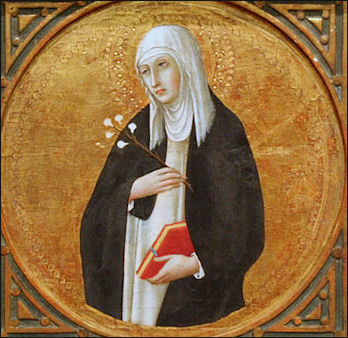
"Love follows knowledge."
"Beauty above all beauty!"
– St. Catherine of Siena

Tuesday, May 12, 2015

Literature in the News: The Languages of the World

Here is a very interesting article from the Washington Post: “The World’s Languages,in 7 Maps and Charts.”  The article provides a really fascinating breakdown of what the world speaks.  Here are a few highlights.

1.      There are 7,102 living languages in the world, and Asia and Africa by far have the most by continent.  Europe has the least.

2.      Of the 7.2 billion people of the world, two-thirds have these twelve languages as their native tongue: Chinese, Hindu-Urdu, English, Arabic, Spanish, Russian, Bengali, Portuguese, German, Japanese, French, and Italian.

3.      The number of countries that speak English is 101, the largest number.  Arabic is a distant second.

4.      English is the actual official language in 35 countries, of which the United States is not one of them.  The US does not have an official language.

5.      English is by far the most commonly learned language in countries that have other languages as their native.


There are lots of other interesting facts and worth going over to read it.


Monday, May 11, 2015

Matthew Monday: Boring and Mother’s Day Card

Two quick takes.

I
Matthew is getting into the habit of a one word reply when he doesn’t prefer something.

“Matthew, you’re having cereal and milk for breakfast.”
“Boring.”

Matthew, it’s chicken fingers for lunch.”
“Boring.”

“Matthew, clean up your room.”
“Boring.”

"We're going to read a bedtime story."
"Which one?"
"Pinocchio."
"Boring."

Is everything other than a rockem-sockem superhero fight boring to a five year old boy?


II
Matthew was told to write a Happy Mother’s Day card for his grandmother. 

“How do you spell it?”

“Sound it out.”

He did.  He spelled it: “Hap Mothers Dey.”

So I asked my wife how does “Hap” sound out to “Happy?”

“Easy: Ha-pee”


Saturday, May 9, 2015

Poetry: “My Mother on an Evening in Late Summer” by Mark Strand

Blogging has been slow lately.  I’ve been busy with work the past few weeks, and it won’t get better until the middle of next week.  But I do wish to honor Mother’s Day.  Here is a lovely poem by Mark Strand, who I had a memorial post a few months ago on his passing. 

My Mother on an Evening in Late Summer
by Mark Strand

1
When the moon appears
and a few wind-stricken barns stand out
in the low-domed hills
and shine with a light
that is veiled and dust-filled
and that floats upon the fields,
my mother, with her hair in a bun,
her face in shadow, and the smoke
from their cigarette coiling close
to the faint yellow sheen of her dress,
stands hear the house
and watches the seepage of late light
down through the sedges
the last gray islands of cloud
taken from view, and the wind
ruffling the moon's ash-colored coat
on the black bay.

2
Soon the house, with its shades drawn closed, will send
small carpets of lampglow
into the haze and the bay
will begin its loud heaving
and the pines, frayed finials
climbing the hill, will seem to graze
the dim cinders of heaven.
And my mother will stare into the starlanes,
the endless tunnels of nothing,
and as she gazes,
under the hour's spell,
she will think how we yield each night
to the soundless storms of decay
that tear at the folding flesh,
and she will not know
why she is here
or what she is prisoner of
if not the conditions of love that brought her to this.

3
My mother will go indoors
and the fields, the bare stones
will drift in peace, small creatures --
the mouse and the swift -- will sleep
at opposite ends of the house.
Only the cricket will be up,
repeating its one shrill note
to the rotten boards of the porch,
to the rusted screens, to the air, to the rimless dark,
to the sea that keeps to itself.
Why should my mother awake?
The earth is not yet a garden
about to be turned. The stars
are not yet bells that ring
at night for the lost.
It is much too late.


No deep analysis is needed.  The poem captures the mother alone beneath the cosmos (first stanza) where she momentarily wonders what life means (second stanza), and then goes back indoors where a complete sense of order is established.  The implication is that she is the reason for the order, an order formed by “the conditions of love” that has her bound.  Lovely and so true.  Yes, mothers sacrifice so much for us.  Happy Mother’s Day.


Tuesday, May 5, 2015

Music Tuesday: “Stand by Me” by Ben E. King

This past week one of the great voices and song writers passed away: Ben E. King, from the Drifters and a solo artist.  From the L.A. Times


Singer and songwriter Ben E. King, who had one of the most enduring hits of all time with "Stand By Me," almost didn't become a solo artist.

In 1960 he was the lead singer with the Drifters when the group got into a disagreement with its manager over money. The manager wouldn't back down.

"He said, 'If you're not happy, you can leave,'" King told the Herald in Glasgow in 2012. "So I left the room, expecting the rest of the guys to follow me. I waited and waited but they never came out, and I became an accidental solo artist."

King, 76, who was also known for his solo hits "Spanish Harlem" and "I (Who Have Nothing)," and "There Goes My Baby" and "Save the Last Dance For Me" with the Drifters, died Thursday at Hackensack University Medical Center, near his home in Teaneck, N.J.

His attorney in New York, Judy Tint, said he died after a brief illness.


The Drifters are one of my all-time favorite groups and I didn’t realize King had so many hits outside of the group as a solo artist.  “Stand by Me” is truly one of the great songs in all of pop music history.


Look at these lyrics:

When the night has come
And the land is dark
And the moon is the only light we'll see
No, I won't be afraid
Oh, I won't be afraid
Just as long as you stand, stand by me

So darling, darling
Stand by me, oh stand by me
Oh stand, stand by me
Stand by me

If the sky, that we look upon
Should tumble and fall
And the mountain should crumble to the sea
I won't cry, I won't cry
No, I won't shed a tear
Just as long as you stand, stand by me

And darling, darling
Stand by me, oh stand by me
Oh stand now, stand by me
Stand by me

So darling, darling
Stand by me, oh stand by me
Oh stand now, stand by me, stand by me
Whenever you're in trouble won't you stand by me
Oh stand by me, oh won't you stand now, stand
Stand by me
Stand by me


The sky and the mountains crumbling into the sea sounds so Biblical to me.  May Mr. King rest in peace.


Friday, May 1, 2015

Notable Quote: The Lord Gives and the Lord Takes

A twofer: A notable quote for a faith filled Friday.  One could pick so many quotes from Job, but here is the most memorable.


“Naked I came from my mother’s womb, and naked shall I return there; the Lord gave, and the Lord has taken away; blessed be the name of the Lord.”

~The Book of Job 1:21


Wednesday, April 29, 2015

Feast Day of St. Catherine of Siena

April 29 is the feast day of the woman I consider the patron saint of this blog, St. Catherine of Siena.  Ever since I read her biography during the first year of this blog, I fell in love with the little woman.  I’ve spent a lot time expanding getting to know more about her life, her writings, and her theology.  Why would a literature blog pick St. Catherine of Siena as its patron?  Well, she is a Doctor of the Church, which means her writings have contributed in some way to church teaching.  But it’s not just that.  After all I could have picked St. Francis De Sales, who is also a Doctor and the patron saint of writers.  But I read St. Catherine first and fell in love with her writing, even if I don’t always understand it.  What makes Catherine’s writing special to me is that she always seems to think in imagery, and finds the most perceptive image.  She is a natural born poet.  It’s amazing to me she had no education and learned to write as an adult. 

For example, take this passage from Prayer #11, translated by St. Catherine of Siena scholar, Suzanne Noffke, OP:

Today your Truth, with wonderful light,
points out the source of darkness,
that stinking garment,
the selfish will.
And your Truth reveals as well
the means by which we come to know the light,
the garment of your gentle will.
What a marvelous thing,
that even while we are in the dark
we should know the light!
that in finite things
we should know the infinite!
that even while we exist in death
we should know life!
Your Truth shows us
that the soul must strip herself of her selfish will
if she wants to be clothed perfectly in yours,
just as one turns one’s garment inside out
when one undresses.
           
Quote is taken from The Prayers of Catherine of Siena, 2nd Edition, Suzanne Nofke, OP, Translator and Editor, Paulist Press, 1983.

If you didn’t catch the metaphor, she uses clothing as a metaphor for two different wills, God’s will and the “stinking” selfish will, and she ups the ante of the metaphor by giving us the image of undressing and turning the garment inside out when we strive to put on God’s garment.  She seems to express everything in imagery.

You may have also noticed on my blog I fixed one of Catherine’s quotes: "Love follows knowledge."  This comes from her a book titled, Little Talks with God, which is an organized condensation of Catherine’s Dialogue, her great work and easier to read if you want to explore her writing.


When the soul is lifted by a great, yearning desire for the honor of God and the salvation of souls, it practices the ordinary virtues and remains in the cell of self-knowledge, so that it may know better God’s goodness toward it.  It does this because knowledge must come before love, and only when it has attained love can it strive to follow and to clothe itself with the truth.

But humble and continuous prayer, founded on knowledge of oneself and of God, is the best way for the creature to receive such a taste of the truth.  Following the footprints of Christ crucified, and through humble and unceasing prayer, the soul is united with God.  He remakes it in his image through desire, affection, and the union of love.

There’s a lot to unpack there, but it hinges on Catherine’s term, “the cell of self-knowledge” and what I think she means by it is that one must have and nurture a personal relationship with God before one can obtain the knowledge of God, and then can one love, not just God but all of humanity.  Now that’s what I think she’s saying.  But she’s light years above my little brain.


You can click on the Catherine of Siena tag and find several of my posts on her and her work.


Sunday, April 26, 2015

Poetry: Sonnet 73 by William Shakespeare

I completely forgot that on April 23rd was William Shakespeare’s birthday.  The Bard turned 451 years old the other day.  Well, of course he didn’t turn anything because Shakespeare passed on from this world many years ago, and unless they celebrate birthdays in heaven it’s unlikely anyone there keeps count. Only we mortals continue to keep count.  Shakespeare wrote such a lovely sonnet on coming death that it’s worth posting as a memorial to his birth.  And death!  Shakespeare happened to die on April 23rd as well.


Sonnet 73
By William Shakespeare

That time of year thou mayst in me behold,
 When yellow leaves, or none, or few, do hang
 Upon those boughs which shake against the cold,
 Bare ruined choirs, where late the sweet birds sang.
 In me thou seest the twilight of such day,
 As after sunset fadeth in the west,
 Which by and by black night doth take away,
 Death's second self, that seals up all in rest.
 In me thou seest the glowing of such fire,
 That on the ashes of his youth doth lie,
 As the death-bed whereon it must expire,
 Consumed with that which it was nourished by.
This thou perceiv'st, which makes thy love more strong,
To love that well, which thou must leave ere long.

Just a quick note to explain the poem.  Shakespeare compares the passing of three time linked events with the passing of life, one in each quatrain.  The passing of the year in the first, the passing of the day in the second, and the passing of the hearth’s fire in the third.  The sequence of the three is rather interesting.  The end of the year is notable because of shortened days; shortened days leads to darkening evenings, and cold evenings lead to a fireplace.  He leaves the extinguishing of the hearth’s fire for last since a fire suggests the spark of life within each person, both of which ultimately expire.  I have to say that the closing couplet doesn’t strike me as one of Shakespeare’s strongest.  It seems rather conventional, but it gets the job done.  It’s still a wonderful poem.


In honor of Will’s birthday, let me also post this picture of a birthday cake topped with the Globe Theater as a cake top.


Now I shameless stole this picture from my friend Laura’s blog, Provenance Online Project, otherwise shortened as POP.  Laura has this wonderful job of putting online rare and interesting books, and she blogs about some of it, and on this particular blog she remembers Shakespeare’s birthday by going through some of the forgings of Shakespeare’s signature by a scoundrel named William Henry Ireland.  It’s a fascinating read, especially since at one point Ireland goes on to include a tuft of hair that he claims was Shakespeare’s on a sham letter supposedly to Shakespeare’s wife, Ann.

Laura is no stranger to my blog.  Several years ago I posted a picture of a wonderful blanket she knitted for Matthew.  You can go back to that post, here.  So Laura is not only very smart, she is very creative.